Hypothetical Illustration # 3: Cloud city part 2 (Building our own cloud city)
Hello Steemians, welcome to another series of Hypothetical Illustration. As promised, this is the part 2 of the previous Cloud city article. In previous post, the content is more about feasibility of setting up a floating city on planet Venus. The article was accompanied with physic calculation to determine the size of the structure to maintain buoyancy in the sky. To find more, please read the article here.
In part 2, readers will be exposed to the cloud city design, size, shape and design characteristic can be undertake on it. Calculation and understanding of physic and chemistry will be accompanied in this article to deliver as much accurate content as possible.
Cloud city illustrated by others

Due to the extreme surface pressure and temperature (Hot enough to melt Lead), NASA proposed a High-Altitude Venus Operational Concept that stay afloat on Venus atmosphere for 30 days. The ship will be piloted by two men crews and performing exploration and analyzing the planet.
Cloud city illustrated in Star Wars

In star wars movie franchise, the above structure is belongs to tibanna gas mining colony (fiction). The gigantic structure mainly harvest gas for refueling space ships or other purpose as their main revenue source. However, the building also heavily receives the arrival of tourists.
Hey, if you have some other great idea about cloud city. You are welcome to share it here in the comment below.
So, let’s begin to design our own cloud city.
To design an almost functional cloud city, we need to know the chemical content, and physics of the planet.
On the surface of the Venus, the atmospheric density is about 67kg per cubic meter and it is like Earth ocean at 1KM below sea level. Basically, the entire planet atmosphere behaves like a body of water. Hence, with a modification on Earth floating vessel design might just work on Planet Venus.
| Item | Data |
|---|---|
| Venus Surface gravity | 8.87 m/s2 or 0.904g (Earth 1g) |
| Surface Atmospheric pressure | 93 bar (Earth 1 bar) |
| air density | 67kg / cubic meter (Earth 1.2kg / cubic meter) |
| Atmosphere Composition | Carbon dioxide 96.5%, Nitrogen 3.5% & other gases that are small value to be quantified link |
| Cloud chemical composition | Sulfuric acid |
| Wind speed (above cloud) | 100 meter per second |
| Surface temperature | 462 degrees Celsius |
| Atmosphere temperature | 30-80 degrees Celsius |
| Day Length | 5,832 Earth hours or 243 earth days |
| Solar Day (position sun in the sky) | 116 earth days |
| Present of Global magnetic field | No |
Based on the data above, any person without proper protection will going to die instantly. Therefore, our cloud city should provide a long-term protection against the harsh environment.
Elements to be considered in the city design.
- A sustainable Population size
- Construction material
- Life support system (food, water and oxygen)
- City Design Characteristic
1. A sustainable Population size

According to CBS Seattle (July,2014), Cameron Smith an anthropologist with Portland State University stated 40,000 people is an ideal population size to send to other worlds possess the genetic diversity needed to give a settlement the best chance of survival during a long space voyage and beyond.
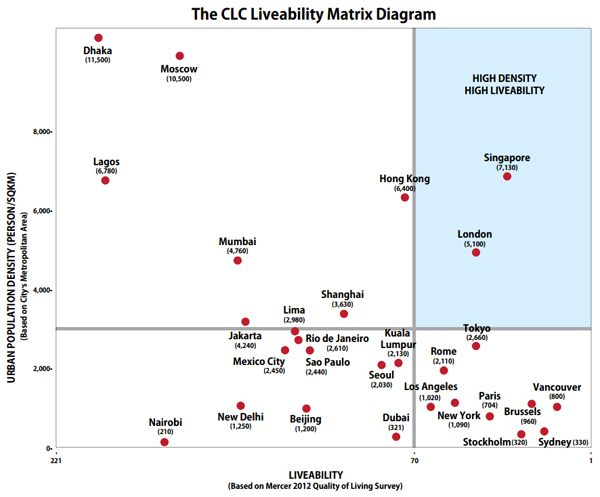
So, what are the most livable density should the cloud city have? According to telegraph, the top 10 most livable cities have a density of 2.9 – 3.7 people per square kilometer, which require 11,000 square kilometer of area to sustain the community. However, the first ever cloud city could be built with limited resources, therefore we need a high density and high livable city case study.
.jpg)
Based on the CLC livability Matrix Diagram, it shows that London and Singapore have the density characteristic that could be implement into our design. According to Singapore city density of 7,130 person per square kilometer, the cloud city of 40,000 people will occupy 6 square kilometer of surface area (3 times the size of Monaco about 2.2 sq.km).

2. Construction material
We must choose our city construction material that must resistant toward sulfuric acid (Venus Cloud).
High density polyethylene (HDPE)

Strong, and sturdy plastic that also resistant to sulfuric acid.
Polytetrafluoroethylene (PTFE)

Have a melting point of 327 degrees Celsius and resistant toward sulfuric acid.
With proper acid resistant coating, some light weight metal such as stainless steel and aluminum and composite material can be used to construct the city.
3. Life support system (Energy, food, water and oxygen)
3.1 Energy Supply
On earth, besides generating power supply through burning fossil fuel, we are getting power from solar power station. Since we received average of 8 hours of sunlight daily, we can generate 2.12kWh per 1.6 sq.m solar panel (265Watts).
However, on Venus our city will receive 116 earth days of sunlight (2,784 earth hours). Therefore, 2,784 x 265Watts = 737kWh of energy per 1.6 sq.m solar panel.
According to US energy information Administration, a US residential could consume 897kWh of energy per month. Assume an average household consist of 5 family member and 30 days a month. So, the stated 40,000 population will form a community of 8,000 household and would consume 217,917kWh of energy for a Venus day (243 earth days).
With only 116 earth days of sun light received on Venus atmosphere, it would require 265 units of 1.6 sq.m solar panel (or an area of 424 sq.m of solar array/ 7.5% of a football field size) to supply a sufficient energy to consumer.
3.2 Water
Water on Venus had been long gone. Due to rising temperature, those ancient water had evaporated to atmosphere and blasted away to deep space by solar wind. So where will the cloud city water source from?

The only viable water source is by harvesting water from C-type asteroids. The selection of this type of asteroid is due to its abundance of water and organic carbon, phosphorus (a key ingredients for fertilizer which could be used to grow food).
3.3 Food
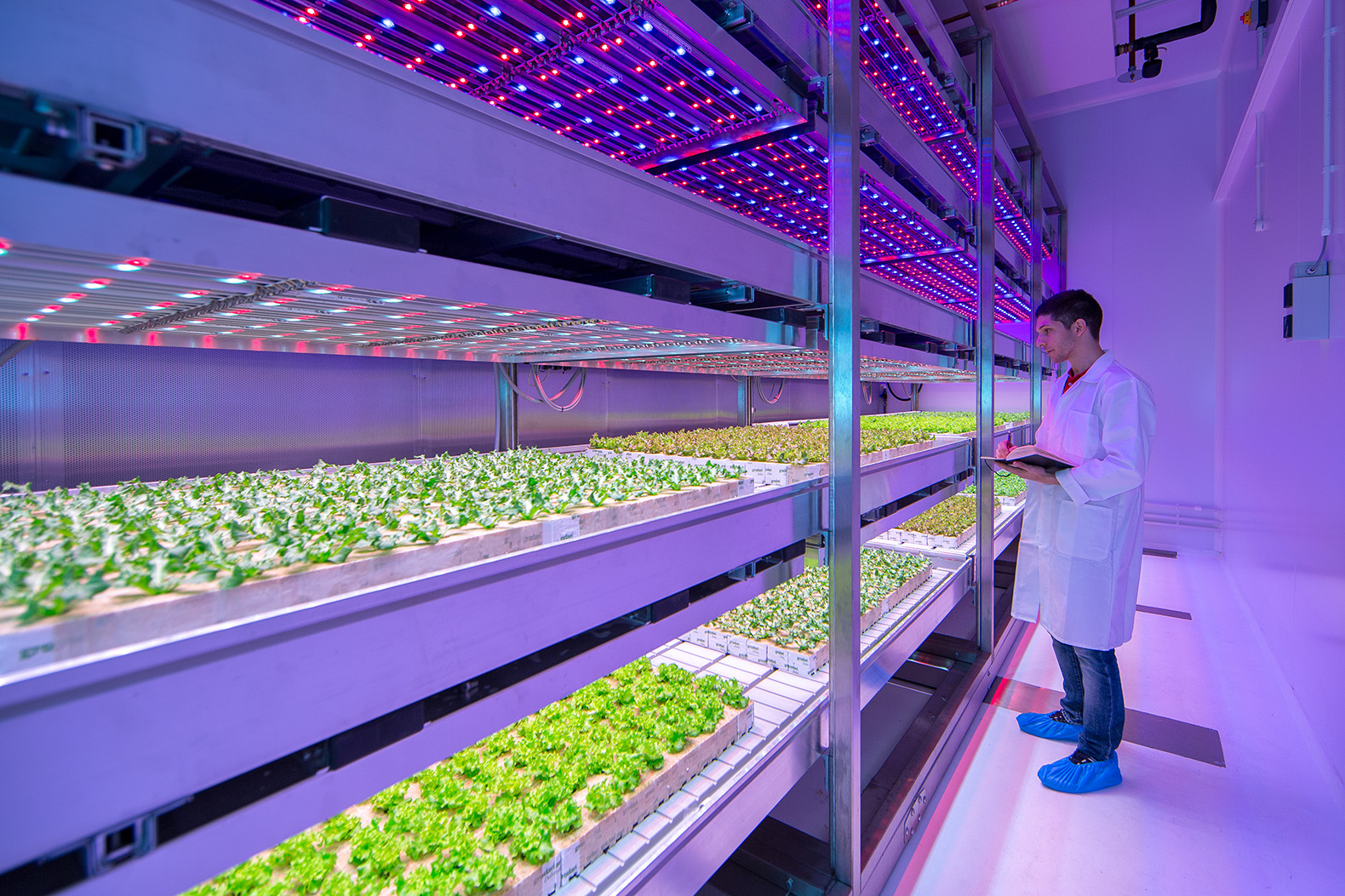
Since there are unlimited supply of Carbon dioxide, vegetable and crops can be grow on the cloud city. However, 5,832 Earth hours of day length could fry the crops before we can consume them. Therefore, food will be grown in indoor to simulate earth like environment like installing artificial lighting for 8 hours of daylighting and control temperature and humidity.
On earth, 1 acre of farm land feed one person per year.
On Venus Cloud city, food will be grown indoor and mostly in hydroponic system. According to Fast Company (Dec, 2015), Crop Box company could farm an acres worth of lettuce in a shipping container. Furthermore, those container farm can be stacked up to increase greater yield on an even tinier footprint.

Item | Data
A 12-meter-long shipping container area | 30 square meter
Total area after stacked up 3 Storey | 400 square Kilometer
Total farming area required 400 square Kilometer
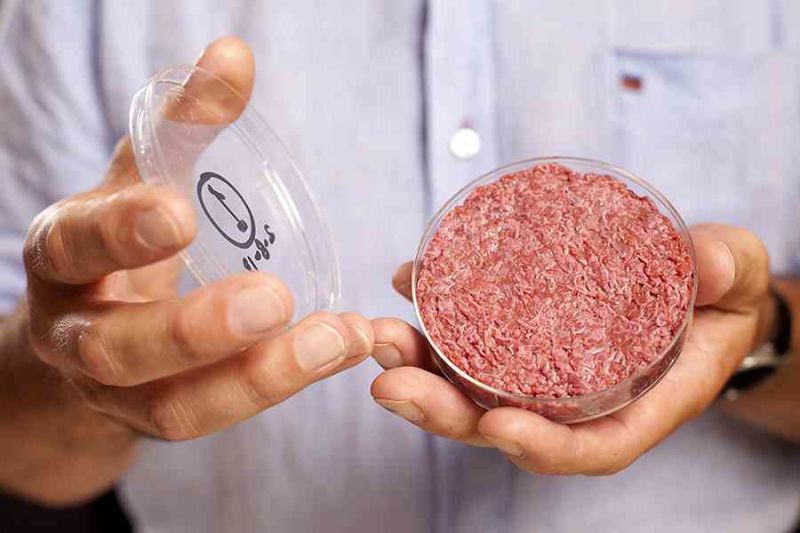
If you would like to consume meat product, we could consume lab grown meat in the cloud city.
Lab grown meat
** 3.4 Oxygen**

To obtain Oxygen gas, we could perform electrolysis on harvested water from asteroid. The byproduct of electrolysis is hydrogen and oxygen, while the oxygen became our breathable air, hydrogen could react with Venus rich carbon dioxide atmosphere to produce more methane (rocket fuel) and water.
The process of produce methane (rocket fuel) and water are like a proposal by Bruce Murray, former Jet Propulsion Laboratory (JPL) Director. The methane could be use as power source once solar panel are no longer functioning for during night time (about 127 Earth days). Furthermore, it can be used for refueling rocket ship back to Earth.
Manufacture Rocket fuel with CO2 on Mars
4. Cloud city Design Characteristic
4.1 What are the gas volume to makes the city float in Venus sky?
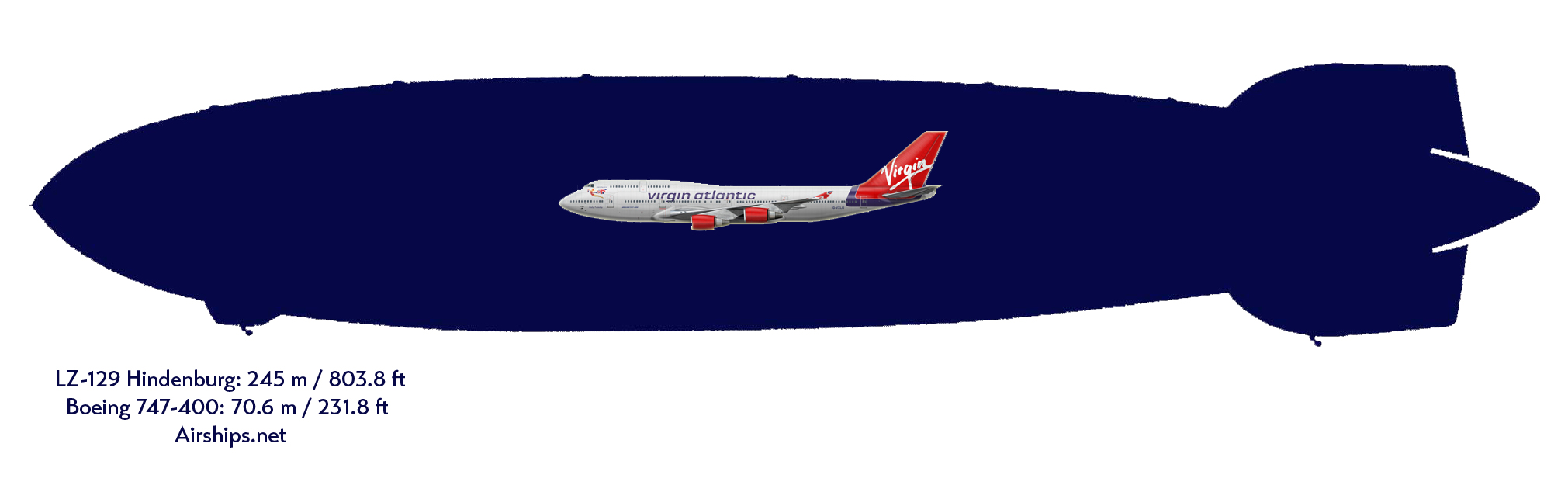
Based on calculation in previous post link, the volume of the Hindenburg airship (200,000 cubic meter) could lift 160,00 people on Venus. Therefore, it provides more buoyancy to support the 40,000 population state above, and it will be the benchmark for our cloud city design.
4.2 Staying afloat
Due to higher air density and greater wind speed, the cloud city will be like floating on a rough sea. The U.S. Navy's floating instrument platform (FLIP) is a vessel that display a counter measure on rough sea by staying upward with large portion of the vessel sink in to ocean that act as a counter weight.

4.3 Solar panel Balloon
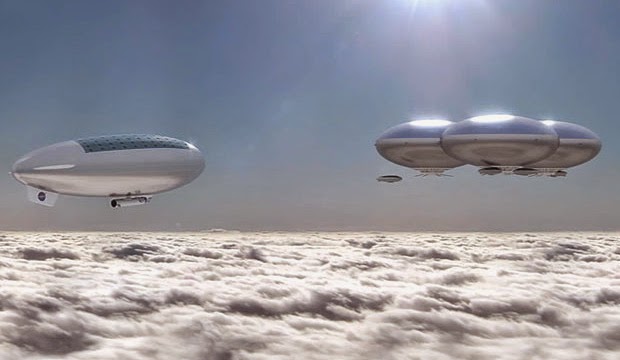
Since the lifting gas are contain inside a large balloon with huge surface area on top of it. Therefore, the location is just perfect for solar farm. Series of solar array could be install on it as shows in the Cloud city image above by NASA.
Conclusion
In summary, every inch of Venus is going to kill you instantly. So, the final design will be shown In part 3 on how the final design would protect human from extreme environment. Hope you guys enjoy and refreshed by the physic and chemistry of the content. If you have any idea would like to add into our cloud city like activities needed and function of the cloud city, you could drop by in the comment below. Thanks, and See you all in part 3.
Disclaimer
The calculation and data in this article may not totally correct due to some of the info might be outdated and human error in calculation.

A new tag that is to curate our existing built environment and also future built environment development. Want to know more? Read here.

Recent post related to Hypothetical Illustration
Hypothetical Illustration # 2: Cloud city part 1
Hypothetical Illustration of My City: Riverside
#Archisteem 2: Live healthier and safer in a revitalized city
Wow, it's so cool bro. Steem on honey @cklai (♥)
thank bro for your support
You've been upvoted by TeamMalaysia Community :-
To support the growth of TeamMalaysia Follow our upvotes by using steemauto.com and follow trail of @myach
Vote TeamMalaysia witness bitrocker2020 using this link vote for witness
Very scientific and detailed! Great post bro
Hopefully the post can make education more fun to learn.