Momentos y experiencias de mi vida -Moments and life experiences # 6 / Spn-Eng (Venezuela)
Hemos estado trabajando arduamente en casa estos días, ya les conté el caso de mi tortuga que se me había escapado, pero ya está junto con las demás nuevamente, siempre ando supervisando que no se escapen, pero son muy astutas estas tortuguitas, y siempre consiguen una parte por donde escabullirse, pero bien, el caso del que les vengo hablar hoy es otro.
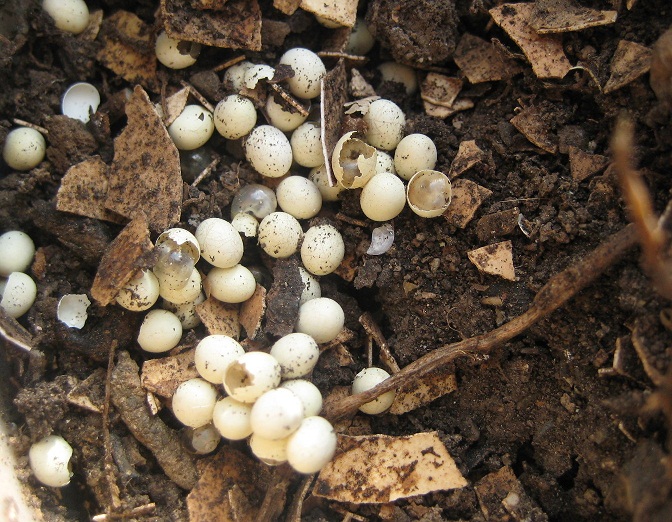
Tratando de organizar un poco en el patio, quería abonar algunas de mis plantas que están bastante descuidadas, hay mucha sequía y poco tiempo para dedicarme a su cuidado, encontré uno de los materos tirado en pleno sol, quise sacarle la tierra para usarla en otra plata, y mi sorpresa es que consigo una cantidad de huevos enterrados.
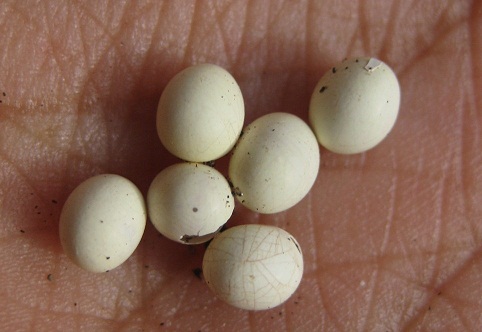
Me dije a mi misma, serán huevos de mato?...pero al observar bien me di cuenta que eran huevos de caracol, y me sorprendí, primera vez que me topaba con algo así, estos son caracoles africanos, y tienen mala fama, ya que son transmisores de parásitos y enfermedades, debido a ello se recomienda manipularlos con guante y acabar con ellos.
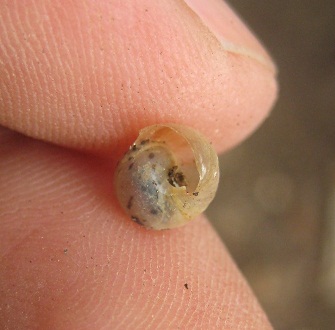
Yo no usé guantes porque los huevos estaban secos, ya tenían muchos días en el sol, y los carocolitos estaban muertos, luego busqué por las partes húmeda del jardín y conseguí uno ya mediano, no soy de estar matando estos animales, pero si son dañinos debo sacarlos de los alrededores de mi casa, son muchas cosas las que se dicen de estos caracoles, no podemos confundirlos con la "Guacara" que si es comestible, estos no, y hay que mantenerlos alejado de nuestro entorno.
El contacto con la baba es lo mas dañino, se pueden agarrar por el caparazón y luego lavar bien tus manos, estos caracoles pueden acabar con tus plantas en poco tiempo, se alimentan de las hojas, frutos, y hasta de las raíces.
Se ven muy inofensivos pero se consideran una plaga si los dejas reproducirse ya que uno solo puede tener centenares de huevos, investigue un poco sobre este caracol y se dice que cada caracol puede poner muchos huevos cada 15 o 20 días, hasta 300 huevos, y son hermafroditas, pueden crecer hasta de 20 cm, yo los he visto como de 14 centímetros.
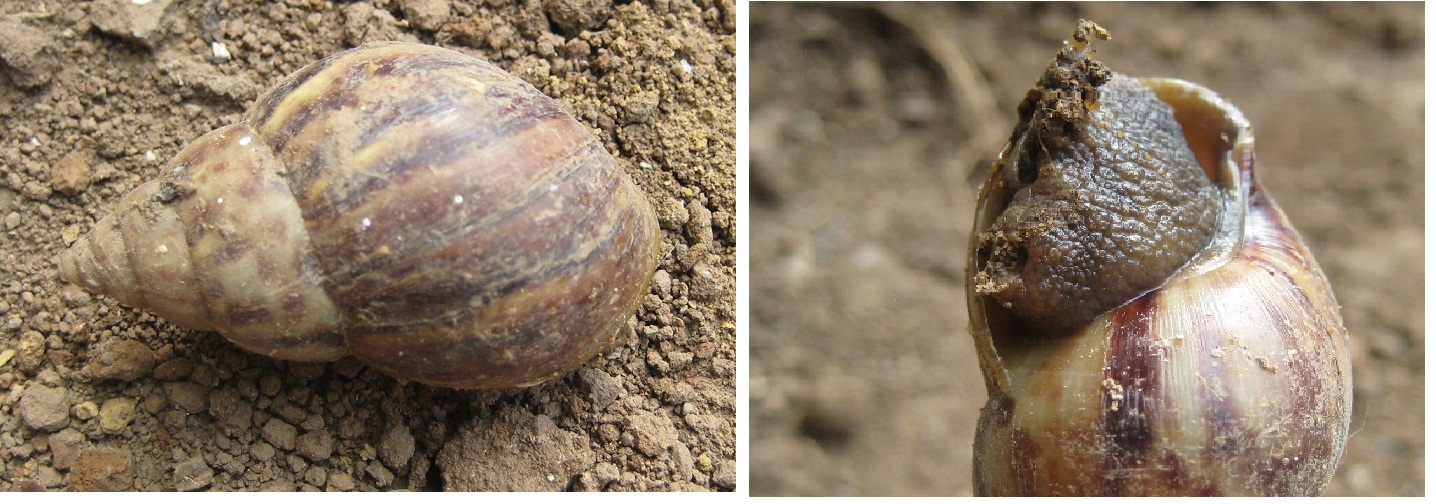
Los caracoles africanos se diferencian de los nativos por su concha, sobre todo cuando están grandes, los africanos tienen rayas horizontales de color café, rosado, blancuzco y amarillento, y cuando son bebes no tienen raya, son pecosos, hay que estar muy pendiente de estos detalles.
En esta época del año en el caso de mi país no se ven mucho, a menos que el jardín permanezca húmedo y con mucha sombras, pero cuando llega la temporada de lluvias es que abundan. Tendré que dejar el sentimentalismo a un lado y tratar de eliminarlos por el bien de mi familia y de las plantas, y hasta de mis mascotas.
We have been working hard at home these days, I already told you about my turtle case that had escaped me, but it is already with the others again, I am always supervising that they do not escape, but they are very clever, these little turtles and they always get a part to slip out of, but well, the case that I have come to talk about today is another.
Trying to organize a little in the yard, I wanted to fertilize some of my plants that are quite neglected, there is a lot of drought and little time to dedicate me to their care, I found one of the maids lying in the sun, I wanted to take the land for use in another Silver, and my surprise is that I get a number of eggs buried.
I said to myself, they will be mato's eggs? ... but when I observed well I realized that they were snail eggs, and I was surprised, the first time I came across something like that, these are African snails, and they have a bad reputation, since they are transmitters of parasites and diseases, due to this it is recommended to manipulate them with gloves and finish them.
I did not use gloves because the eggs were dry, they already had many days in the sun, and the carocolitos were dead, then I looked for the wet parts of the garden and got one already medium, I am not killing these animals, but they are harmful I must remove them from the surroundings of my house, there are many things that are said about these snails, we can not confuse them with the "Guacara" that if it is edible, these are not, and we must keep them away from our surroundings.
The contact with the slime is the most harmful, you can grab the shell and then wash your hands well, these snails can kill your plants in a short time, feed on the leaves, fruits, and even the roots.
They look very harmless but they are considered a plague if you let them reproduce as one can only have hundreds of eggs, investigate a little about this snail and it is said that each snail can lay many eggs every 15 or 20 days, up to 300 eggs, and They are hermaphrodites, they can grow up to 20 cm, I have seen them as 14 centimeters.
The African snails are different from the native ones because of their shell, especially when they are big, the Africans have horizontal stripes of brown, pink, whitish and yellowish color, and when they are babies they do not have a line, they are freckles, we have to be very aware of these details.
At this time of year, in the case of my country, you do not see much, unless the garden remains humid and with lots of shadows, but when the rainy season arrives it is abundant. I will have to leave sentimentality aside and try to eliminate them for the sake of my family and plants, and even my pets.
Note: sorry if the translation is not very good, I use the google translator since my language is Spanish, I hope it has been understood.
All the photos were taken by me, with my camera Canon SD 1000

Excelente información, de verdad que si. Son medios tenebrosos. Gracias.
Vermo amiga @karlin yo también habia escuchado hablar de esos caracoles Africanos, que eran dañinos para la salud, hay que tener cuidado también con los niños de la casa que sin saber pueden agarrarlos, debes sacarlos de tu jardín y estar pendiente.!
Por lo menos mis hijas no se atreven a tocarlos, le tienen miedo hehehe. Saluds
Que impresionante amiga, no había visto este tipo de huevos de caracoles, si he escuchado que hay que manipularlos con guantes porque ellos expulsan una sustancia tóxica para el organismo. Saludos amiga que tengas una linda noche.
Tengo el mismo problema en el jardín de mi casa, nosotros optamos por extender cal y sal combinadas como método para eliminarlos y a funcionado, ojala y te ayude. saludos.
Hola, si, he leído sobre esa técnica de la cal y la sal, Gracias por tu comentario y sugerencia. Saludos.
Sii realmente son muy peligrosos. Lamentablemente debes eliminarlos @karlin porque ellos ponen en riesgo la salud de todos los que viven alli, en especial tus princesas! Saludos y manos a la obra.
si amiga, en eso ando, gracias. Feliz noche.
No sabía que eran nocivos y tampoco había visto nunca sus huevos. Muy interesante e informativo. Gracias.
Los caracoles africanos, como lo muestro en la ultima foto, si los ves debes eliminarlo amigo, lamentablemente no son de fiar.
Follow you and upvote your post
Please supported me and upvote my post
Thanks
If you want to thrive, then you must work to improve your comments (I saw your other comments on other blogs). You need to participate more in the debate on the subject. Also, I recommend reading the following:
https://steemit.com/introduceyourself/@ebitularmbert/steemit-s-2017-five-5-bad-habits-you-should-avoid-in-2018-to-save-your-reputation Also read this: https://steemit.com/steemit/@miti/a-complete-guide-for-newcomers-and-minnows-to-avoid-a-possible-spam-and-to-write-good-comments
I hope you can thrive in Steemit.
Woow son muchos, tenia tiempo que no las veia