Is the criticism of Trump's customs decision justified?
Hello dear people!
In many gazettes one reads something like, Trump the villain of the dretrist tariffs on steel and aluminum imports to raise.
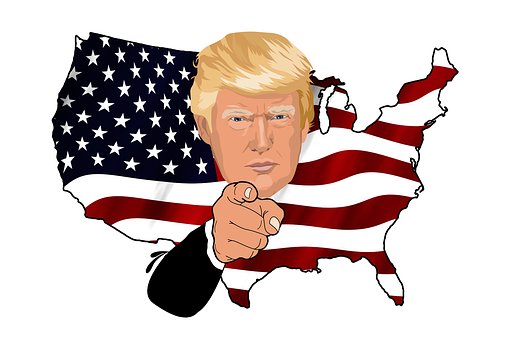
Anyone expressing criticism of Trump's customs introduction would also have to cite customs duties, including US goods, which the EU levies.
I quote from a recently published article by the Ludwig von Mises Institute Germany
The announcement of US President Donald Trump's import punitive tariffs on steel and aluminum was a godsend to his opponents. Reflexively, his numerous critics spoke up and accused him of protectionism. Not a few see even an epoch of world trade come to an end.
Not even those who had a good reason for this were criticized. Thus, the EU announced retaliation in response to the "unfair measures". Towards the US, European Commission President Jean-Claude Juncker said: "That's not sensible, but reason is a feeling that is very different in the world ... we are there, and we will also get to know each other."
Henning Klodt sees it more realistically; until 2017, he headed the Center for Economic Policy at the Kiel Institute for the World Economy. In the FAZ he writes on 3 March 2018:
"It is overlooked in the European discussion that one sits in the trade policy rather in the glass house. In the steel sector alone, more than 40 product areas are protected by EU punitive tariffs. All in all, the EU has clearly been more protectionist than the United States. "
But not only in terms of steel, the EU is sitting in the glass house, but also in the automotive sector. The EU levies import duties of 10 percent on imported passenger cars and only 2.5 percent on the US. Pick-ups from the US are even classified by the EU as trucks and consequently a hefty 22 percent are due. Not to mention EU tariffs on solar panels from China.
Apart from the forward-looking reasons of the "punitive tariffs" to beat Trump again, it's about more.
The Trump opponents rant against him because their goals for an ultimately global free trade agreement have moved further away. That began when he took office, when he put TTIP on hold. The negotiations, even under Obama, were highly controversial. Contracts in which not even deputies got insight and if so, many pages were blackened, such contracts can not promise anything good.
The advocates of TTIP argued that everyone would be "richer" and that we would all benefit if there were no more tariffs. They presented growth figures that were completely out of thin air, as we know today.
A few would undoubtedly make it even richer but also the dependency on goods produced abroad would continue to increase. That even the domestic industry or even other countries, which may have a higher salary and quality level than low-wage countries, would have to struggle with immense difficulties, you can already see.
Good example of dependency was Japan. The tsunami in 2011 caused loss of production of z. As computer chips, which are needed among others for the German auto industry, the production lines were almost silent, and it had an impact on many sectors, such as suppliers and ultimately each of them had to accept wage losses.
A country like Germany would have to be able to produce chips for the local carmaker, or not?
Well, now some will say, they can not even build an airport, but let's put that aside.
Apparently you want to create Abhägigkeiten, under the pretext of profitability. However, one does not expect the resulting lost jobs.
If every region produced what it needs, excluding special things, it would not necessarily make us richer, but in any case more independent. It also creates regional jobs, and people would not have to travel immense distances to get to their jobs. They would have more time for the family and would not be so stressed by the daily traffic jam.
Do you want to prevent that?
More importantly, it would make us more resistant to global economic crises, which means stability. This also means the reduction of goods transport.
The often unnecessary back and forth transport of goods, such as potatoes, which are carted to another country to peel them and then processed in a third country to fries, which are then partially returned to the country of origin. Neither do we need US chickens flown or embarked across the Atlantic, and vice versa. Do we have too few of them worldwide?
From all the projects one could conclude that the small and medium-sized companies are slowly but surely flattened to bind us to a few global players.
From this perspective, it would be quite legitimate to protect the domestic economy and to decide for the benefit of the population, for which one generates jobs.
After all politicians are elected by the people to do just that.
Translate by Google

best regards, wienermelange
To the question in your title, my Magic 8-Ball says:
Hi! I'm a bot, and this answer was posted automatically. Check this post out for more information.
Congratulations @wienermelange! You have completed some achievement on Steemit and have been rewarded with new badge(s) :
Click on any badge to view your own Board of Honor on SteemitBoard.
To support your work, I also upvoted your post!
For more information about SteemitBoard, click here
If you no longer want to receive notifications, reply to this comment with the word
STOP