Air Shower Room Design: 7 Mistakes That Compromise Your Cleanroom
Introduction – The Air Shower Is Your Cleanroom’s First Line of Defense
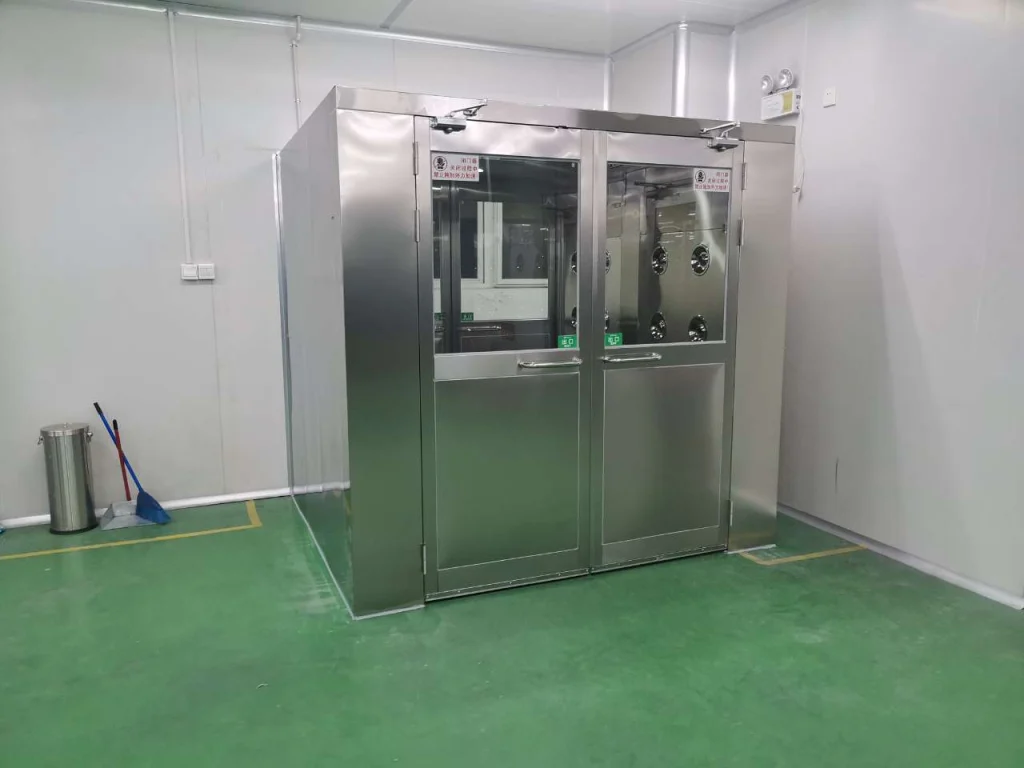
Every cleanroom relies on controlled entry points to keep contamination out. The air shower room serves as that critical barrier between the outside environment and your classified space. A well-designed air shower for clean room applications removes surface particulates from personnel and materials before they enter sensitive production areas.
Yet many facilities get the design wrong. Poor air shower design leads to contamination events, production losses, and costly rework. Below are seven common mistakes—and how to avoid them.
Mistake #1: Undersizing the Air Shower for Peak Personnel Traffic
Many facility planners size their air shower based on average traffic, not peak demand. During shift changes, bottlenecks form, and workers bypass decontamination steps to save time. Always calculate peak personnel flow and select an air shower room configuration—single-lane, dual-lane, or tunnel-style—that handles maximum throughput without delays.
Mistake #2: Incorrect Nozzle Placement and Angle Configuration
Nozzle positioning directly affects particle removal efficiency. Placing nozzles too high or too far apart creates dead zones on the body where contaminants remain. Optimal air shower design positions nozzles at multiple heights—targeting the head, torso, and legs—at angles between 15° and 30° from vertical. This ensures high-velocity air reaches all surfaces.
Mistake #3: Shower Cycle Time Set Too Short to Remove Particulates
Cutting cycle time to speed up traffic flow defeats the purpose of the air shower. Research shows that effective particle removal requires a minimum of 8–12 seconds of exposure to high-velocity filtered air. Setting cycles below this threshold leaves significant contamination on garments and compromises your cleanroom environment.
How Air Shower Clean Room Design Connects to Gowning Workflow
Mistake #4: Poor Integration with Gowning Room Workflow
The air shower room should sit logically between the gowning area and the cleanroom entrance. When designers place the air shower too far from the gowning bench or force personnel through awkward pathways, workers contaminate freshly donned garments before reaching the shower. Map the entire gowning sequence and position the air shower as the final step before cleanroom entry.
Mistake #5: Ignoring Noise Levels and Personnel Compliance Psychology
Air showers generate significant noise—often exceeding 75 dB. High noise levels cause discomfort, and uncomfortable workers rush through the cycle or avoid the air shower entirely. Specify low-noise blower systems and add sound-dampening materials to encourage full compliance. When people willingly complete the cycle, your air shower for clean room protection works as intended.
Mistake #6: Neglecting Regular Maintenance and Filter Replacement
Even the best air shower design fails without proper upkeep. Clogged HEPA filters reduce airflow velocity, and worn door seals allow unfiltered air to leak in. Establish a maintenance schedule that includes monthly filter inspections, quarterly velocity testing, and annual full-system audits.
Mistake #7: Choosing Single-Door Design When Interlocking Doors Are Required
A single-door air shower allows both doors to open simultaneously, creating a direct path for contaminated air to reach the cleanroom. Interlocking doors ensure one door fully closes before the other opens, maintaining pressure differentials and preventing cross-contamination. For any ISO 14644-compliant facility, interlocking doors are not optional—they are essential.
Best Practice Checklist for Air Shower Room Layout in 2025
Size the unit for 120% of peak personnel traffic
Position nozzles at three height levels with 15°–30° angles
Set cycle time to a minimum of 10 seconds
Place the air shower directly after the gowning area
Specify blower noise levels below 70 dB
Schedule monthly HEPA filter inspections
Install interlocking doors with automatic controls
Add visual indicators showing cycle completion status
Document all maintenance activities for audit readiness
Conclusion – Design It Right the First Time or Pay in Contamination Events
An effective air shower room does more than blow air—it protects your entire cleanroom investment. Each mistake listed above introduces contamination risk that compounds over time. By addressing air shower design from the start—sizing correctly, positioning nozzles properly, integrating with gowning workflows, and maintaining equipment consistently—you eliminate preventable failures.
Get your air shower clean room design right the first time. The cost of doing it over always exceeds the cost of doing it well.