[Citizen Science] April's Raptors in South-Eastern Pennsylvania
As with last month, I saved the raptors post for the end of the month, since I think these are the most interesting. For links to some previous wildlife photography posts, see the end of this article.
In April, I encountered four varieties of raptors and also learned a couple tips that set the stage for some really interesting Red-tailed Hawk photos in May (but you'll have to wait for that post), and perhaps into the future. The four raptor species encountered during April were the American Bald Eagle, the Cooper's Hawk, the Red-tailed Hawk, and the Turkey Vulture.
All, except for the Cooper's Hawk, were previously seen in March. All, except for the Bald Eagle, have conservation status of "least concern" in Pennsylvania. Pennsylvania and Federal classifications list the Bald Eagle as "protected".
Cooper's Hawk
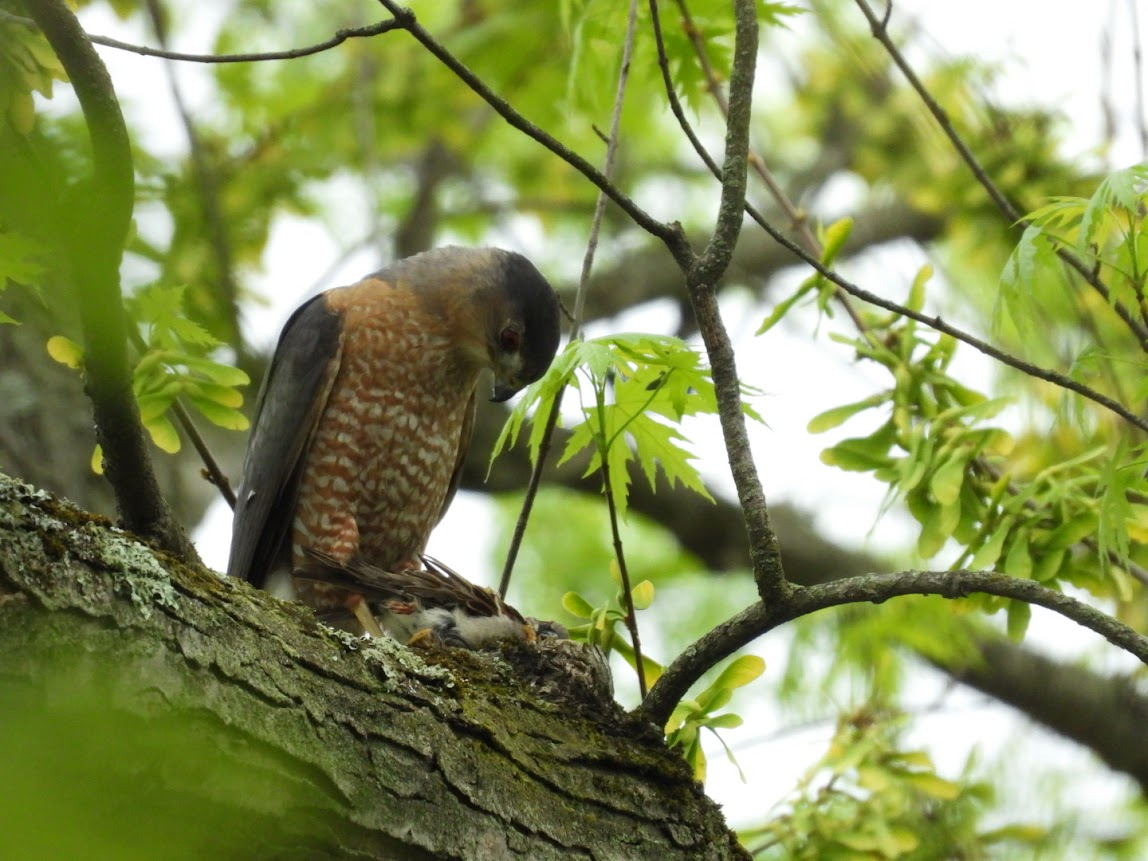
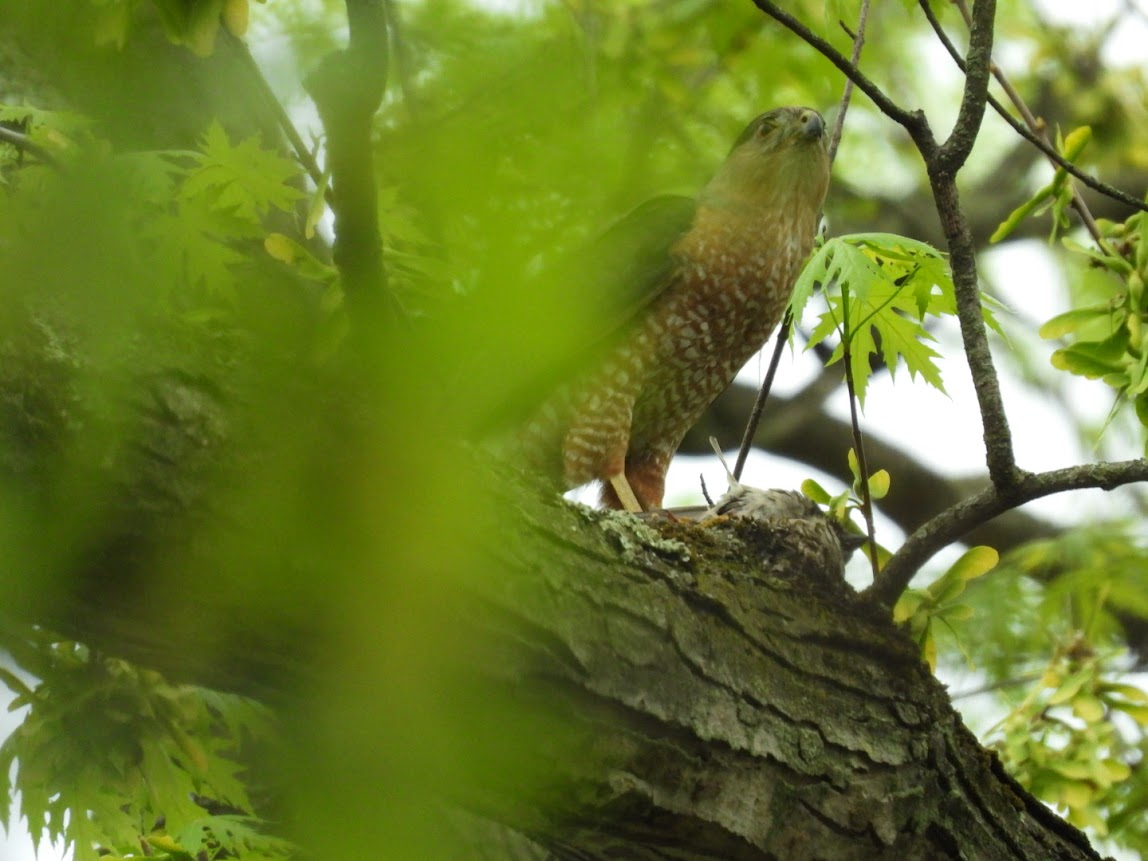
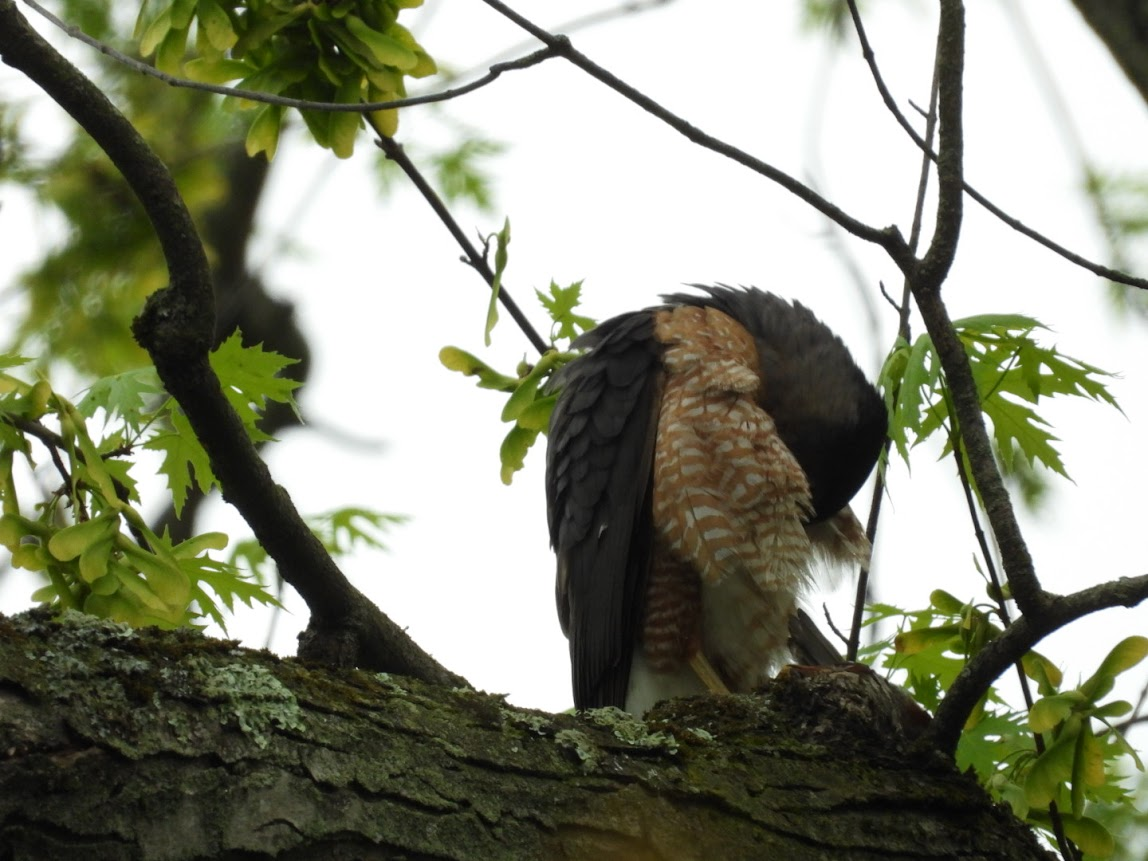
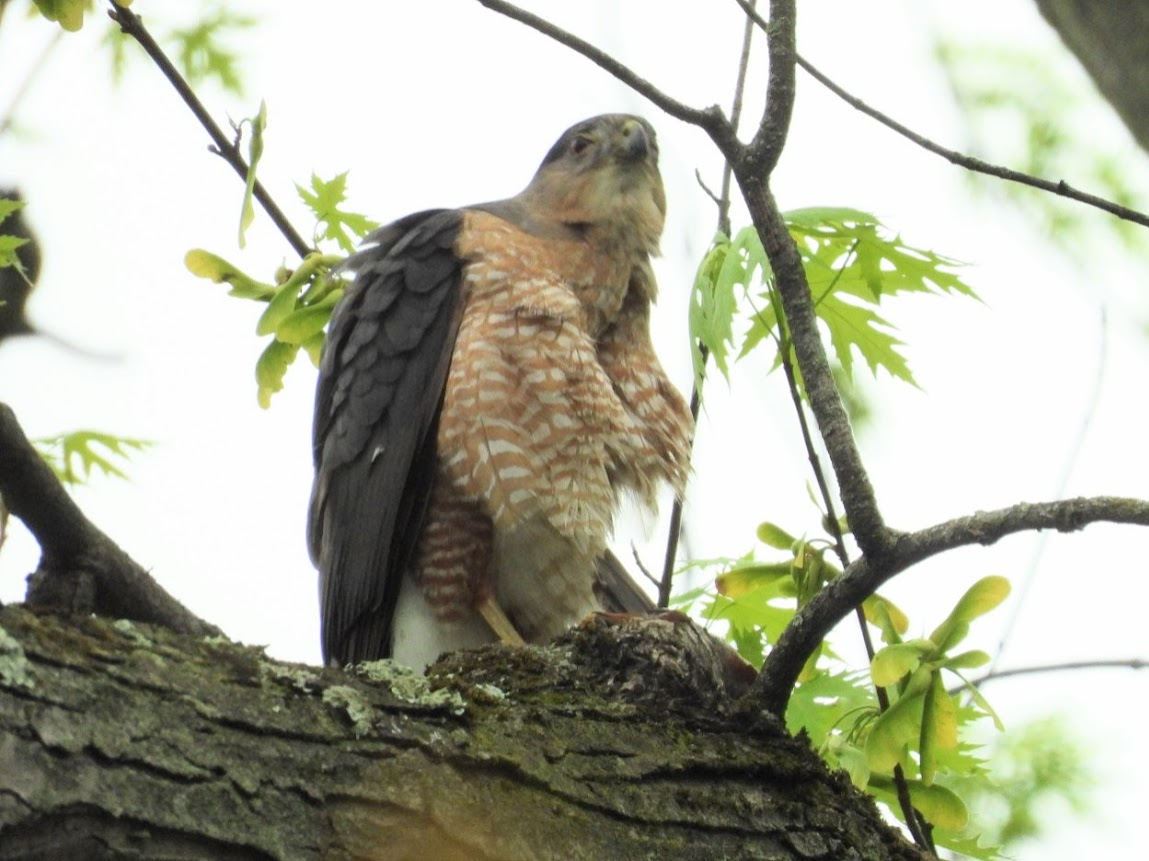
I already posted some of the Cooper's Hawk photos, but I tried to select different ones for today's article.
Recapping the story from the previous post, on April 26 during my "wildlife walk", I noticed that many of the song-birds in my yard and in surrounding properties were making a lot of noise. Normally, that means to check the skies because they're often signaling the presence of a raptor. However, I was checking the sky, and I saw nothing.
I started to walk down to where the racket was coming from, hoping to get photos of the noisemakers and to see what had them all worked up. Suddenly, this Cooper's Hawk flew from ground level behind me, right past my shoulder, veered in front of me and landed in a tree. It stayed there for, maybe, 10-20 minutes, and this gave me a chance to take many photographs.
It wasn't until later that the AI informed me that he was eating some sort of prey animal in that perch. Apparently, the neighborhood birdfeeder is one of the Cooper's Hawk's favorite hunting grounds. And now, I guess we know why the song-birds were so worked up.
As-of today, this remains my only encounter with a Cooper's Hawk.
| April 26 | April 26 |
| Nikon P1000 ƒ/6.3; 1/400; ISO800 359mm (~1996mm eq; ~84x zoom) | Nikon P1000 ƒ/6.3; 1/400; ISO800 359mm (~1996mm eq; ~84x zoom) |
 |  |
| April 26 | April 26 |
| Nikon P1000 ƒ/7.1; 1/400; ISO500 395mm (~2196mm eq; ~92x zoom) | Nikon P1000 ƒ/7.1; 1/400; ISO500 395mm (~2196mm eq; ~92x zoom) cropped and brightened in Google Photos |
 |  |
Red-tailed Hawk
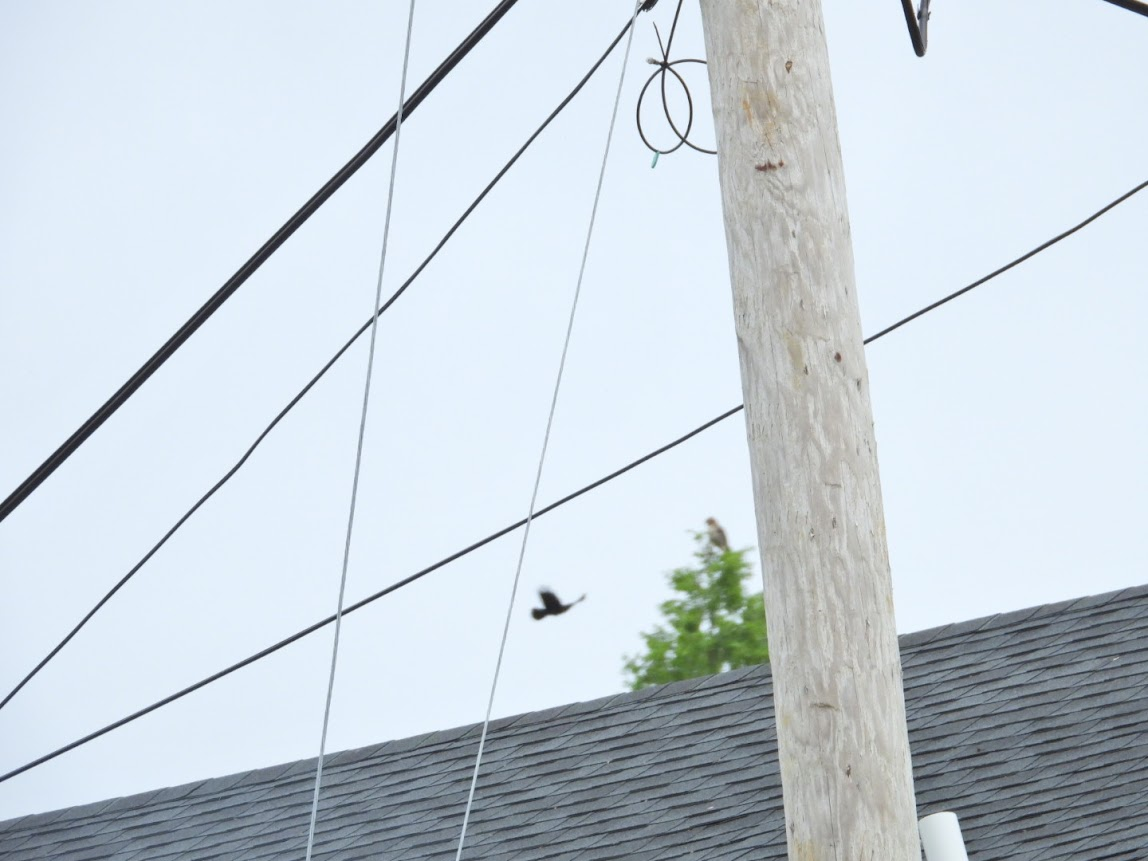
This photo was discussed, previously. I was taking photos of a crow that was engaged in a weird behavior, almost as if it were repeatedly dive-bombing some invisible target. Only when I got inside did I notice the blurry hawk at the top of the tree.
It turns out that the crow was engaged in mobbing - trying to intimidate the hawk into leaving. This gave me two "cheat codes" for photography in May: i. When I see a small bird doing that, I know to look for nearby raptors (I have since seen it from Blue Jays, too); and ii. Whenever I go outside now, I check the top of that tree. It turns out to be a preferred perch for the local Red-tailed Hawks.
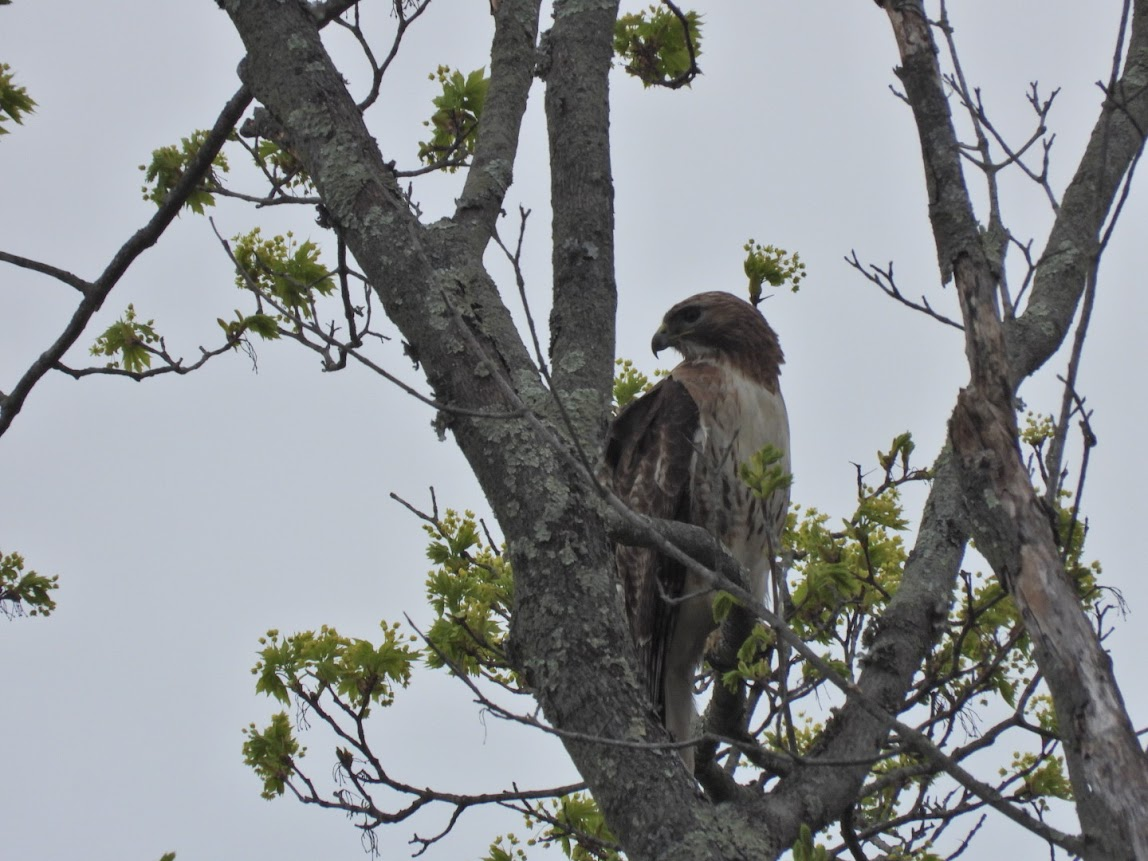
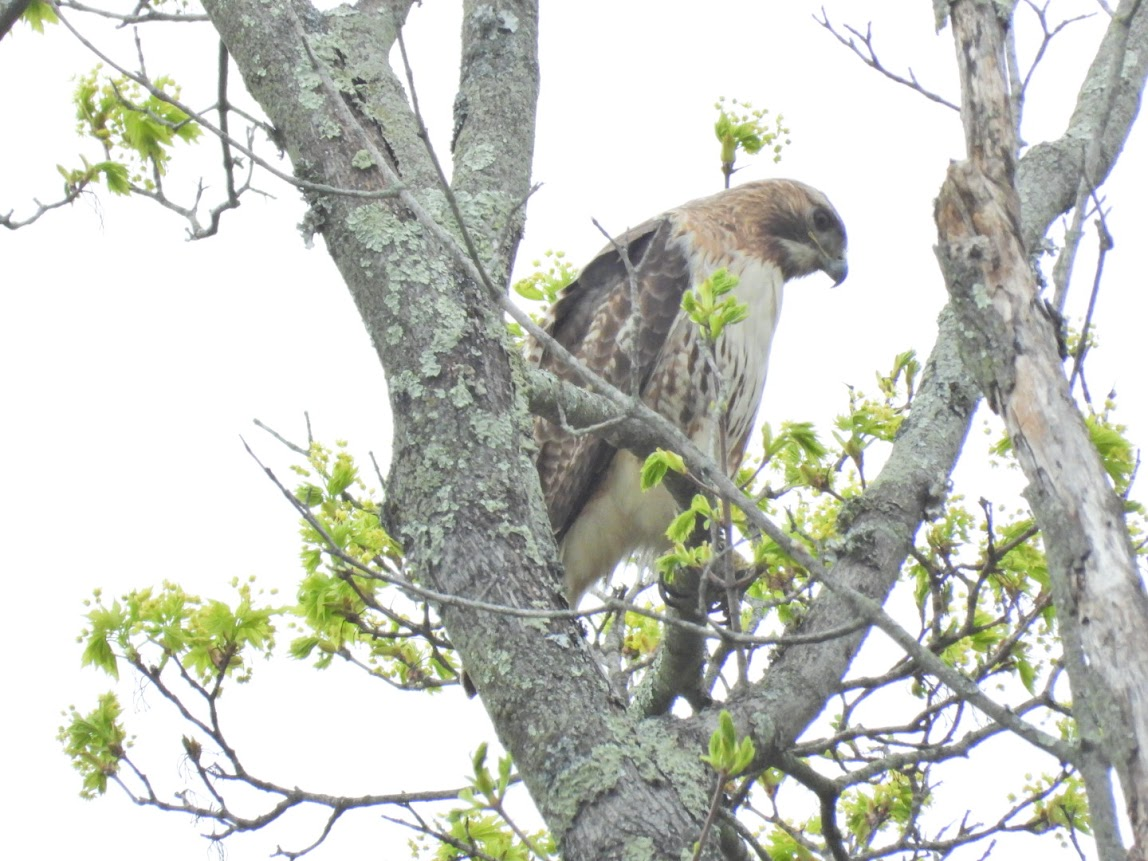
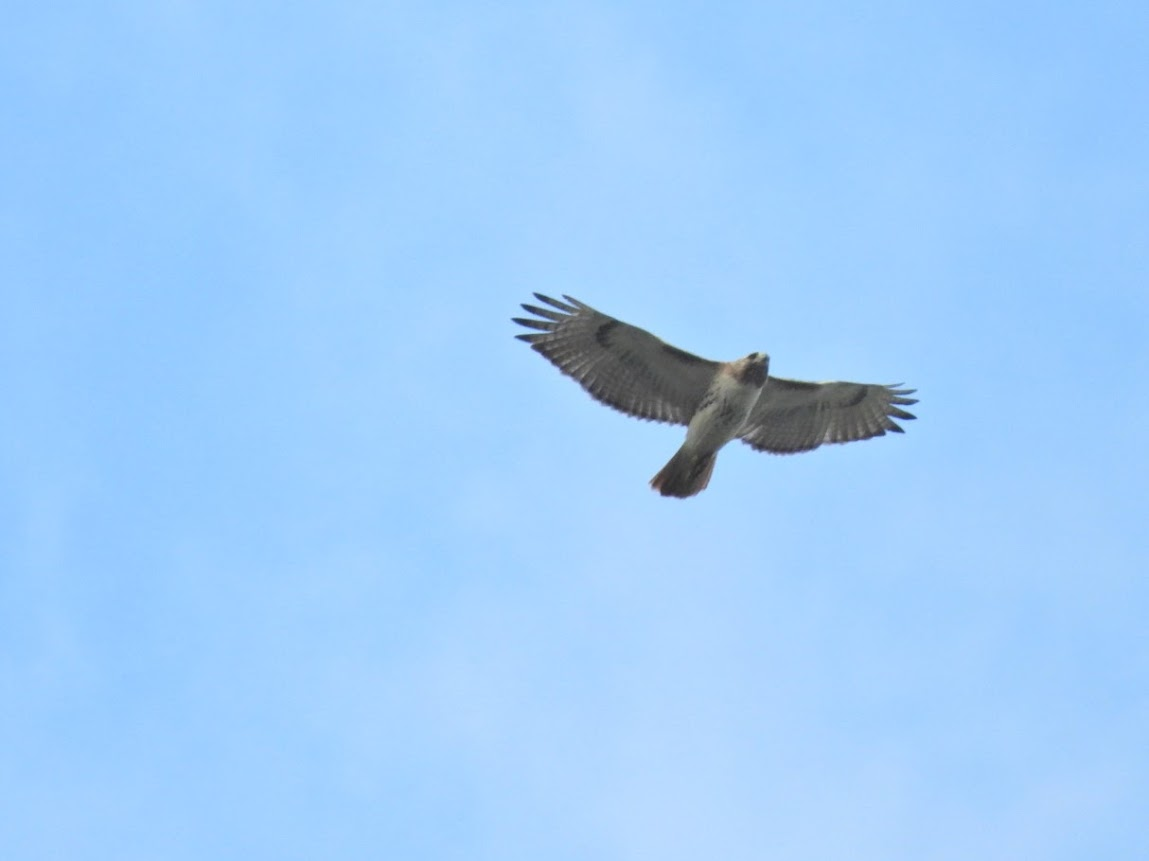
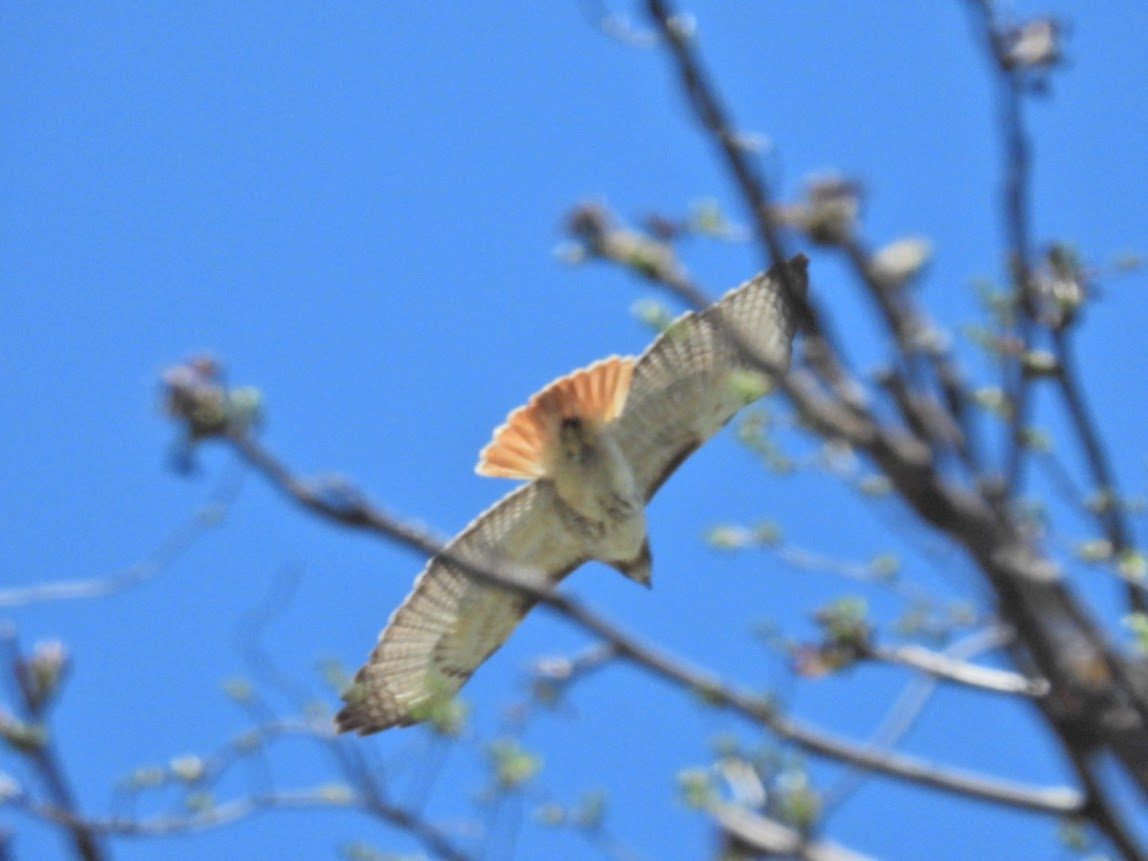
I've seen enough Red-tailed Hawks now that I usually don't need help from the AIs to identify them. Here are the things I look for:
- pink/red tail
- The "dash comma" pattern on the leading edge of the wings. The "dash" is properly called the "patagial mark".
- The solid white chest.
- The white patch in the trailing feathers near the edge of the wing.
Even though it's flickr, this diagram was the most helpful thing I've seen for identifying these guys.
Over the course of several months, I have had many encounters with Red-tailed Hawks. This includes adults and juveniles and one with a band. I'm fairly confident that there is at least one local nesting pair that I have seen, repeatedly.
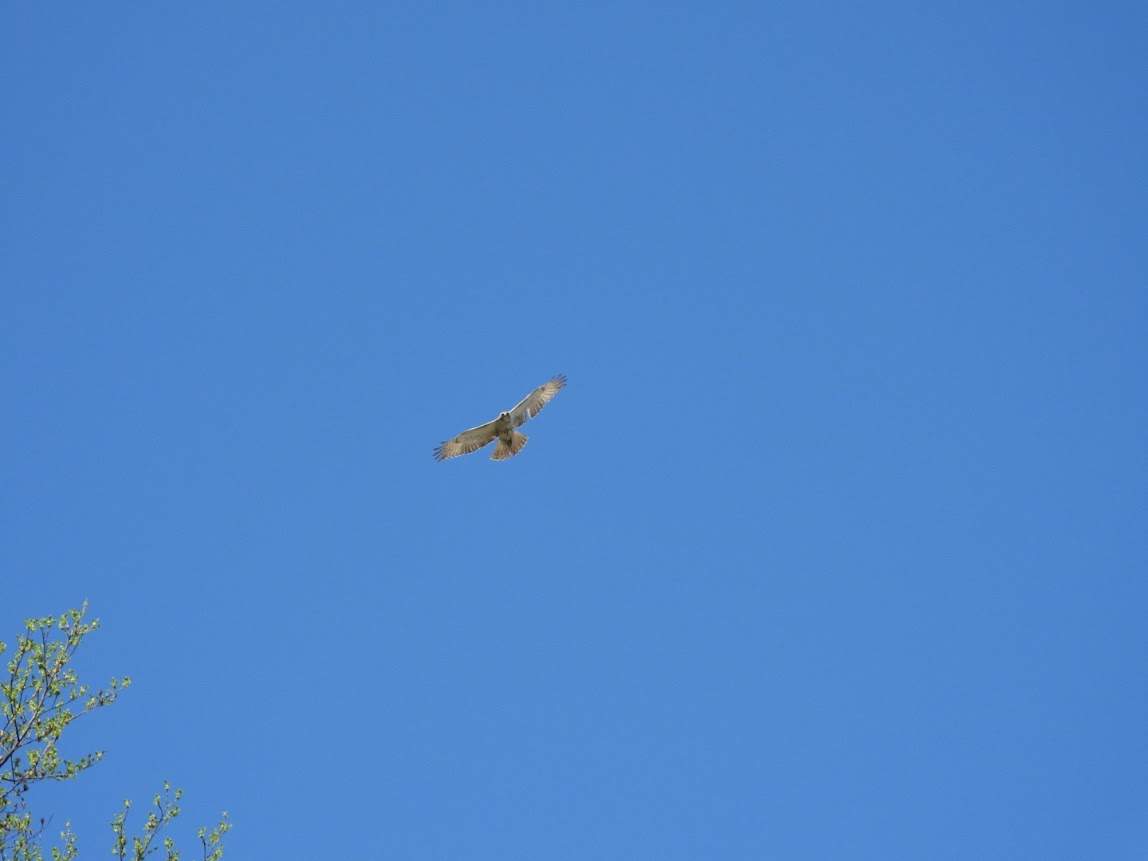
Here are some photos from April.
| April 6 | April 13 |
| Nikon P1000 ƒ/4; 1/1250; ISO180 30.5mm (~170mm eq; ~7x zoom) | Nikon P1000 ƒ/8; 1/800; ISO200 503mm (~2797mm eq; ~117x zoom) |
 |  |
| April 13 | April 24 |
| Nikon P1000 ƒ/8; 1/800; ISO800 539mm (~3000mm eq; ~125x zoom) | Nikon P1000 ƒ/6.3; 1/1000; ISO800 359mm (~1996mm eq; ~84x zoom) Cropped in Google Photos |
 |  |
| April 27 | April 29 |
| Nikon P1000 ƒ/7.1; 1/2500; ISO800 180mm (~1001mm eq; ~42x zoom) | Nikon P1000 ƒ/8; 1/50; ISO100 432mm (~2402mm eq; ~100x zoom) |
 | 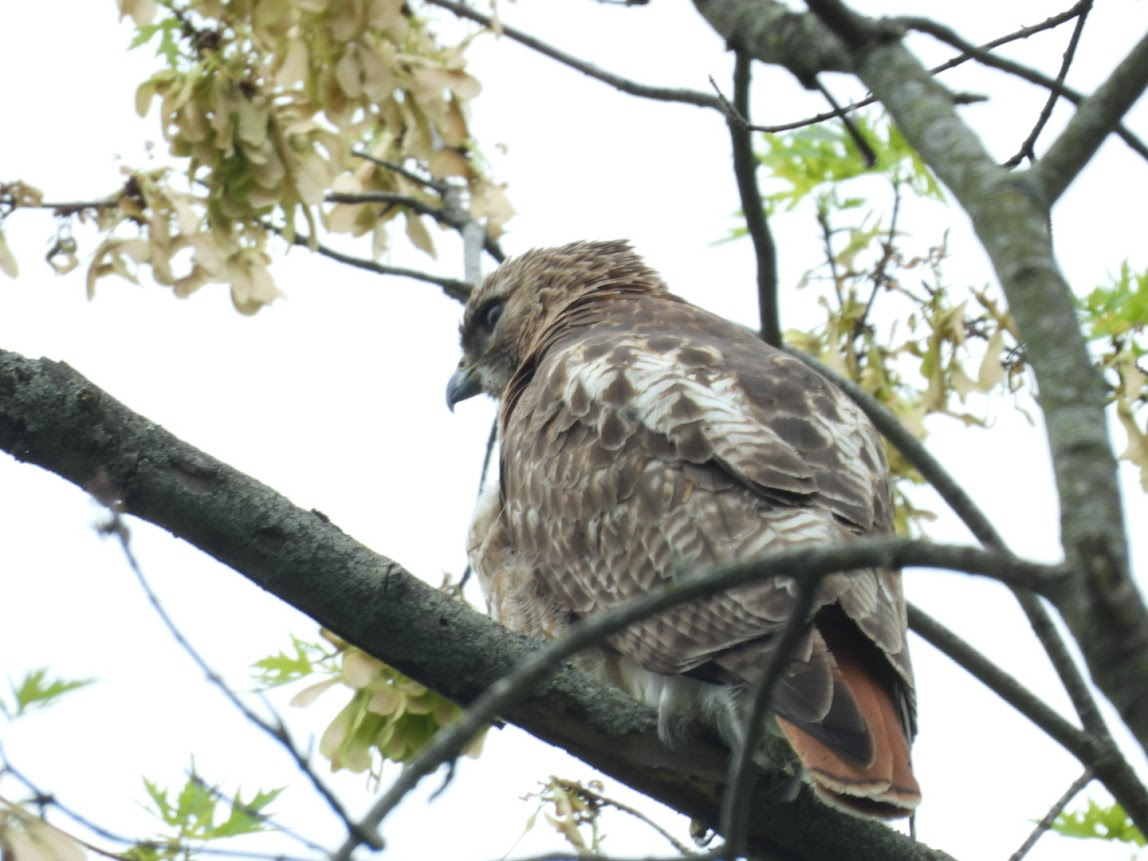 |
The shutter speed and ISO levels in the April 29 photo are both low because the bird was sitting still and the photo was taken with late-afternoon lighting on an overcast day.
Turkey Vulture
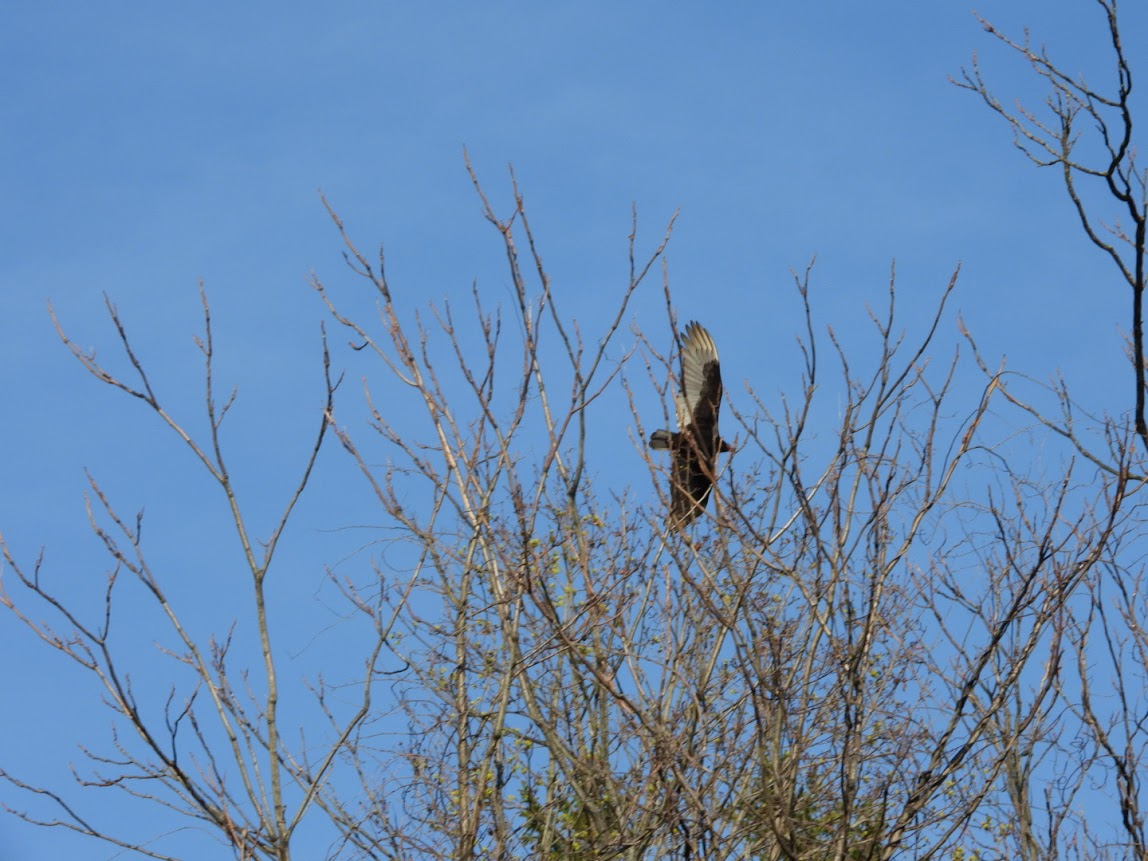
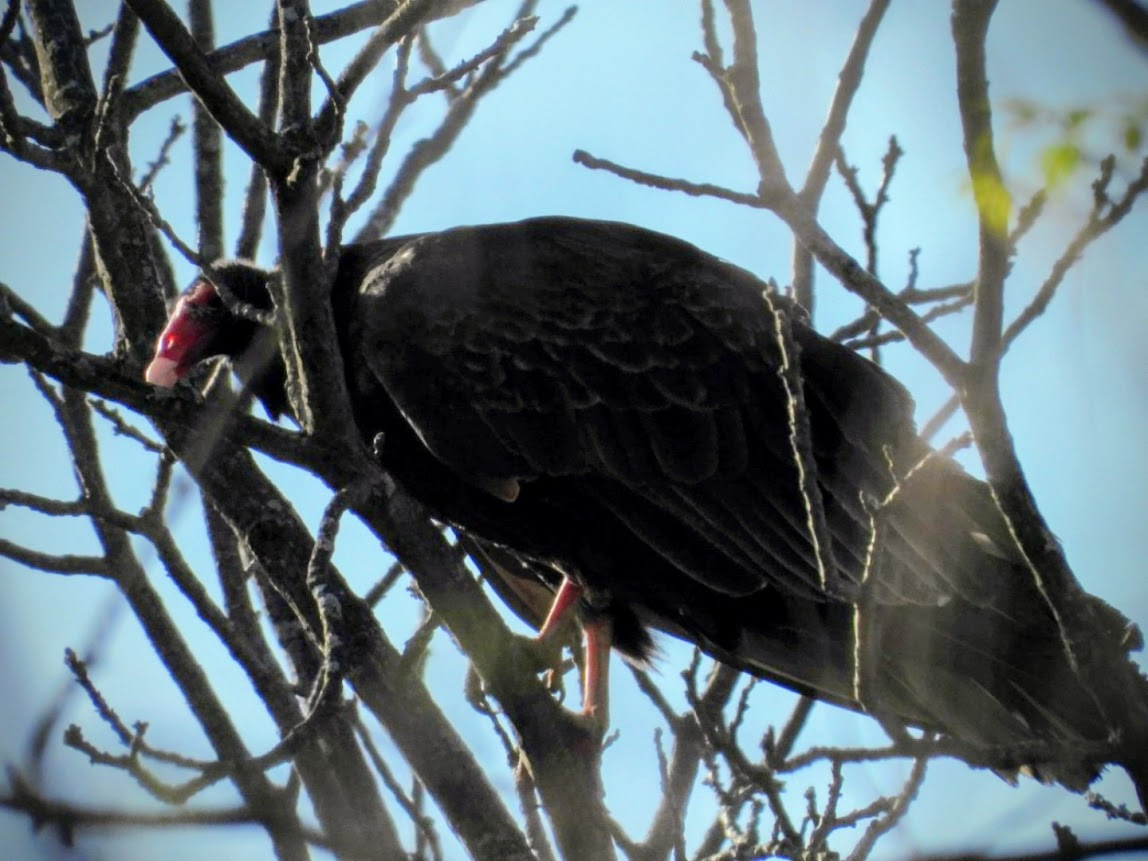
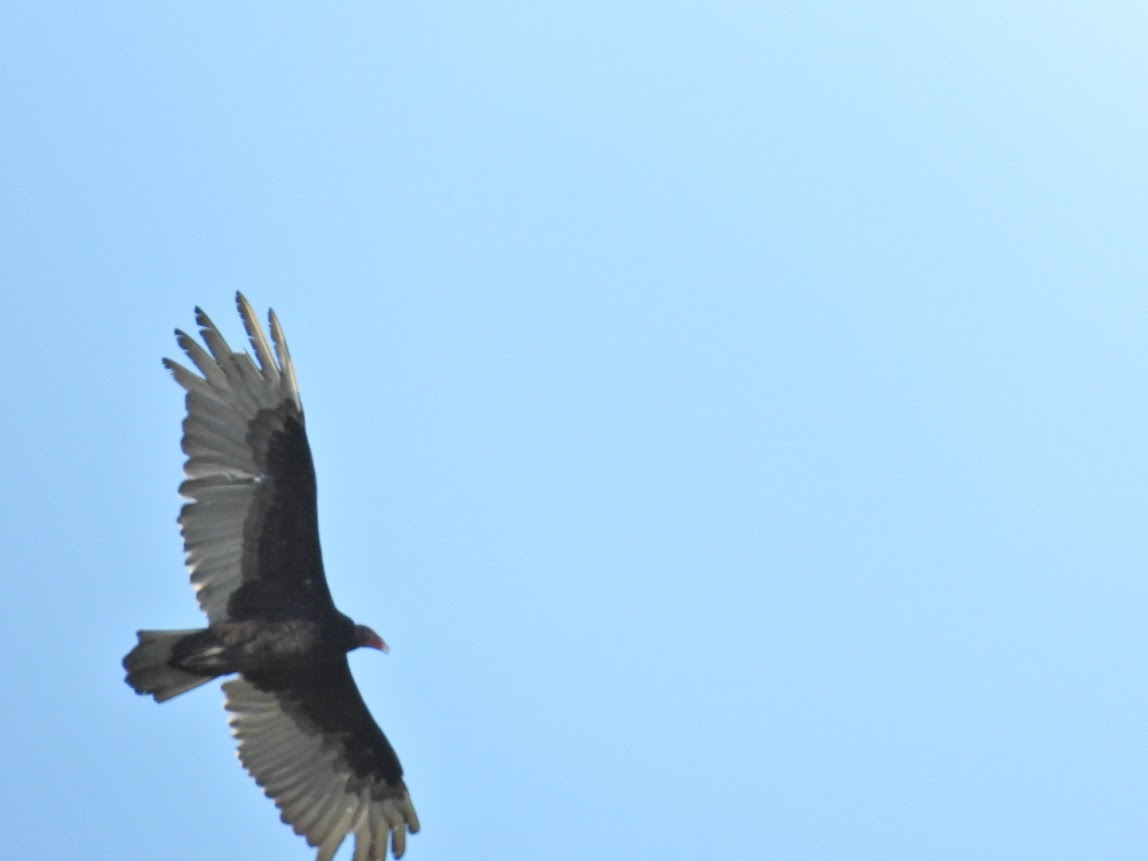
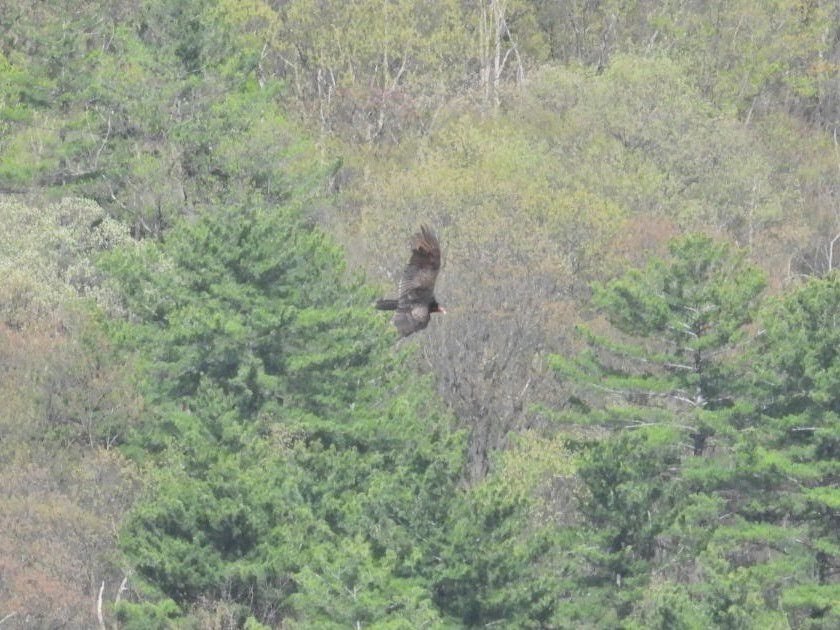
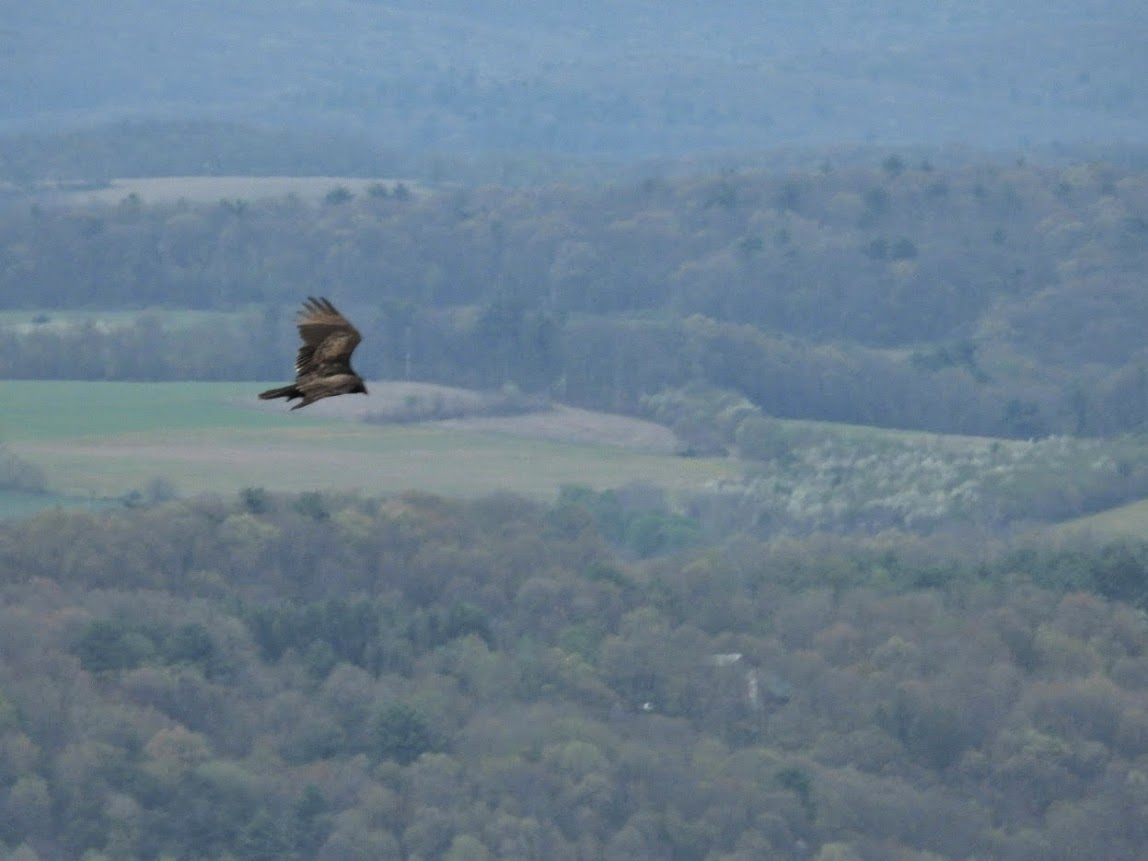
With its dark coloring, the Turkey Vulture is actually fairly difficult to photograph when the background is a backlit sky. Two of the photos here were taken from above, on Hawk Mountain, and I was completely surprised by the brown, patchy coloring that is visible from above when they are flying.
As with the Red-tailed Hawk, I've seen enough of these that I don't need identification guidance from the AIs. The things to look for are: i. V-shaped wings (dihedral) when gliding, ii; Wobbly/rocking motion when gliding; iii. the exposed red, featherless head; and iv. the white feathers trailing the wings when it's in flight.
On April 3, when I got the photo of the vulture perched in the tree, there was a kettle of them that all landed in a small wooded patch behind my yard (those woods were mostly razed the following weekend, by the property owner). Unfortunately, they didn't stay long enough for me to get multiple photos. I got one burst with bad lighting, and they took to the air again. So, I needed help from Google Photos to make the bird visible.
Here is a selection of Turkey Vulture photos from April.
| April 3 | April 3 |
| Nikon P1000 ƒ/5.6; 1/640; ISO125 38.6mm (~215mm eq; ~9x zoom) | Nikon P1000 ƒ/8; 1/1600; ISO360 539mm (~3000mm eq; ~125x zoom) enhanced by Google Photos |
 |  |
| --- | --- |
| April 16 | April 18 |
| Nikon P1000 ƒ/6.3; 1/1000; ISO500 306mm (~1701mm eq; ~71x zoom) | Nikon P1000 ƒ/6.3; 1/2500; ISO800 102mm (~567mm eq; ~24x zoom) at Hawk Mountain Sanctuary |
 |  |
| April 18 | April 30 |
| Nikon P1000 ƒ/5.6; 1/1600; ISO250 167mm (~928mm eq; ~39x zoom) at Hawk Mountain Sanctuary; cropped and lighting adjustments in Google Photos | Nikon P1000 ƒ/5.6; 1/1250; ISO250 180mm (~1001mm eq; ~42x zoom) with lighting adjustments in Google Photos |
 | 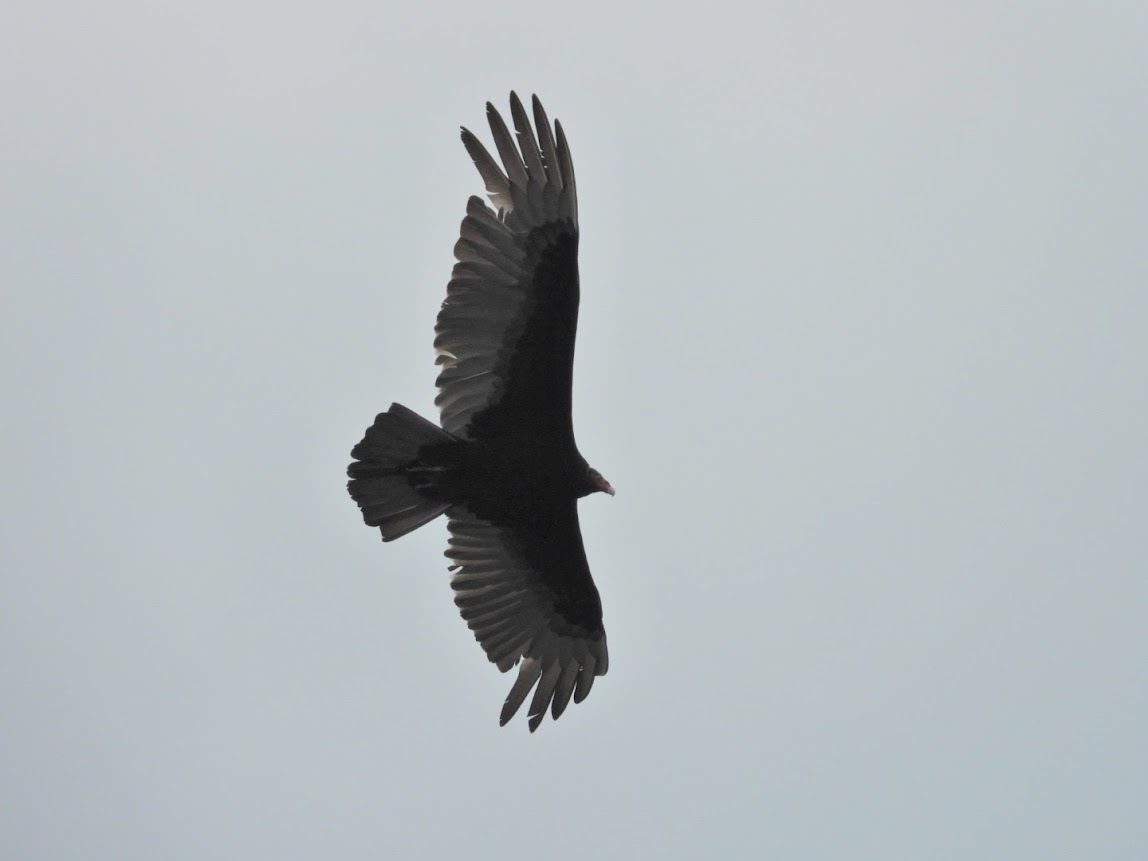 |
American Bald Eagle
The Bald Eagle used to be classified as "threatened", but its status was raised to "protected" by the federal government in 2007 and by Pennsylvania in 2014. As previously mentioned, the species has recovered from three nesting pairs in the entire state of Pennsylvania during the 1980s to more than 300 (maybe more than 600) today.
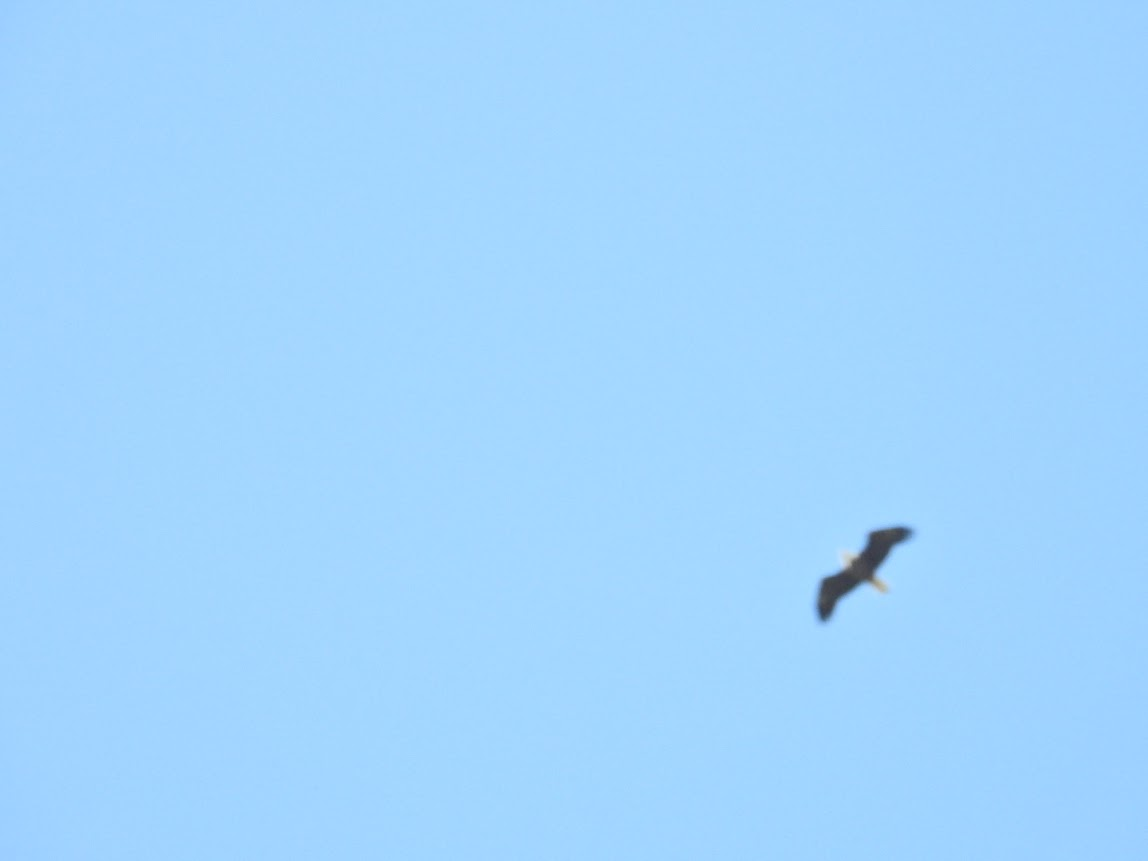
This is the only species that I didn't list in alphabetical order, because I wasn't able to get a good photo, so I wanted a different thumbnail. For me, because of the species' recovery story, it is always exciting to get a Bald Eagle observation, even if the photo isn't great.
On this day, the bird was high and flying fast, so I didn't have time to zoom & autofocus before it disappeared behind the trees. I was actually lucky to get any picture at all. So far, I had exactly one Bald Eagle encounter in March (not counting the day trip to Conowingo Dam, one in April, and (getting ahead of the series) two in May. One of the May encounters led to some better photos, so check back next month.
| April 16 |
| Nikon P1000 ƒ/5; 1/1250; ISO800 102mm (~567mm eq; ~24x zoom) |
 |
Wrap-up
So, that's it for the April photos. Out of ~1,800 photos, I posted maybe 80 or 100. Hopefully, I was able to select the ones that were most interesting and least redundant.
I hope you enjoyed the series this month.
Previously
April's photographs
- Photography meets citizen science: April's wildlife in south-eastern Pennsylvania
- Learning photography with wildlife in south-eastern Pennsylvania: First encounters in the month of April
- Learning photography with wildlife in south-eastern Pennsylvania: First encounters in the month of April - part 2
- April wildlife observations in south-eastern Pennsylvania: repeated encounters with small animals
March's photographs
- Backyard Photography in Chester County, Pennsylvania during March 2026: Warm-up Shots
- [Citizen Science] Observations of Small Birds and Animals in South-eastern Pennsylvania from March of 2026
- [Citizen Science] The Raptors of March in South-Eastern Pennsylvania
Thank you for your attention!
Unless otherwise noted, all photos above were taken by me with a Nikon P1000 camera. I'm sharing them under the CC BY 4.0 license (share & adapt freely with attribution to the original source).
Your post have been rewarded by the Speak on Steem curator team!
Now become a plus member delegating at least 500 SP
Ways to support us:
Curated by @marvinvelasquez