July wildlife in southeastern Pennsylvania: Small birds and first encounters
Here is the second part of my small birds photography during July. In this post, we have a few birds that have been commonplace in the neighborhood throughout the spring and summer: the Gray Catbird, the Mourning Dove, and the Northern Cardinal. Then we have another four birds that were first seen during July: the Barn Swallow, the Chimney Swift, the Northern House Wren, and the Northern Mockingbird. We also venture off a little bit into the historical launch of the Audubon Society by way of an essay in 1886.
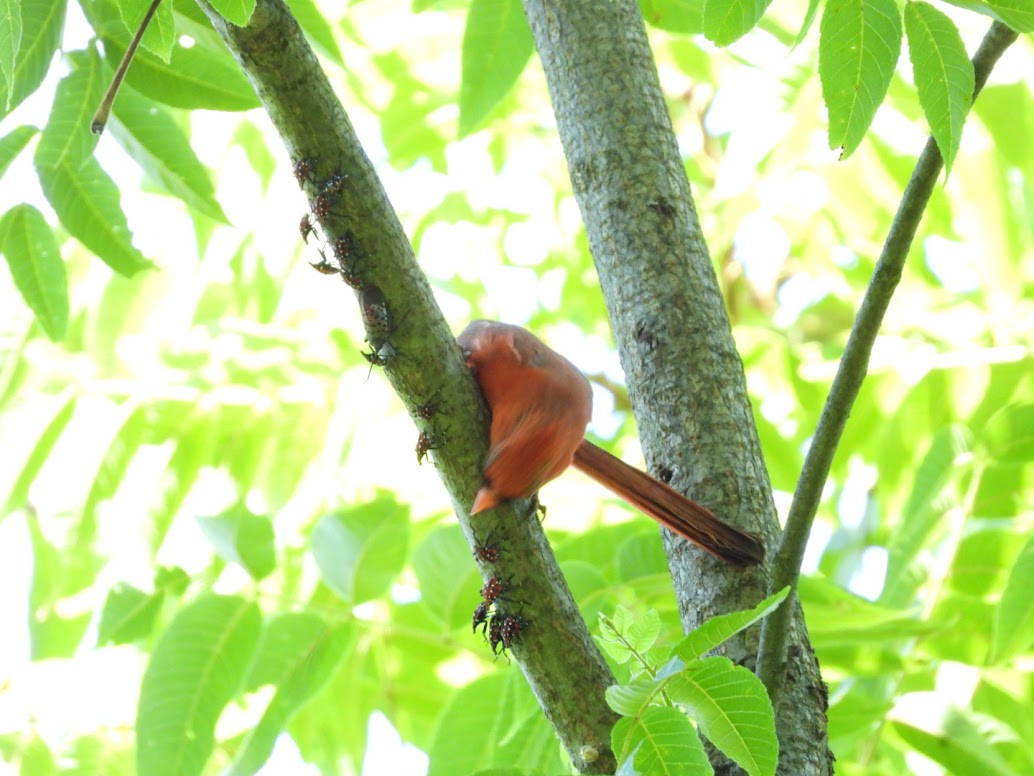
In addition to those planned birds, as I was putting this post together, I realized that I had omitted photos of some Juvenile Northern Flickers that should have been in last week's post, and I added some American Robin photos, although I didn't submit any observations of Robins to iNaturalist during July.
As usual, here's the summary table with the iNaturalist observations that are covered today (not counting the Northern Flicker, which was already posted). Seven species with a total of 14 sightings.
| Common Name | Total Observations | July Observations | First Seen | Observations |
|---|---|---|---|---|
| Gray Catbird | 13 | 4 | 2026-05-01 | 2026-07-02 |
| 2026-07-14 | ||||
| 2026-07-17 | ||||
| 2026-07-22 | ||||
| Mourning Dove | 13 | 3 | 2026-03-21 | 2026-07-03 |
| 2026-07-14 | ||||
| 2026-07-22 | ||||
| Northern Cardinal | 19 | 3 | 2026-03-30 | 2026-07-17 |
| 2026-07-23 | ||||
| 2026-07-23 | ||||
| Barn Swallow | 1 | 1 | 2026-07-22 | 2026-07-22 |
| Chimney Swift | 1 | 1 | 2026-07-22 | 2026-07-22 |
| Northern House Wren | 1 | 1 | 2026-07-01 | 2026-07-01 |
| Northern Mockingbird | 1 | 1 | 2026-07-25 | 2026-07-25 |
(Bonus Pics) Juvenile Northern Flickers
Before I start with today's covered species, let me correct an oversight from the previous post.
I apparently missed these in last week's post, and I didn't submit them to iNaturalist because the photos required editing, but here are a couple of fledgling Northern Flickers that I caught having a little bit of a dust-up.
| July 1 | July 1 |
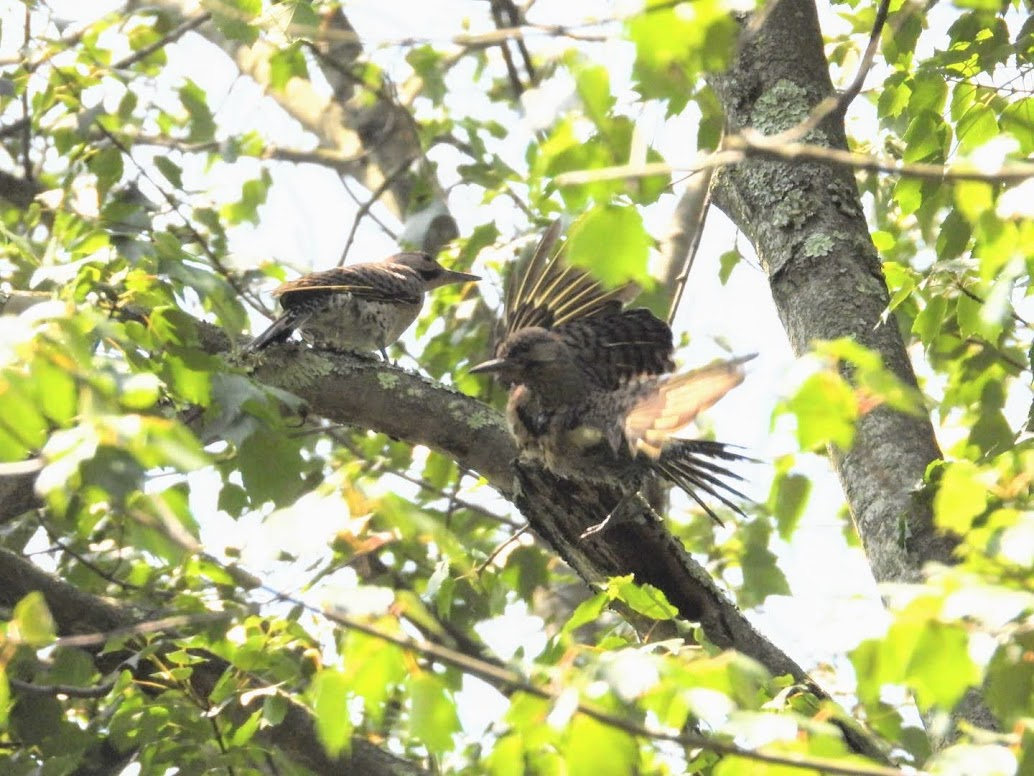 | 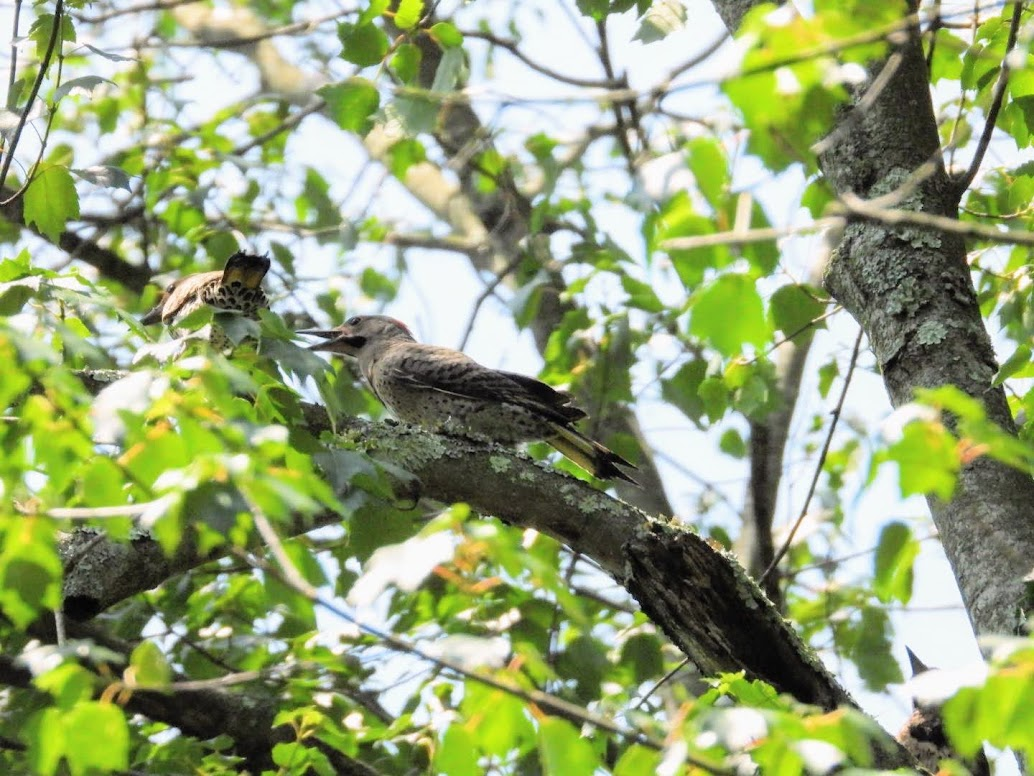 |
| ƒ/5.6, 1/1600, ISO800, 144mm (801mm equiv, 33.4X). Lighting adjusted in Google Photos | ƒ/5.6, 1/1600, ISO800, 144mm (801mm equiv, 33.4X). Lighting adjusted in Google Photos |
Gray Catbird
The Gray Catbird has been one of the staple birds in my yard for the last few months. I know I've mentioned it before, but I still have a hard time understanding how I didn't even know that these birds existed before my first sighting of one on May 1. According to the range map, they're in Pennsylvania throughout the year, so I'm curious if I'll continue seeing them after the summer ends. They go as far north as southern Canada during the breeding season, and they spend the winters as far away as the northern tip of South America.
These photos are all fairly typical, with views from multiple angles, except for the July 22 photo where I managed to get one at the moment that it launched into flight. I'm pretty sure that I know the general area where these birds were nesting, since I frequently saw them in the same location. I never managed to see the actual nest, though. If I'm right, it's hidden deep in the leaves and branches.
According to Brave Leo.
Gray catbirds typically nest near the ground, usually placing their bulky cup nests 3 to 10 feet above the ground in dense shrubs, thickets, or vine tangles.
This is a perfect description of the location where I'm guessing these birds were nesting. Leo goes on to add that their prime nesting season runs from May through July, and the extended nesting season can last from April through August, so I'm curious to see whether they continue to appear in my yard as August passes into September.
So far, I've continued to see and hear them during August, but I'd guess that maybe it's becoming a bit less frequent.
| July 2 | July 17 |
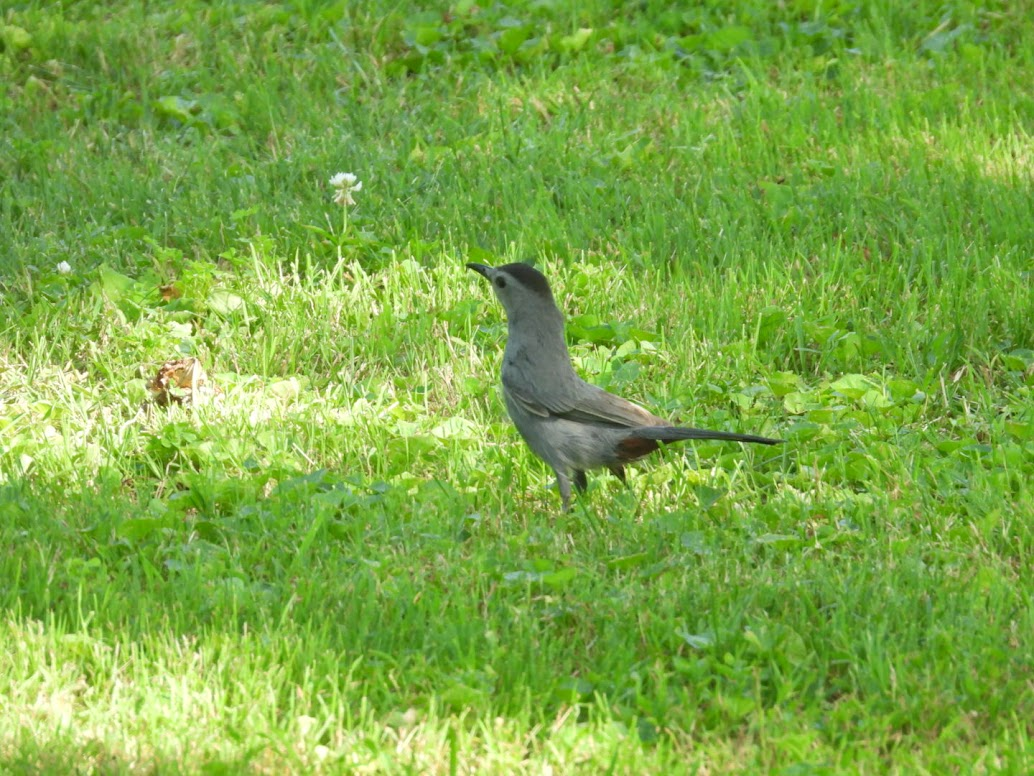 | 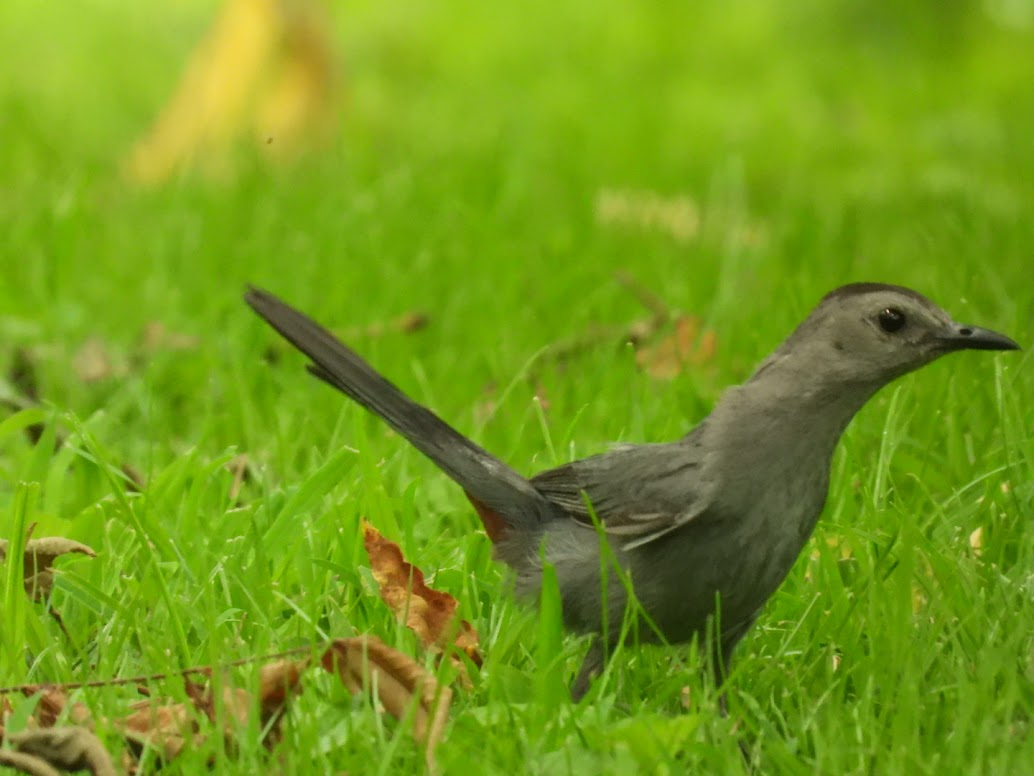 |
| ƒ/5.6, 1/125, ISO560, 216mm (1202mm equiv, 50.1X) | ƒ/8, 1/500, ISO1600, 503mm (2800mm equiv, 116.7X) |
| July 17 | July 17 |
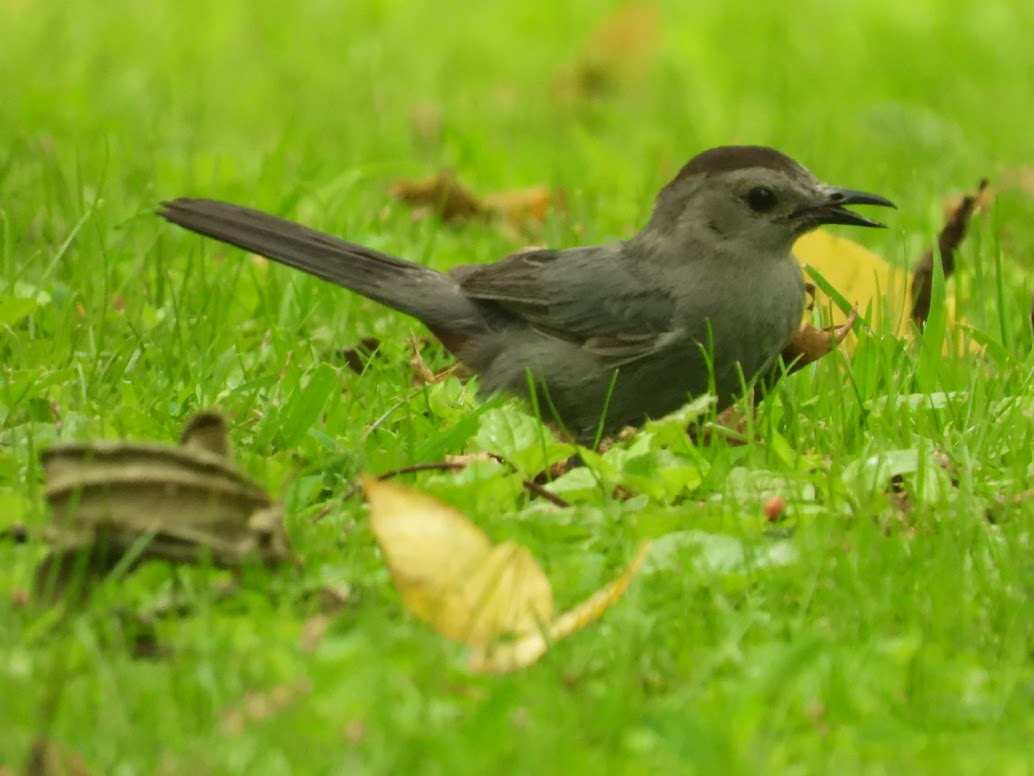 | 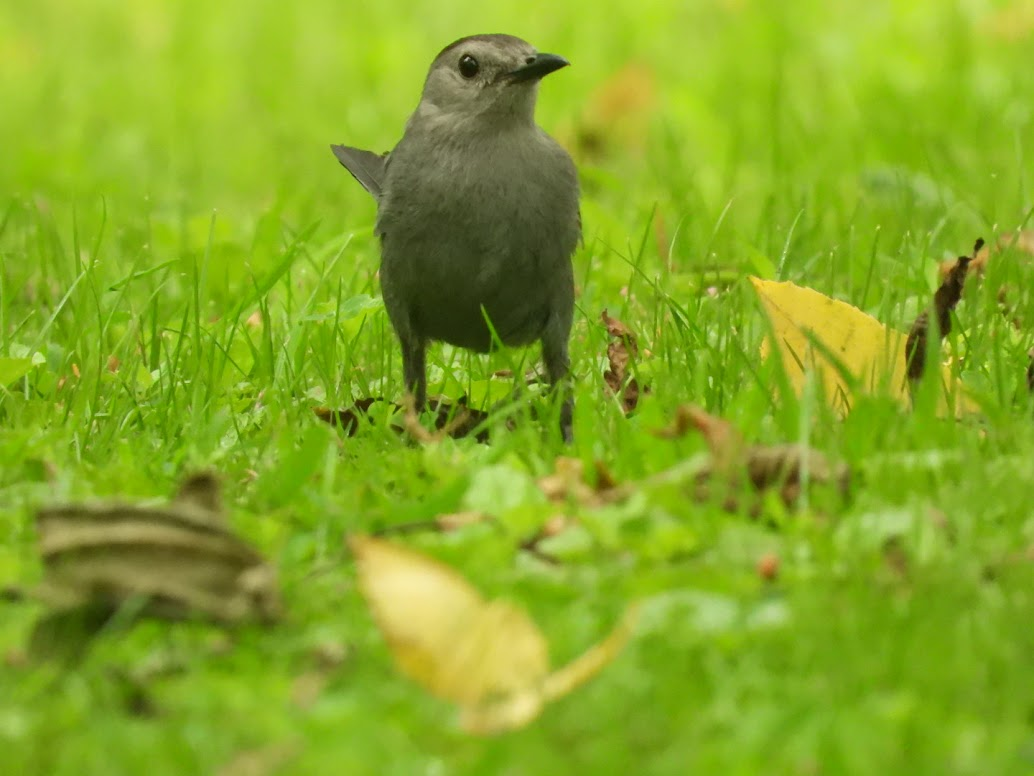 |
| ƒ/8, 1/500, ISO1600, 539mm (3000mm equiv, 125.0X) | ƒ/8, 1/500, ISO1600, 539mm (3000mm equiv, 125.0X) |
| July 17 | July 22 |
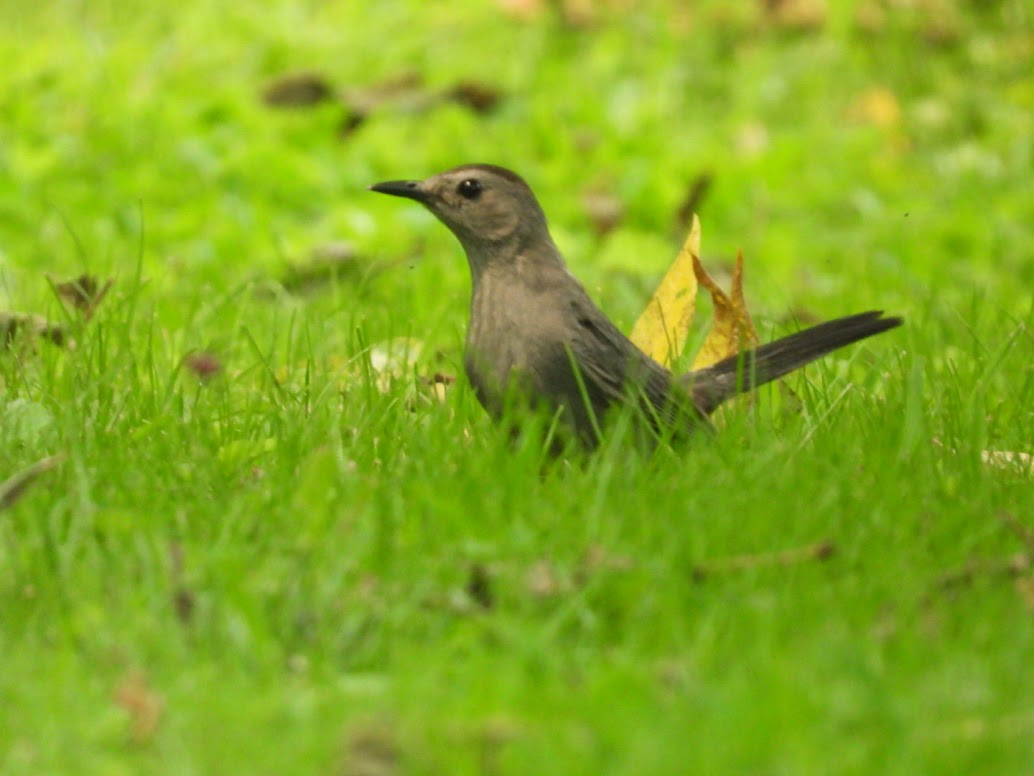 | 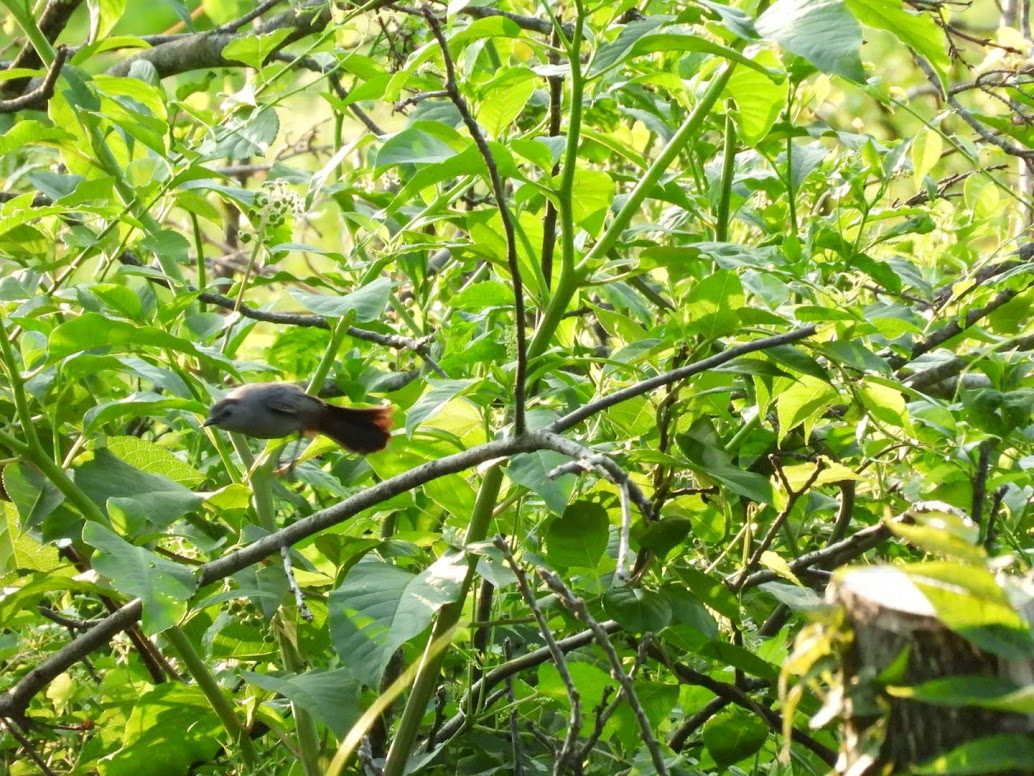 |
| ƒ/7.1, 1/500, ISO1100, 432mm (2404mm equiv, 100.2X) | ƒ/6.3, 1/400, ISO1600, 359mm (1998mm equiv, 83.3X) |
| July 24 | July 27 |
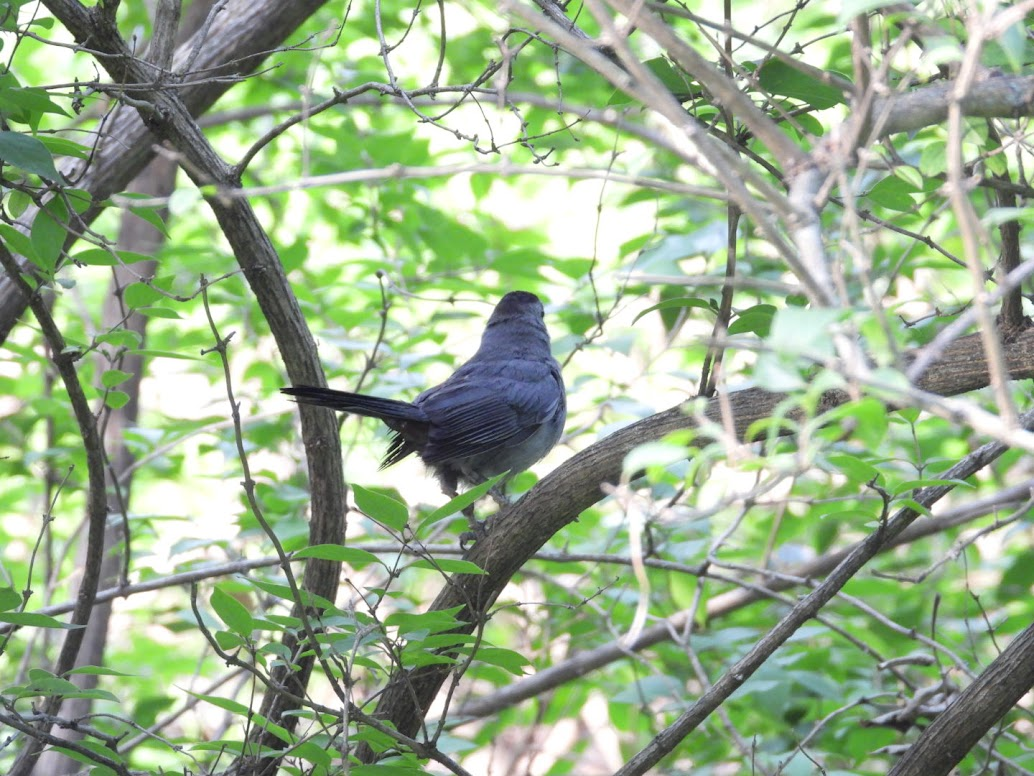 | 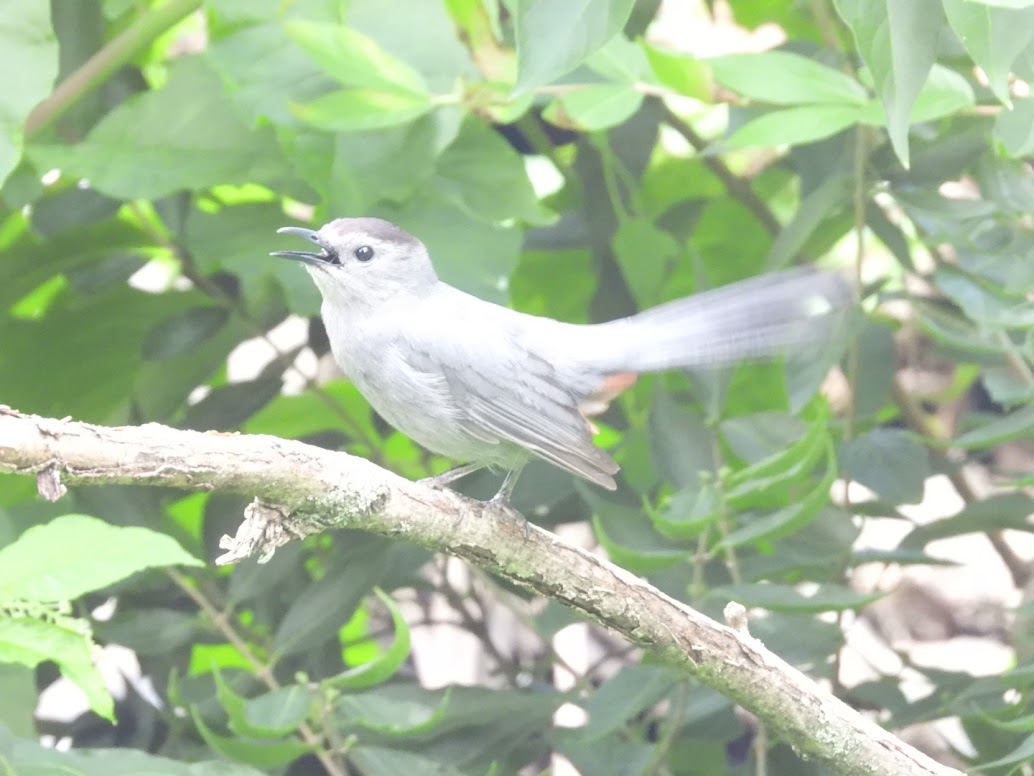 |
| ƒ/5, 1/60, ISO800, 89.9mm (500mm equiv, 20.8X) | ƒ/5.6, 1/30, ISO1600, 234mm (1302mm equiv, 54.3X) |
Mourning Dove
It's funny, because the Mourning Dove actually has a somewhat interesting and unique look, when I manage to get a good photo. Good photos are hard to get, though, because they often tend to only come out when lighting conditions are sub-optimal. From the map, it appears that these birds live year round in most of the continental United States, venture into Mexico and Central America during winters, and Canada during the summers.
Even though they can have an interesting appearance, they're boring. For the most part, they do nothing. They appear out of nowhere. Sit perched on a wire or high in a tree for a good long while, and then they disappear again. That's it. Low energy and usually low-quality photographs.
To be fair, I did get a shot of one in the lawn a couple months back, and I've been close to getting decent shots of them in flight a couple times. For some reason, though, they just don't seem to have the same charisma-level as some of the other birds.
I believe I mentioned before that hunters take about 20 million of these birds per year, and they maintain their population around 350 million, so I guess they must be doing something right.
These four photos actually turned out ok. As you might guess from the raised wing, the photo on July 20 is one of the ones where I missed an "in flight" shot by just a few seconds.
| July 14 | July 15 |
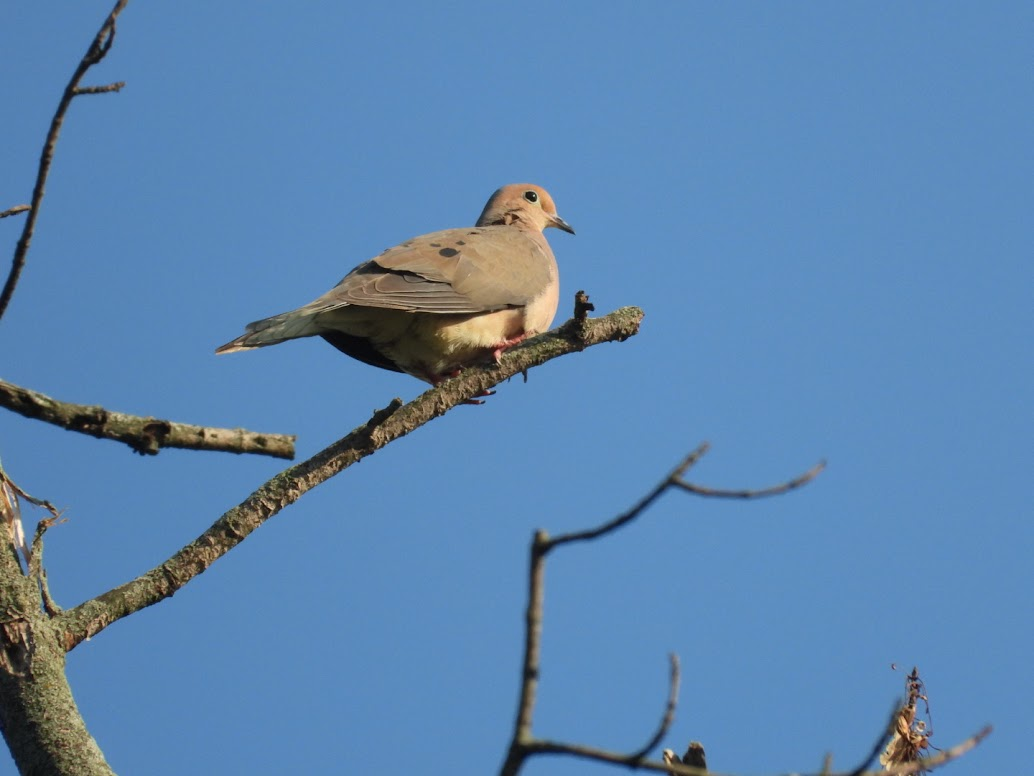 | 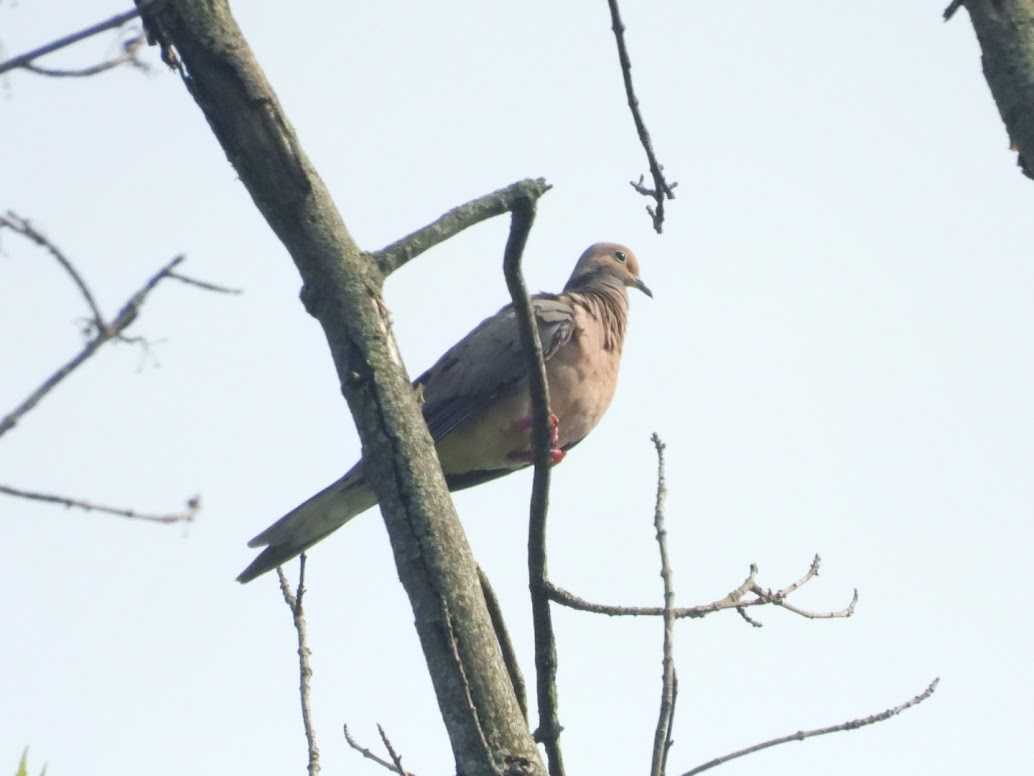 |
| ƒ/8, 1/500, ISO320, 539mm (3000mm equiv, 125.0X) | ƒ/8, 1/2500, ISO1600, 503mm (2800mm equiv, 116.7X) |
| July 20 | July 22 |
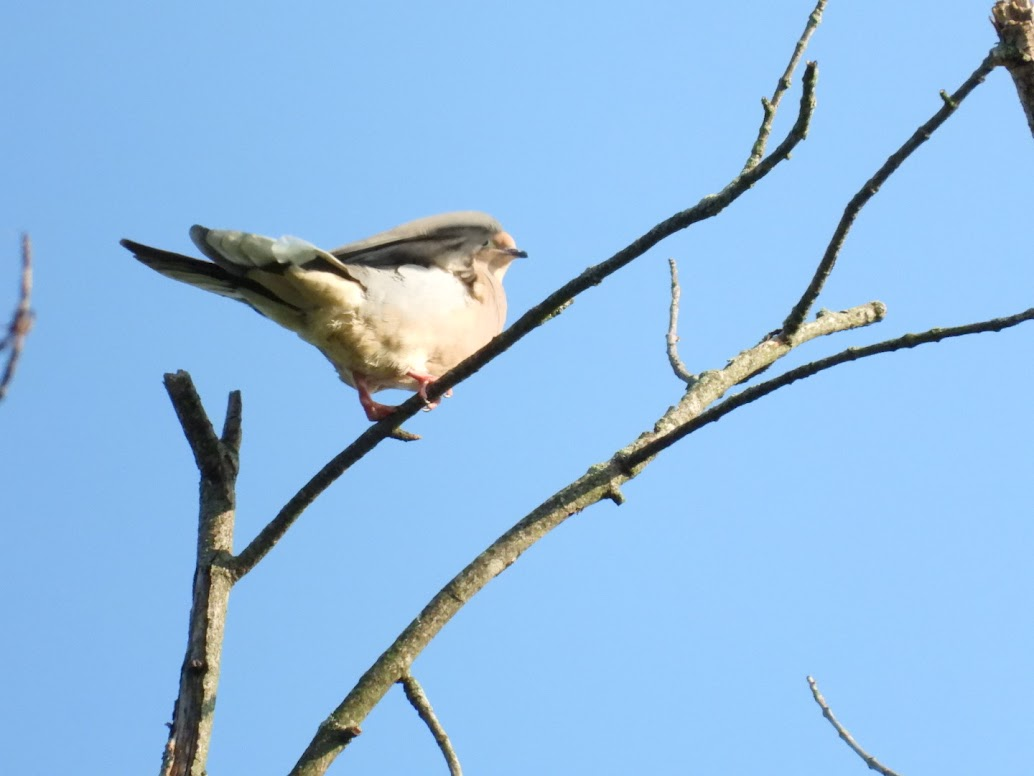 | 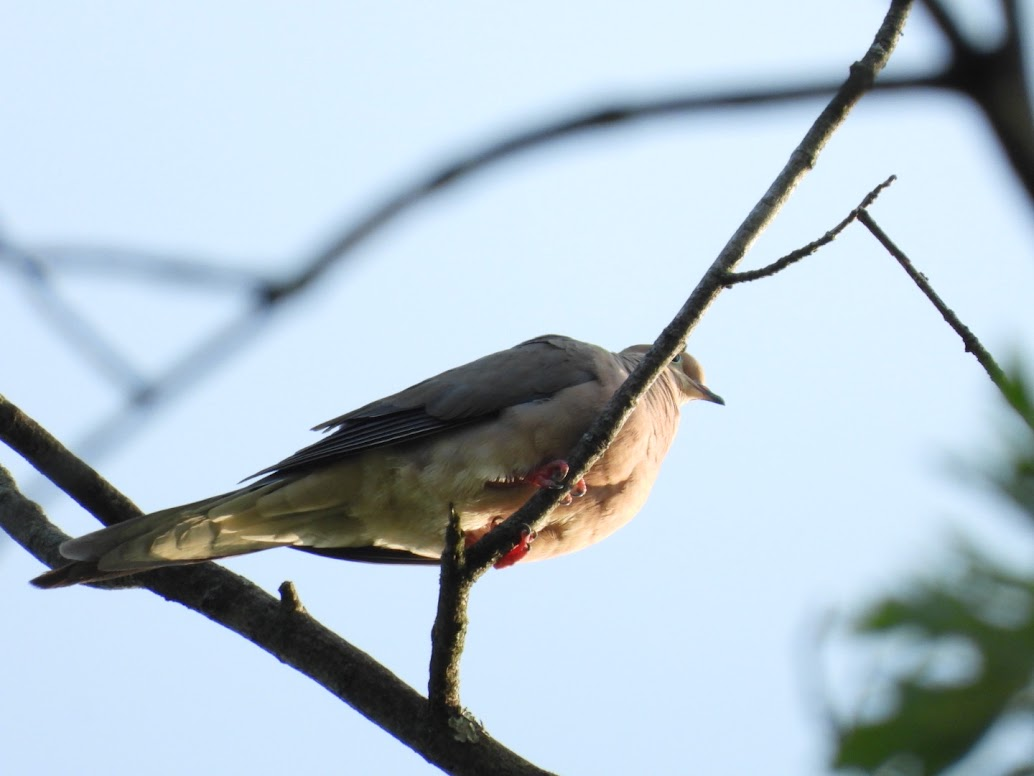 |
| ƒ/8, 1/1250, ISO1600, 539mm (3000mm equiv, 125.0X) | ƒ/8, 1/250, ISO450, 539mm (3000mm equiv, 125.0X) |
Northern Cardinal
As mentioned in an earlier post, the Northern Cardinal gave me my first clue that the Spotted Lanternfly now has predators in Pennsylvania. And it was the July 23 photos where I observed this. The Lanternfly is an invasive species that arrived in Pennsylvania from China sometime around 2012. Having no natural predators, it spread quickly in large parts of the state and was quickly recognized as a threat to Pennsylvania's large agriculture economy.
As a result, 60 of Pennsylvania's 67 counties now have active quarantines requiring permits for transporting goods through the county.
Until I saw the male Cardinal in the July 23 photo eating the Lanternflies, I was still under the impression that these insects had no predators here. After seeing the Cardinal eating the Lanternflies, however, I learned that a number of the state's predators will now eat Lanternflies. These include birds, insects, frogs, and even small mammals.
I also learned today that there's a page on Facebook Birds Biting Bad Bugs where they were posting photos of birds eating Lanternflies. It looks like that page has gone dormant, though.
| July 17 / Male | July 23 / Female |
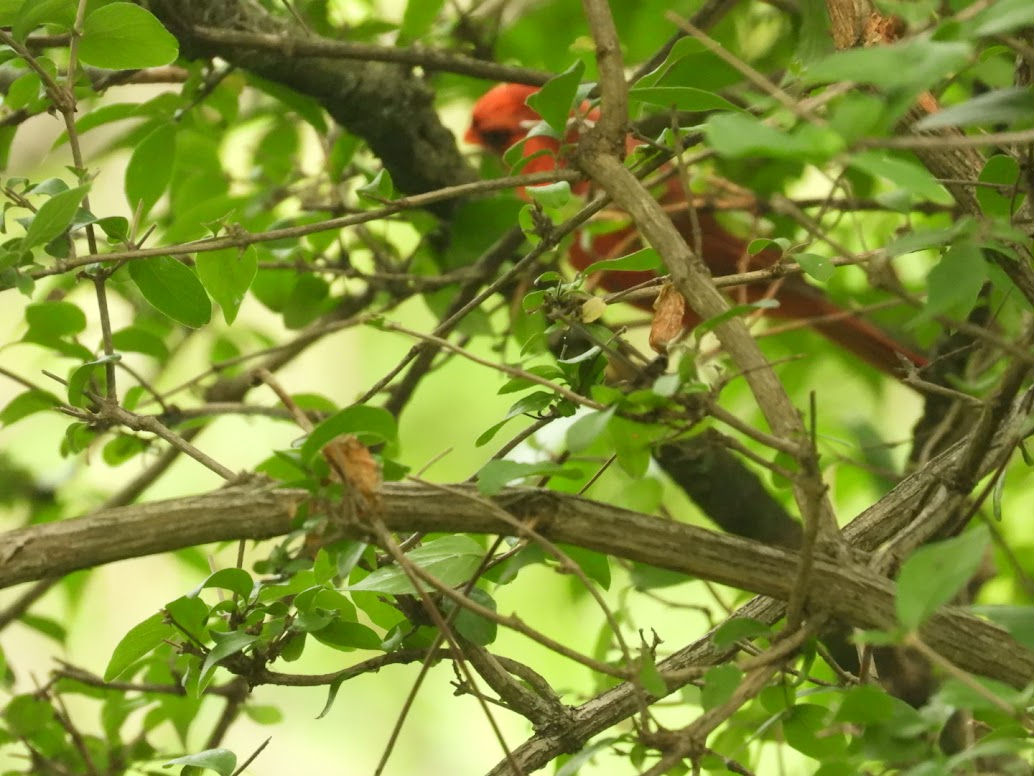 | 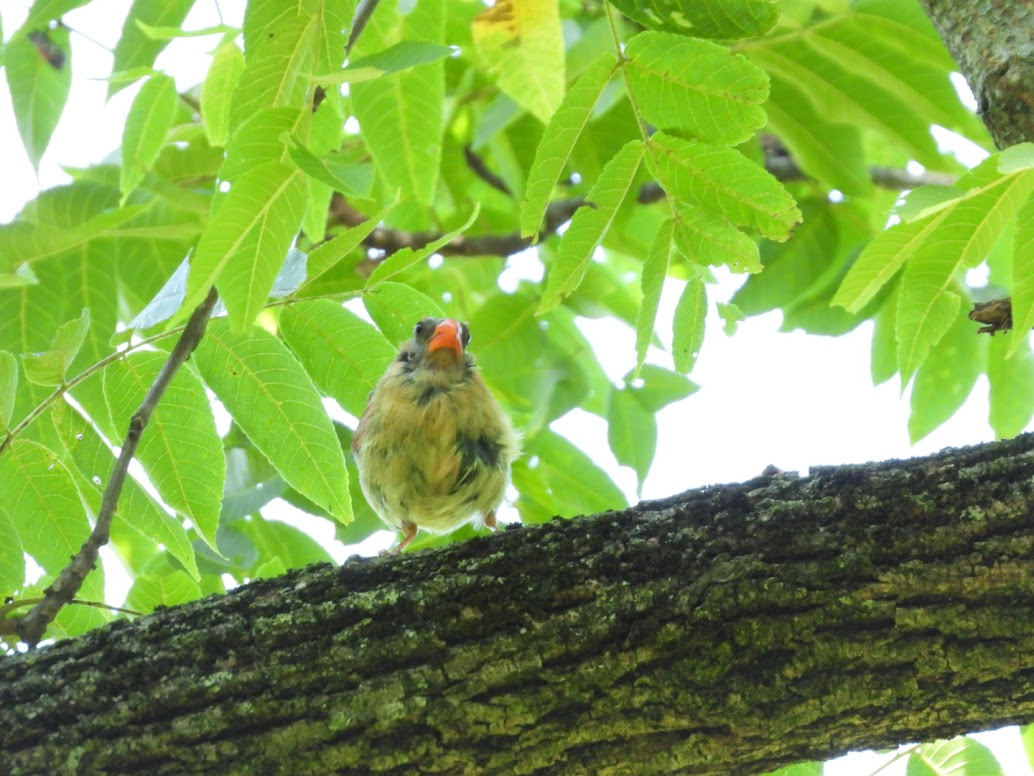 |
| ƒ/6.3, 1/500, ISO1600, 306mm (1703mm equiv, 71.0X) | ƒ/5.6, 1/100, ISO800, 270mm (1503mm equiv, 62.6X) |
| July 23 / Female | July 23 / Male |
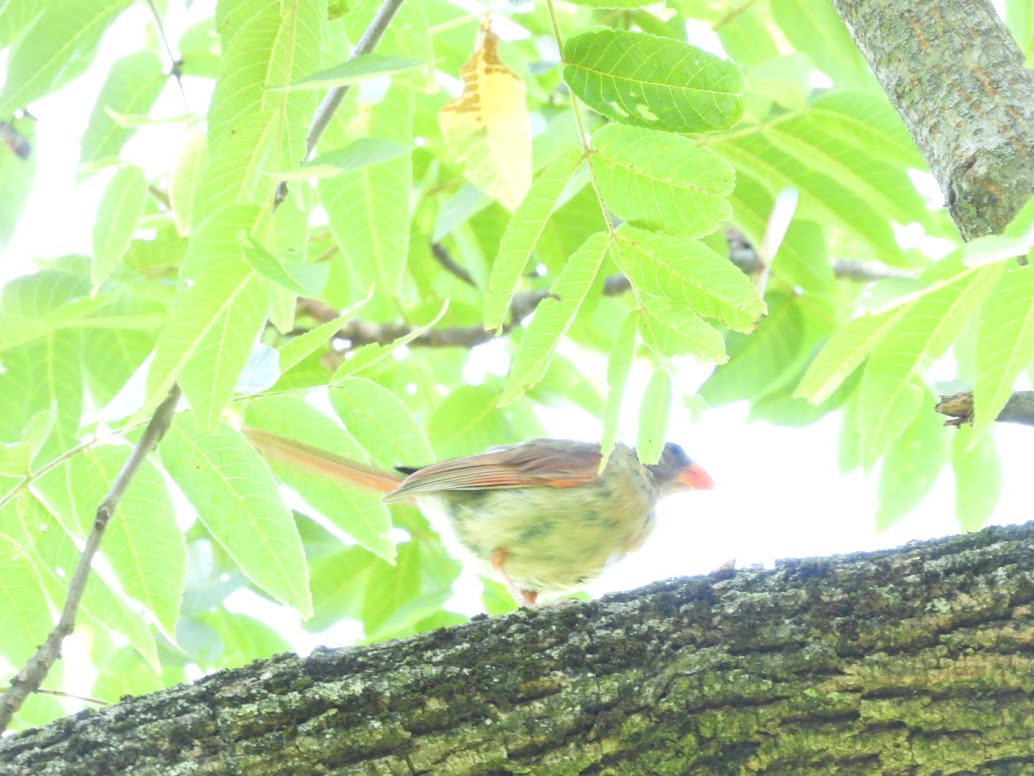 | |
| ƒ/5.6, 1/40, ISO800, 270mm (1503mm equiv, 62.6X) | ƒ/6.3, 1/100, ISO800, 288mm (1603mm equiv, 66.8X) |
| July 23 / Male | July 23 / Male |
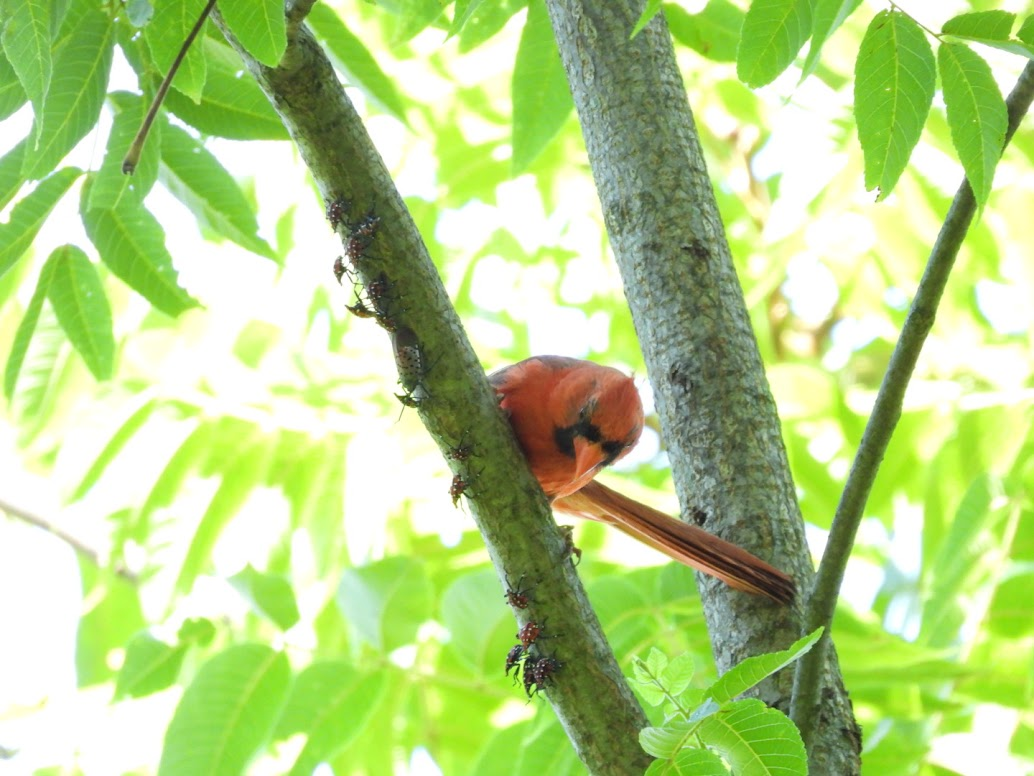 | 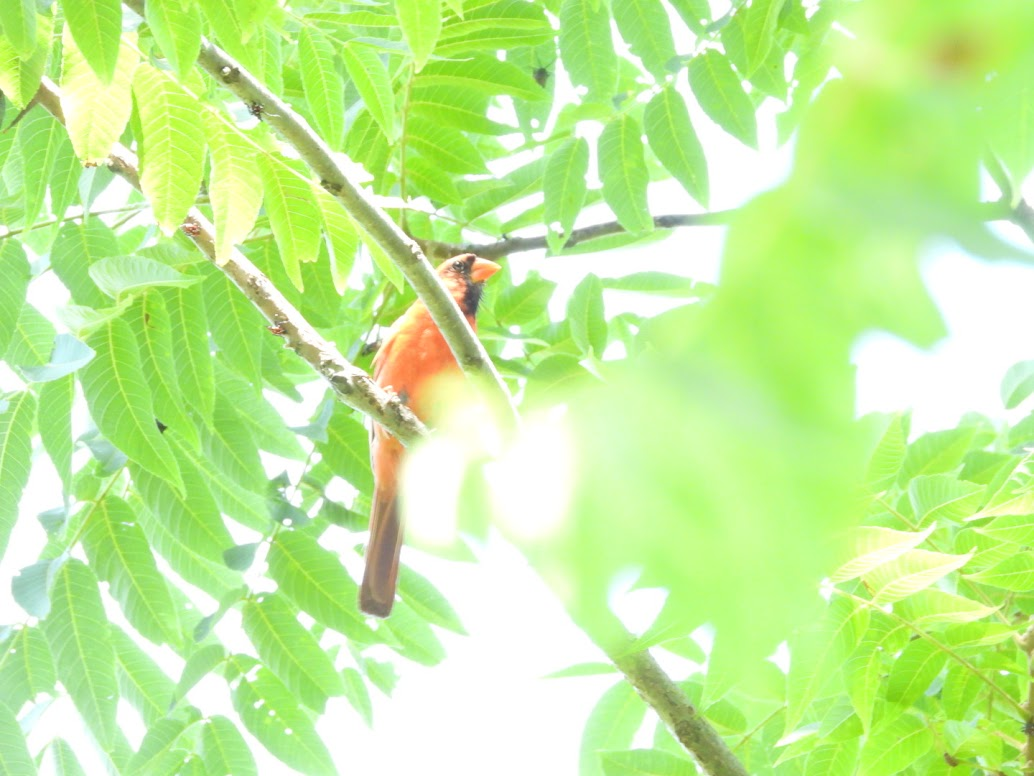 |
| ƒ/6.3, 1/100, ISO800, 288mm (1603mm equiv, 66.8X) | ƒ/5.6, 1/60, ISO800, 167mm (929mm equiv, 38.7X) |
| July 23 / Male | July 23 / Male |
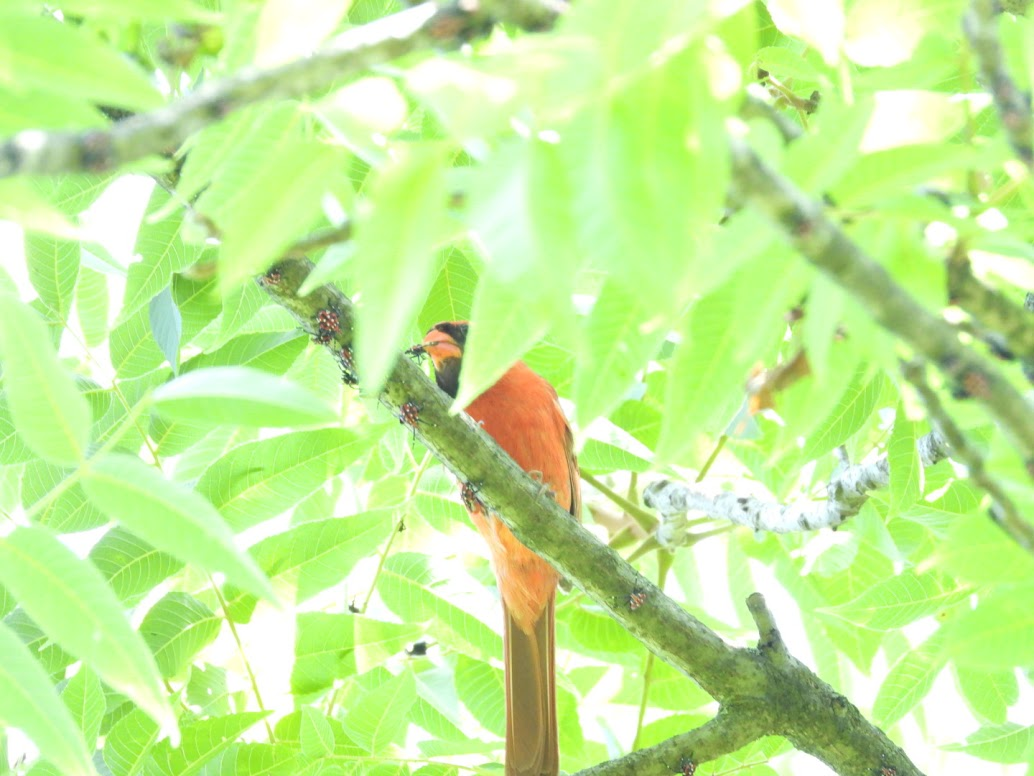 | 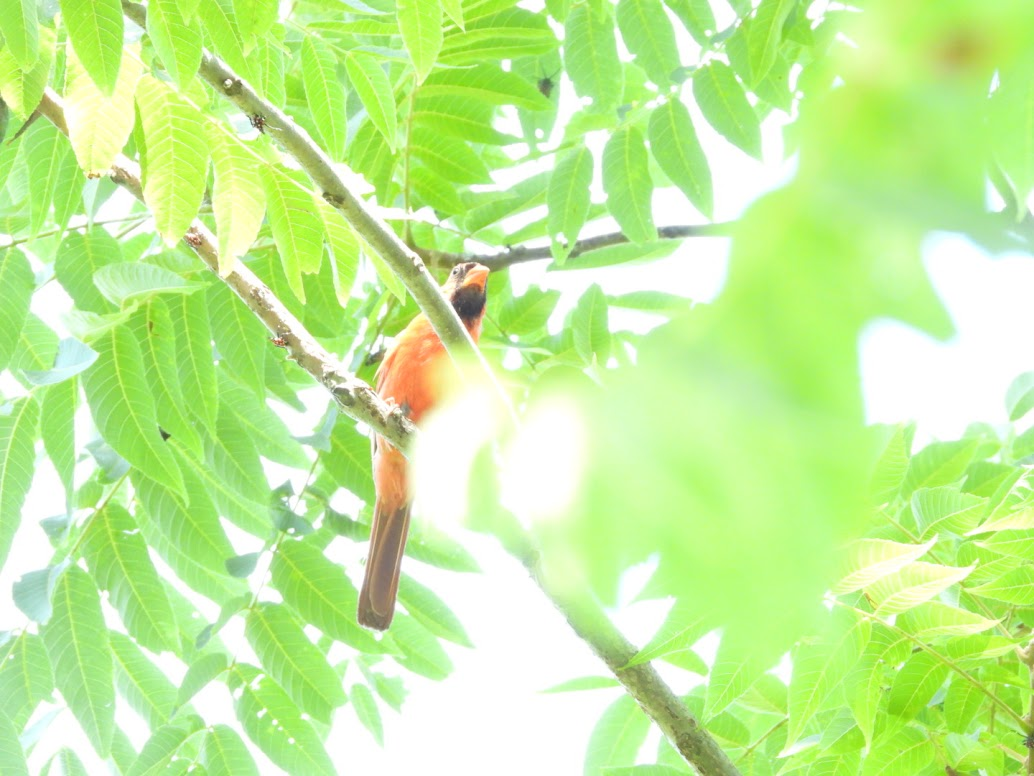 |
| ƒ/5.6, 1/50, ISO800, 216mm (1202mm equiv, 50.1X) | ƒ/5.6, 1/60, ISO800, 167mm (929mm equiv, 38.7X) |
(More Bonus Pics) American Robin
I almost forgot about these birds, because I didn't submit any American Robin pictures to iNaturalist at all during July. This was because the birds were so common (until they largely disappeared in August). I did take quite a few photos, though, so here is a small selection.
The July 23 photo is the first time I actually experimented with digital zoom on this camera. Before that, I thought it would degrade the quality too much. After doubling the camera's 539mm focal length (3000mm equiv), I was pleasantly surprised by the result. There's a little bit of smoothing, but it's not terrible. So, yes, the bird was pretty far away.
| July 1 | July 3 |
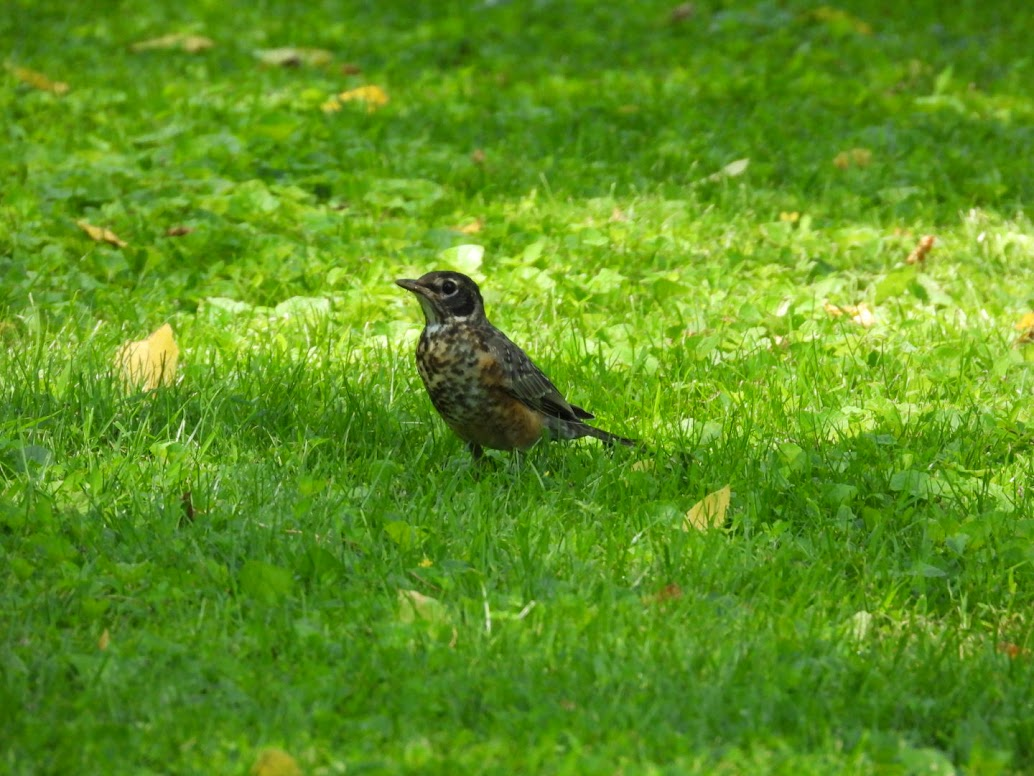 | 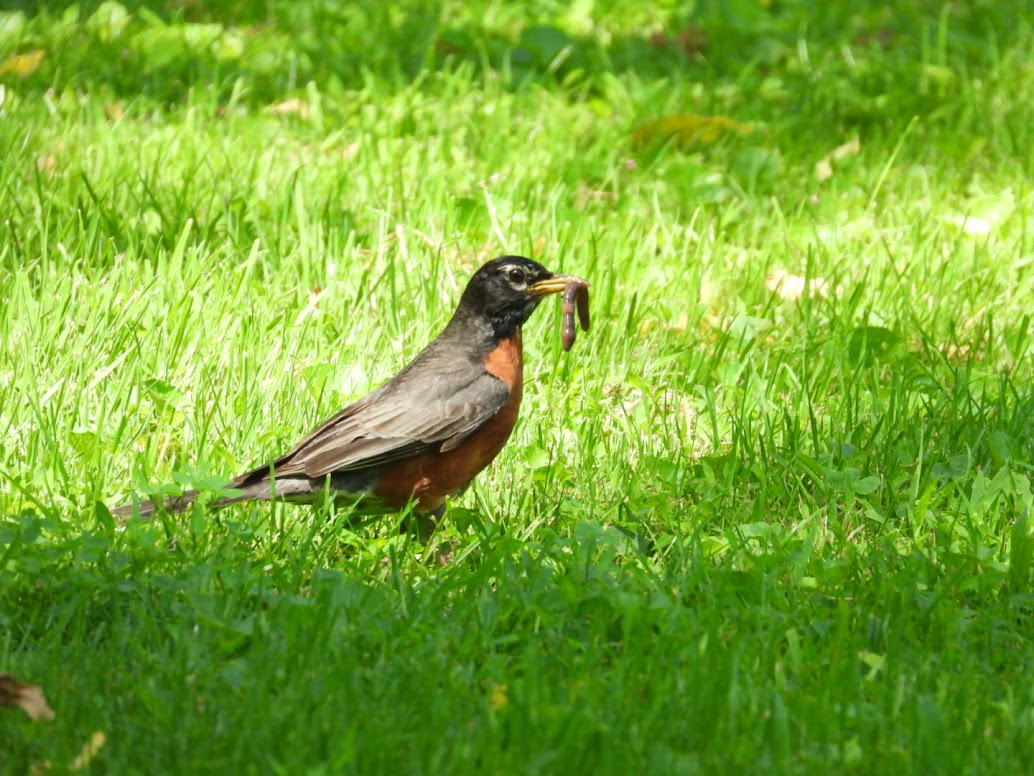 |
| ƒ/5.6, 1/500, ISO800, 198mm (1102mm equiv, 45.9X) | ƒ/5.6, 1/320, ISO400, 252mm (1403mm equiv, 58.4X) |
| July 10 | July 23 |
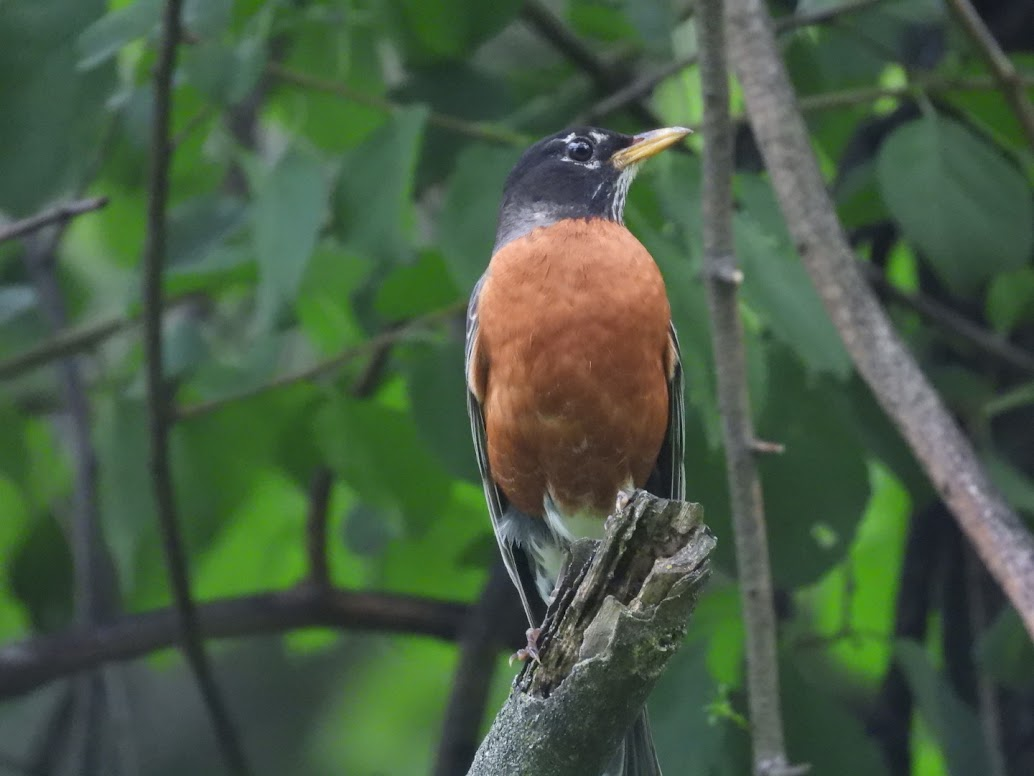 | 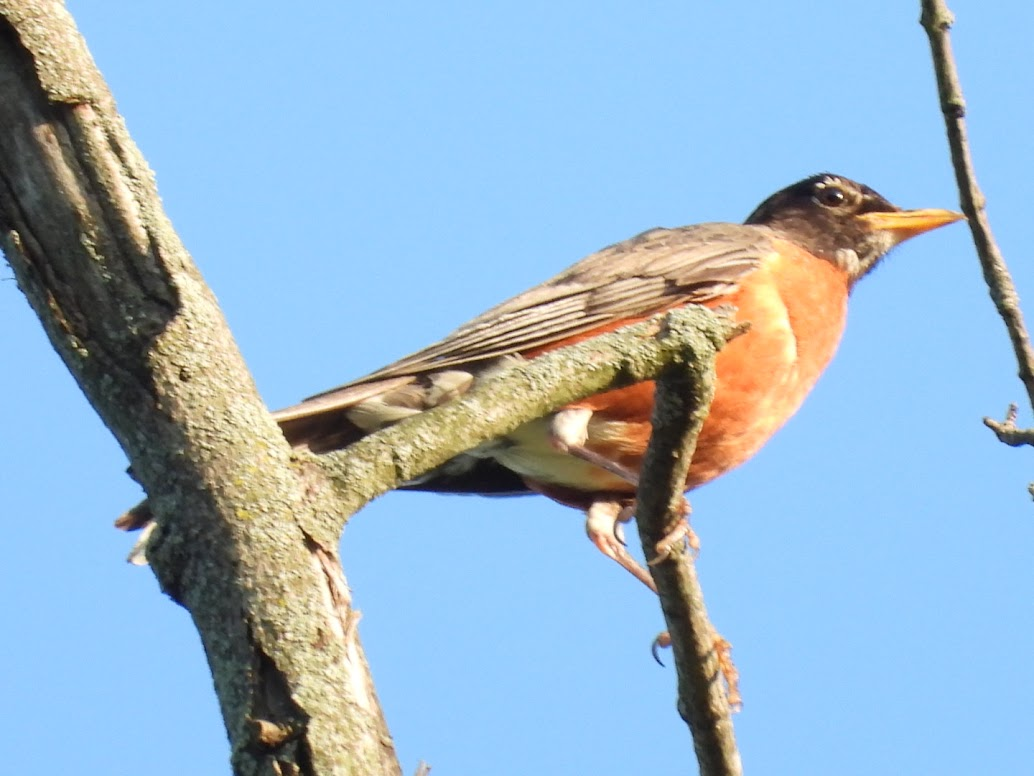 |
| ƒ/6.3, 1/500, ISO1600, 324mm (1803mm equiv, 75.1X) | ƒ/8, 1/160, ISO400, 539mm (3000mm equiv, 125.0X optical) + 2X digital zoom (1,078mm total, ~6000mm equiv) |
| July 23 | July 28 |
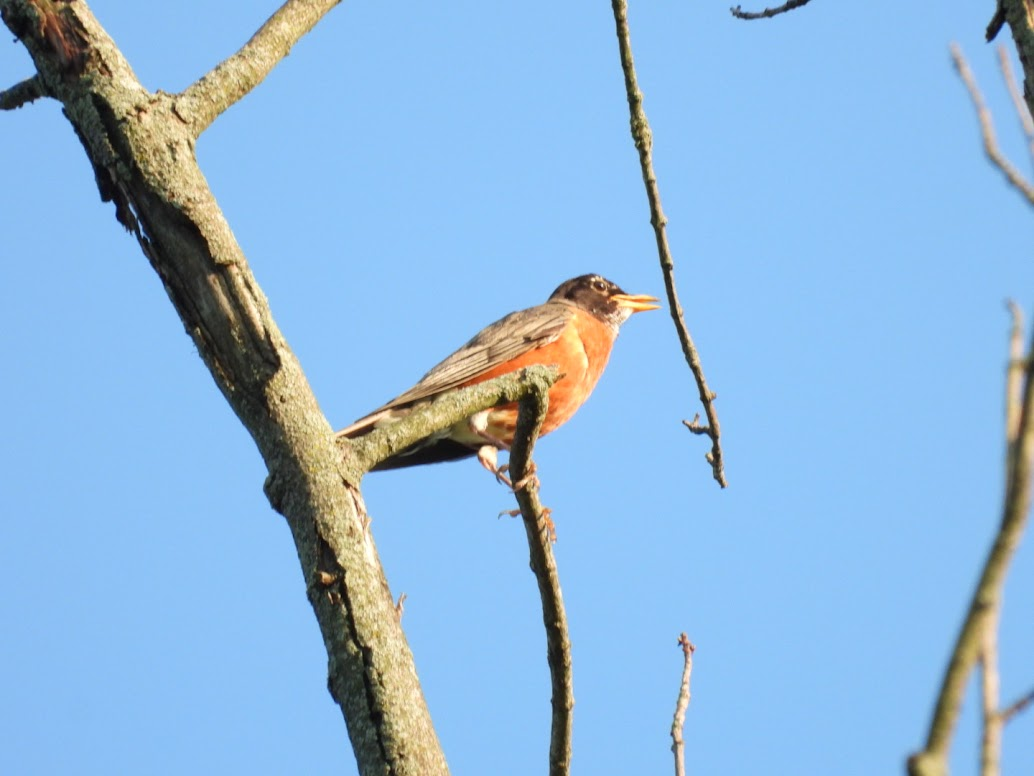 | 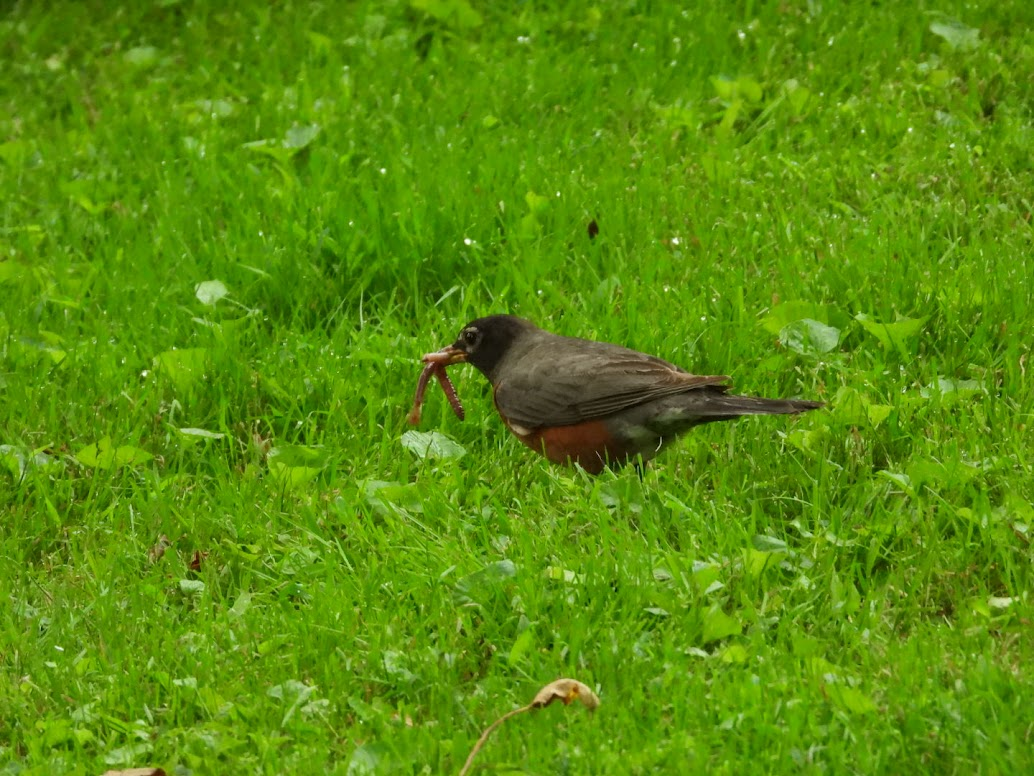 |
| ƒ/8, 1/160, ISO400, 539mm (3000mm equiv, 125.0X). Same bird & distance, optical zoom only | ƒ/5.6, 1/320, ISO1600, 144mm (801mm equiv, 33.4X) |
First Encounters
Although July was a slow month overall, I did have some surprises from four new species: On July 1, the Northern House Wren showed up for its first and only sighting in my personal history, then closer to the end of July, I had first sightings of Chimney Swifts, Barn Swallows, and Northern Mockingbirds. I'm pretty sure I've seen all three of those species again in August, although they're usually in flight, so I may not have any other photographs.
Unfortunately, the photos of Barn Swallows and Chimney Swifts are difficult to make out, but the birds, at least, are recognizable.
Barn Swallow
The Barn Swallow is easily recognized in flight by the deeply forked tail. I think this is the first species I've encountered that ranges across the entire globe, spending its summers in the northern hemisphere and winters in the southern hemisphere.
The range map is interesting, because it doesn't really show a migratory range or any year-round presence, but the north and south seem almost entirely disconnected. There's a belt of land around the equator that is almost entirely excluded from the range. I'm not sure exactly how that works out. Aside from the equatorial region, these birds are also not found in northern Canada, Alaska, northern Russia, or most of Australia.
As far as conservation status, the Barn Swallow is "the most abundant and widely distributed swallow species in the world." The Barn Swallow originally nested in caves, but now they build, almost exclusively, in human structures.
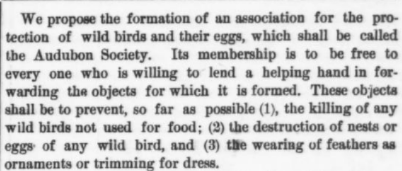
Historically, it was the hat-making industry's impact on Barn Swallows that prompted a widely referenced 1886 Forest & Stream editorial by George Grinnell. It was titled The Audubon Society and led to the formation of the first chapter of The Audubon Society.
Here are the few historic sentences that were partially inspired by Barn Swallows and led to the formation of a ~140-year American institution:
We propose the formation of an association for the protection of wild birds and their eggs, which shall be called the Audubon Society. Its membership is to be free to everyone who is willing to lend a helping hand in forwarding the objects for which it is formed. These objects shall be to prevent, so far as possible (1), the killing of any wild birds not used for food; (2) the destruction of nests or eggs of any wild bird, and (3) the wearing of feathers as ornaments or trimming for dress.
(Rant: It's ridiculous that this 1886 article hasn't been reprinted on a public web site in a format that's convenient for reading. Someone should transcribe it and post it on Steem. Just finding that PDF link took ~30 minutes.)
| July 22 | |
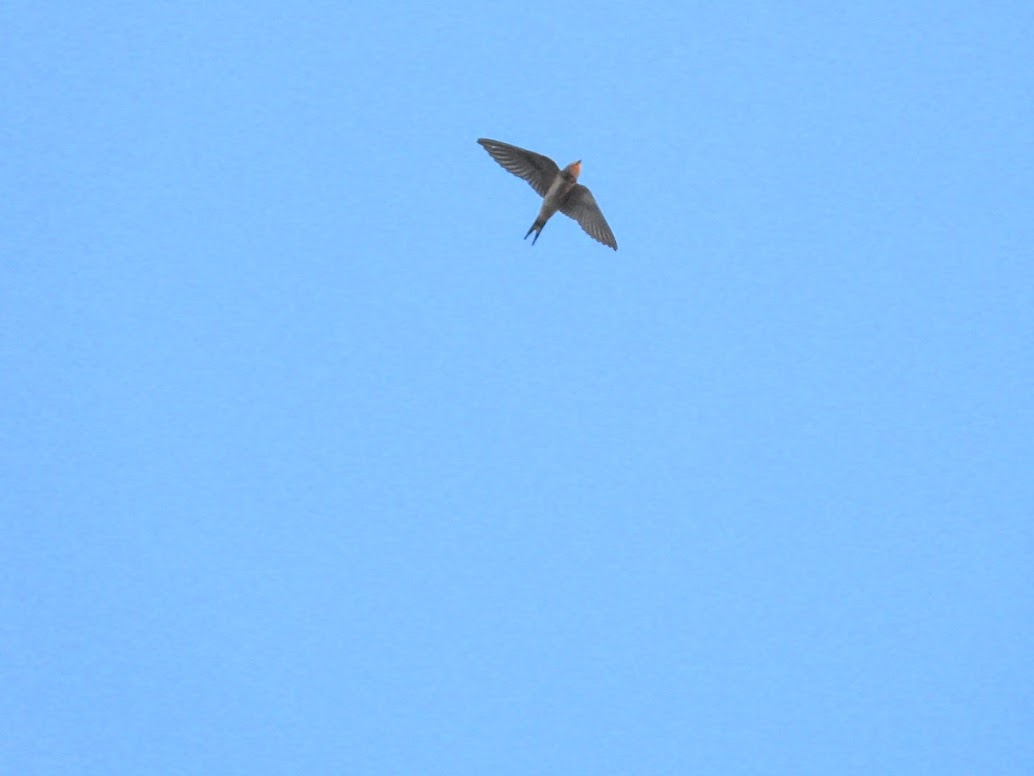 | |
| ƒ/5.6, 1/1250, ISO800, 216mm (1202mm equiv, 50.1X). Lighting adjusted in Google Photos | |
Chimney Swift
Like the Barn Swallow, the Chimney Swift also nests in human buildings. Unlike the Barn Swallow, however, the species is listed in vulnerable status.
My understanding of the reason for this, based on conversations with the AIs on the night I spotted the Chimney Swift is that the Chimney Swift population has been in massive decline since the 1960s as a result of changes to human architectural tendencies. Namely, new homes don't have accessible chimneys any more.
The American forests were largely degraded during the 1800s and early 1900s, which meant that the Chimney Swift could no longer nest in the hollowed out old trees that it needed. The swifts continued to thrive, though, because they were perfectly happy nesting in the chimneys of human homes, instead. As a result of recent architectural trends, however, the population has declined by more than half since the 1960s. Most of the decline was seen in cities, with rural populations remaining stable. The good news, however, is that there are now initiatives to provide them with artificial nesting chimneys, and the population decline is now being reversed.
During the latter part of the 20th century, the American forests started their own recovery, but it will take some time before there are large numbers of trees that are old enough to serve as natural nests for these birds.
These birds are harder to recognize, but the AI told me to look for a cigar shaped body with long narrow wings and almost no tail.
| July 22 | July 22 |
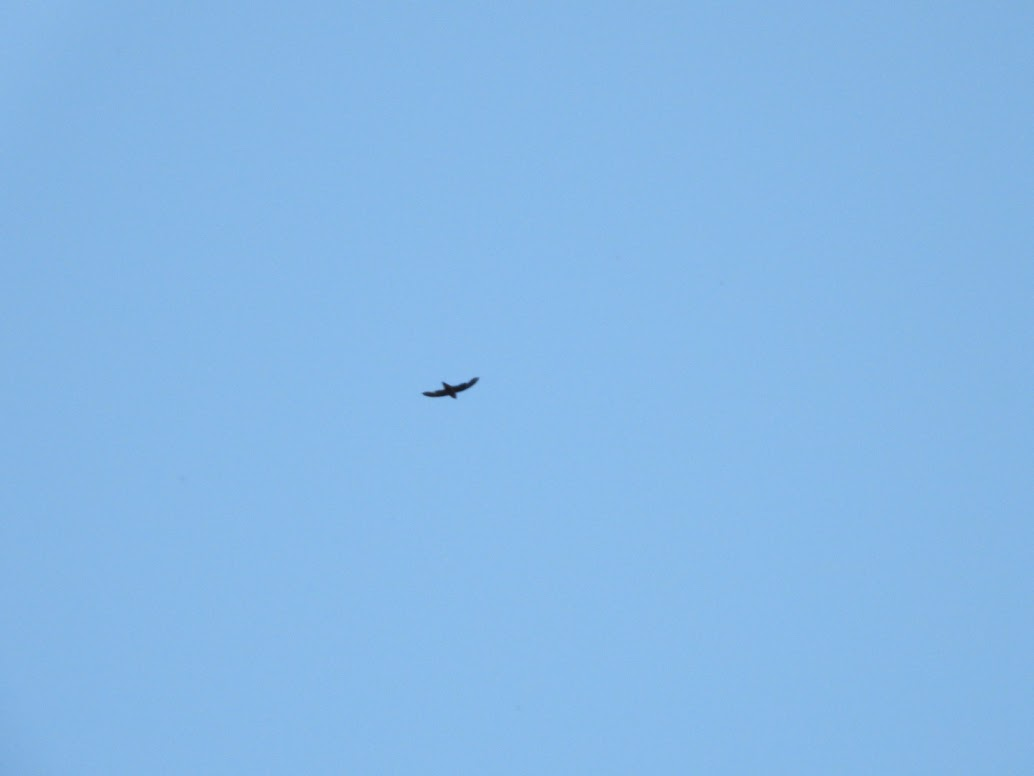 | 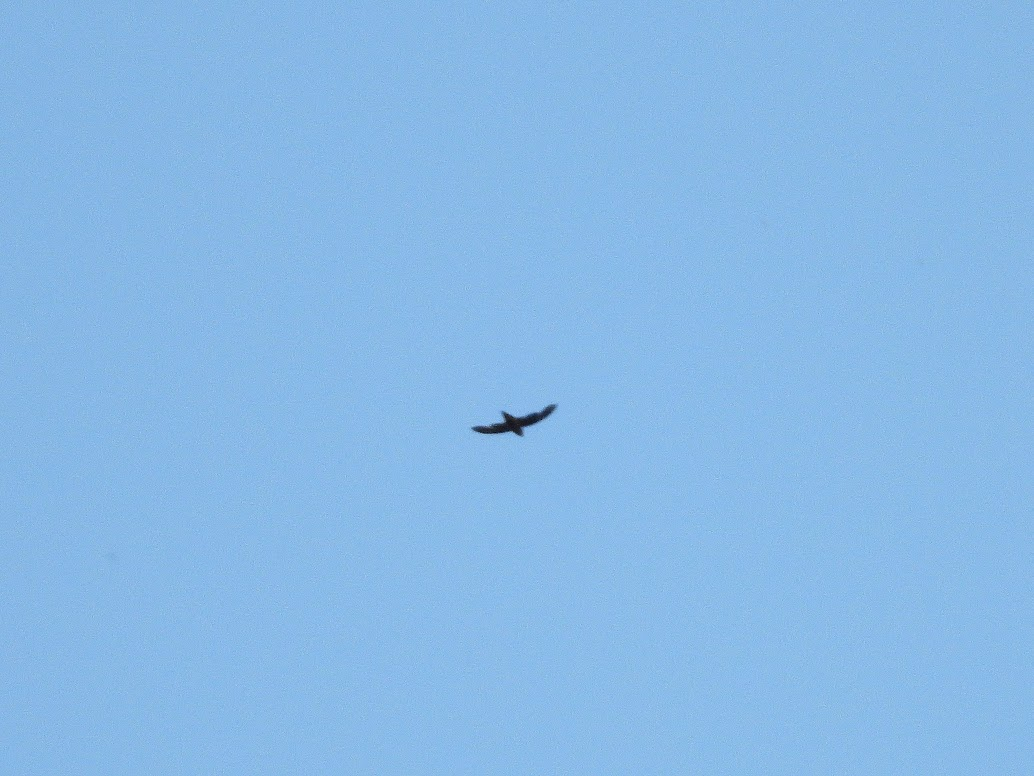 |
| ƒ/5, 1/1250, ISO800, 89.9mm (500mm equiv, 20.8X) | ƒ/5, 1/1250, ISO800, 89.9mm (500mm equiv, 20.8X). Same Bird - Cropped in LibreOffice |
Northern House Wren
The Northern House Wren ranges throughout the United States, Mexico, and parts of Canada. It is listed as "least concern" conservation status. These birds typically change mating partners for every new breeding season, and each summer the male will build multiple nests at the same time in hopes of attracting a mate. For nesting, they often use old woodpecker holes or else nest boxes that were provided by humans. Apparently, they'll use almost anything with a crevice including drain pipes, shoes, and empty cans. And they are aggressive in the acquisition of nests. They only weigh as much as 2 quarters, but they are known to take over nests from other species and kill the nestlings.
In addition to nesting adaptability and aggression, these birds are also known for their wide repertoire of songs. During mating season, the male will sing up to 600 songs per hour.
The photos here are distant shots, and the lighting was difficult, but at least they're improvements over the previous two birds.
| July 1 | July 1 |
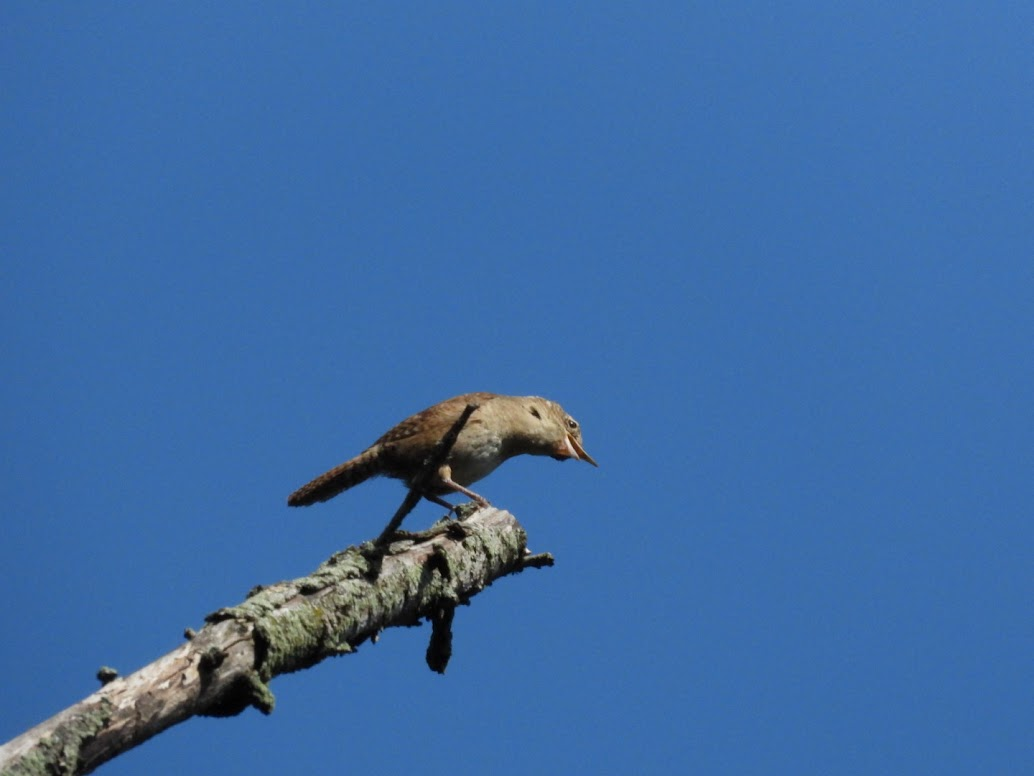 | 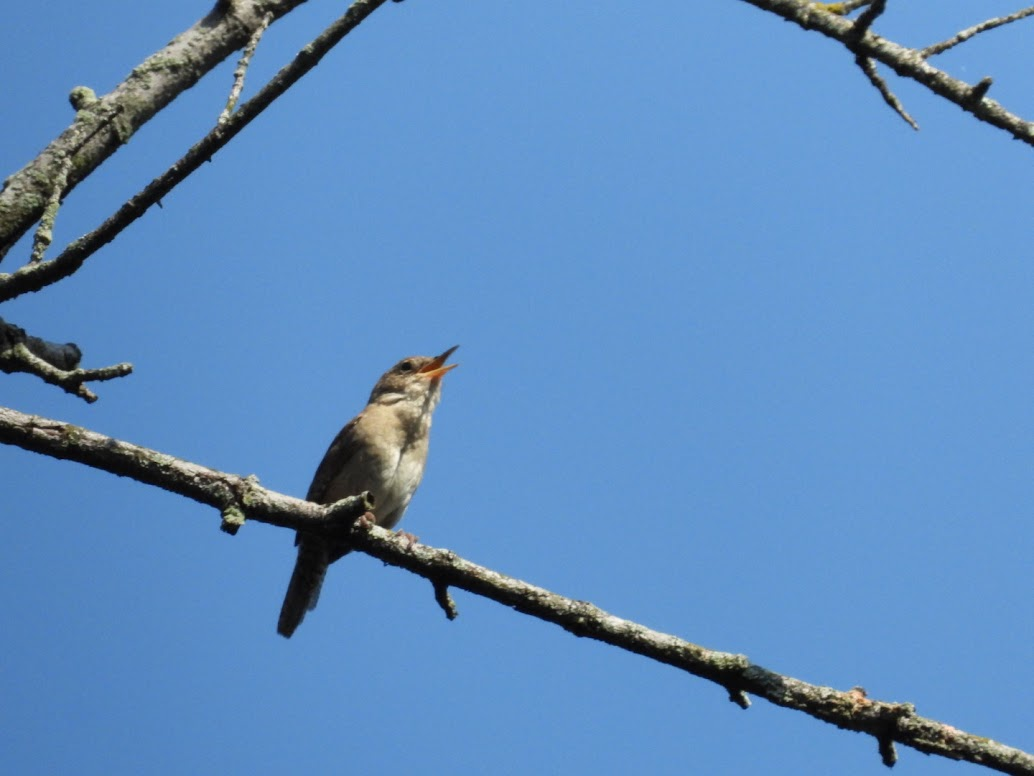 |
| ƒ/8, 1/2500, ISO800, 395mm (2199mm equiv, 91.6X) | ƒ/7.1, 1/2000, ISO800, 395mm (2199mm equiv, 91.6X) |
| July 1 | July 1 |
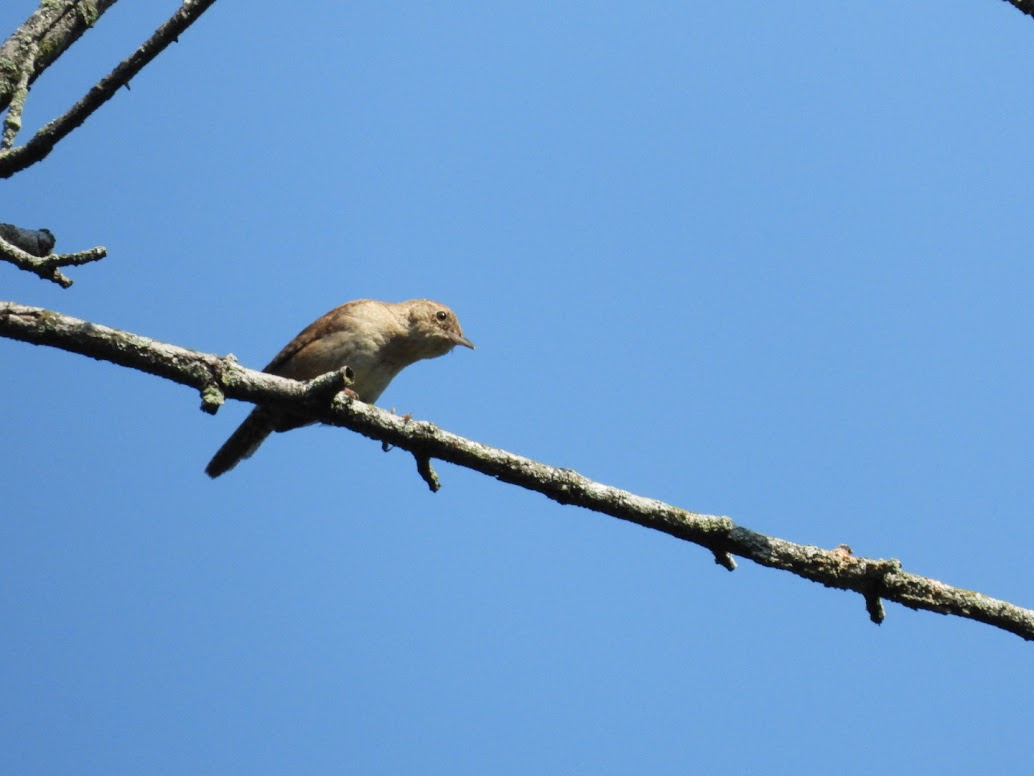 | 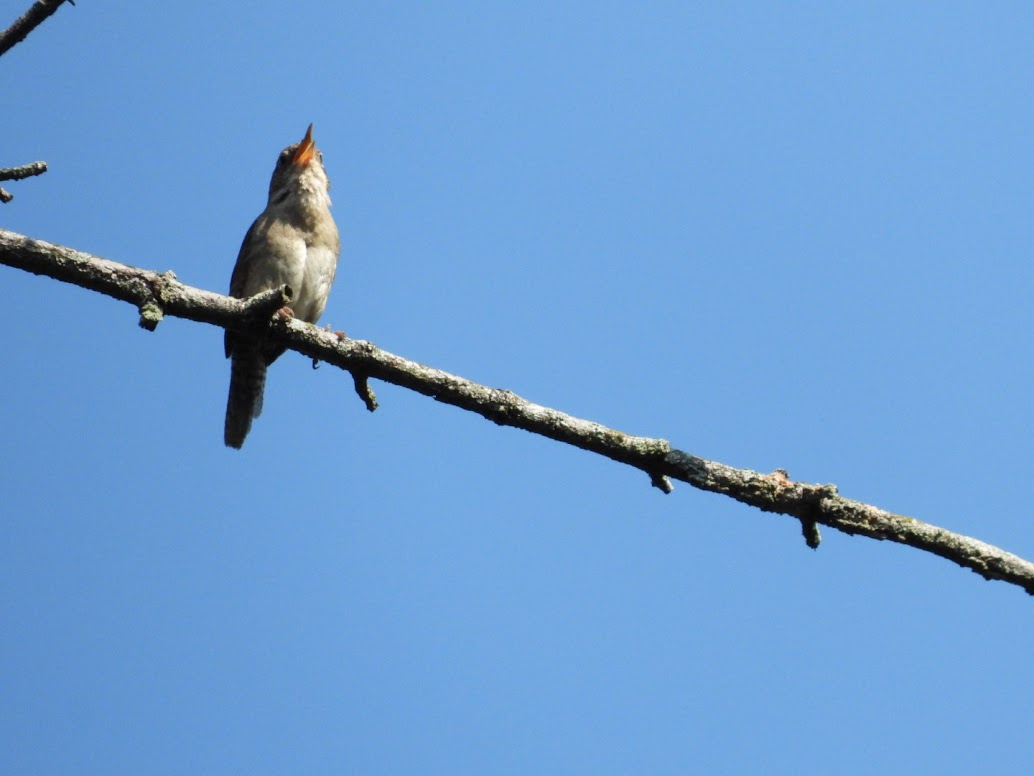 |
| ƒ/7.1, 1/1600, ISO800, 395mm (2199mm equiv, 91.6X) | ƒ/7.1, 1/1600, ISO800, 395mm (2199mm equiv, 91.6X) |
Northern Mockingbird
Again with the difficult lighting. In addition to the slowdown in wildlife sightings, it also seems like most of July and August have had overcast skies with poor lighting for a bridge camera with a small sensor like the Nikon P1000.
Still, you can get a good look at the bird here, and I'm holding my best Northern Mockingbird photo for the July Raptor post. (though you may have already seen it on iNaturalist or in the animalCards game.)
These birds are also low concern as far as conservation status, and they are known for their aggression when chasing out intruders (as we'll see in the next post).
Like the Northern House Wren, the Northern Mockingbird is also known for its songs. The male learns up to 200 different songs over the course of its life. As a result, these were desirable pets during the early 1800s, selling for as much as $50. During that time, the species nearly disappeared from many locations in America.
| July 28 | July 28 |
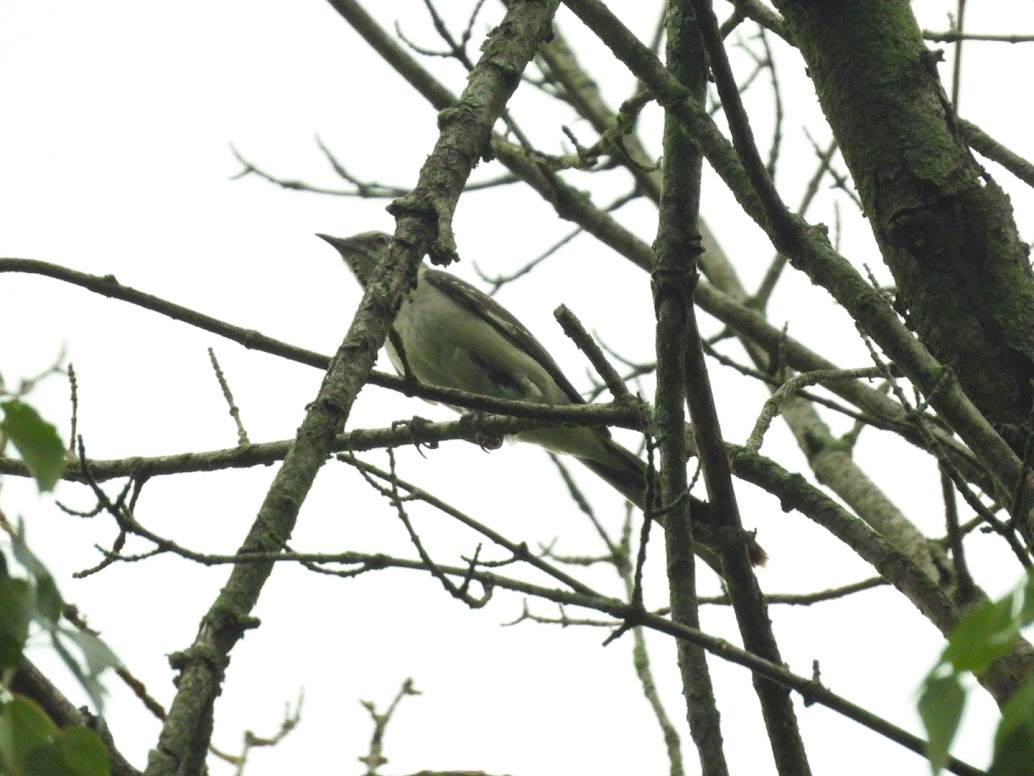 | 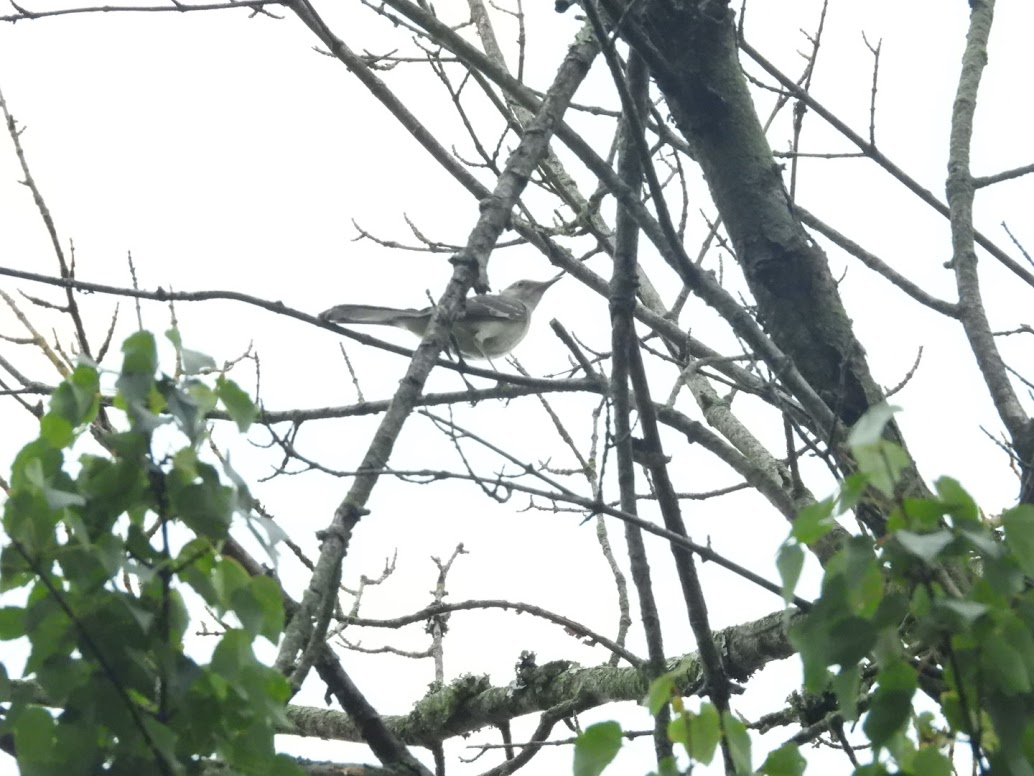 |
| ƒ/6.3, 1/500, ISO1400, 324mm (1803mm equiv, 75.1X) | ƒ/5.6, 1/500, ISO1600, 198mm (1102mm equiv, 45.9X) |
| July 28 | July 28 |
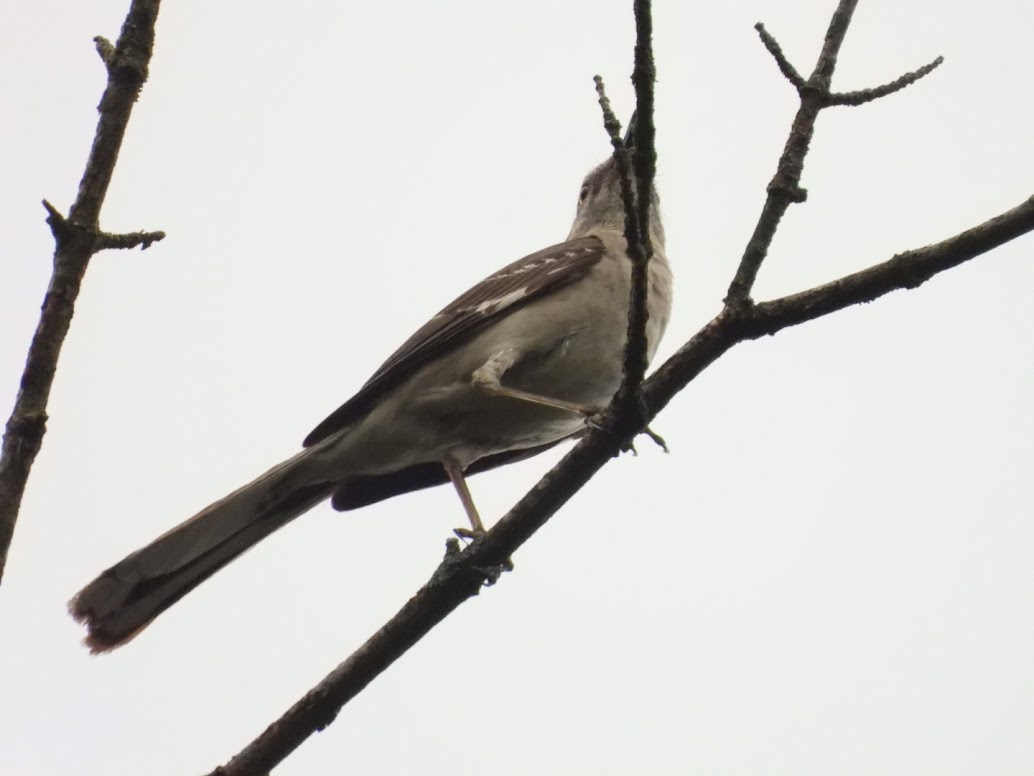 | 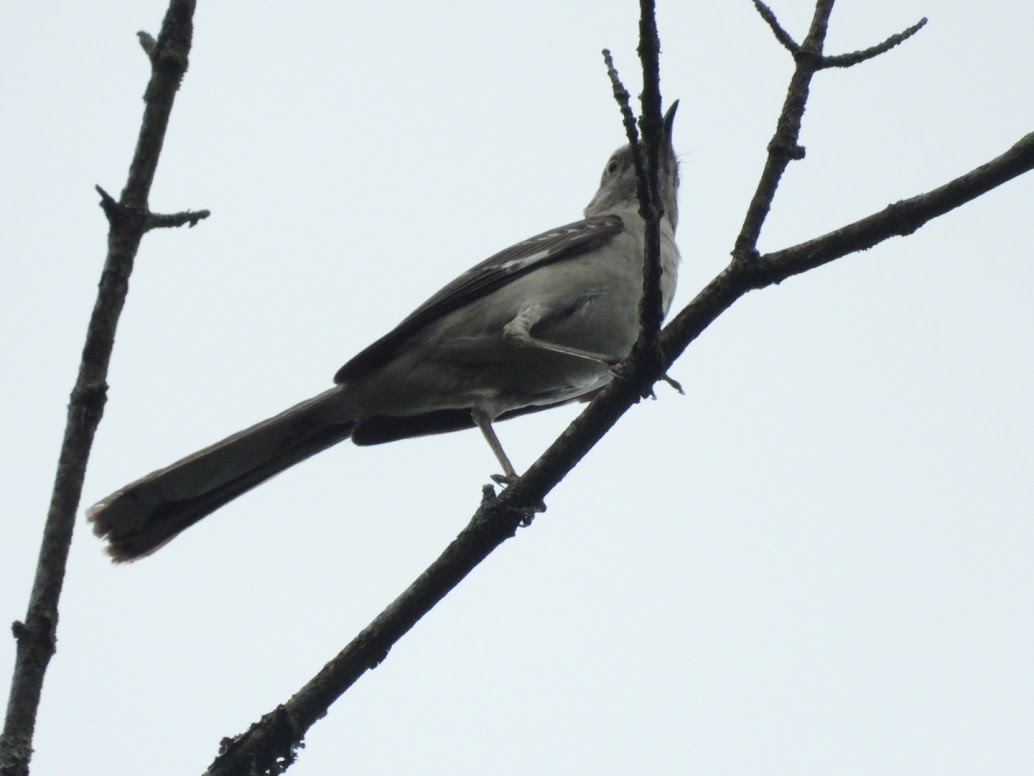 |
| ƒ/8, 1/500, ISO1600, 539mm (3000mm equiv, 125.0X) | ƒ/8, 1/500, ISO1250, 503mm (2800mm equiv, 116.7X) |
Wrap-up
This marks the end of the small birds in July. All we have left for one final photography post are the raptors. If I can squeeze it in, I might add one final post about the birds that Merlin identified by sound. I'm not sure exactly how that would be structured, though, so I'm still on the fence.
In summary, the month was slow overall, with mammals being more common than birds in comparison to last month. The month did have some surprises, in the form of 4 new species, though.
Looking forward to the August posts, those same trends are continuing. However, the fall migration season began in the last week or so, so perhaps some quicker-paced observations will be coming soon. It's time to start watching BirdCast again.
Maybe as a result of migration season or maybe not, the two vacancies that I've started to notice are the Robins and the Gray Catbirds. Both have maintained a continued presence in the area, but apparently at much lower frequency.
Appendix
New: A full index of my posts about wildlife photography is here: wildlife photography index
Notes on the use of AI
As previously noted, I use AI for the following purposes in creating this series:
- Wildlife identification (Merlin, iNaturalist, Meta AI, Claude, Gemini)
- Formatting iNaturalist observations, photographs, dates, and camera settings into markdown tables (Claude)
- Proof-reading and editorial advice (Claude, Gemini, Meta AI, ChatGPT, Grok)
Thank you for your attention!
Unless otherwise specified in the text, all photos above were taken by me with a (hand held) Nikon P1000 camera. I'm sharing them under the CC BY 4.0 license (share & adapt freely with attribution to the original source).