Six lessons from backyard wildlife walks in the month of March
As mentioned last week, I've been taking short "wildlife walks" in my yard for the last month or so, in an effort to get better at photography with the Nikon P1000 camera that I bought for Eagle-watching trips to the Conowingo Dam. One thing that I hadn't anticipated about these walks is that there's a follow-on interesting in learning what animals I'm photographing. Thus, learning photography also leads to learning about wildlife biology. It's a slippery slope;-)!
Last week, I had submitted 6 observations to iNaturalist. This week, I've submitted 15 (in total). After the end of March, I'm also planning to do a series of Steem posts where I try to pull out the better photos and post them in groups, based on the animal type. If I'm able to keep this up during the year, we can see how much the local wildlife changes as the seasons pass.
While we wait for March to end, here are six random things that I've learned from these walks during the month.
1. Some of the birds in my yard are terrible freeloaders
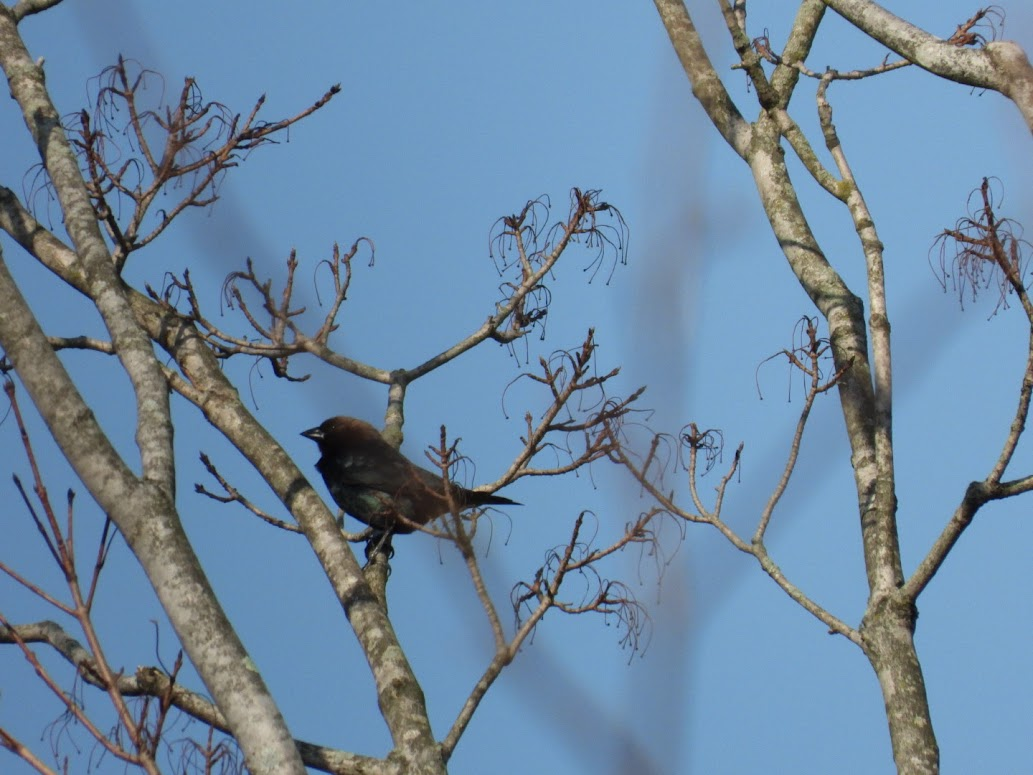
Specifically, I mean the Brown-headed Cowbird. These birds might be photogenic, and if you look at photos of them on the Internet, you'll find a wide variety in what they look like. But they're also lazy deadbeats (aka brood parasites) that don't raise their own hatchlings. Instead, they lay eggs in the nests of other types of birds and let the unsuspecting foster-parents rear their young.
This image was taken at 125x zoom, so you can imagine that the bird was pretty high up in that tree. Maybe 50 or 60 feet (15-18 meters), I guess.
2. Turkey Vultures have light colored feathers under their wings
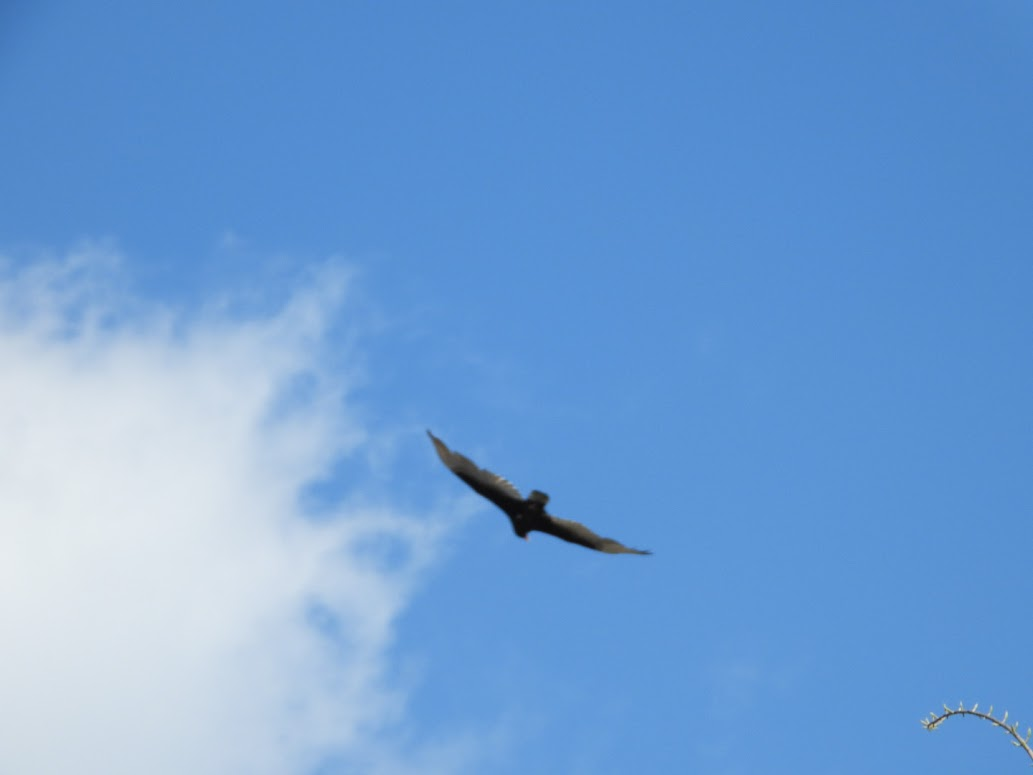
This actually led to some confusion.
When I asked Claude to identify one in a picture, it told me that the silver feathers under the wings are a good marker for Turkey Vultures. I said they're not silver, they're white, and showed it a different picture. Then it said the bird had a rare disease, and I should report it to the local birding community. So, I did.
But then, ChatGPT, Grok, and Gemini all threw water on the fire and said, "Nah... that's perfectly normal. It's actually a good way to identify them."
3. Bird and animal species in my own yard that I had never heard-of before
- American red squirrel
- Brown-headed Cowbird (image above)
- Dark-eyed Junco
- Northern Flicker (a type of woodpecker)
- Red-bellied woodpecker
Aside from the Brown-headed cowbird (seen above), here's what they look like.
American red squirrel | Dark-eyed Junco |
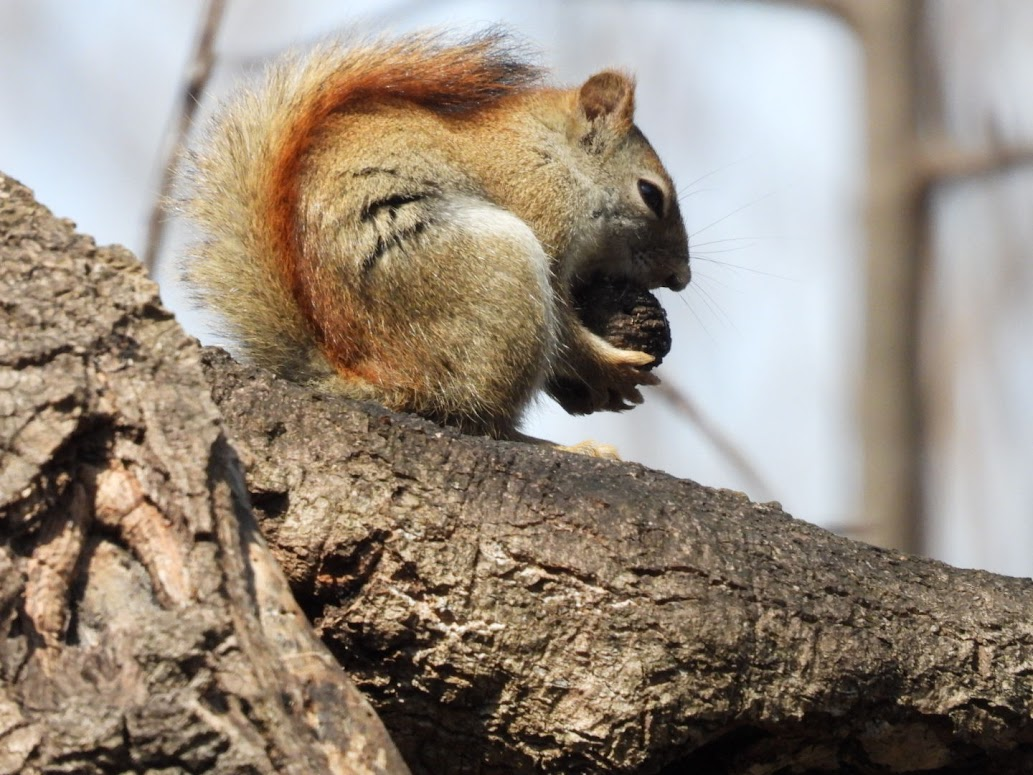 | 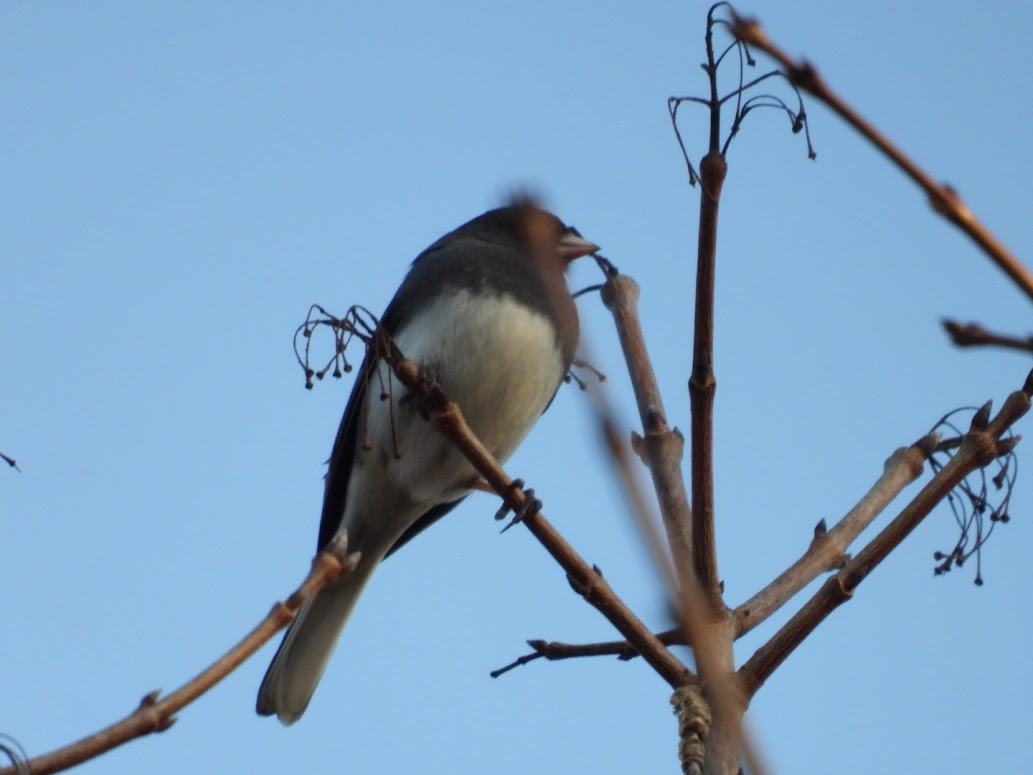 |
Northern Flicker | Red-bellied woodpecker |
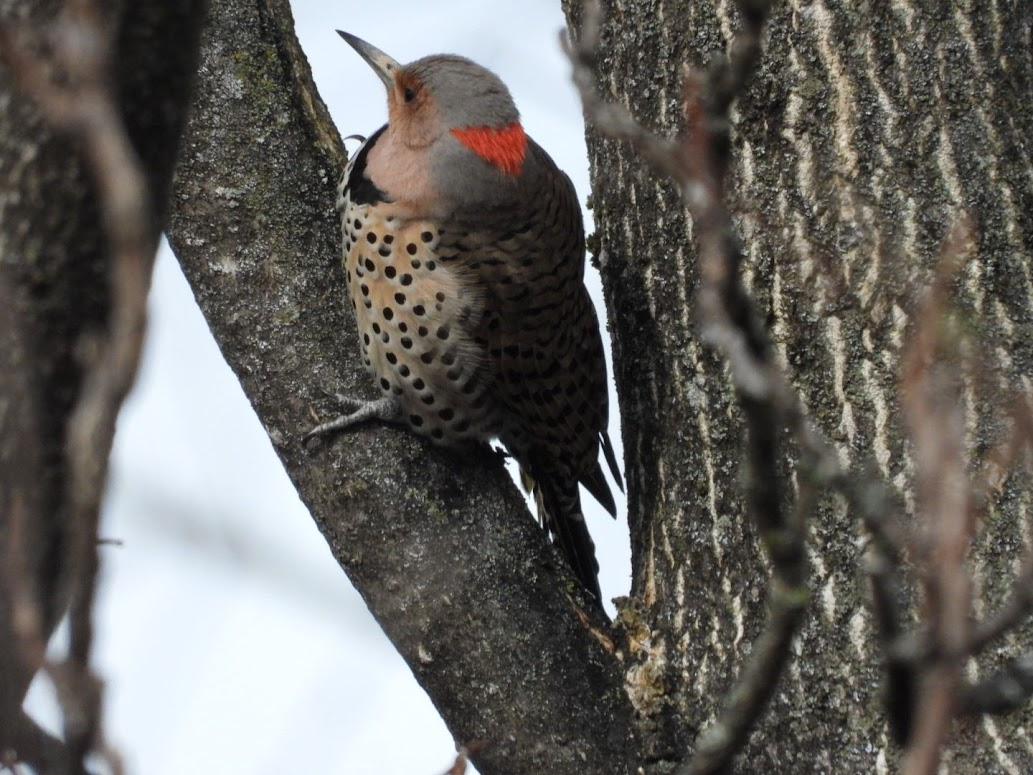 | 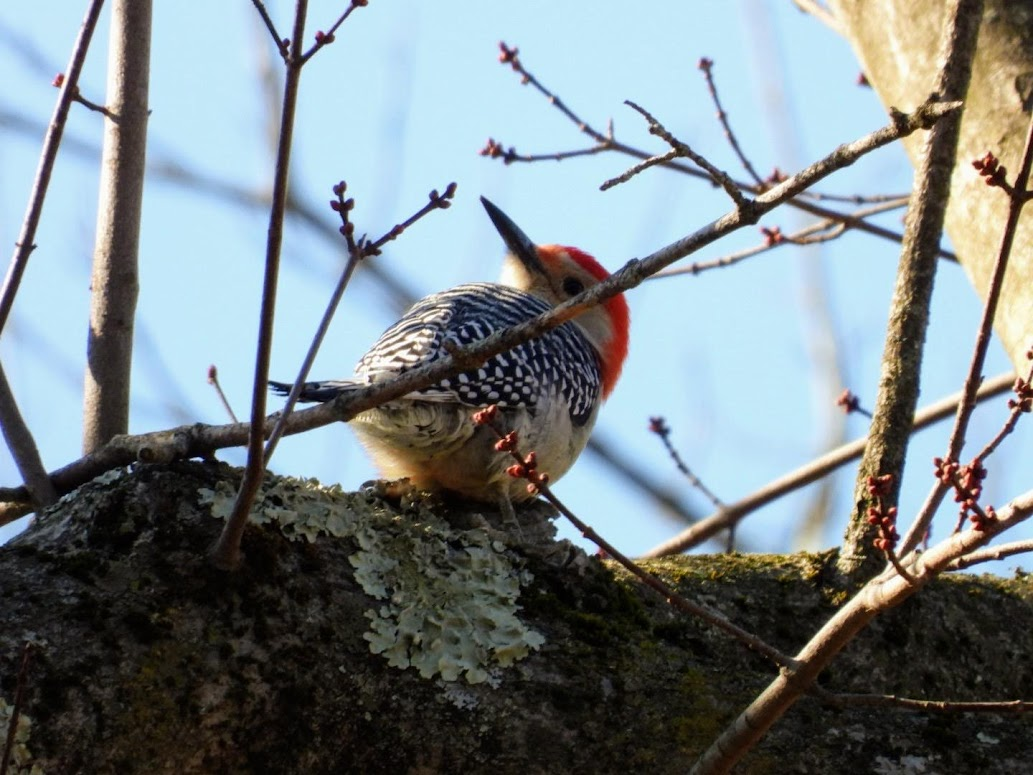 |
4. For my P1000 camera, the amount of zoom can be measured in 3 ways:
- Actual, physical focal length between the lens and the center of the image receiver (reported by Google Photos)
- The 35mm equivalent focal length (reported in the camera's view-finder)
- The actual magnification size (most useful for human understanding).
Here's a table from Brave Leo for reference:
| 35mm-Equivalent Focal Length | Physical Focal Length (mm) | Max. Aperture | Zoom Multiplier (vs. 24mm) |
|---|---|---|---|
| 24 mm | 4.3 mm | f/2.8 | 1x |
| 35 mm | ~6.3 mm | f/3.2 | ~1.5x |
| 50 mm | ~9.0 mm | f/3.2 | ~2.1x |
| 105 mm | ~19 mm | f/4.0 | ~4.4x |
| 200 mm | ~36 mm | f/4.5 | ~8.3x |
| 400 mm | ~72 mm | f/5.0 | ~16.7x |
| 800 mm | ~144 mm | f/5.6 | ~33.3x |
| 2000 mm | ~360 mm | f/6.3 | ~83.3x |
| 3000 mm | 539 mm | f/8.0 | 125x |
So when I said the photo above was taken at 125X zoom, that's the equivalent of a 3000mm focal length for a 35 millimeter camera, or 539 mm focal length for the P1000. I don't know why these tools don't all just use the magnification, but it is unfortunately necessary to be able to convert between them for understanding context.
5. In my location, 4:45 pm (US/Eastern) seems like "The Hawking Hour"
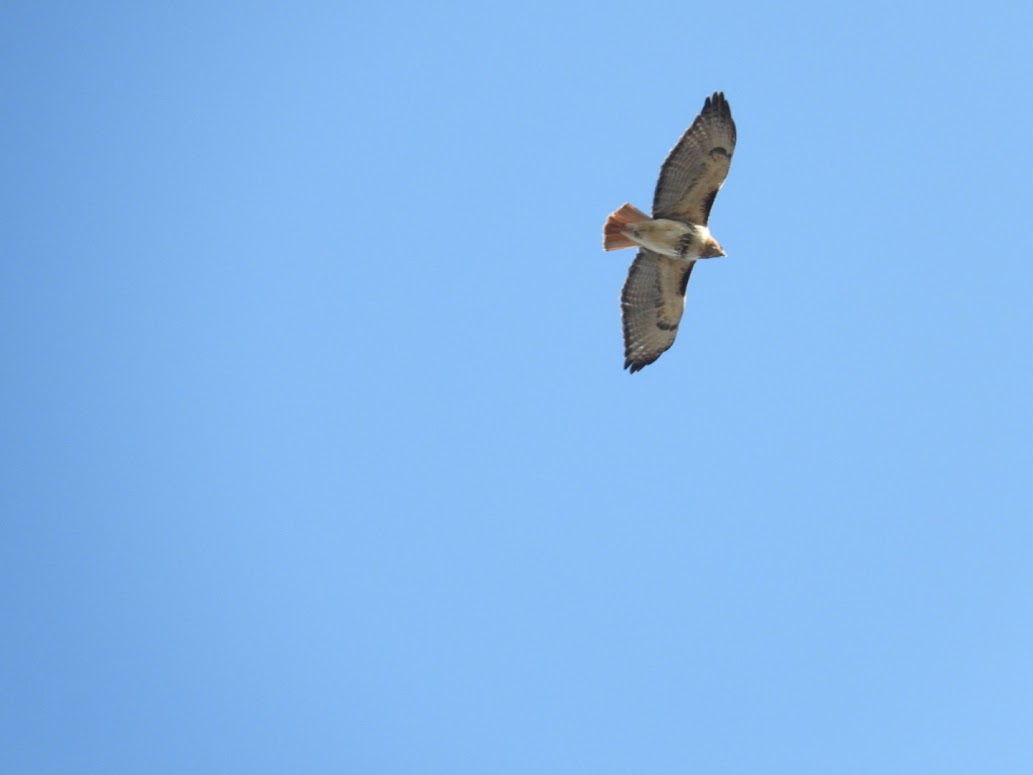
No idea why, but if I go outside between 4:45 and 5:15 and wait for a few minutes, I'll almost always see some sort of raptor flying overhead. Maybe it has something to do with cars on the highway during "rush hour"? It's so reliable that I have nicknamed this time of day, "The Hawking Hour". So far, I've seen Turkey Vultures, Red-tailed Hawks, and even a Bald Eagle during this time of day.
There's a picture of a Turkey Vulture up above. Here are the eagle and hawk.
Bald Eagle | Red-tailed hawk |
|---|---|
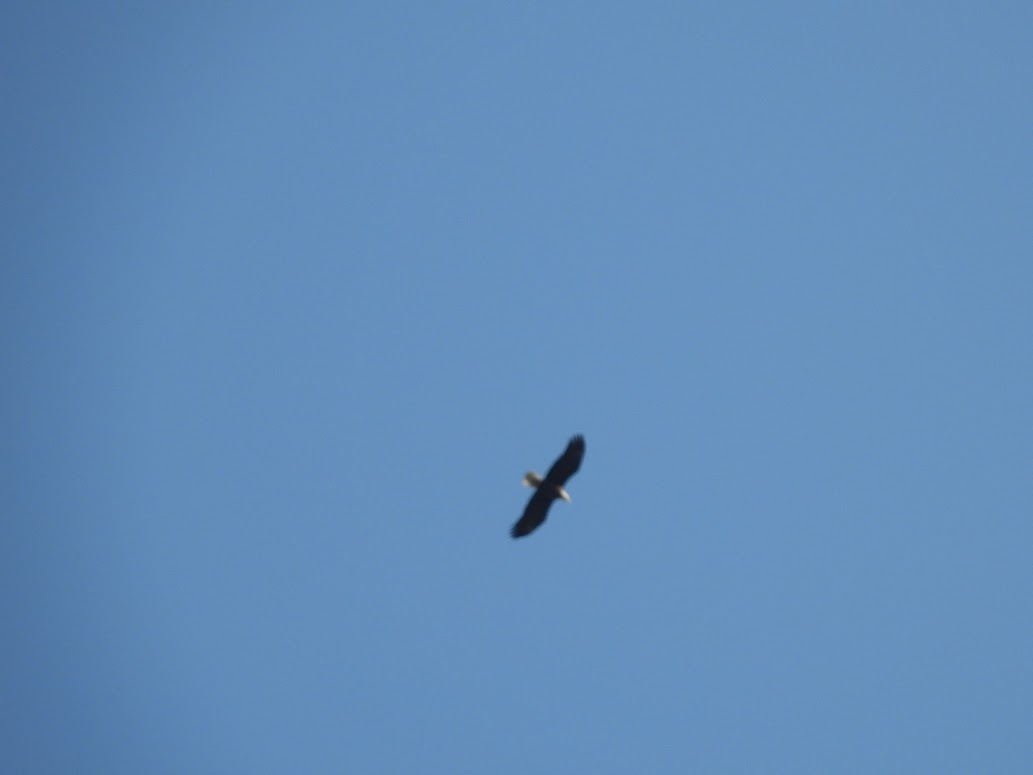 |  |
The Bald Eagle was taken at about 60X zoom, and Bald Eagles are big birds. So, he was really high up there. It's not a great photo, but the AIs all agreed that it's a Bald Eagle, and so did iNaturalist.
I'm still amazed that it's possible to see a Bald Eagle in my own yard now. Until recently, I thought of the Bald Eagle as an exotic animal that could only be seen in the Western United States or Canada.
6. The White-tailed deer seem to be gone.
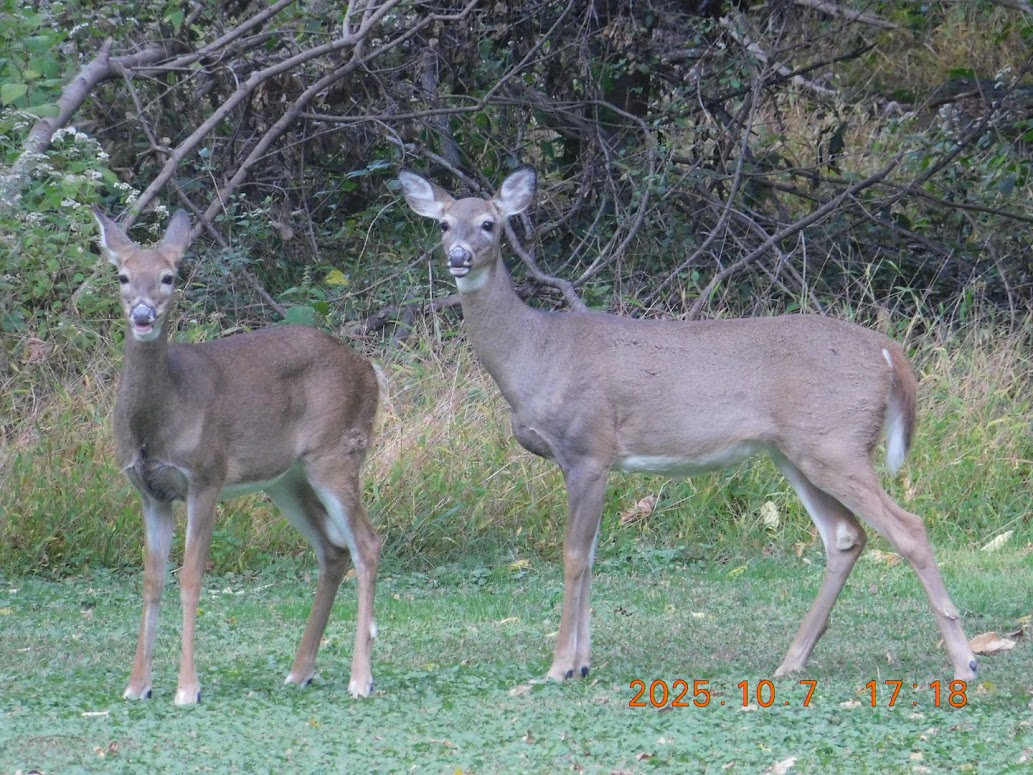
This one is sort-of sad for me. We used to have 14 acres of woods behind my yard, so we had all sorts of mammals wandering through. Deer, Foxes, Groundhogs, etc... Of those, the deer were the most common. I've posted many photos of white-tailed deer over the years, and taken many more that I didn't post. Here are two deer from last October, for example:
About 6-8 years ago, however, a developer tore down most of the woods and replaced them with a new housing development. I tried to pinpoint the exact date by finding a post that I made at the time, but I couldn't dig it up (Update: It was Nov. 2017 - I'm anthropomorphizing, but that's one of the saddest photos I ever remember taking.). All I can determine is that it was a few years before 2022, so, maybe 2018-2020?
Anyway, I was afraid at the time that we'd stop seeing the deer. Until last winter, that didn't seem to be the case, though. I'm sure I've seen deer here as recently as December, in the snow.
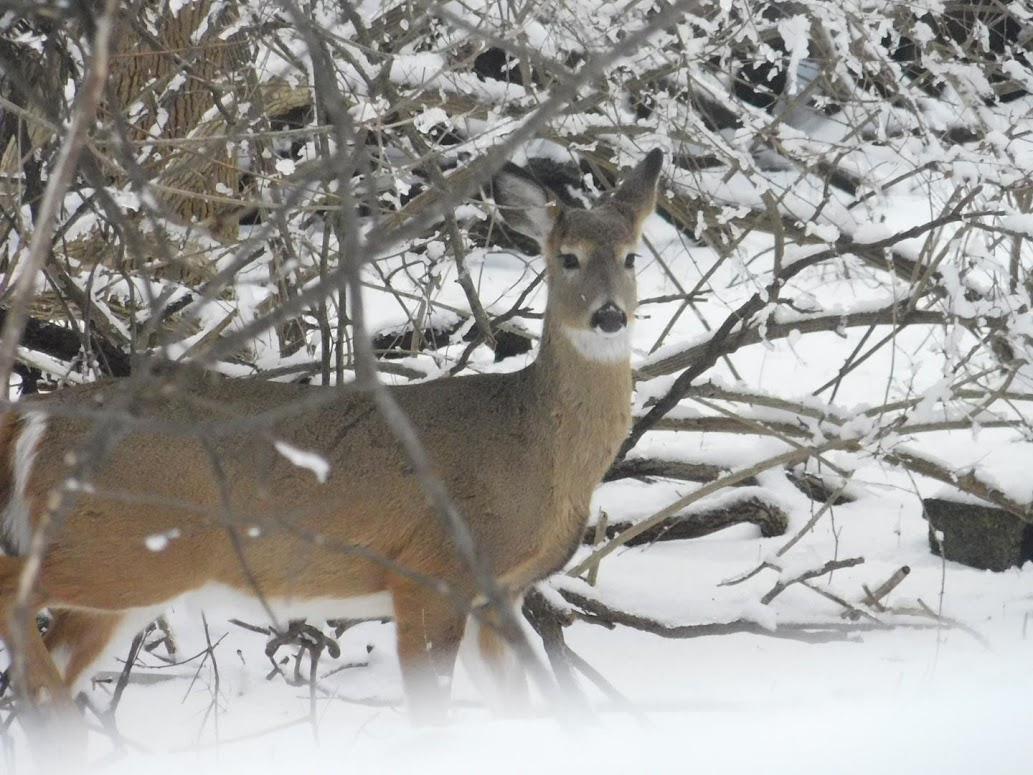
However, during all of my "wildlife walks" in the month of March, I've seen exactly 0 deer. This is definitely not something that would have happened in any previous year. The photo to the left is from March, 2019, so it's not a time of year thing. We'll see what happens in the future, but I'm starting to fear that the consequences of habitat destruction, when those woods were torn down, have finally caught up with us - and holding out just a little hope that I'm wrong.
But then, ChatGPT, Grok, and Gemini all threw water on the fire and said, "Nah... that's perfectly normal. It's actually a good way to identify them."
I'm curious. What will they do after receiving the report?
They won't do anything special. It's still good data on the sighting, so the observation will stay there - available to researchers. It's just not the exciting "rare" observation that Claude thought it was.