Is America Really Prepared for 21st Century Warfare? — My Analysis
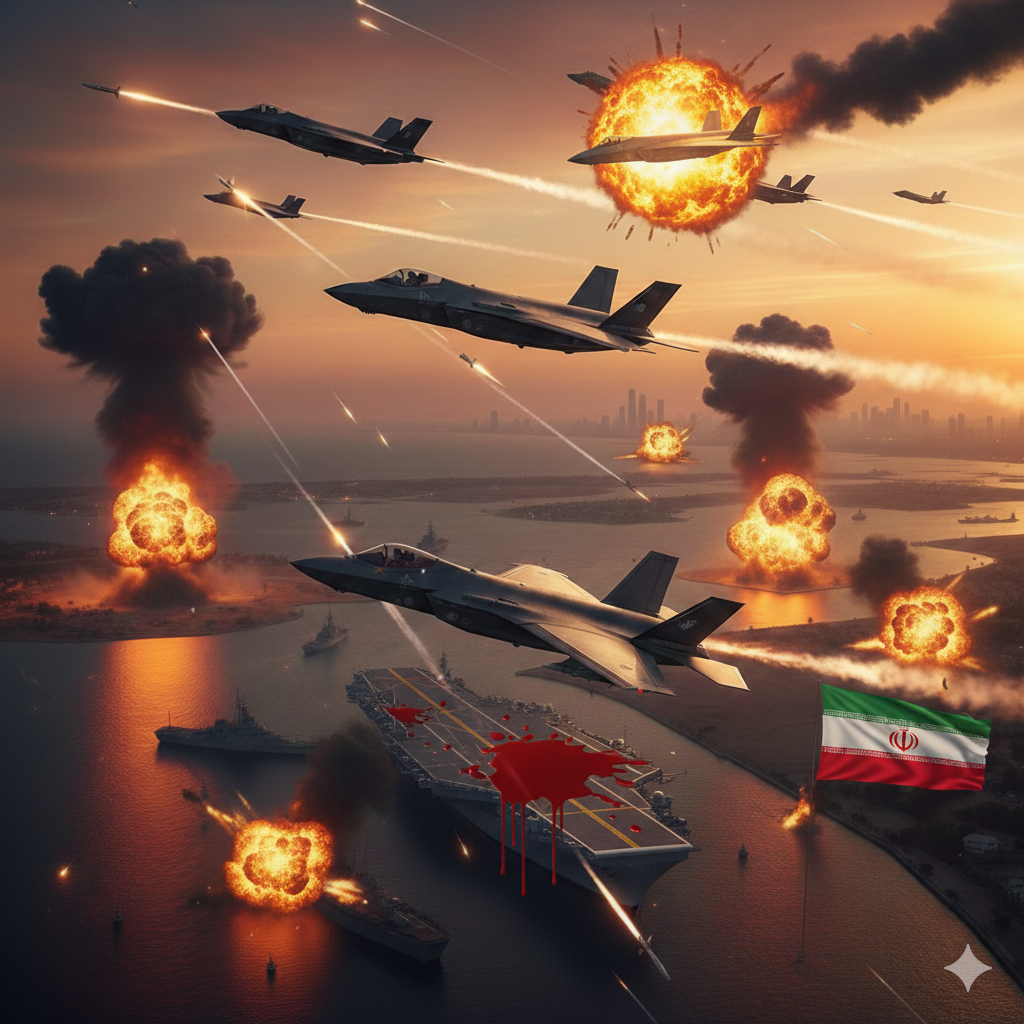
Some wars are not won on the battlefield — they are won in the mind. And some wars are not fought with tanks, but with patience, strategy, and time. In my view, the current tension between Iran and the United States is no longer a conventional conflict. It has become a long war of attrition.
For the past twenty years, Iran has been preparing not for a direct head-to-head clash, but for asymmetric warfare. Instead of relying on expensive weapons, it has focused on low-cost drones. Instead of deploying traditional armies, it has strengthened allied groups. Instead of open confrontation, it has used proxy strategies. This model is designed to slowly exhaust a superpower over time.
The problem is that America’s military system was largely shaped by the logic of World War II and the Cold War — overwhelming force, advanced but extremely expensive technology, and clearly defined battlefields. But modern warfare is cheap, fast, and unpredictable. If a $50,000 drone can force a million-dollar missile system to respond, then in the long run, who actually becomes exhausted?
The Gulf region sits at the center of this tension. The Strait of Hormuz is a lifeline for global energy supplies. Gulf economies depend heavily on oil exports, and even their water supply relies on desalination plants. If energy infrastructure or water facilities are targeted, the conflict stops being purely military — it turns into an economic and humanitarian crisis.
There is also the petro-dollar dimension. Gulf states sell oil in dollars, earn massive revenues, and reinvest those dollars back into the American financial system. If that cycle is disrupted, the consequences would not remain limited to the Middle East. The global financial structure could feel the shock. Today, a significant part of the U.S. economy is supported by technology and AI investments, some of which involve Gulf capital. Instability in the region could weaken that investment flow.
Another major question is ground intervention. History shows that airstrikes alone rarely change governments. If ground troops are deployed, it would be politically and militarily costly for the United States. The American public is already weary of foreign wars. The memories of Iraq and Afghanistan are still fresh.
In my opinion, the real issue is not just about power — it is about models of warfare and global order. The world is gradually shifting from a unipolar system to a multipolar one. No single power dominates uncontested anymore. Regional actors, economic alliances, and non-state groups are now central players.
If this conflict escalates, it will not remain a simple U.S.–Iran confrontation. It could become a war over energy routes, water security, economic stability, and the structure of the global system itself.
The real question is not who will win.
The real question is: who can endure longer?
Congratulations!
Your post has been manually upvoted by the SteemPro team! 🚀
This is an automated message.
If you wish to stop receiving these replies, simply reply to this comment with turn-off
Visit here.
https://www.steempro.com
SteemPro Official Discord Server
https://discord.gg/Bsf98vMg6U
💪 Let's strengthen the Steem ecosystem together!
🟩 Vote for witness faisalamin
https://steemitwallet.com/~witnesses
https://www.steempro.com/witnesses#faisalamin