🌆 Learning Cities: When Infrastructure Dances to the Rhythm of Citizens 🌍📱 [ENG/GER/KOR]
ENGLISH VERSION:
🌆 Learning Cities: When Infrastructure Dances to the Rhythm of Citizens 🌍📱
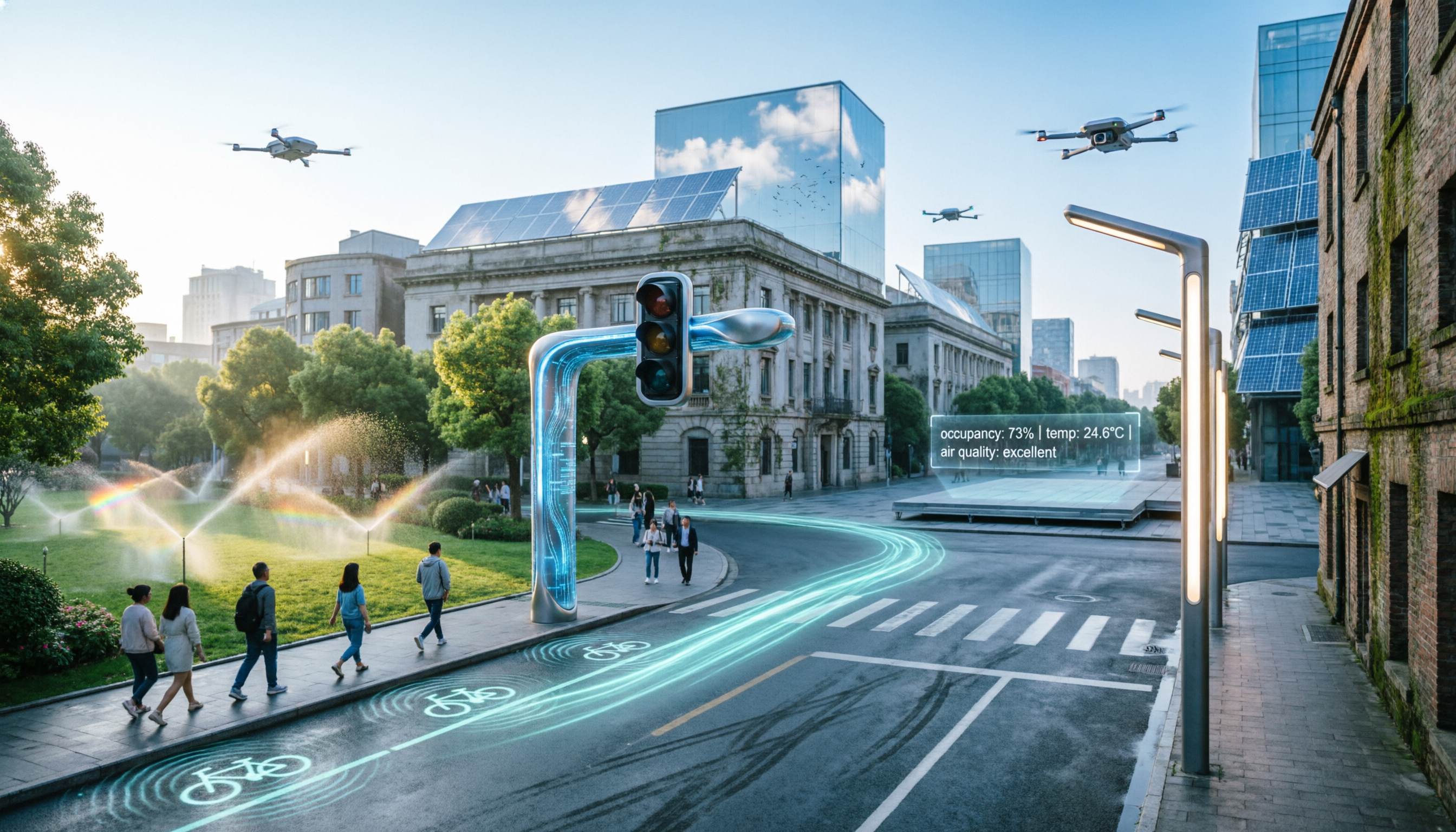
Have you ever imagined traffic lights that adjust not by rigid schedules, but by the real-time flow of pedestrians and cyclists? Or parks that adapt their maintenance frequency based on the community’s weekly usage? This isn’t a scene from a futuristic movie—it’s the emerging reality of Learning Cities. 🏙️✨
Unlike traditional urban models, which are static and reactive, contemporary cities are becoming living systems. They observe, interpret, and evolve alongside the habits, needs, and behaviors of those who inhabit them. And the most fascinating part? This transformation is already happening, block by block. 🔄💡
🧠 What Does It Mean for a City to "Learn"?
It’s not just about spreading sensors and digital screens across town. A learning city integrates real-time data, AI with clear governance, and citizen listening mechanisms to create a continuous improvement cycle. When residents change routes, alter schedules, or signal needs, the infrastructure responds—not in election cycles, but in days or even hours. ⏱️📊
🛣️ Infrastructures That "Breathe" with the Community
• 🚦 Adaptive Mobility: Intersections that prioritize pedestrians during school hours or cyclists on weekends.
• 💡 On-Demand Lighting: Streetlights that regulate intensity based on human presence, saving energy without compromising safety.
• 🗑️ Dynamic Waste Collection: Bins with volume sensors that optimize collection routes, reducing traffic and emissions.
• 🌳 Flexible Public Spaces: Squares and sidewalks that reconfigure according to local events, seasons, or even urban heat indicators.
🌱 Why Does This Truly Matter?
Adaptive cities generate concrete efficiency, not just technological showcases. They reduce resource waste, increase resilience against extreme climate events, and, most importantly, return protagonism to residents in shaping their territory. When infrastructure listens, the city welcomes. 🤝💚
⚠️ But Beware: Technology Without Ethics is Regression in Disguise
Urban learning requires radical transparency. Data must be anonymized, algorithms auditable, and participation truly inclusive. A city that "learns" only works if everyone has a voice—including those without smartphones, living in low-connectivity areas, or with reduced mobility. Digital and physical inclusion is a prerequisite, not an afterthought. 🔒♿
🚀 The Next Step: Co-Creating the Urban Space
The future of cities won’t be signed off by technicians in closed offices. It will be designed in partnership: citizens as human sensors, universities as open laboratories, and governments as facilitators of processes. Continuous feedback platforms, digital participatory budgets, and public indicator dashboards are just the foundation. The roof is still being built. 🌐👷♀️👷♂️
📢 And You? How Could Your City Learn from You?
Observe the flows of your daily life, report failures with context, participate in public consultations, and demand transparency in open data. The infrastructure of tomorrow is already being trained today—and you are part of the most valuable algorithm: the human one. ❤️🏙️
👇 Leave a comment: What habit or observation of yours could help your neighborhood function better tomorrow?
#LearningCities #AdaptiveInfrastructure #SmartUrbanism #DigitalCitizenship #SustainableCities #SocialTechnology #UrbanFuture #CitizenParticipation
GERMAN VERSION:
🌆 Lernende Städte: Wenn die Infrastruktur im Rhythmus der Bürger tanzt 🌍📱
Haben Sie sich schon einmal Ampeln vorgestellt, die sich nicht nach starren Zeitplänen richten, sondern nach dem tatsächlichen Fluss von Fußgängern und Radfahrern? Oder Parks, die ihre Wartungshäufigkeit an die wöchentliche Nutzung durch die Gemeinschaft anpassen? Das ist keine Szene aus einem futuristischen Film – es ist die entstehende Realität der Lernenden Städte. 🏙️✨
Im Gegensatz zu traditionellen städtischen Modellen, die statisch und reaktiv sind, werden zeitgenössische Städte zu lebendigen Systemen. Sie beobachten, interpretieren und entwickeln sich gemeinsam mit den Gewohnheiten, Bedürfnissen und Verhaltensweisen ihrer Bewohner. Und das Faszinierendste daran? Diese Transformation findet bereits statt, Block für Block. 🔄💡
🧠 Was bedeutet es für eine Stadt, zu „lernen“?
Es geht nicht nur darum, Sensoren und digitale Bildschirme in der ganzen Stadt zu verteilen. Eine lernende Stadt integriert Echtzeitdaten, KI mit klarer Governance und Mechanismen zum Zuhören der Bürger, um einen kontinuierlichen Verbesserungszyklus zu schaffen. Wenn Bewohner Routen ändern, Zeitpläne anpassen oder Bedürfnisse signalisieren, reagiert die Infrastruktur – nicht in Wahlzyklen, sondern innerhalb von Tagen oder sogar Stunden. ⏱️📊
🛣️ Infrastrukturen, die mit der Gemeinschaft „atmen“
• 🚦 Adaptive Mobilität: Kreuzungen, die Fußgänger während der Schulzeiten oder Radfahrer am Wochenende priorisieren.
• 💡 Bedarfsgerechte Beleuchtung: Straßenlaternen, die ihre Intensität basierend auf der menschlichen Präsenz regulieren, Energie sparen, ohne die Sicherheit zu compromising.
• 🗑️ Dynamische Abfallsammlung: Mülltonnen mit Volumensensoren, die Sammelrouten optimieren, wodurch Verkehr und Emissionen reduziert werden.
• 🌳 Flexible öffentliche Räume: Plätze und Gehwege, die sich je nach lokalen Veranstaltungen, Jahreszeiten oder sogar städtischen Hitzeindikatoren neu konfigurieren.
🌱 Warum ist das wirklich wichtig?
Adaptive Städte generieren konkrete Effizienz, nicht nur technologische Schaufenster. Sie reduzieren Ressourcenverschwendung, erhöhen die Resilienz gegenüber extremen Klimaereignissen und geben den Bewohnern vor allem die Protagonistenrolle bei der Gestaltung ihres Territoriums zurück. Wenn die Infrastruktur zuhört, heißt die Stadt willkommen. 🤝💚
⚠️ Aber Vorsicht: Technologie ohne Ethik ist Regression im Gewand des Fortschritts
Städtisches Lernen erfordert radikale Transparenz. Daten müssen anonymisiert, Algorithmen überprüfbar und die Teilhabe wirklich inklusiv sein. Eine Stadt, die „lernt“, funktioniert nur, wenn jede Stimme gehört wird – auch die der Menschen ohne Smartphones, die in Gebieten mit geringer Konnektivität leben oder mit eingeschränkter Mobilität. Digitale und physische Inklusion ist eine Voraussetzung, kein nachträglicher Gedanke. 🔒♿
🚀 Der nächste Schritt: Den urbanen Raum co-kreieren
Die Zukunft der Städte wird nicht von Technikern in geschlossenen Büros abgezeichnet. Sie wird in Partnerschaft gestaltet: Bürger als menschliche Sensoren, Universitäten als offene Labore und Regierungen als Facilitatoren von Prozessen. Kontinuierliche Feedback-Plattformen, digitale partizipative Haushalte und öffentliche Dashboards mit Indikatoren sind nur das Fundament. Das Dach wird noch gebaut. 🌐👷♀️👷♂️
📢 Und Sie? Wie könnte Ihre Stadt von Ihnen lernen?
Beobachten Sie die Ströme Ihres täglichen Lebens, melden Sie Mängel mit Kontext, nehmen Sie an öffentlichen Konsultationen teil und fordern Sie Transparenz bei offenen Daten. Die Infrastruktur von morgen wird bereits heute trainiert – und Sie sind Teil des wertvollsten Algorithmus: des menschlichen. ❤️🏙️
👇 Hinterlassen Sie einen Kommentar: Welche Gewohnheit oder Beobachtung von Ihnen könnte Ihrem Viertel helfen, morgen besser zu funktionieren?
#LernendeStädte #AdaptiveInfrastruktur #IntelligenterUrbanismus #DigitaleBürgerschaft #NachhaltigeStädte #SozialeTechnologie #UrbaneZukunft #Bürgerbeteiligung
KOREAN VERSION:
🌆 학습하는 도시: 시민의 리듬에 맞춰 진화하는 인프라 🌍📱
고정된 시간표가 아니라 보행자와 자전거 이용자의 실제 흐름에 따라 조정되는 신호등을 상상해 본 적 있으신가요? 또는 지역 사회의 주간 사용 패턴에 따라 유지보수 빈도를 조절하는 공원은 어떨까요? 이는 SF 영화의 한 장면이 아니라, ‘학습하는 도시(Learning Cities)’ 라는 떠오르는 현실입니다. 🏙️✨
정적이고 사후 대응적인 전통적인 도시 모델과 달리, 현대 도시는 살아있는 시스템으로 변모하고 있습니다. 도시는 거주자의 습관, 필요, 행동을 관찰하고 해석하며 함께 진화합니다. 가장 놀라운 점은 이러한 변화가 이미 블록 단위로 일어나고 있다는 사실입니다. 🔄💡
🧠 도시가 ‘학습한다’는 것은 무엇을 의미할까?
이는 단순히 센서와 디지털 스크린을 도시 전역에 설치하는 것을 의미하지 않습니다. 학습하는 도시는 실시간 데이터, 투명한 거버넌스를 갖춘 인공지능(AI), 그리고 시민 참여 및 피드백 메커니즘을 통합하여 지속적인 개선 사이클을 만들어냅니다. 주민들이 경로를 바꾸거나 일정을 조정하거나 필요 사항을 알리면, 인프라는 선거 주기가 아닌 며칠 혹은 몇 시간 내에 반응합니다. ⏱️📊
🛣️ 지역사회와 함께 ‘호흡’하는 인프라
• 🚦 적응형 모빌리티: 등하교 시간에는 보행자를, 주말에는 자전거 이용자를 우선시하는 교차로.
• 💡 수요 조명 시스템: 사람의 존재 유무에 따라 밝기를 조절하여 안전성을 해치지 않으면서 에너지를 절약하는 가로등.
• 🗑️ 동적 쓰레기 수거: 용량 센서가 장착되어 수거 경로를 최적화함으로써 교통 혼잡과 배기가스를 줄이는 쓰레기통.
• 🌳 유연한 공공 공간: 지역 행사, 계절, 심지어 도시 열섬 지표에 따라 재구성되는 광장과 보도.
🌱 왜 이것이 정말 중요한가?
적응형 도시는 단순한 기술 과시가 아닌 구체적인 효율성을 창출합니다. 자원 낭비를 줄이고 극단적인 기후 현상에 대한 회복력을 높이며, 무엇보다 영토 설계에 있어 주민에게 주도권을 돌려줍니다. 인프라가 경청할 때, 도시는 포용적이 됩니다. 🤝💚
⚠️ 주의: 윤리가 결여된 기술은 퇴보의 다른 이름이다
도시의 학습에는 근본적인 투명성이 필요합니다. 데이터는 익명화되어야 하고, 알고리즘은 감사 가능해야 하며, 참여는 진정한 포용성을 가져야 합니다. ‘학습하는’ 도시는 스마트폰이 없거나 연결성이 낮은 지역에 거주하거나 이동이 불편한 사람들을 포함한 모든 사람의 목소리가 반영될 때만 기능합니다. 디지털 및 물리적 포용성은 부차적인 사항이 아닌 필수 전제 조건입니다. 🔒♿
🚀 다음 단계: 도시 공간의 공동 창조
도시의 미래는 폐쇄된 사무실에 앉은 기술자들에 의해 결정되지 않을 것입니다. 이는 파트너십을 통해 설계됩니다. 시민은 인간 센서로서, 대학은 열린 실험실로서, 정부는 프로세스의 조력자로서 역할을 합니다. 지속적인 피드백 플랫폼, 디지털 참여 예산제도, 공개 지표 대시보드 등은 단지 기초일 뿐입니다. 지붕은 아직 건설 중입니다. 🌐👷♀️👷♂️
📢 그리고 당신? 당신의 도시는 당신으로부터 어떻게 학습할 수 있을까요?
일상의 흐름을 관찰하고, 맥락을 포함하여 문제를 보고하며, 공공 협의에 참여하고, 개방형 데이터의 투명성을 요구하세요. 내일의 인프라는 오늘 이미 훈련되고 있으며, 당신은 가장 가치 있는 알고리즘인 ‘인간’의 일부입니다. ❤️🏙️
👇 댓글을 남겨주세요: 당신의 습관이나 관찰 중 동네가 내일 더 잘 기능하도록 도울 수 있는 것은 무엇인가요?
#학습하는도시 #적응형인프라 #스마트어바니즘 #디지털시민의식 #지속가능한도시 #소셜테크놀로지 #도시미래 #시민참여