KOL Marketing in 2026: Key Trends Every Crypto Marketer Should Know
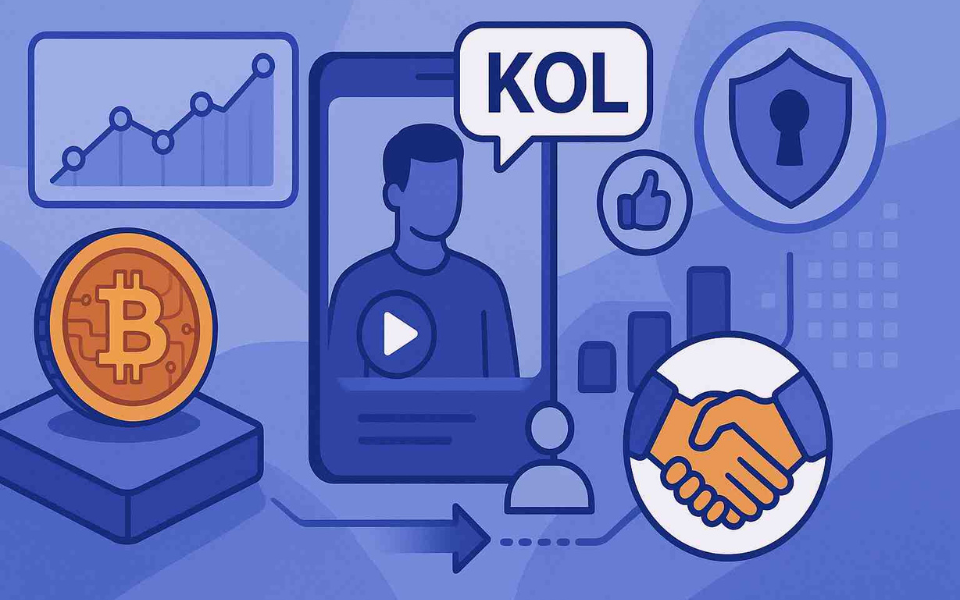
In an ever-evolving digital ecosystem where trust is currency and attention is limited, KOL (Key Opinion Leader) marketing has moved from being an optional tactic to an essential pillar in crypto marketing strategies. In 2026, crypto audiences are more discerning, communities more decentralized, and regulatory dynamics increasingly complex. Marketers must understand not only who influences the market but how influence operates across platforms, cultures, and technologies. In this comprehensive guide, we will explore the key trends shaping KOL marketing in the crypto space this year including authenticity, AI integration, decentralized communities, performance measurement, and much more.
1. The Rise of Authentic Influence: Why Trust Beats Reach
In 2026, the era of vanity metrics follower counts, likes, and comments has given way to relationship-based influence. Crypto communities have grown tired of influencers who promote every project without conviction. Today, audiences care first about authenticity: whether a KOL genuinely holds the asset, uses the product, or deeply understands the underlying technology. Trust now outweighs reach as the most valuable currency in influencer marketing.
KOLs who demonstrate transparency about their positions, investment rationales, and risk disclosures are more likely to engage long-term followers. Rather than short bursts of hype, audiences now reward consistency and honesty. For crypto marketers, this means identifying and partnering with voices who can think and speak independently, even when providing critical perspectives. The shift toward authentic influence underscores that followers are not products they’re community members who value trust as highly as gains.
2. Decentralized Influence Networks: Community Over Celebrity
Traditional celebrity endorsements have limited value in crypto because communities prefer peer-derived credibility. In 2026, influence is increasingly decentralized: micro-leaders with deep community roots often outperform macro personalities with mass audiences. A respected developer on Discord, an NFT artist with a loyal collector base, and a DAO moderator with governance expertise can all function as potent KOL marketing within their niches.
Decentralized influence networks are shaped less by follower count and more by community engagement, trust scores, and peer validation. These leaders don’t just broadcast messages they spark conversations, guide decisions, and co-create value with their communities. Crypto marketers who align with decentralized networks find that messages spread organically, resulting in higher conversions and deeper brand loyalty. Smart campaigns now invest in ecosystem builders rather than only traditional influencers.
3. AI-Enhanced KOL Identification and Matching
Artificial Intelligence has transformed how marketers discover and engage KOLs. Instead of manual searches through social platforms, token communities, and content feeds, AI tools now automatically map influence patterns across blockchain networks, sentiment trends, and engagement clusters. Advanced algorithms can analyze factors such as relevance, authenticity signals, audience quality, and historical performance to recommend optimal KOL partners.
In 2026, AI-driven platforms also monitor real-time performance metrics, enabling marketers to adjust campaigns dynamically. Predictive analytics can forecast which voices will generate sustained interest versus short-lived hype. AI optimization helps marketers reduce wasted spend, avoid fake engagement, and tailor messages to specific community temperaments. As a result, AI is no longer just a tactical tool it’s a strategic asset in building and sustaining meaningful KOL collaborations.
4. Cross-Platform Influence: Web3, Social, and Beyond
Crypto KOL marketing is no longer confined to social media giants like Twitter, YouTube, or Instagram. In 2026, successful campaigns operate across multiple digital dimensions: Web3 platforms, decentralized communication hubs, immersive environments, and even AI-generated channels. Platforms such as Lens Protocol, Farcaster, BeReal, Discord communities, and NFT-driven metaverses have emerged as core arenas of influence.
Cross-platform strategies allow KOLs to reach different audience segments based on context. A thought leadership piece on a decentralized blog might resonate with long-term holders, while a live AMA in a VR metaverse could invigorate a younger audience. Crypto marketers must therefore design omnichannel influence campaigns that embrace fluid audience behaviors rather than one-size-fits-all approaches. Understanding platform nuances is key to maximizing reach and engagement without diluting brand voice.
5. Strategic Use of Micro-Influencers
While macro-influencers bring visibility, micro-influencers typically with 1,000 to 50,000 followers now deliver superior engagement quality. Micro-influencers often specialize in niche areas such as specific blockchain sectors, trading styles, NFT communities, or DAO governance topics. Their smaller but highly engaged followings are more apt to act on recommendations and engage in meaningful discussion.
Crypto marketers have learned that micro-influencers can achieve higher conversion rates at a lower cost relative to broad-reach influencers. Their audiences trust them not because of popularity, but because they feel closely connected. When integrated into multi-tiered campaigns, micro and macro influencers can complement each other micro voices providing depth and niche credibility, and macro voices offering broader visibility.
6. Performance-Based Compensation Models
Traditional flat-fee arrangements are being replaced with _performance-based compensation models in KOL marketing. Crypto projects are increasingly offering token-backed incentives, revenue sharing, milestone-based payouts, and affiliate rewards to align influencer success with project outcomes. These models help mitigate risk and ensure that KOLs are motivated to deliver measurable results.
Performance incentives also encourage KOLs to be more deeply involved in campaigns crafting high-quality content, engaging with community members, and driving conversions rather than simply broadcasting messages. For marketers, this reduces wasted spend on static promotions and incentivizes real performance. In 2026, performance-based partnerships are seen as a sign of mutual commitment rather than transactional interactions.
7. Regulatory Awareness and Compliance
As global regulation around crypto tightens, KOL marketing has come under intense scrutiny. Regulatory bodies in the United States, Europe, and Asia now require strict disclosure of paid relationships, conflict of interest statements, and transparency around compensation especially when promoting investment products. A failure to comply can expose both KOLs and brands to legal consequences.
In 2026, successful crypto marketers embed regulatory considerations into campaign design. They ensure that influencers clearly disclose sponsorships, include risk warnings, and, where necessary, comply with local financial promotion guidelines. KOLs themselves are becoming more educated about the legal landscape, choosing to work with marketers who prioritize compliance and ethical standards. This shift not only reduces risk but also increases audience trust a critical factor when dealing with financial assets.
8. Community-Driven KOL Engagement
Crypto communities now expect to co-create influence. Community-driven KOL engagement means prioritizing direct interactions, feedback loops, and participatory campaigns. Instead of one-way messaging, successful KOLs involve audiences in discussion, invite them to share insights, and leverage community feedback to shape narratives. This deepens emotional investment and fosters grassroots advocacy.
For example, KOLs host live hackathons, collaborative governance discussions, or AMAs where community members influence campaign direction. This participatory approach builds a sense of ownership and transforms followers into ambassadors. Marketers who facilitate authentic community involvement with influencers can create viral momentum based on socially validated recommendations far stronger than top-down marketing alone.
9. Token Integration and Incentivized Engagement
The integration of tokens as incentives in KOL marketing has become a defining trend in 2026. Projects now reward communities and influencers with tokens for participation, contribution, and advocacy. These token incentives might be distributed for creating content, referring new users, participating in governance, or achieving defined engagement milestones.
For crypto marketers, using tokens strategically means aligning influence incentives with network growth goals. Unlike traditional giveaways, token incentives can be designed to vest over time, encouraging sustained involvement rather than one-off attention spikes. Token-based KOL campaigns also tap into economic psychology: participants value rewards they can stake, trade, or use within ecosystems, boosting both loyalty and long-term brand alignment.
10. KOLs as Educators, Not Advertisers
In 2026, communities expect influencers to educate, not just advertise. Crypto concepts like liquid staking, rollups, real-world assets (RWA), zk-proofs, L2 scaling, and modular blockchains are complex and users appreciate KOLs who can break them down with depth, clarity, and context. The most impactful KOLs are those who teach their communities how to think, evaluate, and make informed decisions.
For marketers, this means supporting influencers with high-quality educational resources, expert access, and technical briefings that enable informed content creation. Rather than scripted promos, educational content becomes the bedrock of influence campaigns building credibility and trust while driving conversions organically. Projects that empower KOLs with knowledge amplification strategies see stronger, longer-lasting engagement than those relying on superficial messaging.
11. Integration of Virtual and Immersive Experiences
With Web3 technologies advancing rapidly, KOLs are no longer limited to flat content. Immersive experiences virtual galas, XR events, metaverse walkthroughs, and avatar-led panels have become mainstream platforms for influence. These experiences are especially powerful when influencers act as guides or hosts, bringing communities into engaging, interactive worlds.
Crypto marketers now allocate budgets specifically for immersive influence, using events where audiences can explore ecosystems, participate in real-time decision making, or interact with products in a simulated environment. KOLs act as storytellers, moderators, and experience facilitators, making influence more experiential than passive. The result? Higher emotional engagement and deeper brand affinity.
12. Long-Term Ambassador Programs
Short-term influencer blasts are out; long-term ambassador programs are in. Projects now establish multi-month or multi-year relationships with KOLs, treating them as strategic partners rather than one-off promoters. Ambassador programs often include educational initiatives, co-creation opportunities, governance participation, and ongoing content series.
These long-term relationships allow KOLs to share genuine journeys, failures, and successes building trust over time rather than relying on fleeting hype. For marketers, this results in sustainable influence, continuity in messaging, and increased credibility within communities. Ambassador programs position KOLs as ecosystem champions, aligning their success with project growth.
13. Enhanced Measurement: Beyond Impressions to Impact
Measuring KOL performance has evolved from simple impressions and engagement metrics to impact-based analytics . Crypto marketers now evaluate influence based on key metrics such as community growth quality, conversion rates , retention metrics , on-chain activity attributed to campaigns , and token utility adoption .
Advanced attribution models track which influencers drive not just clicks, but meaningful user actions wallet creations, staking activity, governance participation, and network usage. This shift allows marketers to distinguish between noise and value investing in voices that produce measurable ecosystem growth instead of vanity engagement. With improved attribution, budgets can be optimized and ROI can be demonstrated with precision.
14. Cultural Nuance and Global Crypto Influence
Crypto audiences are global, but influence is not monolithic. Effective KOL marketing in 2026 embraces cultural nuance, understanding that messaging resonates differently across regions. Influencers who understand local regulatory contexts, language subtleties, and cultural touchpoints often perform better than generic global voices.
Marketers now prioritize regional KOLs who can localize narratives, contextualize use cases, and speak authentically to community values. African blockchain developers, Southeast Asian NFT creators, Latin American DeFi educators, and European compliance advisors each bring distinct influence dynamics. Multi-regional campaigns that respect cultural identities see stronger adoption and long-term engagement.
15. Ethical Influence and Social Responsibility
As crypto intersects with real-world finance and societal impact, ethical influence has become a priority. Projects that disregard ethical considerations promoting risky products to uninformed audiences or failing to disclose compensation face backlash. KOLs are increasingly held accountable for the quality and integrity of what they endorse.
Crypto marketers must therefore partner with influencers who prioritize ethical communication, community well-being, and responsible guidance. This includes avoiding predatory promotions, prioritizing educational narratives over speculation, and ensuring transparency about risks and rewards. Ethical influence sustains long-term trust and protects both communities and projects from reputational harm.
Conclusion
KOL marketing in 2026 is fundamentally different from years past. It is no longer transactional, superficial, or focused solely on reach. Instead, it is strategic, community-centric, data-driven, and value-aligned. Authentic influence, decentralized networks, AI optimization, performance-based partnerships, regulatory compliance, and ethical engagement have become non-negotiable pillars for success.
For crypto marketers ready to thrive in this new era, the goal is clear: build influence that educates, engages, and empowers. By understanding the trends that define modern KOL marketing, projects can not only amplify their reach but also cultivate resilient, loyal communities that contribute to sustainable growth.