The Mango Tree That Refused to Die
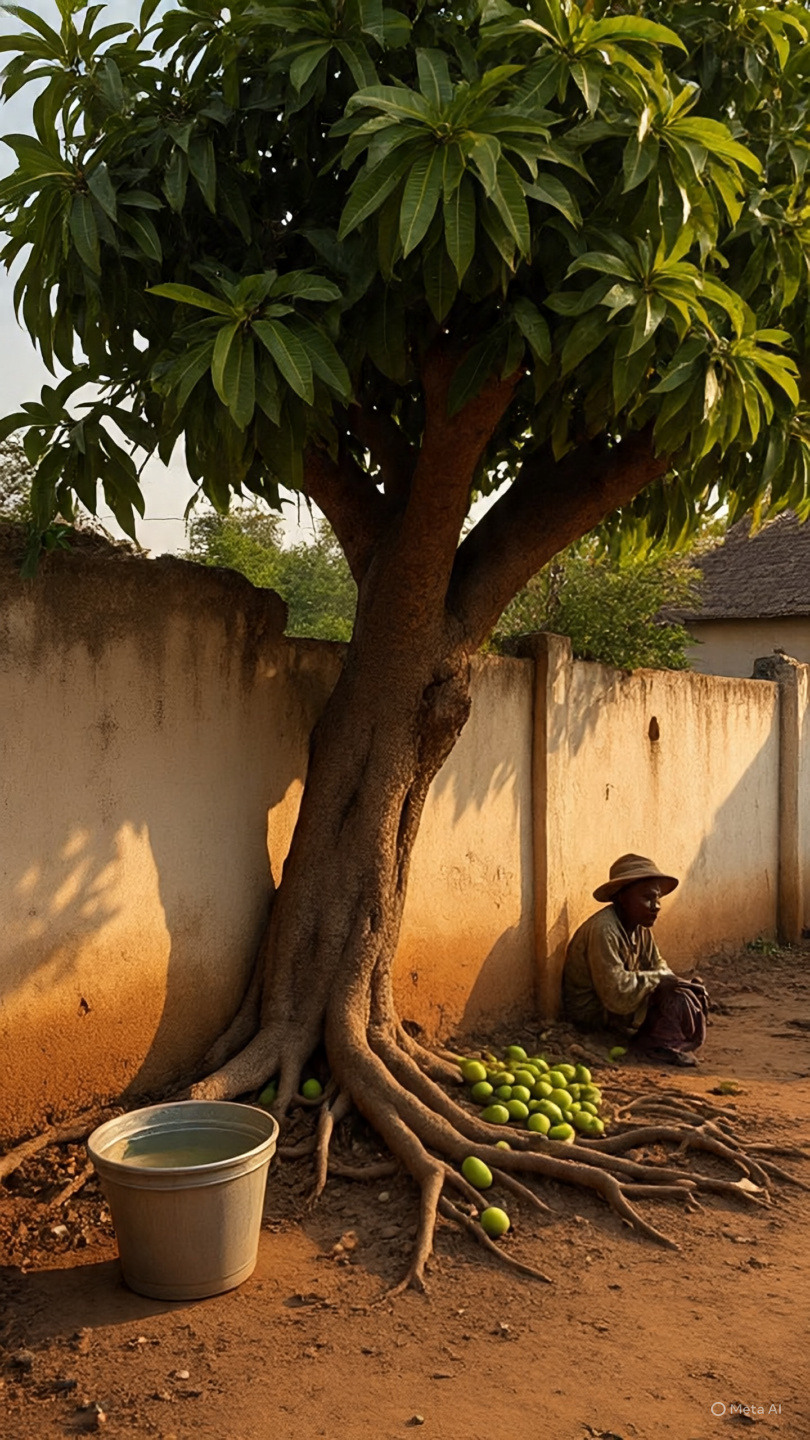
The mango tree behind our compound was older than the landlord. Nobody planted it — at least, nobody alive would claim it. Its roots had cracked the fence and lifted two blocks. NEPA boys threatened to cut it every dry season: “It will fall on the wires.” But it never fell.
Last March, harmattan came angry. It stripped every tree on the street bare. Yellow leaves blew into gutters and turned to dust. But the mango tree held ten leaves. Just ten. Like it was keeping receipts.
Baba from the next compound said the tree was stubborn because a woman was buried under it during the war. My mother said Baba likes to talk and that trees don’t need ghosts to be stubborn. They just need deep roots.
I started watering it when NEPA took light and I had nothing else to do. One bucket every evening. The soil would drink it fast, like it remembered rain. In April, small green buds showed up where I thought the branches were dead. By May, the whole tree was lying. It exploded green like it was mocking the harmattan.
Now it’s August. The tree has mangoes again — small, hard, green ones that will stain your shirt if you bite too early. Children throw stones and miss. The NEPA boys still eye it, but they don’t bring the saw.
Last week I sat under it during a blackout. No generator, no fan, just breeze moving through those leaves. The air smelled like wet earth even though it hadn’t rained.
That tree doesn’t know it’s in Abuja. Doesn’t know about fuel prices or cashless policy. It only knows sun, then water, then grow.
Maybe that’s why it’s still here. It isn’t waiting for the country to get better. It’s just being a tree. And that’s enough.