Wali Nanggroe Institution Identifies Substantive Customary Law in West Aceh
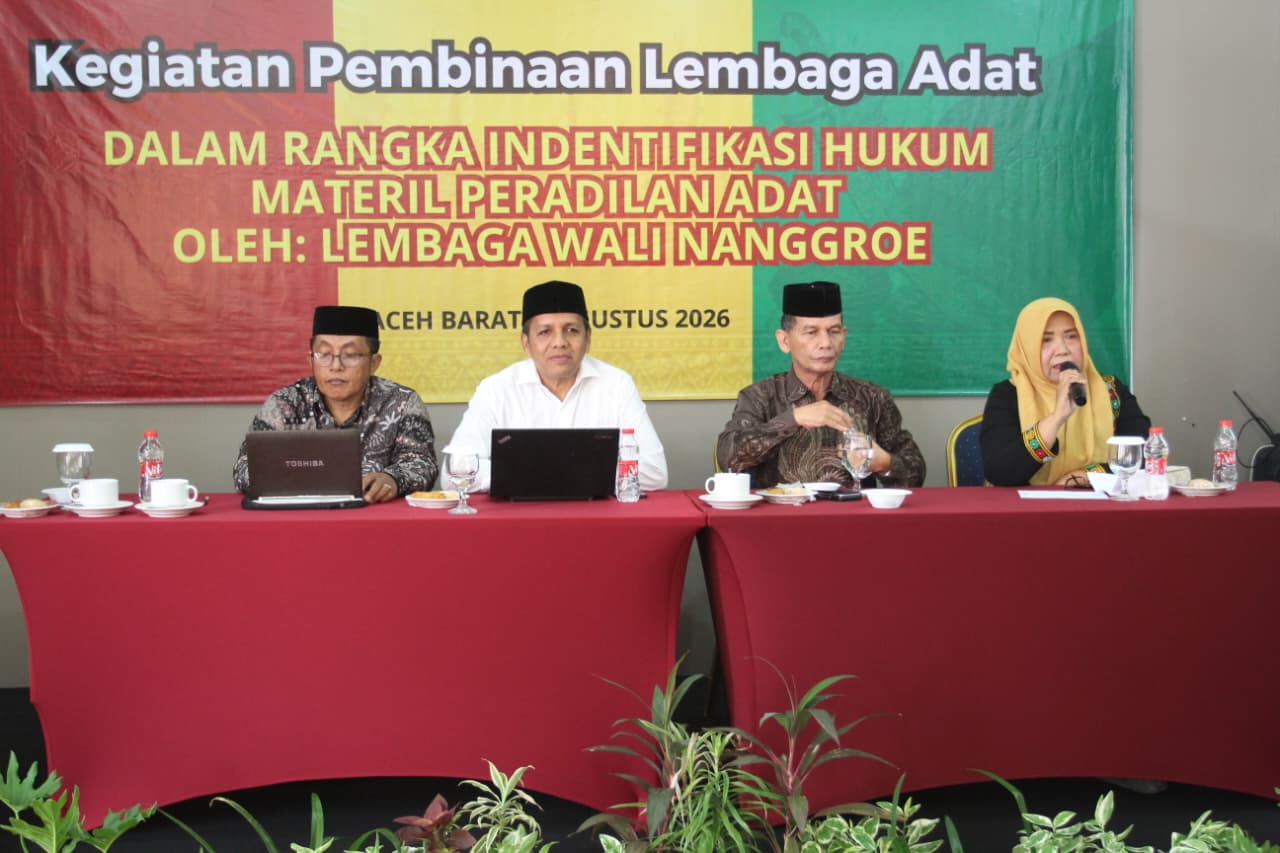
The Aceh Wali Nanggroe Institution held an event to identify the substantive law governing customary justice in West Aceh Regency on Tuesday (August 4, 2026). This initiative aims to strengthen the customary justice system while gathering the customary legal norms and practices that remain active within the community.
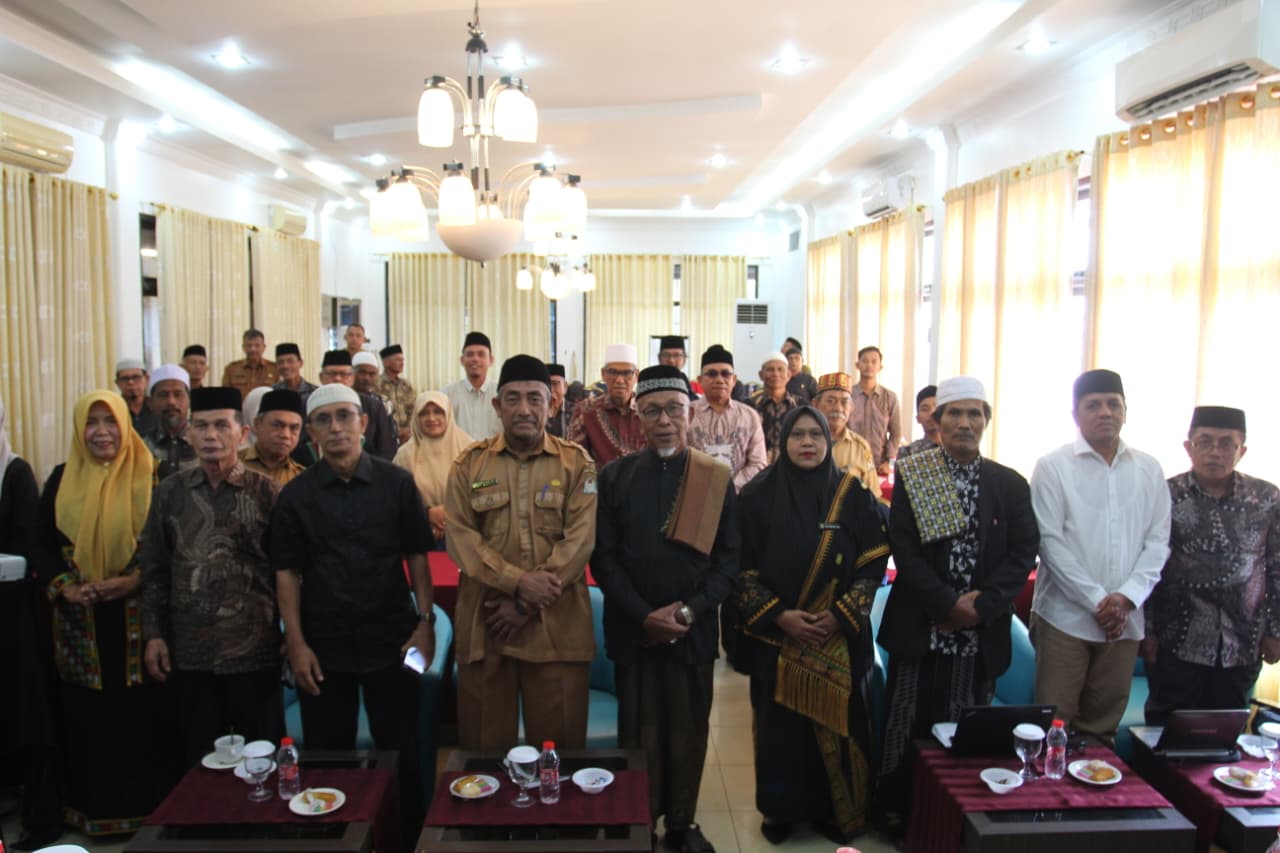
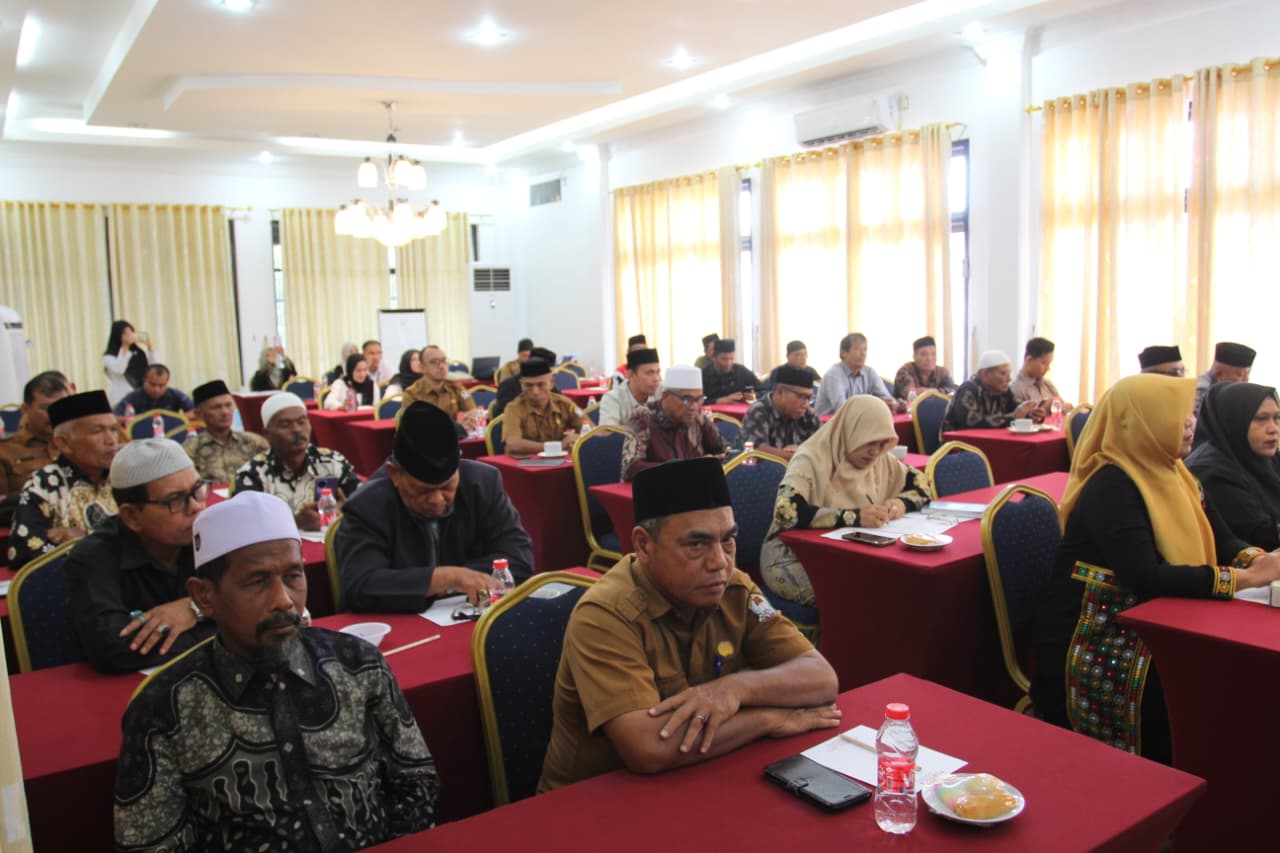
The event, held at the Portola Tiara Hotel Hall, was opened by Bukhari, ST, the Expert Staff to the West Aceh Regent for Human Resources and Aceh's Special Status. Participants included village heads (keuchik), representatives from the sub-district level of the Aceh Customary Council (MAA), customary leaders, and community figures. Presentations were delivered by resource persons from academia and the Wali Nanggroe Institution.
Zulfikar Idris, Head of the Cooperation and Public Relations Division at the Wali Nanggroe Institution, stated that the event was part of a strategic effort to establish a more comprehensive foundation for customary law and to strengthen the role of customary institutions in resolving various social issues within the community.
"Through this activity, the Wali Nanggroe Institution seeks to strengthen the customary justice system by compiling the active customary legal norms that serve as the basis for dispute resolution in the community," he said.
The organizing committee chair, Nurhayati, explained that the event aimed to enhance the understanding of customary stakeholders regarding customary law and the procedural law of customary justice. Additionally, the event served as a forum to identify the substantive laws that have historically formed the basis for resolving disputes through customary justice mechanisms.
"It is hoped that customary stakeholders will gain a better understanding of customary law and customary justice procedures, while also producing an identification of substantive laws that can serve as a foundation for dispute resolution through customary justice in Aceh," she said.
In his remarks, Bukhari emphasized that customary law continues to play a vital role in the lives of the Acehnese people. According to him, the existence of customary law is not merely a part of the community's identity but also rests on a strong legal foundation. "The implementation of customary law in Aceh rests on a clear legal foundation, including Law Number 44 of 1999 concerning the Implementation of Aceh's Special Status and Law Number 11 of 2006 concerning the Government of Aceh," he said.
He hopes that the involvement of village (gampong) representatives, customary leaders, and members of the Aceh Customary Council (MAA) in the event will strengthen the practice of customs and traditions, ensuring they remain guiding principles for community life.
The event's resource person, Dr. Zainal Abidin, SH, M.Si., stated that the enactment of the new Criminal Code (KUHP) provides scope for customary law to serve as a basis for resolving cases related to the values and norms prevailing in society.
According to him, the input provided by participants will serve as vital material for drafting recommendations—including the refinement of regulations such as qanuns (local ordinances) and gubernatorial regulations—to ensure greater legal certainty in the administration of customary justice.
"Participant input will form the basis for refining regulations, thereby establishing an increasingly clear and robust legal foundation for customary justice proceedings," he said.
Meanwhile, Cut Husna, SH, Head of the Legal and Procedural Affairs Division at Keurukon Katibul Wali (the Secretariat of the Aceh Wali Nanggroe Institution), explained that West Aceh Regency and Pidie Regency have been designated as pilot project areas for identifying the substantive customary laws used in customary justice.
The findings from these two regencies will be compiled and documented as written customary law, serving as a guide for resolving issues at the village, sub-district, and regency levels.
"This documentation of customary law is expected to strengthen legal certainty in customary justice proceedings while preserving Aceh's local wisdom values," she said.
During the event, participants also raised various issues encountered in the practical application of customary law. This input will contribute to the formulation of recommendations aimed at strengthening the legal standing of customary institutions, ensuring that community dispute resolution becomes more effective and fair, while remaining grounded in Aceh's local wisdom.[]
Thank so much @radjasalman.