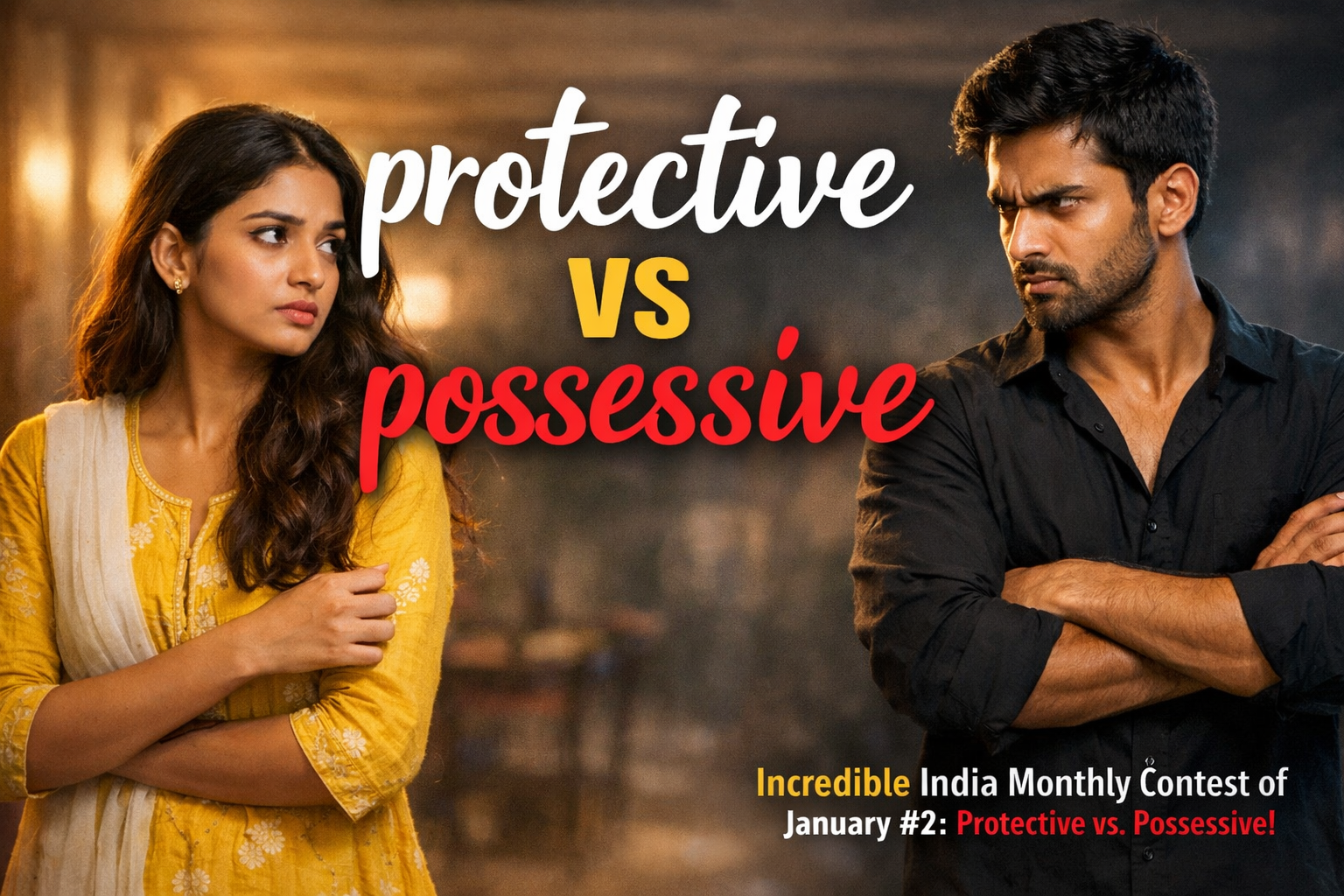
Incredible India Monthly Contest of January #2: Protective vs. Possessive!
Hello Steemians, it is indeed an exciting time to discuss the two key words of the contest: "protective and possessive". Why not join me as we uncover the hidden secrets these words have in our relationship with friends and family?
 |
|---|
How Do You Glance Towards The Two "P's"? Describe! |
|---|
The two words "protective" and "possessive" are two words with distinct functions and meanings. I will start by sharing what I feel the word protective stands for. Protective has to do with being on alert when safeguarding a particular person, secret, or object. Let's take, for instance, a protective glance at something that is usually watchful and controlled.
Whenever you are protective of something, you often feel that where that thing is isn't safe, so you stay on guard. When you are protective, you express responsibility, reassurance, and concern instead of dominance. What the word protective actually talks about is "I'm aware, I'm present, and I will step in if needed". Let's say for instance, standing up for someone when they’re being treated unfairly, then stepping back once things are okay.
Possessive |
|---|
The word possessive represents a firm claim of ownership to something. When someone is in the position of doing something that doesn't require your attention, the word possessive shows intensity and certainty in the stare, sometimes being followed by a tightened jaw and narrowed eyes. This shows that the words communicate attachment and exclusivity not because of words, but rather through focus. The word possessive says "this matters to me, don't interfere".
A possessive glance is firm and claiming.
The eyes lock in more directly, often lingering. There’s intensity and certainty in the stare, sometimes accompanied by narrowed eyes or a tightened jaw. It communicates attachment and exclusivity—not through words, but through unmistakable focus. It says: This matters to me. Don’t overstep.
Share Some Reasons Behind The Possessiveness In Any Relationships! |
|---|
 |
|---|
The possessiveness that comes from relationships doesn't exist in a particular aspect. It usually has to do with mixed experiences, and emotions. Here are the reasons I believe are behind possessiveness in relationships.
Low self-esteem; This happens when a person doubts their worth, which causes them to have the fear of being replaced. Possessiveness in this case shows up as jealousy, regular checking, and the requirement of reassurance.
Fear of loss; This is when someone is afraid of losing an individual they value, this can cause them to be possessive as an act to hold on to the relationship. It's not about control but rather anxiety.
Past experience; Sometimes individuals who have been cheated on, emotionally hurt, or maybe abandoned, can develop a possessive attitude in relationships, this is mainly to avoid getting hurt again.
Intense emotional attachment; When you suddenly develop a strong emotional attachment, it can result in possessiveness. This happens in the scenario that emotions grow faster than trust in the relationship. This can cause your partner to feel that "you are very important to me".
Overstepping personal boundaries; In some areas, possessiveness comes forth due to the desire for power or dominance in a relationship. This often creates an unhealthy atmosphere for one partner, which is mainly caused by emotional immaturity.
Lack of trust; This often takes place when there's no trust in both parties in relationships, broken or weak trust can appear as suspicion, monitoring, or jealousy.
Do You Believe Both "P's" Exist In Each Relation We Are Close To? Share Some Pros And Cons Behind Both "P's"! |
|---|
I certainly believe that protective and possessive feelings can exist in close relationships, depending on which one we are close to, but these two have their functions and impact in relationships.
 |
|---|
Yes, they do. In most close relationships, be it friendship, family, romantic, etc., an individual's having a protective instinct is natural. The desire to safeguard someone comes from care and attachment.
Possessiveness can't be avoided. This comes when insecurity, fear, or lack of trust conquers confidence and emotional safety.
So:
Protectiveness: Common and healthy, (when balanced).
Possessiveness: Occasional but unhealthy when it dominates
There's care and concern.
Aids in the development of physical and emotional safety.
Fosters support in emotional difficulties.
Helps build trust and loyalty.
Maintains adequate boundaries even in the process of helping.
Can result in overprotection.
It is sometimes smothering when boundaries aren't respected.
Can cause a lack of emotional growth and a lack of independence.
It can cause an individual to feel loved or valued initially.
Shows strong attachment.
It could increase attention for a while, but with time it would fade.
It can result in fear, resentment, and stress.
Often causes intense control and restrictions.
It can sometimes reduce freedom and individuality.
It damages the relationship due to a lack of trust and communication.
I would like to invite
Cc; @sduttaskitchen
@suboohi
@dove11
@ngoenyi
@entity01
Thanks for reading this post!!!