Artur Virgílio Alves dos Reis
Hello, people of Incredible India.
Here is another story of a forger, again related to currency.
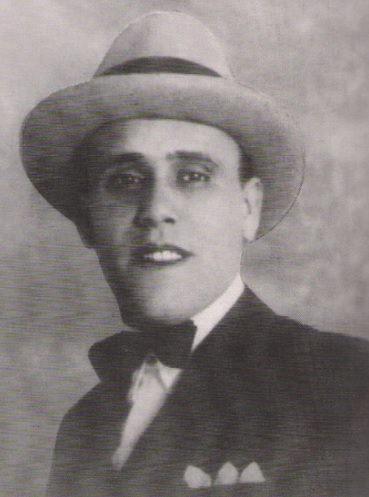
Artur Virgílio Alves dos Reis
Artur Virgilio was born in Lisbon on September 3, 1898, into a modest family. His father was a cattle transporter who had financial difficulties and went bankrupt in 1914. That same year, Artur enrolled to study engineering, but he dropped out of university to marry Maria Luisa Jacobetti de Azevedo. The marriage was not accepted by her family, who constantly pointed out Alves dos Reis's economic and social background.
In 1916, fed up with the criticism and snubs from his in-laws, he decided to go to the Portuguese colony of Angola, determined to make money by any means necessary. Alves dos Reis arrived at the port of Luanda with his first forged document: a diploma from the Polytechnic School of Engineering in London, which certified him as an electrical and mechanical engineer with studies in fields related to his supposed area of expertise.
When it came to working, his ingenuity helped him solve problems and feign competence without the proper knowledge.
In 1922, back in the Portuguese capital, Alves dos Reis acquired a company that resold American cars, which served as a front for other activities. He knew that currency controls in the colonies weren't as strict as in the country that founded them, so he crossed bad checks to defraud the Angolan company Ambaca. With the money he obtained, he tried to buy the Southern Angola Mining Company, but he was arrested and imprisoned.
When he was finally released, he decided that his next target would be the Bank of Portugal.
Using his extensive contacts in various circles, he established a network of collaborators without them all knowing exactly what they were getting into. Among his assistants were José Bandeira, the brother of the Portuguese ambassador to the Netherlands, the German spy Adolph Hennies, and the Dutch financier Karel Marang.
Together, the three of them drew up a fictitious contract with the Portuguese state, entrusting him with a secret financial operation. Riddled with forged signatures, the document authorized Alves dos Reis to print 500-escudo banknotes.
The presses of Waterlow & Sons Ltd. delivered the first series of banknotes in February 1925, although the issue date stated November 1922.

That same year, rumors began circulating about counterfeit 500-escudo banknotes. The Bank of Portugal was aware of this and alerted other banks to find evidence to distinguish genuine banknotes from counterfeits.
When Alves dos Reis was identified as responsible for the embezzlement, the newspaper O Século published an exposé in its November 1925 edition. Authorities confiscated the funds of the Bank of Angola, prompting Alves dos Reis to flee to Namibia with Hennies. The owner of the banknote printing company Waterlow & Sons Ltd provided the authorities with the printing plates and molds used for the counterfeit currency.
Alves dos Reis and Hennies were arrested in December 1925 aboard the steamship Adolph Woermann. Alves dos Reis was prosecuted and remanded in custody, claiming the bank had framed him. Hennies jumped overboard from the aforementioned ship, survived, and returned to his country to live out the rest of his life under the name of Hans Doring, which was his real name.
Alves dos Reis spent the rest of his life in poverty, with deteriorating health and attending the Protestant church until he died of a heart attack in June 1955. Days before, he had pulled off another scam, this time selling a non-existent shipment of Angolan coffee to a Lisbon merchant.

Wikipedia
Curated by: @wilmer1988