📷Firenze
🏛️ The Uffizi Gallery - Sala di Lorenzo Monaco
“The following passage leads to the Sala di Lorenzo Monaco, the room which bears the name of the austere monk of Camaldoli...”
The Sala di Lorenzo Monaco takes its name from the austere monk of Camaldoli.
It is hallowed by the presence of Fra Angelico’s Madonna, which still seems to echo with the music of the angelic choir.
Yet, for the modern visitor, it is the place where one turns to admire the Venus of the Renaissance rising from the sea — Sandro Botticelli’s famous Birth of Venus (No. 39).
🎨 The Birth of Venus — Sandro Botticelli
Painted for Lorenzo de’ Medici and inspired in part by verses of Angelo Poliziano, this is the most emblematic picture of the Quattrocento.
No description can surpass the golden words of Walter Pater in The Renaissance:
“At first, perhaps, you are attracted only by a quaintness of design...
...the sadness with which he has conceived the goddess of pleasure, as the depositary of a great power over the lives of men.”
(Walter Pater, The Renaissance)
🕊️ Other Masterpieces in the Room
Beyond Botticelli’s Venus, this room contains five other masterpieces of early Tuscan painting.
👑 Don Lorenzo — Coronation of the Madonna (1309)
Although signed and dated 1413, this work may be considered the last great altarpiece of the school of Giotto.
It was painted for a Camaldolese monastery, as shown by St. Benedict and St. Romuald in their white robes.
The predella depicts:
- The Adoration of the Magi
- Scenes from the life of St. Benedict, including his last meeting with his sister St. Scholastica, when her prayer brought a storm forcing him to remain overnight.
“I asked you a favour, and you refused it me;
I asked it of Almighty God, and He has granted it to me.”
👉 As Browning wrote in Fra Lippo Lippi:
“Brother Angelico’s the man, you’ll find;
Brother Lorenzo stands his single peer…”
✨ Domenico Veneziano — Madonna and Child with Saints (1305)
One of the very few authentic works by this great innovator of fifteenth-century painting.
👑 Botticelli — Adoration of the Magi (1286)
Painted for Santa Maria Novella, this work was enthusiastically praised by Vasari.
It includes remarkable portraits of the Medici family and their circle:
- 👑 Cosimo the Elder — kneeling before the Christ Child
- 👑 Piero il Gottoso and Giovanni di Cosimo — the other two kings
- 👦 Giuliano de’ Medici — the dark-haired youth who perished in the Pazzi conspiracy
- ⚔️ Lorenzo the Magnificent — standing with his hand on his sword
- 📜 Angelo Poliziano — behind Lorenzo
- 🎨 Botticelli — at the far right, gazing directly at the viewer
🕊️ Possibly painted just before or after Giuliano’s death, this painting has been called “The Apotheosis of the Medici.”
It should be contrasted with Botticelli’s later “Nativity” (1500), now in the National Gallery — a mystical work inspired by the followers of Savonarola.
👼 Domenico Ghirlandaio — Madonna and Child with Angels (1297)
A rich and harmonious composition with two archangels standing guard and two kneeling bishops in adoration.
✨ Fra Angelico — Tabernacle of the Guild of Flax Merchants (No. 17)
- Madonna and Child, with St. John the Baptist and St. Mark
- The famous series of angels, often copied
- Predella scenes:
- St. Mark reporting St. Peter’s sermons
- The martyrdom of St. Mark
- The Adoration of the Magi
🏛️ Beyond the Sala
🏞️ Corridor to the Palazzo Pitti
Following the corridor across the Ponte Vecchio, one encounters fine Italian engravings and ancient statues, including the so-called Dying Alexander, and several of those praised by Shelley.
🖼️ Sala del Baroccio
Highlights include:
- 👩 A lady with Petrarch’s Sonnets — Andrea del Sarto (No. 188)
- 👸 Eleonora of Toledo with Don Garzia (No. 172) — a touching portrait
- 🧔 Bartolommeo Panciatichi (No. 159)
- 👩 Lucrezia Panciatichi (No. 154) — a sympathetic and graceful rendering
- ⚛️ Galileo, by Sustermans (No. 163)
🕯️ The deaths of Eleonora and her sons Giovanni and Garzia in 1562 inspired dark legends —
tales of murder and revenge that are, in fact, entirely fictitious.
🏹 The Hall of Niobe
This hall contains the famous group of statues depicting the slaughter of Niobe and her children by Apollo and Artemis.
They are Roman or Graeco-Roman copies of a fourth-century B.C. original, brought from Asia Minor to Rome in 35 B.C.
The most striking is Niobe’s son, lifting his cloak as a shield —
protecting his sister, who leans dying against his knee.
👑 Portraits of the Medici Family
Further along is an interesting series of miniature portraits of the Medici, from Giovanni di Averardo to the family of Duke Cosimo.
Six of the later portraits are by Bronzino.
✏️ Drawings of the Old Masters
At the end of the corridor, near Baccio Bandinelli’s copy of the Laocoön, are three rooms of priceless drawings and sketches.
They include:
- 🖋️ Works by Fra Angelico through Fra Bartolommeo
- 🧠 Raphael — cartoons for Madonnas and St. George and the Dragon
- 🔮 Leonardo da Vinci — whose drawings reveal the true “Magician of the Renaissance”
- 🪶 Michelangelo — powerful anatomical studies
- ⚔️ Andrea Mantegna — Judith (1491), conceived with Roman heroism and once owned by Vasari
“Many of the Florentine painters, who were always better draughtsmen than colourists,
are seen to much greater advantage in their drawings than in their finished pictures.”
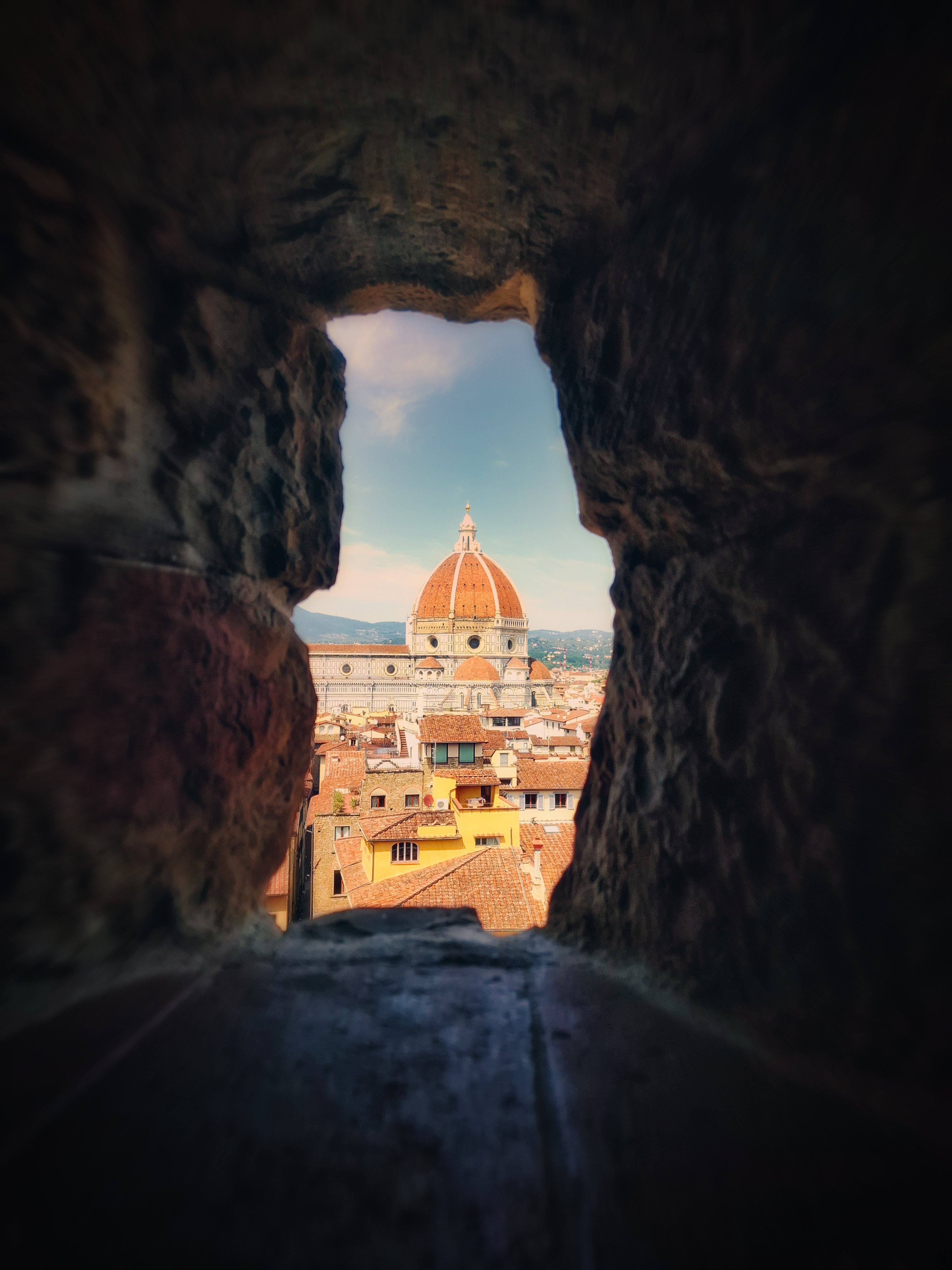
| Category | #photography |
| Photo taken at | Florence - Italy |

)
Upvoted! Thank you for supporting witness @jswit.