IP68 LED Strip Lights: Complete Guide to Waterproof LED Lighting
Summary: IP68 LED strip lights provide enhanced protection against dust and water for demanding wet, outdoor, and submerged applications. This guide explains IP68 ratings, IP67 vs. IP68, applications, installation considerations, power requirements, controls, and waterproof accessories, helping lighting professionals select and install reliable linear LED lighting for architectural and commercial projects.
Water and electricity require careful planning, especially when lighting is installed outdoors, around pools, in water features, or in other moisture-prone environments. IP68 LED strip lights are designed for applications where standard indoor LED strips are not suitable.
With the right protection, installation, power supply, and accessories, waterproof LED strips can provide reliable linear illumination in demanding architectural and commercial environments. SIRS-E® offers professional-grade waterproof LED strip solutions designed for wet, outdoor, and submerged applications, including white, RGB, RGBW, and digitally controlled options.
What Does IP68 Mean?
IP stands for Ingress Protection, a rating system used to indicate how well electrical equipment is protected against solids and liquids.
The 6 in IP68 indicates the highest standard of protection against dust. The 8 indicates protection against water during continuous or prolonged immersion under conditions specified by the manufacturer.
This makes IP68 different from a basic splash-resistant LED strip. However, an IP rating should not be treated as a universal guarantee that every IP68 product can be installed at any depth or for any underwater application. The actual product specifications and installation requirements matter.
Waterproof LED portfolio includes IP68 solutions designed for demanding wet, damp, and submerged commercial and architectural applications.
IP67 vs. IP68 LED Strip Lights
IP67 and IP68 LED strips are both designed for environments where moisture protection is important, but their intended water exposure can differ.
IP67: Generally designed to withstand temporary immersion and exposure to water.
IP68: Designed for more demanding and prolonged water exposure, subject to the manufacturer's specified conditions.
We offer both IP67 and IP68 waterproof strip options. Its waterproof product range includes weatherproof strips for outdoor applications as well as marine-grade silicone-encapsulated solutions for continuous water exposure.
The right choice depends on the environment rather than simply selecting the highest rating available.
Why Choose IP68 LED Strip Lights?
IP68 protection allows LED strip lighting to be considered for applications where conventional dry-location tape lighting would be unsuitable.
Protection Against Moisture
A properly sealed IP68 LED strip can resist water exposure far better than an indoor-rated strip. This makes it useful for wet areas, outdoor installations, water features, and other demanding environments.
Flexible Installation
LED strips can follow curves, edges, architectural details, and other spaces where rigid fixtures may be difficult to install. Their flexible format makes linear lighting possible across a wide variety of designs.
Multiple Lighting Options
Waterproof LED strips are not limited to one color. Depending on the product, applications can use white, tunable white, RGB, RGBW, or digitally controlled LED strips.
The waterproof portfolio includes dedicated white strips, RGB/RGBW options, and individually addressable SPI and Direct DMX solutions.
Architectural Design Flexibility
Waterproof linear lighting can add illumination to facades, landscaping, outdoor entertainment spaces, pools, fountains, and other architectural features without changing the basic linear-lighting concept.
Where Are IP68 LED Strips Used?
The application determines the type of waterproof LED strip required.
Outdoor Architectural Lighting
IP68 strips can be used where lighting is exposed to moisture, weather, and direct water contact. Common applications include building accents, facades, landscape elements, and exterior architectural details.
Pools and Water Features
Fully encapsulated waterproof strips are particularly useful around pools, fountains, splash zones, and aquatic features where continuous exposure to water is expected.
We specifically identify marine-grade silicone submersible LED strips for pools, fountains, marine installations, and landscape water features.
Commercial and Hospitality Spaces
Hotels, restaurants, entertainment venues, and other commercial environments may use waterproof linear lighting around outdoor seating, architectural features, wellness areas, and decorative installations.
Dynamic Lighting Installations
Waterproof RGB, RGBW, SPI, and Direct DMX strips can add color-changing and pixel-controlled effects to outdoor entertainment and architectural projects. Direct DMX strips provide pixel-by-pixel control using the DMX512 protocol.
Choosing the Right IP68 LED Strip
Waterproofing is only one part of selecting an LED strip. Consider the complete lighting system before installation.
1. Determine the Environment
Is the strip being installed indoors, outdoors, near water, or underwater? The answer will determine the appropriate IP rating and construction.
2. Select the Light Output and Color
White LED strips work well for architectural and functional illumination, while RGB and RGBW strips provide color-changing capabilities. RGBW adds a dedicated white LED for greater flexibility.
3. Check Voltage Requirements
LED strips are available in different input voltages. Our products include options such as 5V, 12V, and 24V DC, depending on the series.
4. Consider Run Length and Power
Long LED runs require careful power planning. Voltage drop can affect brightness and color consistency, so power injection, appropriate wire sizing, and the manufacturer's maximum run-length recommendations should be considered during system design.
5. Match the Control System
For simple installations, conventional dimming may be sufficient. More advanced projects may require RGB/RGBW control, SPI pixel control, or DMX-based systems.
Direct DMX LED strips can provide individual pixel control without requiring an external decoder, simplifying certain digitally controlled installations.
Installation Considerations for Waterproof LED Strips
Even a high IP rating cannot compensate for poor installation.
Connections, cuts, end caps, and junction points must maintain the intended level of protection. When waterproof strips are cut or extended, the exposed ends must be properly sealed using compatible waterproof accessories and installation methods.
We offer waterproof accessories including clear LED strip end caps, silicone bracket kits, and RTV silicone sealant for waterproof LED strip applications.
The installation surface should also be appropriate for the mounting method. Depending on the product, LED strips can use 3M VHB adhesive mounting tape, while mechanical mounting accessories may be appropriate for particular waterproof installations.
IP68 Does Not Mean "Install Anywhere"
One of the most important points when specifying waterproof LED lighting is that an IP68 rating does not remove the need for proper system design.
Consider:
- Water exposure
- Installation depth
- Operating temperature
- Power supply location
- Cable and connection protection
- Mounting method
- Heat management
- Maximum run length
- Control requirements
- Accessibility for maintenance
The manufacturer's technical documentation should always be reviewed for the specific product being installed.
Why Product Specifications Matter
Not all waterproof LED strips are built in the same way. Construction, LED density, voltage, encapsulation, operating temperature, mounting method, and control compatibility can all affect performance.
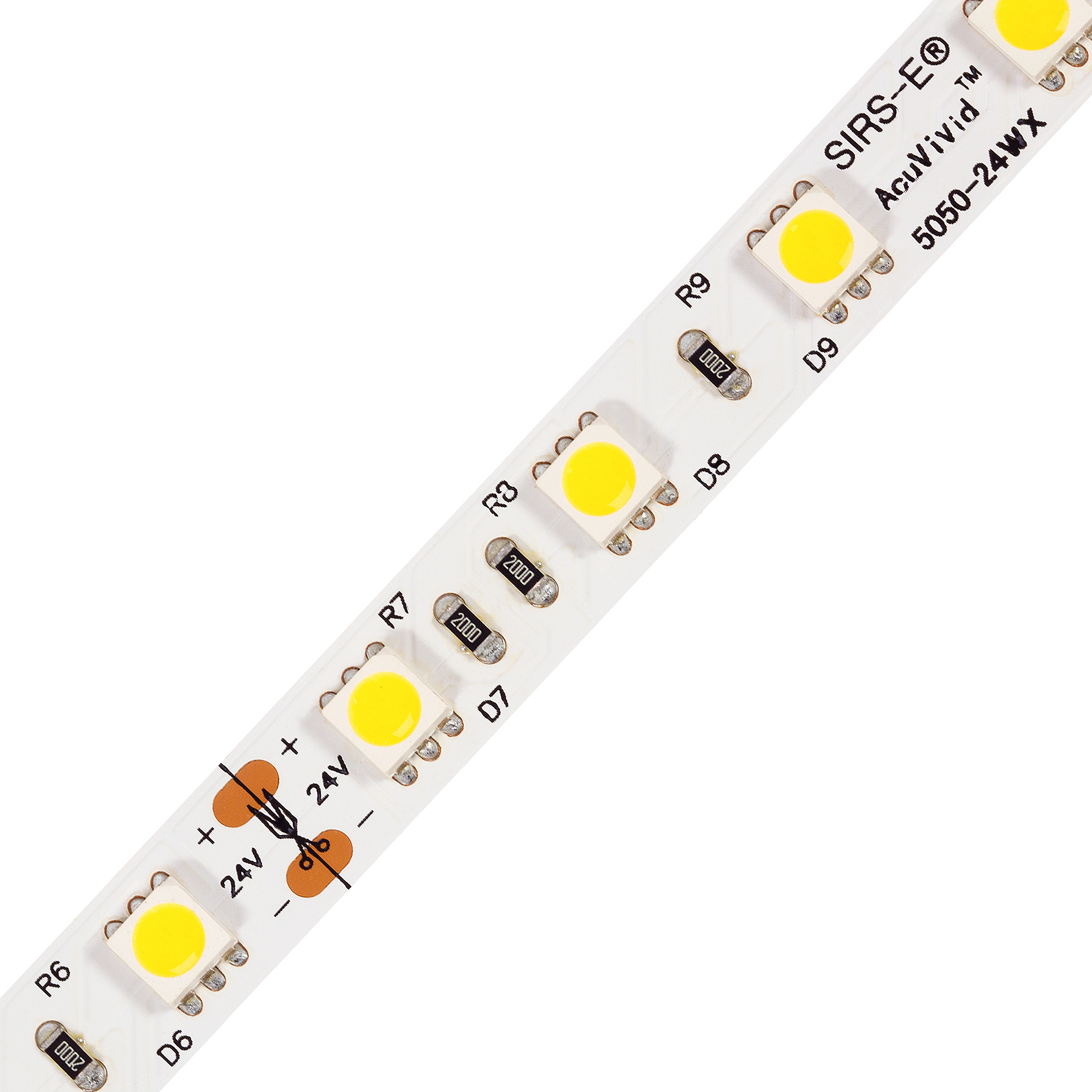
For example, SIRS-E's AcuVivid™ White LED Strip includes IP68 versions specified for damp and wet environments, with 24VDC operation, 60 LEDs/m, a 120-degree beam angle, and a stated 75,000-hour luminous-flux-maintenance figure.
These details demonstrate why selecting an LED strip should involve more than simply looking for the words "waterproof" or "IP68."
Final Thoughts
IP68 LED strip lights provide a practical solution for bringing linear illumination into wet, outdoor, and demanding environments. But reliable performance depends on selecting the correct IP protection, light output, voltage, control method, power system, and waterproof accessories for the application.
For professional projects, SIRS-E® combines American-made linear LED lighting with engineering expertise, waterproof solutions, and DMX control technologies. From architectural accents and outdoor installations to submerged water features and dynamic lighting environments, we can help specify a solution suited to the project's requirements. Contact SIRS-E to discuss your waterproof LED lighting application and find the right professional-grade solution for your project.
FAQs
1. What is an IP68 LED strip light?
An IP68 LED strip light is designed with high protection against dust and water ingress. Depending on the manufacturer's specifications, IP68 products can be suitable for demanding wet or submerged applications.
2. Can IP68 LED strips be used underwater?
Some IP68 LED strips are specifically designed for submerged applications. However, the manufacturer's installation conditions, immersion requirements, and product specifications should always be followed.
3. What is the difference between IP67 and IP68 LED strips?
Both provide strong protection against water and dust, but IP68 products are designed for more demanding and prolonged water exposure under specified conditions. The appropriate rating depends on the application.
4. Can IP68 LED strips be cut?
Some waterproof LED strips can be cut at designated points, but cutting can compromise the factory-applied waterproof protection. The cut end must be properly resealed using compatible accessories and installation methods.
5. Where can IP68 LED strips be used?
IP68 LED strips can be used for outdoor architectural lighting, landscape features, pools, fountains, water features, commercial environments, and dynamic lighting installations when the specific product is rated for the intended application.