Frangipani: The Bug Scammer.
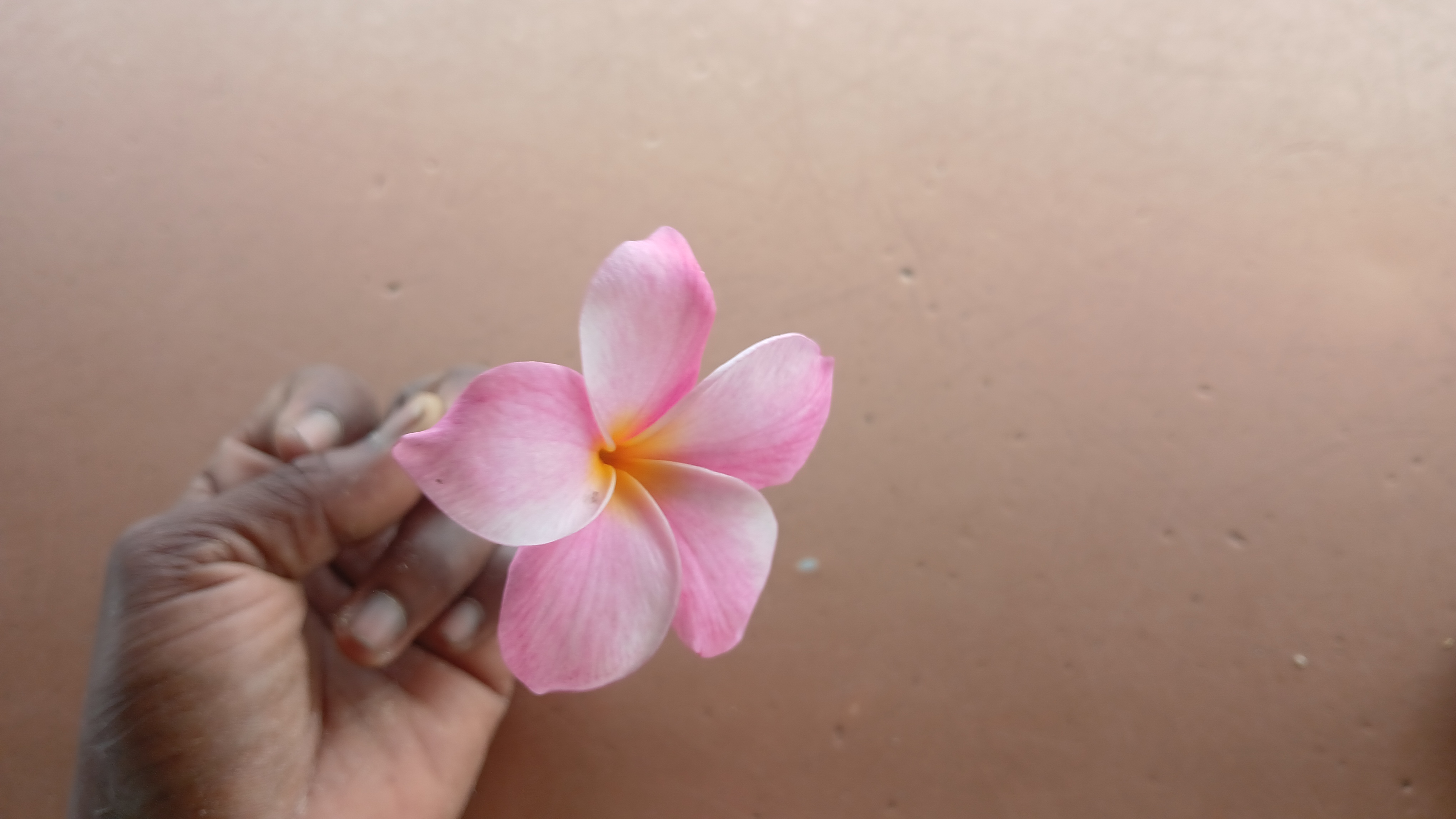
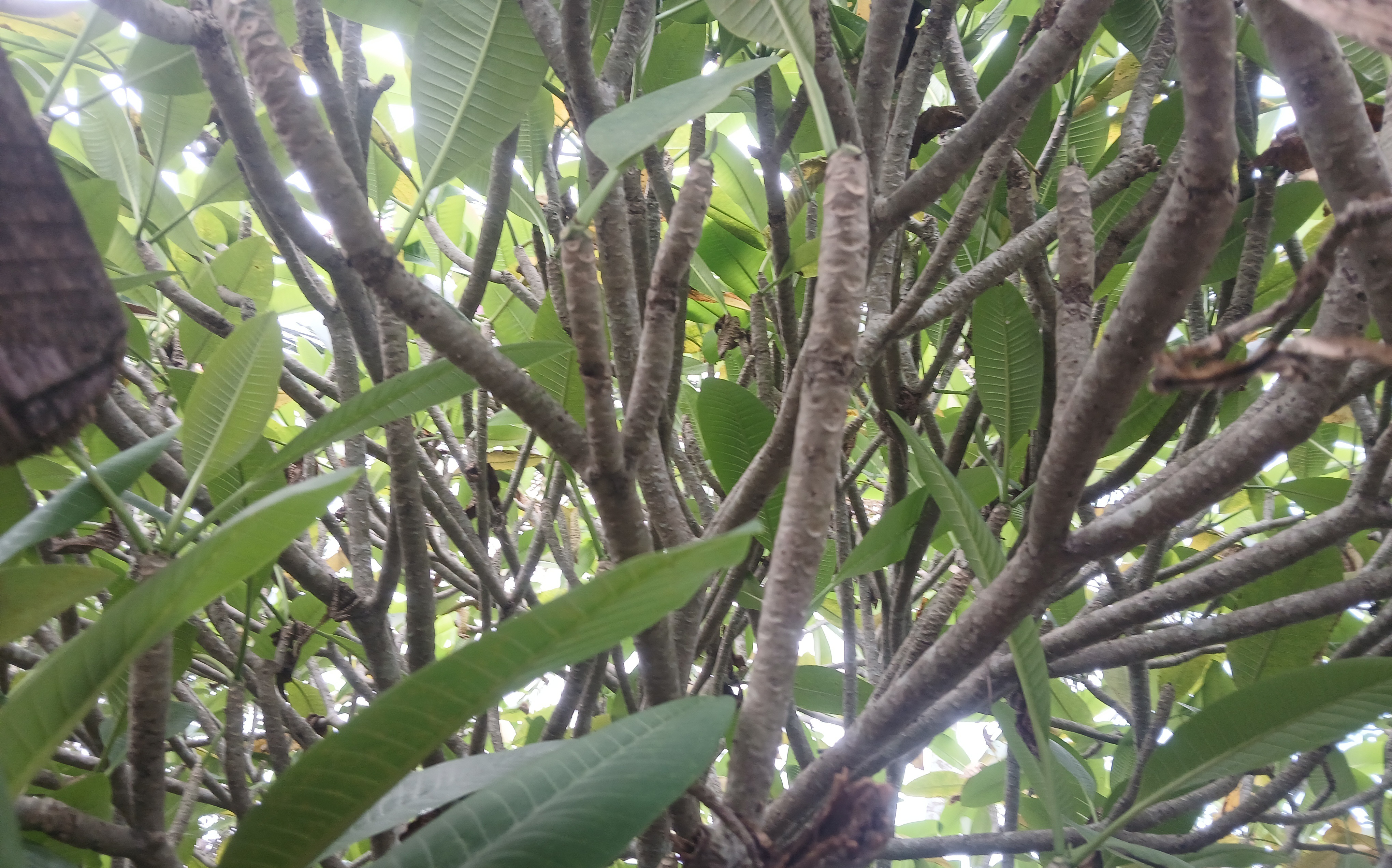
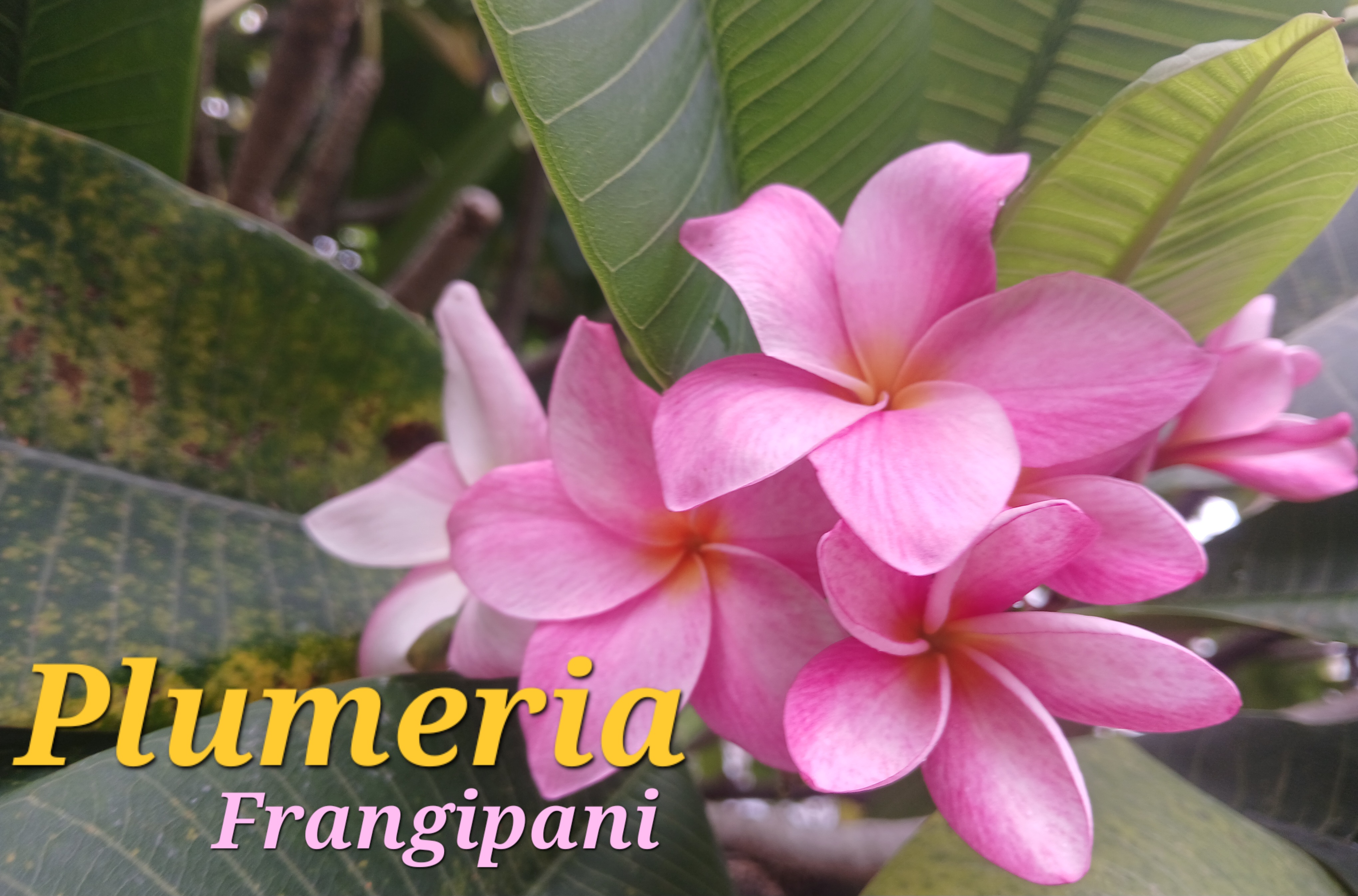 The Plumeria rubra Captured with GalaxyA15
The Frangipani
Many people remember this flower for its peculiar scent, but that is not what I remember it for. I remember when I was a kid, we got this flower and used a broomstick to insert it into the opening at the Pedicel, and then put it in a biro cap. We held it with arms stretched forward and ran with it.
The incoming wind interacts with the flower petals; each of the five angled petals is inclined and tucked under the next like turbine blades. As it catches the incoming wind, it creates an aerofoil effect, spinning as we run.
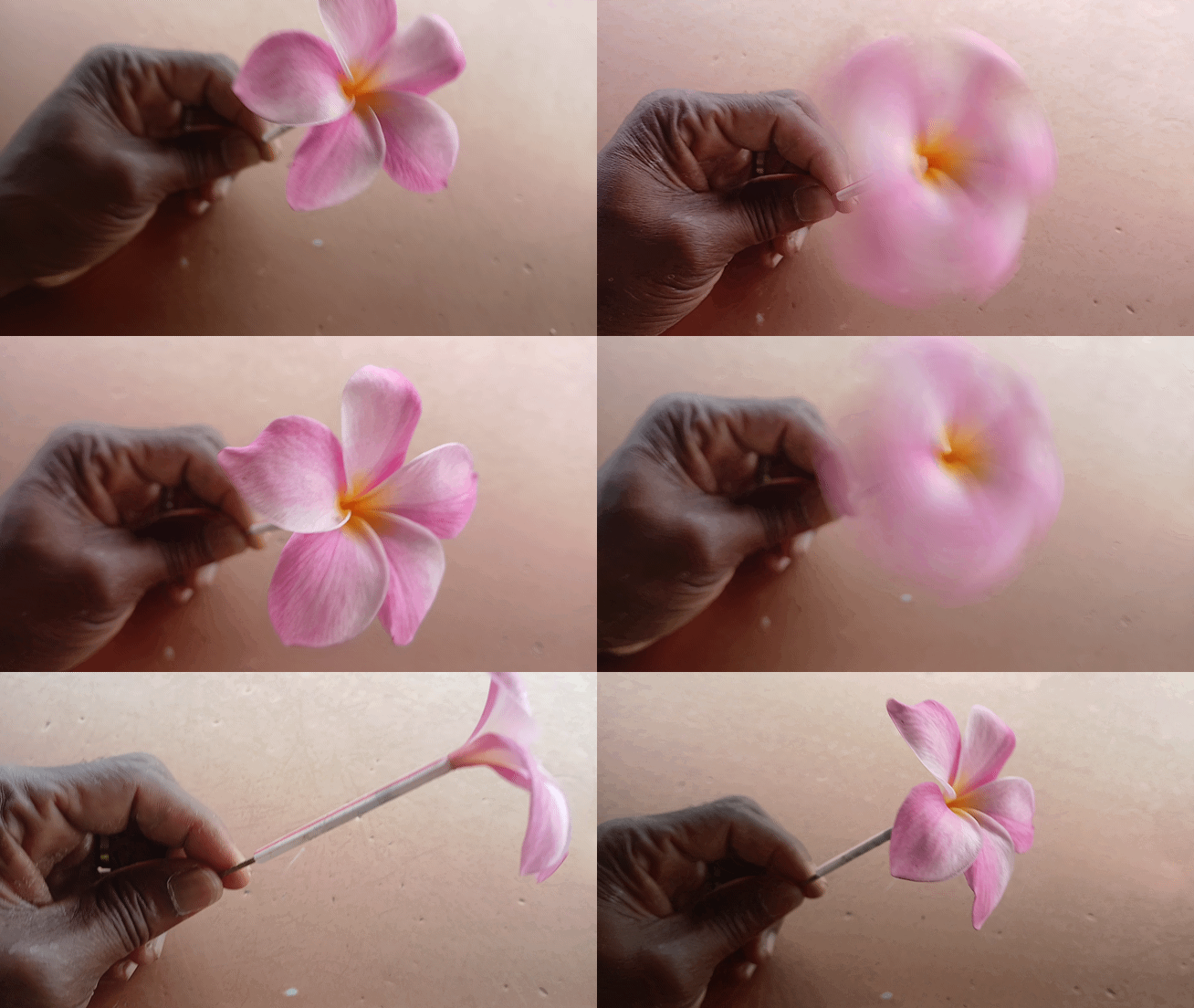
Here is a reconstructed version of what we did with the frangipani flowers. It spins once I blow air into it. Hopefully in another post, I will remember to show you how we cut and fixed a mango leaf into a similar propeller.
Back to the Frangipani, better identified as Plumeria rubra. I have been observing its scent is even stronger in the evening and nighttime, as if it is calling on nocturnal insects to come and enjoy fresh nectar. But if that is the case, then frangipani is guilty of fraud better known locally as 4-1-9. Based on what I read on wikipedia, the flowers on this plant do not produce nectar. It only makes false advertising using its scent and brilliant coloured flowers, calling pollinators who help pollinate the plant but end up disappointed when they find out that the flowers have no nectar to give as a reward for the service. The sweet scent is just a clever bait. If you want to convict frangipani, ask the sphinx moths, some bees and butterflies, to testify against it, they would recount how they got duped by frangipani.
I have seen frangipani with different colours, some are pink, red, white, yellow, orange, or pastel coloured flowers depending on the type that was planted, but the intensity of the colour on a single plant may depend on sunlight and the age of each flower from the time it blooms.
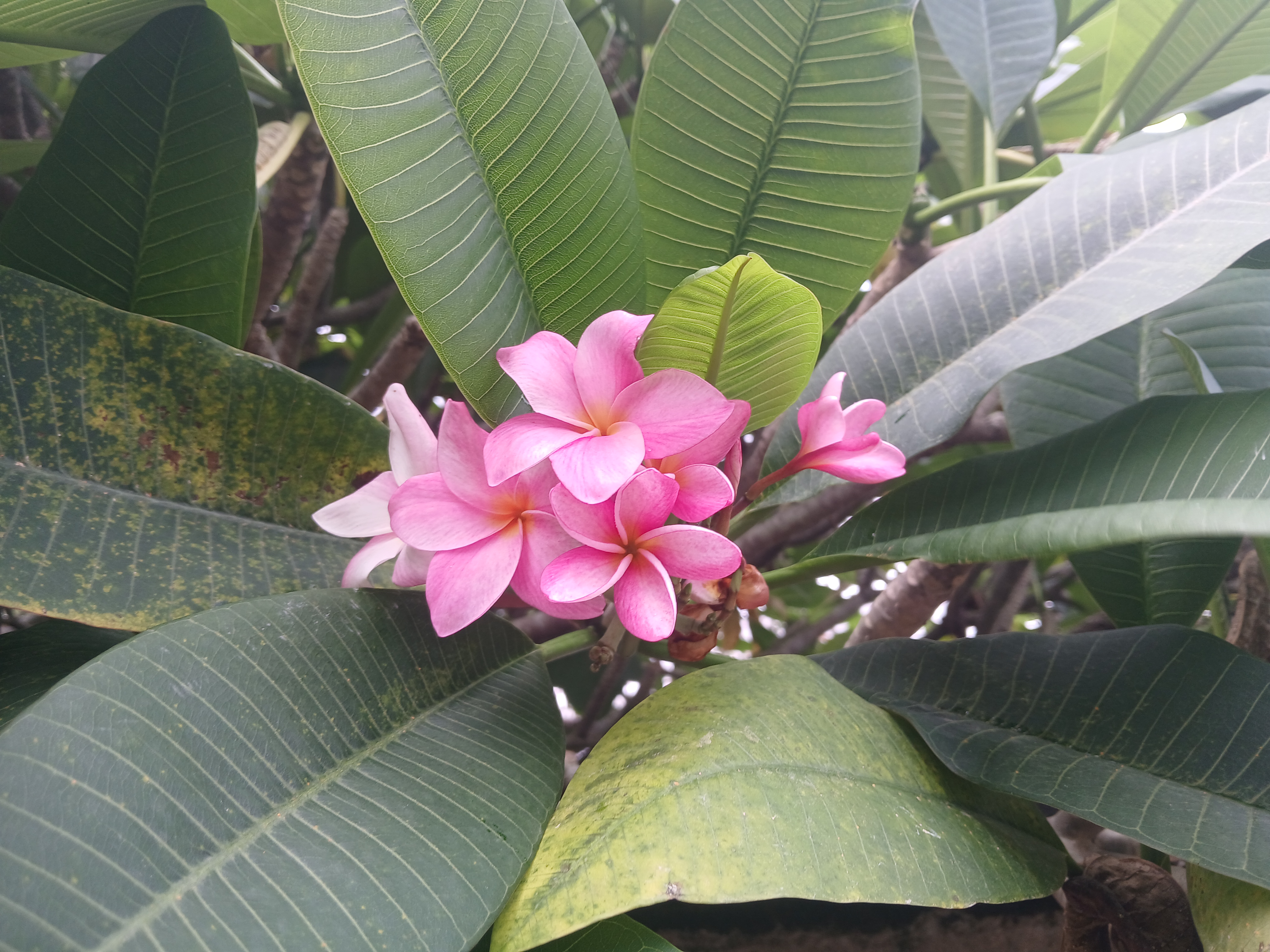
The frangipani has a protective mechanism, that white sap that comes out whenever I plug one of its leaves, cut a branch, or grab a flower below the pedicel. That white sap is toxic, it can irritate the skin if it touches you. Frangipani as a plant is mostly ornamental, no part is edible from roots, leaves, stems, flowers, or fruit..
Yes, I read on Wikipedia that it has fruits and seeds that come as a pod, though I have never seen it myself. Even when some people use the flowers for leis, hair, temple offerings, and essential oils for perfume, there is no record of their consumption..
Conclusion
I see this as another case confirming that not every plant was indeed meant to serve as food, but beyond its beautiful looks, Frangipani has a story as a master of deception. For Frangipani, the strength is not in the nectar it gives, but in the scent that calls insects and attracts us to it.
 |  |
|---|
@dequeen
@okere-blessing
@rubee2as1 @scottrollins
@joslud @xavuno @bountyking5
@josepha @udyliciouz @commey05
Media Credit |
|---|
| Composer | @manuelhooks |
|---|---|
| Captured by | @manuelhooks |
| Captured with | Galaxy-A15 |
| Location | Uyo, Nigeria |
| Posting Date | Sun. 28th June |
| (@) 2026 |
#steemexclusive #plants #club5050
#discovery #education #nigeria
#learning #science #data
#communication
#botany
#user
Accounts that delegate to us may receive a daily vote worth approximately 15x their delegated SP.