📱 WHAT OCCURS BETWEEN PRESSING “SEND” AND YOUR MESSAGE REACHING ANOTHER PERSON?
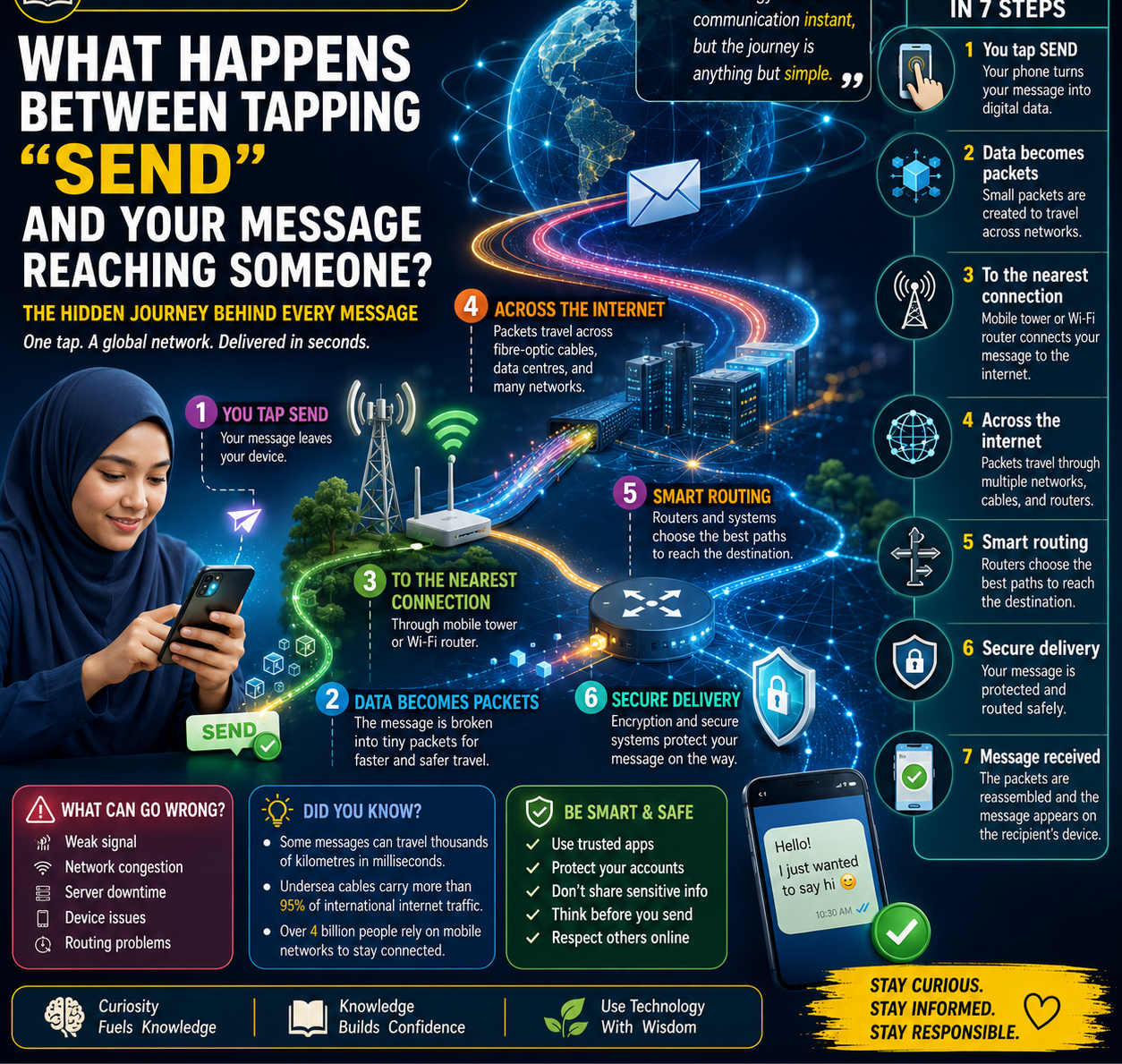
You type a message.
You press the SEND button.
Shortly thereafter, your acquaintance receives it.
Although it appears immediate, your MESSAGE has in fact traversed a complex network comprising phones, radio signals, cables, computers, routers, and servers prior to arriving at its endpoint.
Thus, what transpires during those brief moments?
We shall commence our investigation.
━━━━━━━━━━━━━━━━━━━━━━
🚀 THE JOURNEY COMMENCES WITH YOUR MOBILE DEVICE
Upon pressing SEND, your phone initiates the process of formatting the MESSAGE for transmission from your device.
Should you employ a messaging application, that app interacts with the internet via your phone's connectivity.
Such connectivity may take the form of:
📶 cellular data
🏠 wifi
🌐 an alternative internet link
Your phone encodes the data to enable its transmission across a network.
Hence, the journey commences.
━━━━━━━━━━━━━━━━━━━━━━
📦 YOUR MESSAGE DOES NOT TRAVEL AS A SINGLE LARGE ENTITY
Computers possess a remarkable capacity to communicate by transmitting information.
Substantial volumes of data can be partitioned into smaller segments, commonly referred to as packets.
Consider these packets as miniature letters, each carrying a fragment of the information you intend to send.
Each packet contains metadata that instructs the network on how to handle it.
The network then endeavours to forward these packets toward their intended destination.
Ultimately, the packets are reassembled so that the MESSAGE becomes readable.
━━━━━━━━━━━━━━━━━━━━━━
📡 HOW DOES YOUR PHONE ESTABLISH INTERNET CONNECTIVITY?
When utilizing mobile data, your phone communicates with a proximate cellular network via radio signals.
Your device links to a nearby cell tower.
That tower connects your communication to the broader network operated by your mobile carrier.
From that point, your data can traverse numerous interconnected networks.
If you employ wifi, your phone typically interfaces with a wireless router.
The router subsequently connects your network to an internet service provider.
In either scenario, your MESSAGE is now en route.
━━━━━━━━━━━━━━━━━━━━━━
🌍 THE INTERNET IS NOT MERELY "THE CLOUD"
We have been accustomed to perceiving the internet as something floating in the sky.
However, in actuality, considerable physical infrastructure underpins your online activities.
Among the elements found on the physical internet are:
🔌 fibre-optic cables
📡 wireless networks
🖥️ data centres
📶 routers
🌊 undersea cables
🏢 network facilities
Certain internet traffic can indeed traverse enormous fibre-optic cables that span countries and even oceans.
Consequently, when you send a MESSAGE to someone on the opposite side of the globe, your data may cover an exceptionally vast distance.
━━━━━━━━━━━━━━━━━━━━━━
🧭 WHO DETERMINES THE ROUTE OF YOUR DATA?
The internet comprises an extraordinarily large number of networks.
Routers facilitate the correct delivery of information packets.
They utilize data regarding a packet's intended destination to route it efficiently.
There is no singular mandatory path for a packet.
Various packets may follow different routes based on prevailing conditions.
This also contributes to the internet's resilience when a particular route becomes unavailable.
━━━━━━━━━━━━━━━━━━━━━━
🔐 BUT WHAT ABOUT PRIVACY?
This is where matters become particularly intriguing.
Numerous contemporary messaging services employ encryption to safeguard communications.
With end-to-end encryption, the communicating devices can be configured such that MESSAGE content remains unreadable to intermediaries.
Nevertheless, privacy technologies can vary significantly across services.
Encryption does not invariably render every piece of metadata surrounding a communication invisible.
Information such as account details, timestamps, device identifiers, and similar data may be processed differently depending on the service.
One should never presume that all facets of online activity are entirely private merely because a service utilizes encryption.
━━━━━━━━━━━━━━━━━━━━━━
📲 THE MESSAGE ULTIMATELY ARRIVES
After traversing the requisite networks, your MESSAGE reaches the recipient's device or the system responsible for it.
The receiving application then processes the data.
Your friend's phone subsequently displays something that appears remarkably simple.
"Hello!"
Yet behind that uncomplicated MESSAGE may lie a sophisticated array of digital operations.
And all of this can occur within mere seconds.
━━━━━━━━━━━━━━━━━━━━━━
🤯 AN EVEN MORE FASCINATING ASPECT
Your MESSAGE does not necessarily travel physically from your phone to your friend's.
Depending on the service, it may transit through numerous other systems along the way.
These systems can facilitate functions such as authentication, delivery, synchronization, storage, notifications, and more.
This is also how modern communication functions even when individuals are thousands of miles apart.
━━━━━━━━━━━━━━━━━━━━━━
⚠️ WHAT CAN GO WRONG?
Occasionally, the journey is interrupted for various reasons.
You might encounter:
❌ "MESSAGE not sent"
❌ "Connecting..."
❌ "Waiting for network"
❌ delayed delivery
❌ missed notifications
This can result from weak signal, network congestion, service outages, device malfunctions, routing errors, or other technical failures.
The remarkable aspect is that the internet is not infallible.
The remarkable aspect is that such a vast infrastructure operates flawlessly billions of times daily.
━━━━━━━━━━━━━━━━━━━━━━
🌐 THE BROADER CONTEXT
Whenever you:
📱 send a MESSAGE
🎥 watch a video
📧 send an email
💳 make an online payment
🌍 visit a website
you are engaging with a massive global communication infrastructure.
What appears as a simple tap on a screen can actually involve quite sophisticated technology.
━━━━━━━━━━━━━━━━━━━━━━
💡 WHAT THIS ILLUSTRATES
Technology can render some rather remarkable processes seemingly effortless.
Yet the elegance lies in our capacity to comprehend what occurs behind the screen.
The next time you press SEND, recall that it is actually traversing a remarkable digital infrastructure spanning the globe.
━━━━━━━━━━━━━━━━━━━━━━
❓ QUESTIONS YOU MAY HAVE
Q: Does every MESSAGE follow the same path?
A: Not necessarily. Internet traffic can take diverse routes depending on networks and conditions.
Q: Does my MESSAGE always go via a satellite?
A: No. A substantial portion of internet traffic travels through fibre-optic cables. Satellites represent merely one possible communication method.
Q: Why can messages sometimes arrive late?
A: Due to network issues, weak connections, service interruptions, device problems, or other technical factors.
Q: Is the internet entirely wireless?
A: No. Much of the internet's infrastructure depends on physical cables and networks.
━━━━━━━━━━━━━━━━━━━━━━
⭐ KEY TAKEAWAYS
📱 your phone encodes information
📦 data can be divided into packets
📶 networks transport those packets toward their destination
🧭 routers assist in directing traffic between networks
🌊 physical cables play a significant role in the global internet
🔐 encryption can protect communication depending on the service
🌍 a simple MESSAGE can traverse an incredibly long distance
━━━━━━━━━━━━━━━━━━━━━━
🤝 AN ETHICAL PERSPECTIVE
The technology underlying modern communication is potent, yet we must respect individuals' privacy, refrain from disseminating harmful information, safeguard our accounts, and acknowledge that real people exist behind the screens.
Technology grants us a remarkable capacity to communicate.
Wisdom dictates how we responsibly exercise that capacity.
━━━━━━━━━━━━━━━━━━━━━━
🏁 CONCLUSION
The next time you press SEND, you can appreciate what transpires.
A simple MESSAGE embarks on its journey across networks, devices, cables, routers, and digital systems to appear on another person's screen.
What takes mere seconds is actually the culmination of decades of scientific research, engineering, infrastructure, and global cooperation.
📱 one tap
🌍 one global network
⚡ one MESSAGE delivered in seconds
That is what lies behind a simple digital interaction.
━━━━━━━━━━━━━━━━━━━━━━
📢 CALL TO ACTION
The next time you use your phone, instead of asking:
"How can I use this technology?"
Ask:
🧠 "How can I understand the inner workings of this technology?"
Curiosity is where knowledge begins.
🌟 Follow @aboy01 for more interesting guides that explore technology, knowledge and ideas.
Or @mauromar for more science and technology guide
reach us @