Solar Storms: Can the Sun Affect Technology on Earth?
The Sun may look peaceful from Earth, but it is actually a very active star. From time to time, it releases enormous bursts of energy and charged particles into space. These events are known as solar storms. When a powerful solar storm reaches Earth, it can interact with our planet's magnetic field and create beautiful auroras, but it can also affect satellites, radio communication, navigation systems, and even electrical infrastructure.
Solar storms can begin with powerful eruptions on the Sun called solar flares and coronal mass ejections. These events can send huge amounts of energy and charged particles traveling through space. If they are directed toward Earth, they may arrive after a period of time and disturb the planet's magnetic environment. The stronger the storm, the greater the possibility of technological effects.
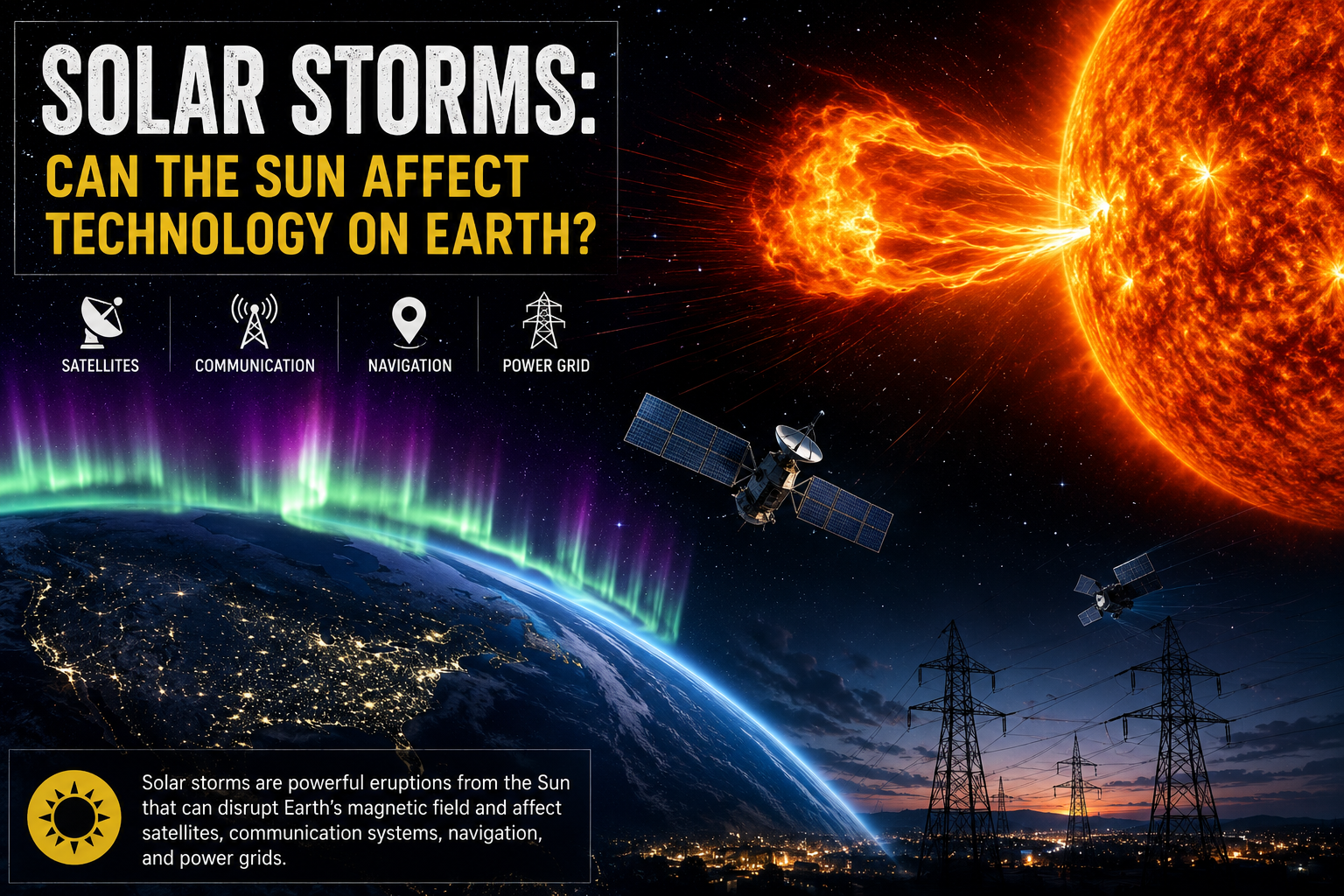
Modern technology makes us more connected to space weather than ever before. Satellites provide communication, navigation, weather forecasting, and many other important services, so strong solar activity can create challenges for these systems. Scientists continuously observe the Sun using satellites and ground-based instruments so they can detect potentially dangerous solar activity and give warnings before major events reach Earth.
Personally, I think solar storms are a fascinating reminder that Earth is connected to a much larger space environment. We often think of technology as something completely controlled by humans, but events happening millions of kilometers away can sometimes influence the systems we depend on every day. Studying the Sun and improving our ability to predict solar storms could become increasingly important as our dependence on technology continues to grow.
What Are Your Thoughts?
If you enjoyed this article, your support through an upvote would mean a lot to me. Thanks for reading and supporting my work!
Esto es genial, la diferencia se nota en la foto donde las auroras rodean los satélites. ¿Cuánto tiempo tarda típicamente una eyección de masa coronal en llegar a la Tierra? Práctico, porque así podemos calibrar los sistemas de alerta.