Earth's largest supervolcano becomes active.
in Popular STEM3 days ago

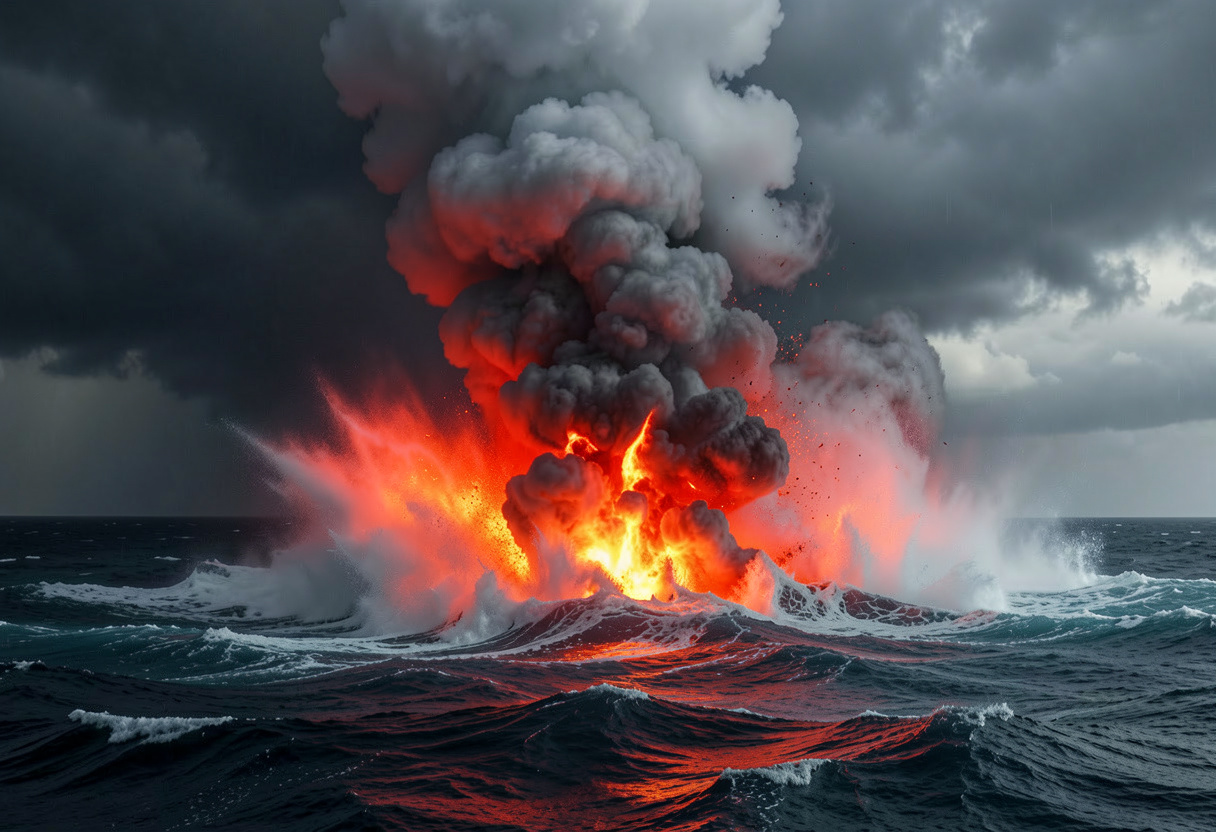
Earth's largest supervolcano becomes active.


Research published on July 28 reveals that the giant Kikai caldera—located mostly underwater in southern Japan—is beginning to recharge with fresh magma. This finding comes from scientists at Kobe University, working in collaboration with the Japan Agency for Marine-Earth Science and Technology.
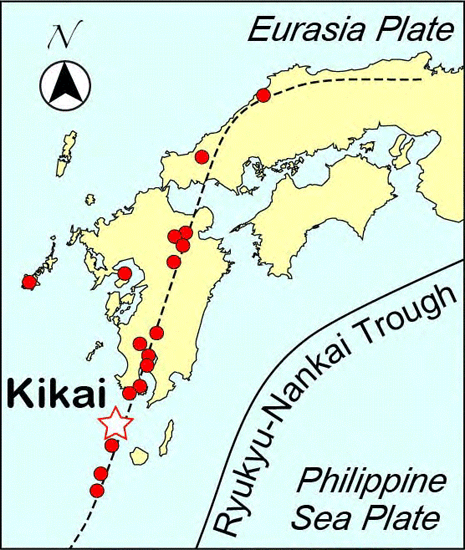

Kikai is located where the star is shown on the map; the image displays the islands of southern Japan and the main island. It is a massive supervolcano that produced a cataclysmic eruption 7,300 years ago—in fact, it is classified as the largest known eruption of the Holocene epoch. The Holocene is the period we live in today; it began about 11,700 years ago at the end of the Ice Age and marks the era of humanity's flourishing.


Humanity suffered greatly in this region 7,300 years ago because the eruption was devastating; it literally obliterated the island that once stood to the north and severely impacted Japan, Korea, and parts of China, burying crops under millions of tons of ash. Researchers have discovered that the magma currently entering the system is not residual—left over from that ancient eruption—but rather entirely new magma.


Fresh magma is flowing in; this supports the theory that, following a massive caldera eruption, the caldera void does not simply vanish. Instead, the system gradually rebuilds itself with new magma. One might wish calderas would disappear after exploding, but unfortunately, that is not the case. And how did they discover this? Through marine seismology—using controlled compressed-air blasts and ocean-floor seismometers to read seismic waves acting like radar or sonar. These waves passed through the subsurface material, allowing researchers to distinguish between zones of solid rock and zones of partially molten rock.


The question remains: what would happen if an eruption like the one from 7,300 years ago occurred today? The outlook would be grim. What would happen if it fully refilled with new magma and erupted again? Supervolcano eruptions are unlike the volcanic events we typically see; it isn't just a volcano spewing lava, ash, and gas from a central cone. In a supervolcano eruption, the entire ground surface erupts. The caldera spans tens of square kilometers; the whole area collapses and erupts. It is a cataclysmic event.


During that last major eruption 7,300 years ago, the volcano ejected between 332 and 457 cubic kilometers of material. (For scale, a single cubic kilometer measures 1,000 meters in length, width, and height). Pyroclastic flows traveled over 100 kilometers—even across the sea. Anything caught in a pyroclastic flow—much like the events seen in documentaries about Pompeii—is incinerated and destroyed; it is essentially a wave of searing-hot ash. Ashfall from the event covered a large part of Japan.


Souce


There are around 10 to 12 million people living on that island; back then, practically the entire island became a dead zone—a scene of total destruction affecting both the vegetation and the human communities present at the time. It is believed that it took centuries for life and wildlife to return to the territory. If something similar were to happen today, the effects would likewise be catastrophic; we are talking about some 14 million people directly affected—that is, within the "circle of death"—who would absolutely have to be evacuated. However, thanks to Japan's current monitoring systems—which are the best in the world—it is highly likely we would know a major event was imminent days or even weeks before the eruption actually occurred.


Even so, evacuating millions of people would be a colossal undertaking requiring international intervention and support from multiple nations. After all, it is not just a matter of getting people out, but also housing them—potentially for years—since the entire southern part of the island, at the very least, would be devastated. Even then, the death toll on the first day of the eruption is estimated to reach the thousands, primarily due to the tsunamis triggered by the collapse of the caldera.


Furthermore, there would be pyroclastic flows, and the worst would follow: massive ashfall—layers ranging from tens of centimeters to over a meter thick across that southern island. Further north, Tokyo and Osaka would be blanketed by ash layers between roughly 20 and 50 centimeters deep; while the accumulation would decrease as one moved further north, these layers would destroy crops throughout the region—not only in Japan but also in South Korea and China.


There would be crop destruction, soil and water contamination, severe respiratory problems, and food shortages; the international economic impact would be devastating. Air traffic across East Asia would be disrupted, as volcanic ash is disastrous for aircraft engines. Ash clouds would reach Korea and China, and potentially travel even further, depending on the winds. Global climatic effects would ensue, with a massive injection of sulfur and particles into the stratosphere causing temporary cooling lasting anywhere from several months to a few years. It would not escalate into a decades-long "volcanic winter"—which would require an eruption of a much larger scale—but the impact would still be catastrophic.


Study Source


The images without reference were created with AI
Thank you for visiting my blog. If you like posts about #science, #planet, #politics, #rights #crypto, #traveling and discovering secrets and beauties of the #universe, feel free to Follow me as these are the topics I write about the most. Have a wonderful day and stay on this great platform :) :)


! The truth will set us free and science is the one that is closest to the truth!


Sort:  

Congratulations!

Your post has been selected and upvoted by the SteemPro Team 🚀

Explore more on SteemPro:
🌐 https://www.steempro.com
🎮 Play SteemHeights: https://www.steempro.com/games/steem-heights
💬 Join our Discord: https://discord.gg/Bsf98vMg6U

💪 Supporting the growth of the Steem ecosystem together.

🟩 Vote for witness faisalamin:
https://steemitwallet.com/~witnesses
https://www.steempro.com/witnesses#faisalamin

steempro-cover-black.png
This is an automated message.