The first modern telescope “dismantled”
in Popular STEM21 days ago

The first modern telescope “dismantled”


Souce


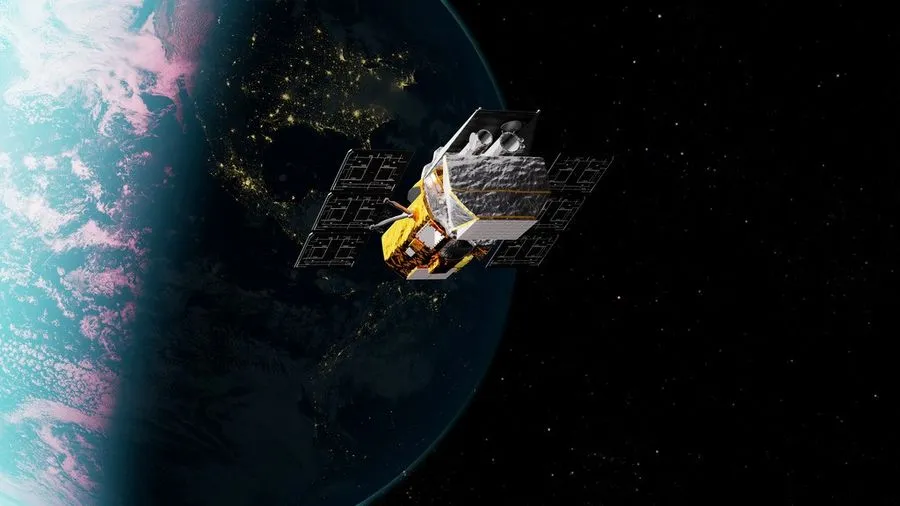
The Swift Telescope is another instrument destined to reach the end of its operational life—much like Hubble—within a few years, unless a rescue plan is implemented (or if one is attempted but fails, as happened recently with another telescope slated for destruction this year).


Launched in 2004, the Swift space telescope orbits Earth; its low orbit has been gradually decaying due to atmospheric drag—caused by interactions with Earth's atmospheric molecules—and solar activity. Solar storms and activity act much like an oven heating up: just as bread rises when heated, the Earth's atmosphere expands. When solar storms strike the upper atmosphere, the energy charges atmospheric particles, causing the atmosphere to swell and reach a higher altitude. Satellites that were previously orbiting smoothly through the near-vacuum of space—free from drag—begin to encounter a slight "breeze" that slows them down; and in orbit, a reduction in speed means falling back toward Earth.


Even though we see astronauts in space stations experiencing weightlessness or microgravity, gravity is still present. If they were standing on a 400-kilometer-high column, they would still feel Earth's gravity; they would weigh slightly less—an 80 kg person would weigh approximately 70 kg—but they would still have weight. And if a space station or satellite were to suddenly come to a halt, it would plummet straight down to Earth like a lead weight; that is why slowing down is fatal. To try to save the "soldier" known as the Swift telescope, NASA hired the company Katalyst Space to send the *Link* spacecraft; it was supposed to approach Swift, grab it with robotic arms, and boost it into a safer, higher orbit.


*Link* launched on July 3, 2026, but shortly thereafter experienced attitude control failures and began spinning uncontrollably; on August 19, NASA and Katalyst Space announced that the mission had failed. This time, *Link* couldn't rescue the princess—and with all due respect, that princess is quite heavy. Swift has a launch mass of about 1,470 kg. NASA estimates it will drop below an altitude of 300 km in a month or two—around September or October. From that point on, the descent accelerates. Some estimates place re-entry toward the end of 2026.


The point is that most of it will disintegrate upon entry into the atmosphere due to the heat, but not all of it; some fragments will strike the surface—the question is where.


Souce


The area shaded in pink represents the tropical zone; the actual path will be a strip within that area, though slightly narrower. For instance, Havana would likely be spared; even though it lies within the tropics, the space telescope's orbital path covers a somewhat narrower band. The orbital inclination is 20.6°, meaning re-entry will occur between 21° North and 21° South latitude. That is a slightly narrower range than the tropical zone shown on this map.


In practical terms, it could land almost anywhere in the Caribbean, across all of Central America, much of southern Mexico, northern South America, and parts of Central Africa and the Sahel—though not the extreme north or south of Africa. It could also land in northern Australia, in the ocean, or, of course, across Southeast Asia and all of Indonesia.


There is a risk of ground impact, and the object cannot be steered—which is a common topic of discussion: the ability to guide satellites toward a safe zone. The safest place on the planet to drop something without causing harm is, in principle, the South Pacific. That is where Point Nemo is located—the most isolated spot on Earth. There is no solid land there, just open ocean; the only solid matter might be 3,000 or 4,000 meters down on the seabed, but there are no islands. That makes it the ideal location for de-orbiting any object from space.


The images without reference were created with AI
Thank you for visiting my blog. If you like posts about #science, #planet, #politics, #rights #crypto, #traveling and discovering secrets and beauties of the #universe, feel free to Follow me as these are the topics I write about the most. Have a wonderful day and stay on this great platform :) :)


! The truth will set us free and science is the one that is closest to the truth!


Sort:  

Congratulations!

Your post has been selected and upvoted by the SteemPro Team 🚀

Explore more on SteemPro:
🌐 https://www.steempro.com
🎮 Play SteemHeights: https://www.steempro.com/games/steem-heights
💬 Join our Discord: https://discord.gg/Bsf98vMg6U

💪 Supporting the growth of the Steem ecosystem together.

🟩 Vote for witness faisalamin:
https://steemitwallet.com/~witnesses
https://www.steempro.com/witnesses#faisalamin

steempro-cover-black.png
This is an automated message.