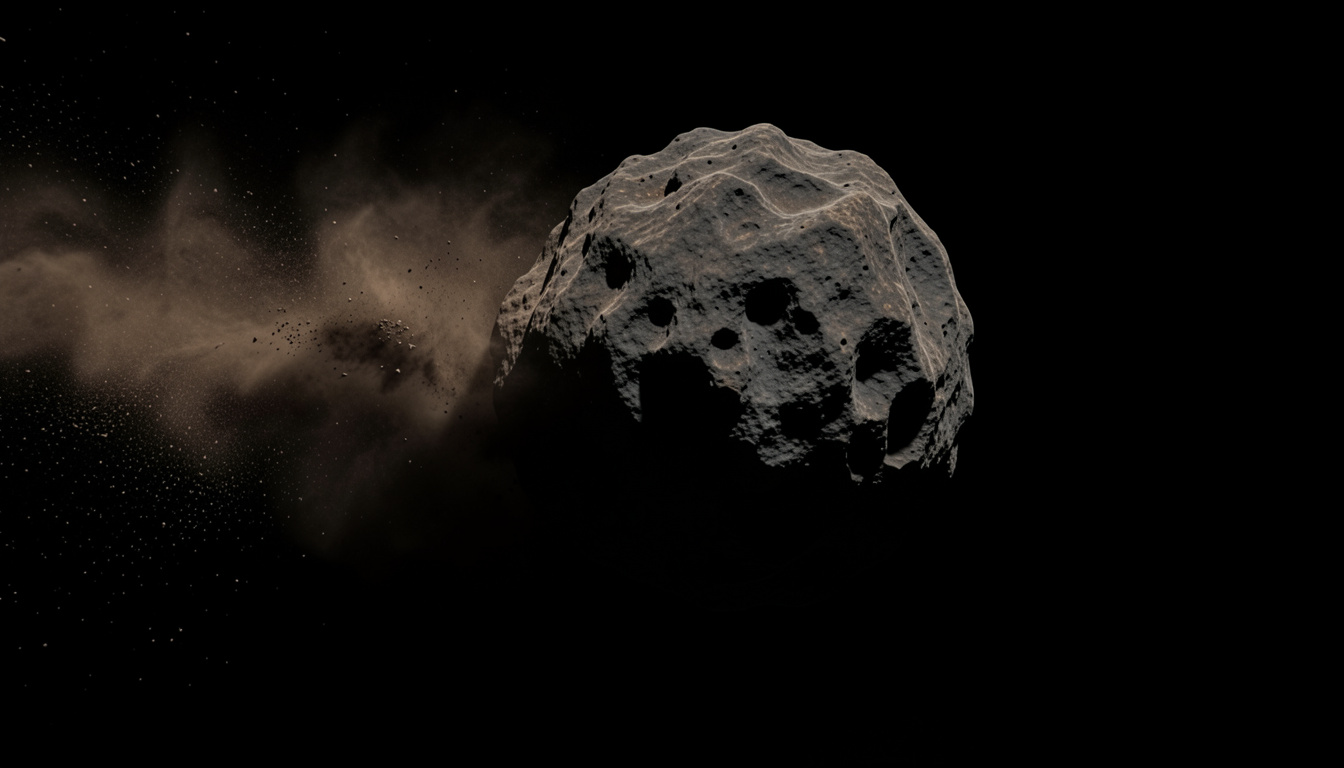
The Mystery of Group 4

in Popular STEM15 hours ago

The Mystery of Group 4


There are even stranger stories about asteroids, because just recently, on July 7, a curious and intriguing study was published in the scientific journal *Science Advances*. The study involved analyzing the space dust that constantly reaches Earth; particles of space dust—micrometeorites—are constantly arriving, and we sometimes see them as shooting stars, but the smallest shooting stars are the size of a grain of sand; there’s even finer dust, and every day, tons and tons of this dust are collected as it falls to Earth.
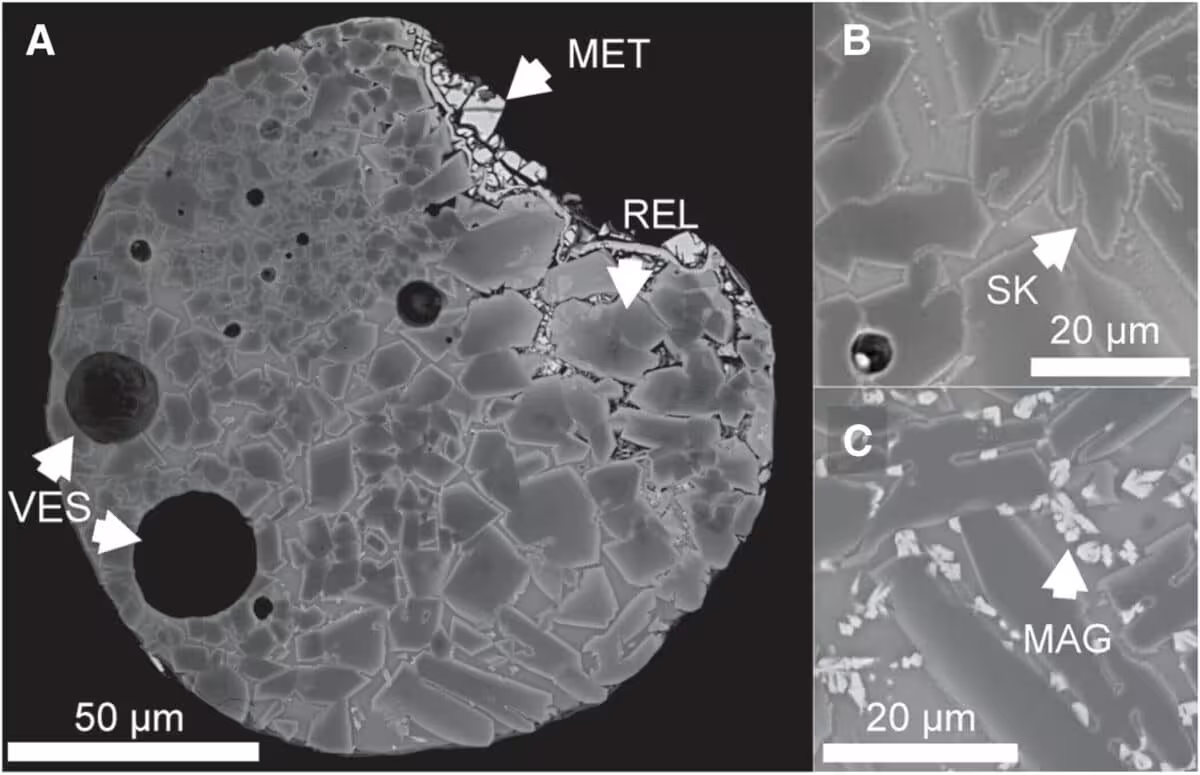

What the researchers did was analyze this space dust to identify its sources. It turns out that when this dust falls, it forms cosmic spheres—or “spherules”—and their origin can be roughly traced thanks to isotopes: oxygen isotopes, other molecules that make up the dust, and other elements it contains, but it turns out they’ve discovered that 10% of these spherules are a complete mystery; in fact, they’ve grouped them into what they call Group 4—the mystery of Group 4—which accounts for 10% of all space dust, and as I said, that amounts to tons and tons falling every day.


These Group 4 spherules have very rare chemical characteristics and do not match any known meteorite, because what the researchers did was collect samples from everywhere—and when I say everywhere, I mean even the roof of your house. If your house has a roof that’s not new, of course, but if it’s already 10, 20, or 30 years old, then it’s sure to have space dust that has fallen on it, because it doesn’t have to pierce the roof to fall—it just falls. Ultimately, once it enters the atmosphere at high speed, it can end up landing on the roofs of houses or in all sorts of places.


Souce


Although Antarctica is usually the ideal place to collect all these samples from space—because of the ice, of course—it’s easier to identify and collect them there, since anything that isn’t ice must have come from somewhere else. But the point is that this fourth group—that 10% of all the dust they collected—they couldn’t identify or match to any known meteorite, because what they did was collect a dust sample and say, “Well, this one matches the meteorite that fell in Argentina, or this one matches the meteorite that fell in Utah, or this one, and so on.” And those meteorites might come from the asteroid belt or from a large, already known asteroid—since they have the same composition, and so on—so you can trace them back. Except for this Group 4, which they haven’t been able to figure out where it comes from.

They’ve conducted chemical analyses, run numerical simulations, and performed a lot of calculations, and they’ve concluded that this material must have entered the atmosphere at high speeds—14 to 17 km per second—which implies highly eccentric orbits typical of near-Earth objects. That’s the first troubling point. For this reason, researchers suggest that it could belong to a primitive carbonaceous asteroid—since there is a lot of carbon in those particles—which is also rich in sulfides (that is, sulfur), and possibly a thermally altered asteroid that migrated to an orbit that crosses Earth’s, with parameters similar to those of comets.


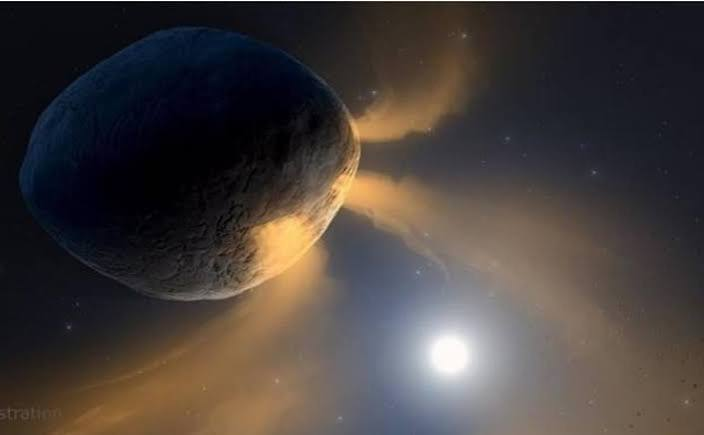
Faetón Souce


In light of all this, they’ve come to the conclusion that this material—this 10%, this Group 4—represents a clue to a missing type of meteorite. There are two possibilities right now: one is that an ancient asteroid disintegrated long ago, forming the dust that isn’t reaching us; the other is that the asteroid hasn’t disintegrated, but is simply shedding dust. Could this happen? Yes, in fact, we know of one quite well. The image shown is not a real photo, but it’s an illustration of Phaethon.


Phaethon is a 5.1-km asteroid—in other words, a massive asteroid—and it’s releasing dust. It behaves a bit like a comet, but instead of releasing vapor, it releases a trail of dust due to chemical reactions caused by heating from the sun, because it doesn’t stray very far from Earth’s orbit; in fact, it’s responsible for the Geminid meteor shower, and Phaethon does this—it’s an active asteroid. So, there are these two options


If it’s an asteroid that was destroyed long ago, the problem with that theory is: why haven’t we found any associated meteorites from it? Why do we only find dust? Because that would be unusual—if it were an asteroid that broke apart a long time ago, it would have produced a large amount of dust during that disintegration, but it would also have produced debris and larger chunks, some of which would have had to end up on Earth just as its dust has, and that’s why we would have been able to identify it with a known asteroid. However, that isn’t the case. All we have is dust, so—at least from my point of view—this would be the most likely explanation: there is an unknown asteroid that may contain a lot of carbon and be very dark, because those with high carbon content tend to be very dark and difficult to see, that crosses Earth’s orbit and is shedding dust, just as Phaeton does—and that would be quite disturbing because there would be an asteroid that could be of considerable size—it could easily be a kilometer in diameter—that we do not know about, do not monitor, and have not recorded.


Study Source


The images without reference were created with AI
Thank you for visiting my blog. If you like posts about #science, #planet, #politics, #rights #crypto, #traveling and discovering secrets and beauties of the #universe, feel free to Follow me as these are the topics I write about the most. Have a wonderful day and stay on this great platform :) :)


! The truth will set us free and science is the one that is closest to the truth!


Sort:  

Congratulations!

Your post has been selected and upvoted by the SteemPro Team 🚀

Explore more on SteemPro:
🌐 https://www.steempro.com
🎮 Play SteemHeights: https://www.steempro.com/games/steem-heights
💬 Join our Discord: https://discord.gg/Bsf98vMg6U

💪 Supporting the growth of the Steem ecosystem together.

🟩 Vote for witness faisalamin:
https://steemitwallet.com/~witnesses
https://www.steempro.com/witnesses#faisalamin

steempro-cover-black.png
This is an automated message.