The obsolescence of the International Space Station.
in Popular STEM6 days ago

The obsolescence of the International Space Station.


Souce


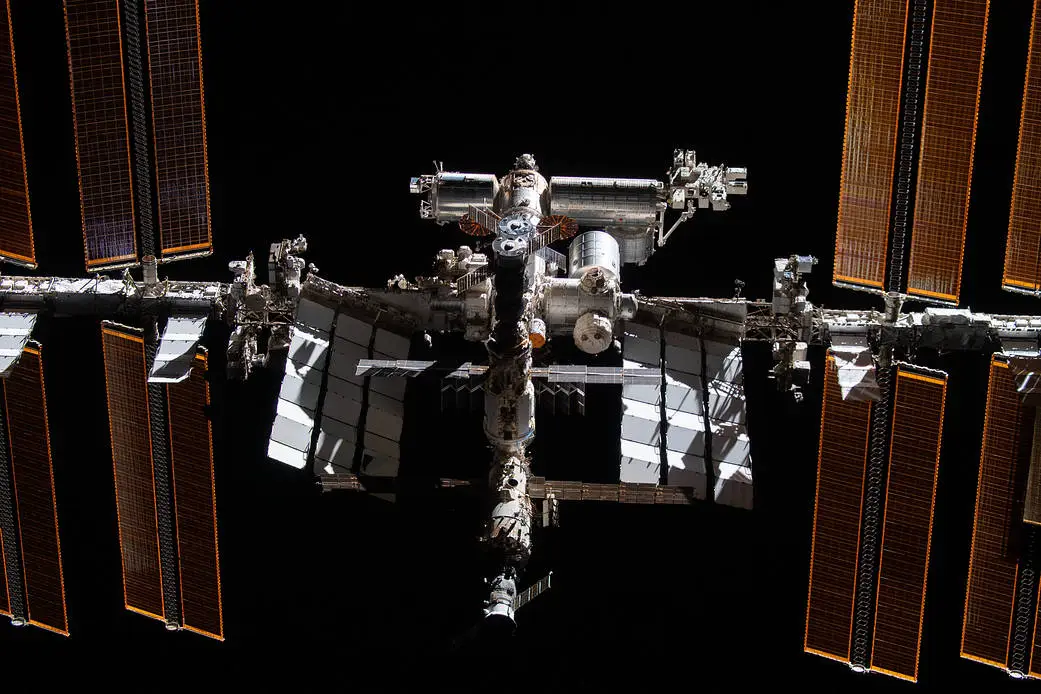
Imagine that you have a car that is more than 25 years old and that has had a chronic engine failure for a long time. Really fixing it would be as expensive as installing a new engine and you don't have the money, neither for the new engine, nor to buy a new car, so the solution is to take it to the workshop every few months to have a repair done and thus be able to continue driving, since that is more or less the situation on the International Space Station.


The Russian Zvezda module and especially the PrK tunnel has been leaking air for years, but a few days ago it began to lose more air than normal, it is a recurring problem known since at least 2019 or early 2020, there are cracks, intermittent leaks, they also put temporary patches on the mathgiver and repairs that sometimes reduce the loss, but have never managed to completely eliminate it.


The PrK plays a critical function in the international space station, it serves as a transit between the aft docking port of the ships and the rest of the space station, its design allows it to function as a watertight compartment if an accident occurs, imagine that the PrK tunnel does not exist and an uncrewed cargo ship has a problem in its engines and instead of a little push to dock gently, it releases an impulse that causes it to crash against the port, destroying it and opening a hole in the same size as the port, if there were an astronaut waiting for the freighter without any type of protective suit, he would be automatically ejected into space, he would die in a matter of seconds, although it may be that after 15 seconds he would lose consciousness and luckily for him he would no longer know what would be happening to his body, although the normal thing is that he would be in a pressurized suit like the ones the astronauts put on to take refuge in their ships during the repair this June 5.


With those suits I could survive maybe an hour, but in very harsh conditions, with little oxygen, very limited thermal protection and hardly any mobility, a pilot suit is not really a space suit, an EVA suit for spacewalking, those types of suits are very hard and very resistant. An astronaut with that suit can easily last 6 or 8 hours in the vacuum of space, but the pilot suits are for another function. They provide very limited thermal protection and barely have any oxygen reserves because these suits work connected to the ship's system.


They are designed to survive in the event that a breach opens in the ship and the ship loses pressure dramatically, but the astronaut can remain inside the ship connected to its life support and thus survive that accident. What would happen to the rest of the station? In this hypothetical case that we are talking about, of an accident where the ship leaves the docking port and that PrK tunnel that has been repaired this June 5 did not exist, the station would not explode in a fireball, nor would it fall to the ground in flames, as it would surely appear in a Hollywood movie.


The international space station is not the Titanic, without the PrK tunnel, without that tunnel. What would happen is that the Russian module would be devastated, it would hold, but it would not be destroyed, everything that was not secured would be thrown into space, in the rest of the station, the astronauts would have time to close the airlocks and create watertight compartments and then be able to escape if necessary in their ships. Once the fault is controlled, the Russian module would be closed, which would also be a pretty big problem, since this Russian module provides important services to the rest of the station, but as a whole the international space station, the other modules could continue to function normally.


The space station is designed precisely for that, to isolate the modules in the event of an accident, and in fact there are emergency procedures that are trained and that allow the hatches to be closed in less than 3 minutes. The station, in the event of this hypothetical accident that we are talking about, would be a ship hit, but not sunk, however, even if a catastrophe of the previous type, the PrK, does not occur, the tunnel suffers many stresses, this tunnel, like the Zvezda module, has been in service since July 2000 and in all that time they have received more than 50 ships with an average of 7 and a half tons of typical mass each.


Each ship has to literally collide at low speed with the port in order to be able to engage properly and subsequently disengage with an impulse from its engines. This creates a tension in the structure of the tunnel that has ended up creating this multitude of microcracks that are now affecting the tunnel and that are causing this loss of air.


Official website


The images without reference were created with AI
Thank you for visiting my blog. If you like posts about #science, #planet, #politics, #rights #crypto, #traveling and discovering secrets and beauties of the #universe, feel free to Follow me as these are the topics I write about the most. Have a wonderful day and stay on this great platform :) :)


! The truth will set us free and science is the one that is closest to the truth!