The Super-niño on the Horizon
The Super-niño on the Horizon
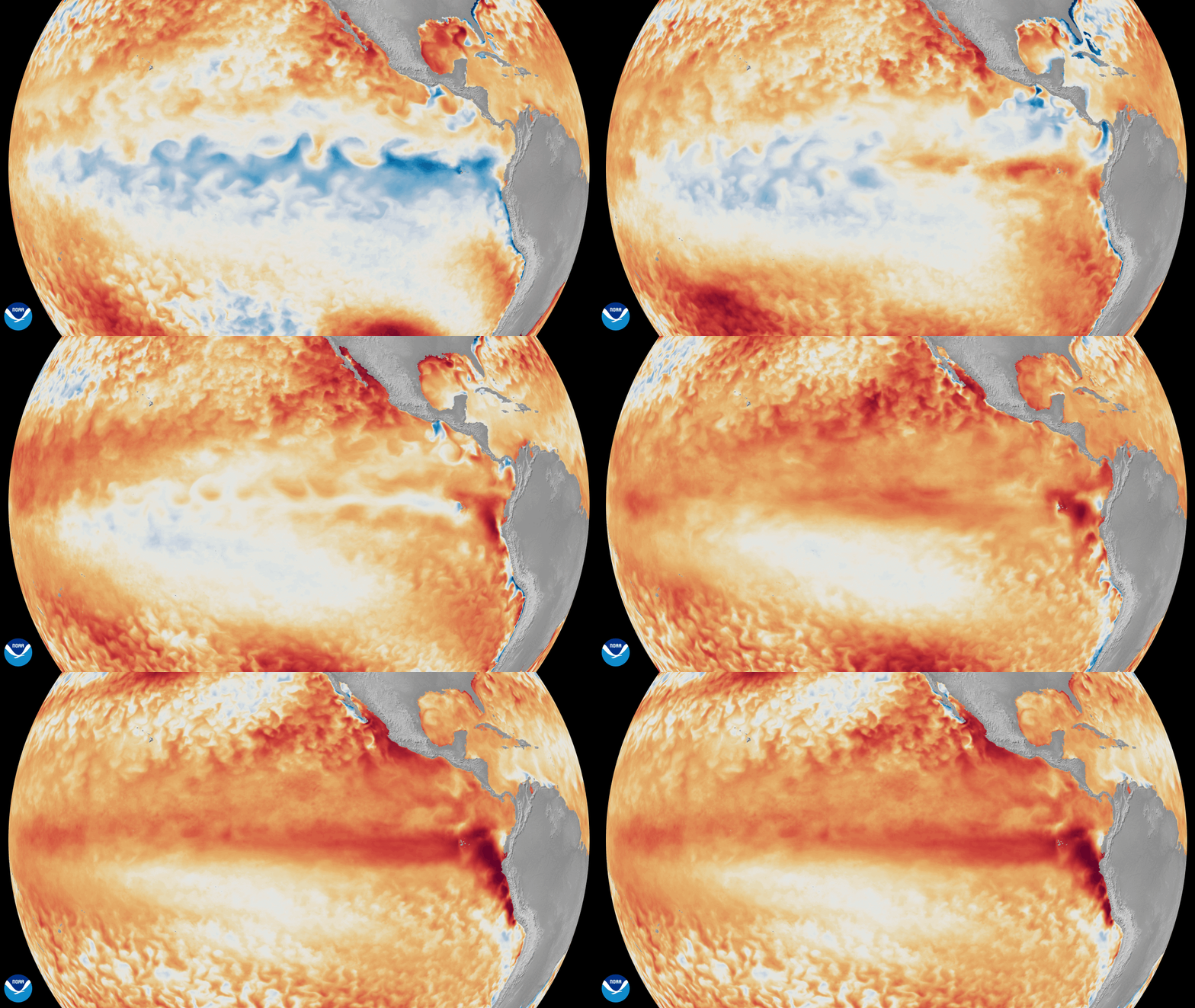
Souce
This is not something humans invented, nor is it new in history; records from coral and seafloor sediments indicate that this phenomenon has been occurring for at least 40,000 years and has been far more intense in the past. It has brought down entire civilizations, as the effects it triggers are anything but positive.
Recent "Super El Niño" events include the 1982–1983 episode and the 1997–1998 event—the latter being the most powerful ever recorded using modern measurement tools—as well as the 2015–2016 season. It is believed that such events may have played a role in the "Dark Age" that marked the end of the pyramid-building era in Egypt, as well as affecting other civilizations. El Niño was likely a large-scale global phenomenon that caused years of terrible drought; it is implicated as a contributing factor in these historical upheavals.
During the 1997–1998 event—the most powerful to date, and one that we may match or surpass this year—there were floods, Rift Valley fever outbreaks in Africa, droughts and fires in Southeast Asia, catastrophic flooding in California, massive coral bleaching, and estimated economic losses of $5.7 trillion. And although they originate in the Pacific—as you can see in the illustration—their effects are global, impacting both hemispheres. It is not merely a Northern Hemisphere phenomenon; in fact, its origins and many of its most severe impacts occur in the Southern Hemisphere or near the Equator.
According to a recent report in Science News (as of June 17), it is not yet confirmed whether this will be a "super" event—it might not be—but current forecasts indicate a 63% probability that it will develop into a very strong "Super El Niño." Some even suggest it could surpass the strongest one recorded so far (1997–1998), which would be disastrous, as it brings a series of brutal climatic effects in its wake.
We know it is El Niño—a natural pattern involving the persistent warming of Equatorial Pacific waters over several months. It occurs every two to seven years; it doesn't follow a strict mathematical schedule, but it is due to happen. A typical El Niño event involves a sea-temperature rise of half a degree above average, which disrupts global atmospheric circulation, leading to higher global temperatures and altered rainfall patterns—bringing drought to areas that usually see rain, and torrential downpours to regions that are typically dry. However, while a standard El Niño involves a half-degree rise, a "Super El Niño" sees that figure quadruple; the "Super" classification applies when warming exceeds 2°C. Currently, ocean temperatures are rising, and climate models predict surprisingly high global temperatures.
Forecasts suggest that November and December of this year will be significantly warmer than usual. Consequently, the coming months are expected to bring extreme temperatures and deadly heatwaves, as well as a rise in vector-borne diseases—such as those spread by mosquitoes, including cholera, typhus, and malaria. We also anticipate changes in hurricane activity: curiously, there will likely be increased activity in the Pacific but less in the Atlantic (or, if you prefer, more typhoons in the Pacific and fewer hurricanes in the Atlantic). Droughts and extreme flooding are also expected in various regions, as rainfall patterns shift toward extremes. Naturally, all of this entails damage to agriculture and infrastructure, as well as potential risks to human safety.
The images without reference were created with AI
Congratulations!
Your post has been selected and upvoted by the SteemPro Team 🚀
Explore more on SteemPro:
🌐 https://www.steempro.com
🎮 Play SteemHeights: https://www.steempro.com/games/steem-heights
💬 Join our Discord: https://discord.gg/Bsf98vMg6U
💪 Supporting the growth of the Steem ecosystem together.
🟩 Vote for witness faisalamin:
https://steemitwallet.com/~witnesses
https://www.steempro.com/witnesses#faisalamin
This is an automated message.