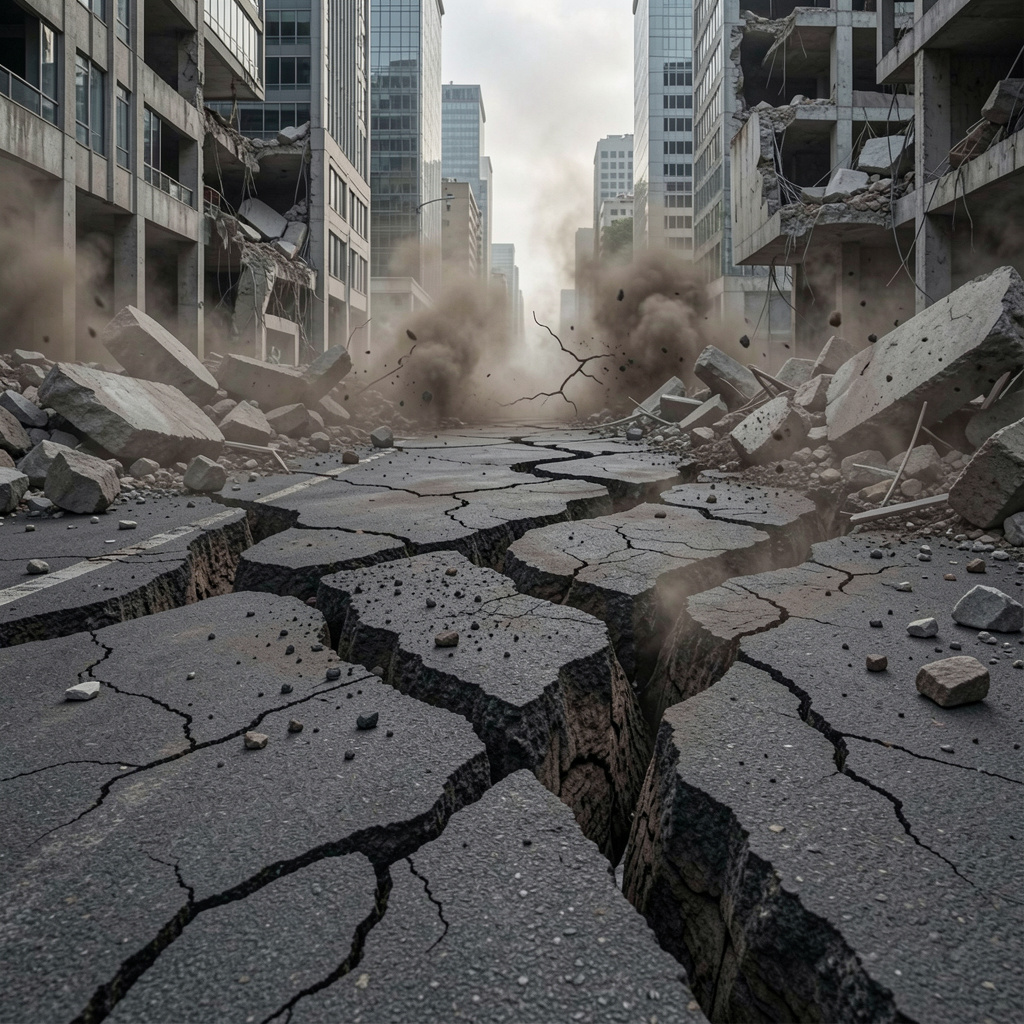
Why is it shaking so much?

in Popular STEMyesterday

Why is it shaking so much?


Let’s begin with the two most recent earthquakes that made headlines and one that didn't. In the early hours of August 15, an earthquake struck Otura, Granada; Spain’s National Geographic Institute placed its magnitude at 4.8, while the United States Geological Survey put it at 5.2. Although there were no casualties, there was property damage; the potential for destruction was heightened because it was a very shallow quake, occurring at a depth of between 1 and 10 km.
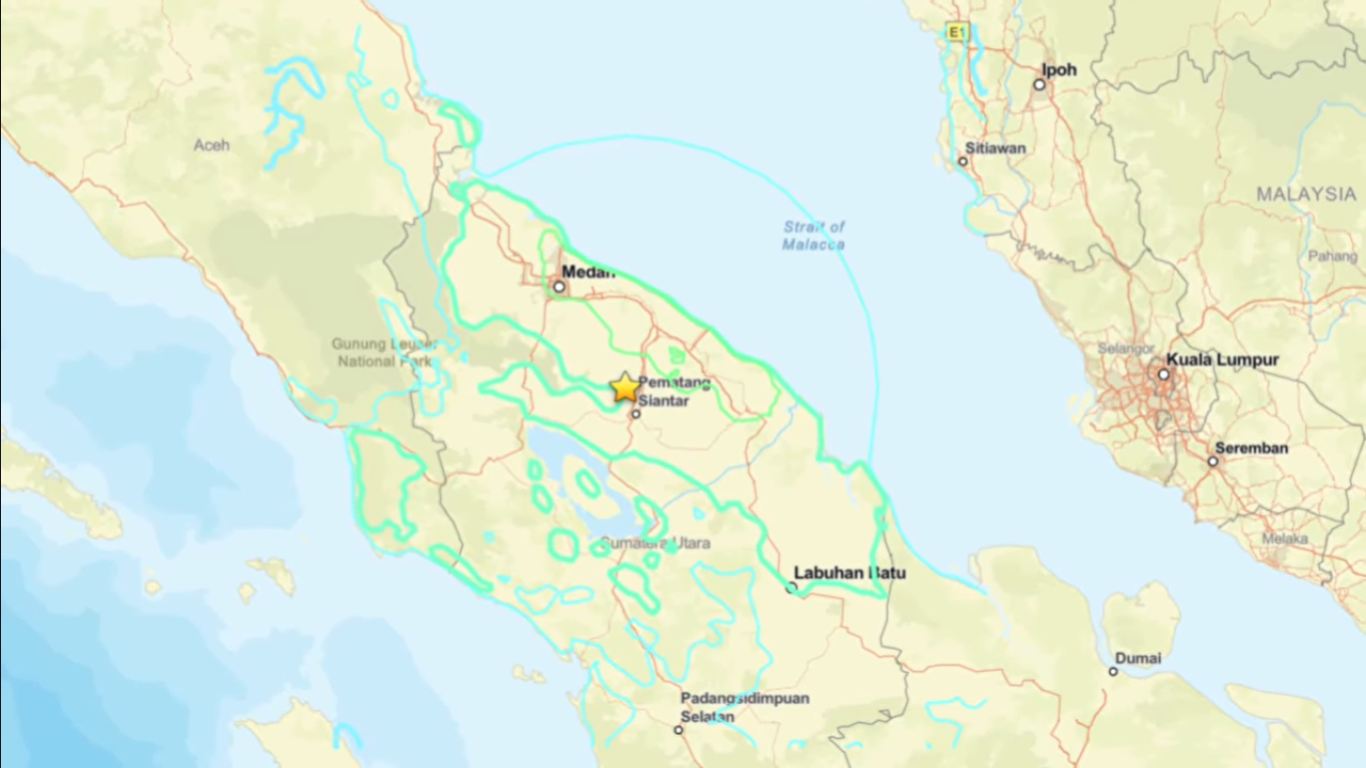

Some experts estimate the depth at just 2 km. While magnitude indicates an earthquake's destructive power, other factors can either amplify or diminish that impact. For instance, that same day, another earthquake occurred—one that didn't make the news or cause casualties—despite releasing approximately 355 times more energy than the Granada quake (based on the 5.2 magnitude figure). This event took place off the northern coast of Sumatra with a magnitude of 6.9, but it occurred at a much greater depth than the Granada quake—specifically, between 172 and 183 km below the surface.


The energy from the Sumatra earthquake dissipated as it traveled through that massive thickness of rock; in fact, the quake originated in the mantle, beneath the Earth's crust. By the time the seismic waves reached the surface, they were significantly weakened. Another reason the Sumatra quake didn't make headlines was that, just the day before, a more powerful 7.7 magnitude earthquake had struck Indonesia; that one was very shallow—occurring at a depth of about 10 km—and such high magnitude combined with shallow depth creates the perfect recipe for disaster.


As of August 17, authorities report 53 deaths and thousands of displaced people, alongside extensive material damage that has not yet been quantified—two key points to keep in mind. First, to summarize, the Granada earthquake is caused by the reorganization of faults in the Betic Cordillera, part of the large-scale process of Africa drifting northward and colliding with the European plate; over time, this will eventually close the Strait of Gibraltar and form one of the world's highest mountain ranges millions of years from now.


While the two earthquakes in Indonesia are related to each other, they occurred on different islands and involved different faults—though both are located in the Pacific Ring of Fire, one of the world's most seismically and volcanically active regions. Abrir en Google Tra


Souce


Here is a second point—and please take note, as it is crucial: the earthquakes you see in the media do not represent every quake that occurs. Only those causing disasters or striking areas with a powerful media presence make the headlines. Yet, other powerful earthquakes occur in sparsely populated regions; these remain confined to scientific databases because they lack media appeal. This distinction is vital if we are to answer the questions raised earlier.
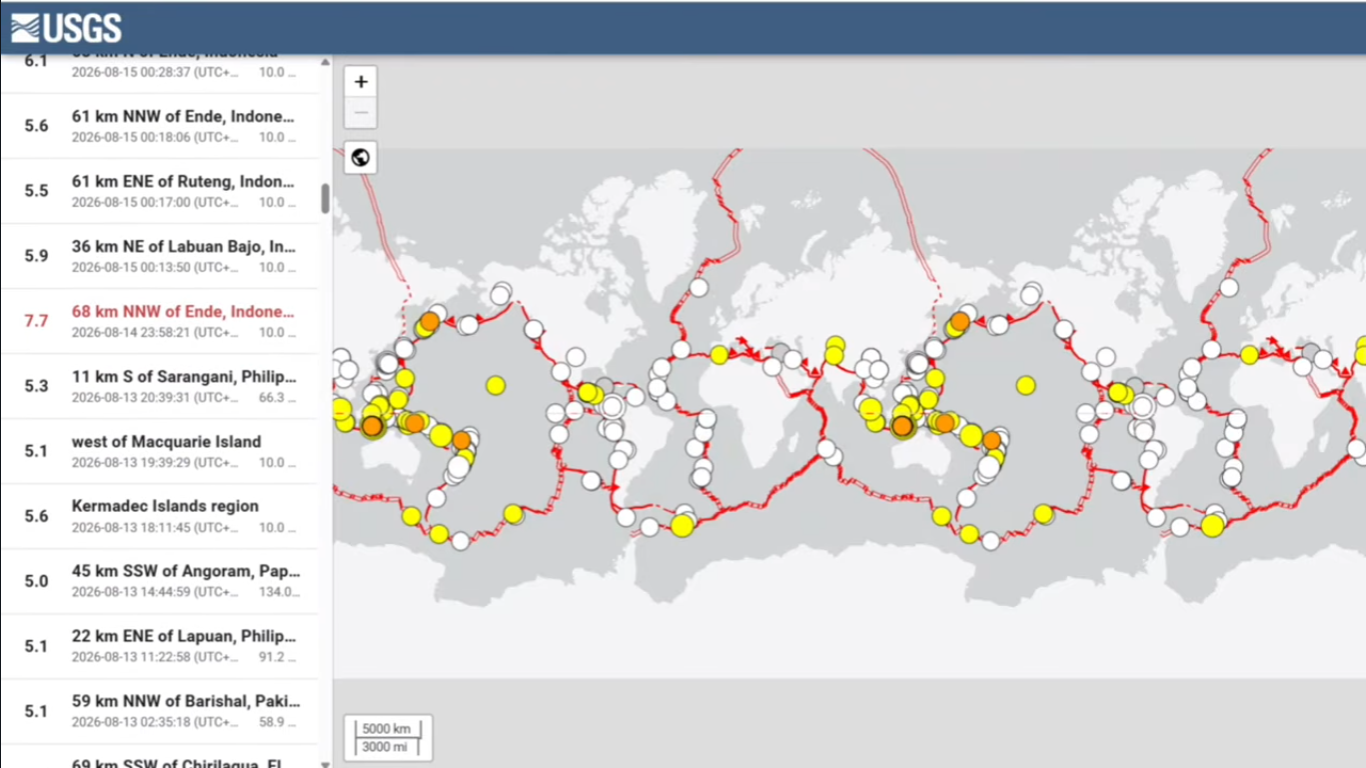

To determine whether Earth is experiencing a surge in earthquakes, we must delve into scientific databases and compare the number of recent quakes against the annual average. To clarify, I am focusing only on earthquakes with a magnitude greater than six, as the energy released at this level typically causes catastrophic destruction. While magnitude-5 quakes can also inflict significant damage, the frequency of earthquakes increases as we move down the scale. This multitude of smaller quakes—stemming from diverse causes—can obscure more significant patterns.


For instance, hundreds or even thousands of quakes with magnitudes below 5 occur daily, driven by factors such as volcanic activity, glacial movement, and oceanic dynamics. One example is the so-called "Earth's heartbeat"—a constant seismic pulse originating in the Gulf of Guinea (off the coast of Africa) that is imperceptible to humans. These micro-quakes repeat with exact precision every 26 seconds; while their nature remains a subject of debate and mystery, the leading theory attributes them to the action of the Atlantic Ocean within the Gulf of Guinea's unique geological configuration.


Souce


If we set aside the minor tremors and focus on earthquakes with magnitudes greater than six, we are looking at the most energetic events—those driven by colossal processes occurring within the Earth's crust and deeper. Up to August 15, 2026, the year's most powerful earthquake was the magnitude 7.8 event on June 7 in the ocean near Mindanao, Philippines; it struck at a depth of 57 km and claimed 107 lives. However, the deadliest event was the double earthquake—with magnitudes of 7.2 and 7.5—that struck Venezuela on June 24, resulting in more than 6,300 fatalities.


The question is: are more earthquakes occurring than usual in 2026? Well, according to statistical data for the year so far, the answer is no; to date, about 87 earthquakes with magnitudes between 6.0 and 6.9 have been recorded. The annual average is between 130 and 140. Regarding earthquakes of magnitude 7.0 or higher, we have seen 11 so far, while the annual average is between 15 and 16. In both cases, we remain within the average range. Knowing that there is an average leads us to the next question: are there "bad" years and "good" years, or do all years fall within the average?


The answer is yes—there are bad years and good years. Statistical data spanning over 125 years of records show bad years—such as 2010—and good years, like those in the late 1980s (1986, 1988, and 1989). The difference between a good year and a bad one is that a bad year can see up to three times as many earthquakes exceeding magnitude 7.0 compared to a good year. This is a highly significant difference that leads us to another major question: Is there a pattern to major earthquakes? Is there a cycle in which the Earth periodically experiences a surge of catastrophic earthquakes? Having this information would be invaluable, allowing us to be on alert when the next bad year arrives.


As far as we know, there is currently no cycle; earthquakes seem to be driven by chaos and a multitude of factors. The most significant among these include the movement of the tectonic plates that support continents and ocean floors, the composition of those plates, and the nature of the crustal fractures known as faults. Other factors include mantle plumes—jets of magma rising from the mantle and piercing the Earth's crust. Each factor appears to have its own dynamics and pace, generating earthquakes randomly without a discernible cycle—or perhaps a cycle does exist, but on a scale far larger than the 125-year period for which we have data.


There may well be not just bad years, but truly terrible ones—years with a number of earthquakes far exceeding the norm, involving events that occur only once every 500 or 1,000 years. Of course, that last point is merely speculation; we would need more data—specifically, data on past earthquakes—to investigate the matter. Archaeoseismology (or seismic archaeology) is a relatively new scientific field; it studies earthquakes—primarily those from the last 3,000 to 5,000 years—by examining evidence found in archaeological remains and ancient human structures, analyzing events such as the earthquake that destroyed the Colossus of Rhodes.


Unfortunately, the data gathered by archaeoseismology to date is scarce and sporadic. However, if you dream of becoming a researcher and have an interest in both geology and archaeology, this could be the field for you; there is a great deal yet to be discovered, and the potential findings promise to be spectacular.


Imagine uncovering the secrets behind earthquakes that wiped out a city or an entire civilization. By the way, I assume you’ve already noticed an important detail: I mentioned that as of the making of this video—in August 2026—we have already experienced 11 earthquakes of magnitude 7 or higher, while the annual average is between 15 and 16. You’ve likely realized that this means—staying within that average—there are still four or five earthquakes yet to occur on the scale of those seen in Colombia and Venezuela, or perhaps even more powerful and destructive ones.


If we’re lucky, they will strike unpopulated areas. But where will the next one hit? If only we knew. However, we do have clues. In June, a team of researchers warned that a section of the San Andreas Fault—one of the most dangerous in the world—was building up stress at a level not seen in the last 1,000 years. What do you make of all this? Could there be a hidden pattern in the frequency of major earthquakes?


The images without reference were created with AI
Thank you for visiting my blog. If you like posts about #science, #planet, #politics, #rights #crypto, #traveling and discovering secrets and beauties of the #universe, feel free to Follow me as these are the topics I write about the most. Have a wonderful day and stay on this great platform :) :)


! The truth will set us free and science is the one that is closest to the truth!


Sort:  
Loading...

Congratulations!

Your post has been selected and upvoted by the SteemPro Team 🚀

Explore more on SteemPro:
🌐 https://www.steempro.com
🎮 Play SteemHeights: https://www.steempro.com/games/steem-heights
💬 Join our Discord: https://discord.gg/Bsf98vMg6U

💪 Supporting the growth of the Steem ecosystem together.

🟩 Vote for witness faisalamin:
https://steemitwallet.com/~witnesses
https://www.steempro.com/witnesses#faisalamin

steempro-cover-black.png
This is an automated message.