800 km/h, a new record for magnetic levitation technology/800 km/h, un nuevo récord para la tecnología de levitación magnética
Source
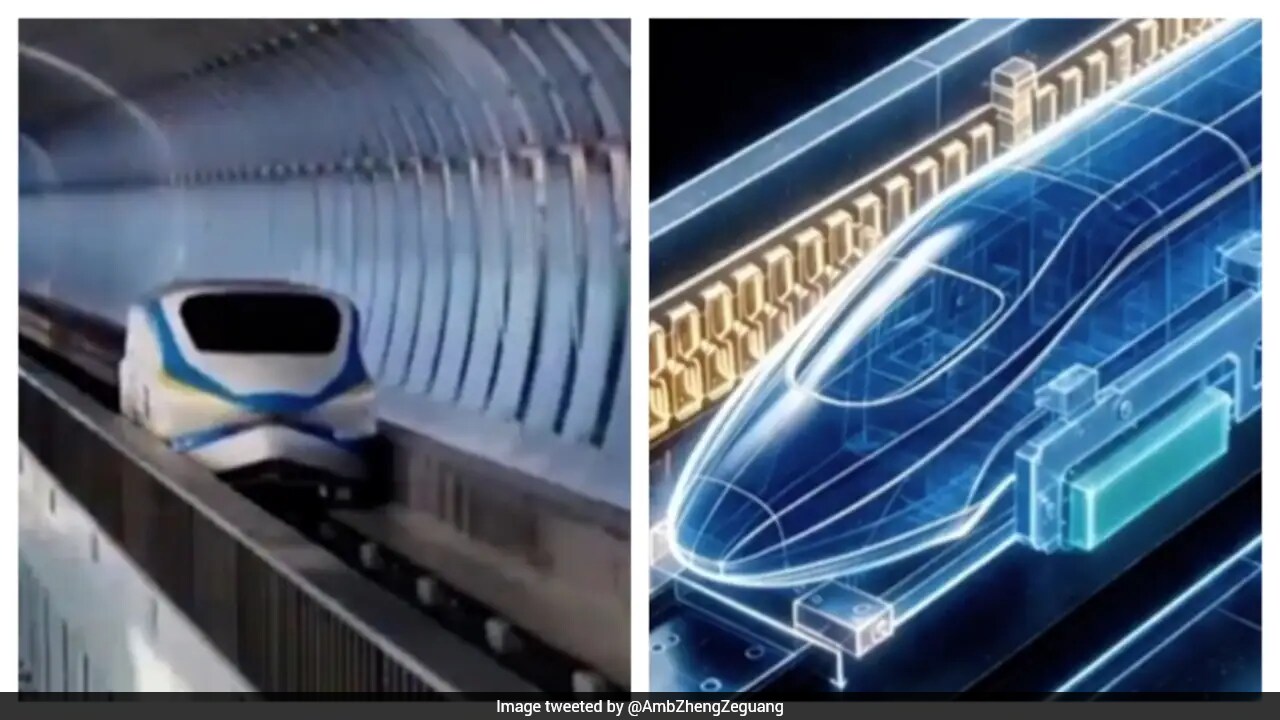
Magnetic levitation (maglev) is a physical phenomenon in which an object floats in the air without touching any surface, thanks to the force of a magnetic field that counteracts gravity. This technology completely eliminates friction and allows for remarkable advances in the speed and efficiency of modern transportation. China has achieved an impressive milestone with a prototype magnetic levitation train that reached 800 km/h in a recent test. This achievement places this technology at a new level of speed, opening a debate about the future of land transportation.
La levitación magnética (maglev) es un fenómeno físico en el que un objeto flota en el aire sin tocar ninguna superficie, gracias a la fuerza de un campo magnético que contrarresta la gravedad. Esta tecnología elimina por completo la fricción y permite avances notables en la velocidad y eficiencia del transporte moderno. China ha logrado un hito impresionante con un prototipo de tren de levitación magnética que ha alcanzado los 800 km/h en una prueba reciente. Este logro sitúa a esta tecnología en un nuevo nivel de velocidad, abriendo un debate sobre el futuro del transporte terrestre.
This is an experimental prototype, not a commercial train in service, designed to test the limits of maglev technology. The train "floats" above the track thanks to the repulsive or attractive forces between magnets installed on the vehicle and the infrastructure itself. With no friction against the rails, the train can reach much higher speeds with less energy consumption to overcome mechanical resistance. The main force to overcome is air resistance. In the test, the vehicle accelerated from 0 to 800 km/h in just 5.3 seconds on a 1-kilometer track.
Se trata de un prototipo experimental, no de un tren comercial en servicio, diseñado para probar los límites de la tecnología maglev. El tren "flota" sobre la vía gracias a la fuerza de repulsión o atracción entre imanes instalados en el vehículo y en la propia infraestructura. Al no haber fricción con los rieles, el tren puede alcanzar velocidades mucho mayores con un menor consumo de energía para superar la resistencia mecánica. La principal fuerza a vencer es la resistencia del aire. En la prueba, el vehículo aceleró de 0 a 800 km/h en solo 5,3 segundos sobre una pista de 1 kilómetro.
Source
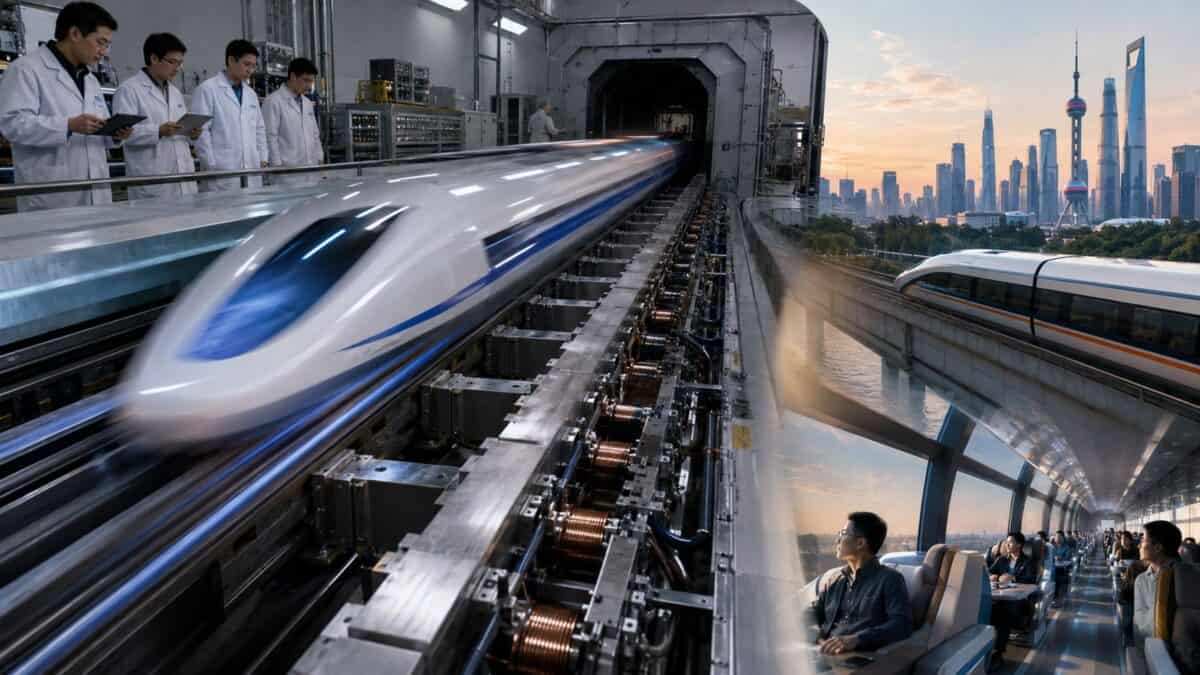
The potential of this technology is transformative, but its large-scale implementation presents significant challenges. Such a train could connect cities like Beijing and Shanghai (1,200 km) in approximately one hour, competing directly with air travel, which takes about two hours (including transfers and waiting times). With no friction, wear and tear on components is minimal, reducing maintenance costs and extending the system's lifespan. It is quieter than a conventional high-speed train and, being more energy-efficient, could have a smaller environmental impact.
El potencial de esta tecnología es transformador, pero su llegada a gran escala conlleva importantes desafíos. Un tren así podría unir ciudades como Pekín y Shanghái (1.200 km) en aproximadamente una hora, compitiendo directamente con el avión, que tarda unas 2 horas (contando traslados y esperas). Al no haber rozamiento, el desgaste de los componentes es mínimo, lo que reduce los costes de mantenimiento y aumenta la vida útil del sistema. Es más silencioso que un tren convencional a alta velocidad y, al ser más eficiente energéticamente, podría tener un menor impacto ambiental.
But they face numerous challenges and barriers. The main obstacle is the cost of infrastructure; building the special tracks these trains require is extremely expensive. Shanghai's maglev, which reaches 431 km/h, cost $1.2 billion for just 30 km. Furthermore, it is incompatible with existing railway lines, so a completely new network would need to be built, making it a monumental investment. Although it eliminates mechanical friction, overcoming air resistance at 800 km/h requires an enormous amount of energy. The risk of derailment is virtually nil, as the train wraps around the track or is magnetically guided.
Pero han de superar numerosos desafíos y barreras. El principal obstáculo es el coste de las infraestructuras, construir las vías especiales que requieren estos trenes es extremadamente caro. El maglev de Shanghái, que alcanza 431 km/h, costó 1.200 millones de dólares por solo 30 km. Además es incompatible con las lineas de Ferrocarril existentes, por lo que se necesitaría construir una red completamente nueva, lo que lo convierte en una inversión monumental. Aunque elimina la fricción mecánica, superar la resistencia del aire a 800 km/h exige una cantidad de energía enorme. El riesgo de descarrilamiento es prácticamente nulo, ya que el tren envuelve la vía o está guiado magnéticamente.

Source
The 800 km/h test is linked to the T-Flight project of the China Aerospace Science and Industry Corporation (CASIC). Its goal is not just a maglev, but a system that combines magnetic levitation with travel in vacuum or low-pressure tunnels to further minimize air resistance and reach speeds of up to 1,000 km/h. Something similar to Elon Musk's Hyperloop, but a terrestrial version instead of traveling through a tube in the air, which currently seems to have fallen out of fashion.
La prueba de los 800 km/h está ligada al proyecto T-Flight de la China Aerospace Science and Industry Corporation (CASIC). Su objetivo no es solo un maglev, sino un sistema que combine la levitación magnética con el desplazamiento en túneles de vacío o baja presión para minimizar aún más la resistencia del aire y alcanzar velocidades de hasta 1.000 km/h. Algo parecido al Hyper-Loop de Elon Musk pero en versión terrestre en lugar de ir dentro de un tubo por el aire, que actualmente parece que se ha pasado de moda.
The previous speed record with this technology was held by Japan at 603 km/h with its SCMaglev, which is still under development. The 800 km/h record is a spectacular demonstration of the potential of magnetic levitation. China is proving that the technology for traveling at airplane speeds on rails is viable. However, the major challenge is no longer just speed, but how to make this technology economical and sustainable on a large scale. For now, it remains a promising future, but still a distant one for most travelers.
El anterior récord de velocidad con esta tecnología lo tenía Japón con 603 km/h con su SCMaglev, que aún se encuentra en desarrollo. El récord de 800 km/h es una demostración espectacular del potencial de la levitación magnética. China demuestra que la tecnología para viajar a velocidades de avión sobre raíles es viable. Sin embargo, el gran desafío ya no es solo la velocidad, sino cómo hacer que esta tecnología sea económica y sostenible a gran escala. Por ahora, sigue siendo un futuro prometedor, pero aún lejano para la mayoría de los viajeros.
More information/Más información
https://www.railwaypro.com/wp/record-set-by-an-experimental-maglev-in-china/
It is astounding how the 800 km/h maglev train test in China imitates what has been shown in science-fiction films. The fact that a train weighing more than a ton moves from 0 to 100 km/h in under 0.7 seconds is truly crazy! It is even faster than a Formula 1 car. However, it is quite sad that common people will distant to be using this technology for the near future because of g-forces. But, in any case, it is great to know how the absence of friction can lead to such incredible know-how.