China's Tiangong space station is already growing tomatoes/La estación espacial china Tiangong ya cultiva tomates

Source
A couple of days ago we discussed how to grow chickpeas in simulated lunar soil. Continuing with the culinary theme, today we have to report that astronauts aboard the Chinese Tiangong space station are already harvesting their first crop of cherry tomatoes. This achievement, announced in February 2026 during the Chinese New Year celebrations, represents a significant advance in space agriculture research, part of the Shenzhou-21 mission's efforts to develop technologies that will allow future astronauts to produce their own food during long-duration missions, such as a trip to Mars.
Hace un par de días comentábamos como cultivar garbanzos en suelo lunar simulado, siguiendo con la línea gastronómica hoy tenemos que comentar que los astronautas a bordo de la estación espacial China Tiangong ya están recogiendo su primera cosecha de tomates Cherry. Este logro, hecho público en febrero de 2026 durante la celebración del Año Nuevo chino, representa un avance significativo en la investigación de la agricultura espacial que forma parte de los esfuerzos de la misión Shenzhou-21 para desarrollar tecnologías que permitan a los futuros astronautas producir sus propios alimentos durante misiones de larga duración, como un viaje a Marte.
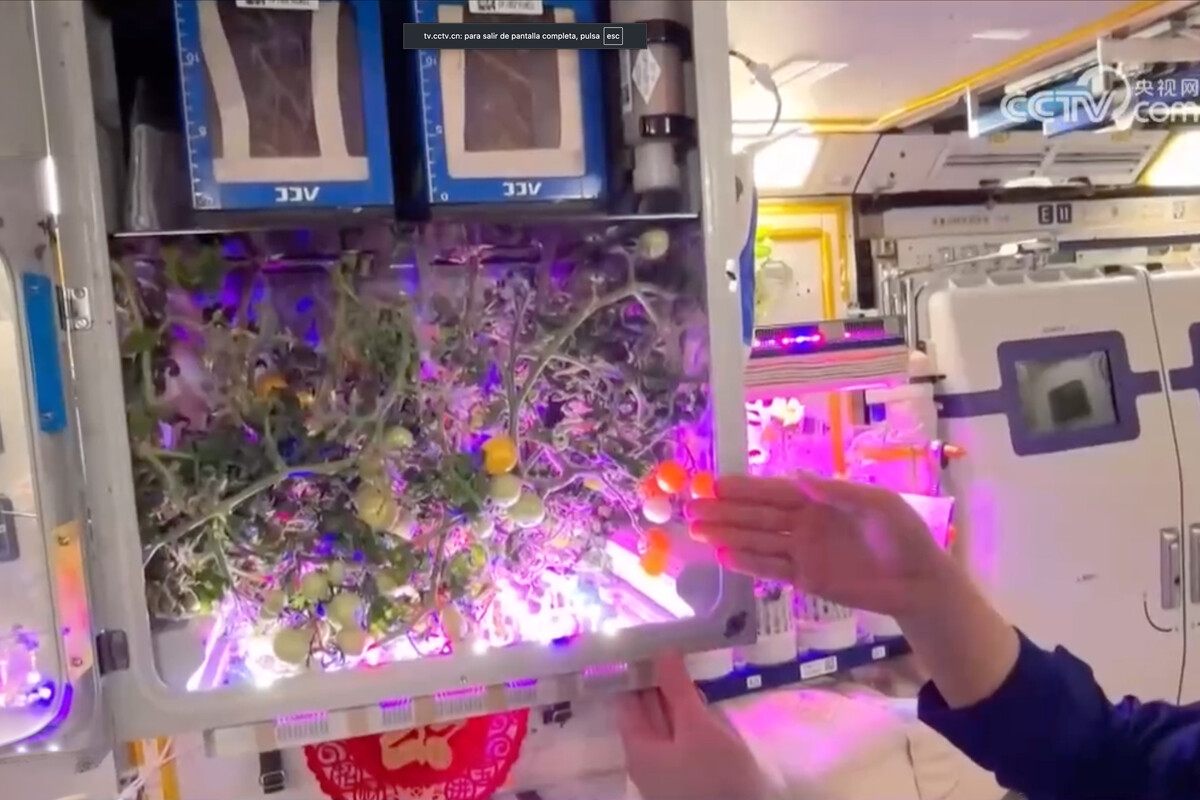
Obviously, the crop doesn't use soil. Instead, the tomatoes are grown in an aeroponic system, a soilless farming method ideal for the microgravity environment of a space station. This system was developed by the China Astronaut Research and Training Center and works as follows: The plant roots are neither submerged in water nor buried in soil, but are suspended in the air within a specially designed, sealed compartment.
Obviamente, el cultivo no utiliza tierra. En su lugar, los tomates crecen en un sistema de cultivo aeropónico, un método de agricultura sin suelo que es ideal para el entorno de microgravedad de una estación espacial. Este sistema ha sido desarrollado por el Centro de Investigación y Entrenamiento de Astronautas de China y funciona de la siguiente manera. Las raíces de las plantas no están sumergidas en agua ni enterradas en tierra, sino que se mantienen suspendidas en el aire dentro de un compartimento cerrado preparado al efecto.
Source
The system vaporizes water mixed with essential nutrients, creating a fine mist that is sprayed directly onto the roots. This method is far more water-efficient than traditional agriculture. Since there is no natural sunlight in space, the system uses an LED light panel designed with a specific spectrum to provide the light energy the plants need for photosynthesis and growth, while also optimizing the station's energy consumption. Astronauts monitor the plants daily, recording growth data so scientists on Earth can analyze how the crops are responding to microgravity.
El sistema vaporiza agua mezclada con nutrientes esenciales, creando una fina niebla que se pulveriza directamente sobre las raíces. Este método es mucho más eficiente en el uso del agua que la agricultura tradicional. Como no hay luz solar natural en el espacio, el sistema utiliza un panel de luces LED diseñado con un espectro específico para proporcionar la energía lumínica que las plantas necesitan para la fotosíntesis y su crecimiento, optimizando al mismo tiempo el consumo energético de la estación. Los astronautas monitorean las plantas a diario, registrando datos de crecimiento para que los científicos en la Tierra puedan analizar cómo reaccionan los cultivos a la microgravedad.
This experiment goes far beyond scientific curiosity and has two main objectives that are crucial for the future of space exploration. First, it aims to create sustainable life support systems, since for long-duration space missions, such as a stay on the Moon or a trip to Mars, relying on food shipments sent from Earth is neither practical nor sustainable. The ability to grow food in space is a key step toward creating bioregenerative life support systems, where plants not only provide food but can also help regenerate the atmosphere by producing oxygen and absorbing carbon dioxide.
Este experimento va mucho más allá de la curiosidad científica y tiene dos objetivos principales que son cruciales para el futuro de la exploración espacial. Por un lado crear sistemas de soporte vital sostenibles ya que, para misiones espaciales de larga duración, como una estancia en la Luna o un viaje a Marte, depender de cargamentos de alimentos enviados desde la Tierra no es práctico ni sostenible. La capacidad de cultivar alimentos en el espacio es un paso clave hacia la creación de sistemas de soporte vital bioregenerativos, donde las plantas no solo proveen comida, sino que también pueden ayudar a regenerar la atmósfera al producir oxígeno y absorber dióxido de carbono.
Source
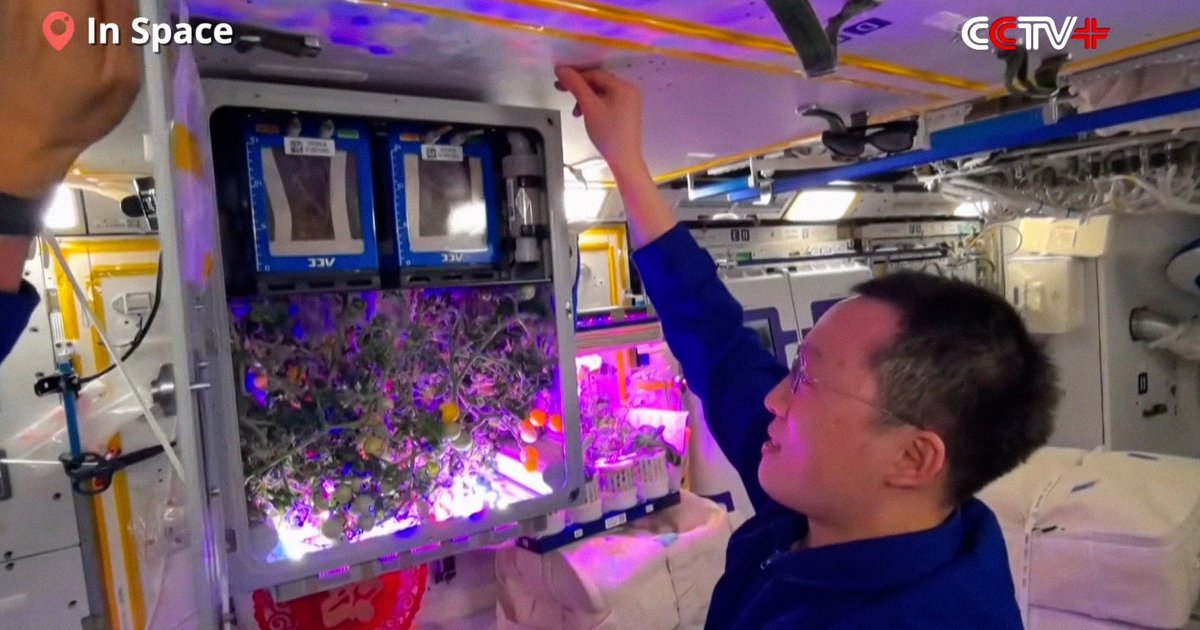
On the other hand, these crops can provide a psychological benefit to the crew. The astronauts on Tiangong themselves refer to their garden as a "healing corner," since tending to the plants and watching them grow offers significant psychological relief in an environment as isolated and hostile as space, helping to combat the stress and monotony of prolonged missions. Furthermore, the success with cherry tomatoes is just the beginning, as plans for the Tiangong station's "space garden" include conducting new aeroponic experiments with other crops such as wheat, carrots, and medicinal plants.
Por otro lado estos cultivos pueden proporcionar un beneficio psicológico a la tripulación. Los propios astronautas de la Tiangong se refieren a su huerto como un "rincón curativo" ya que cuidar de las plantas y verlas crecer ofrece un importante alivio psicológico en un entorno tan aislado y hostil como el espacio, ayudando a combatir el estrés y la monotonía de las misiones prolongadas. Además, el éxito con los tomates cherry es solo el comienzo pues los planes para el "huerto espacial" de la estación Tiangong incluyen la realización de nuevos experimentos aeropónicos con otros cultivos como trigo, zanahorias y plantas medicinales.
The goal is to continue expanding the variety of foods that can be produced in space. Each new crop that can be grown also provides valuable data that brings humanity one step closer to the possibility of living and working in space in a self-sufficient way. There is no longer any doubt that in the next decade we will see a permanent colony on our satellite. The bad news is that I'm already a bit too old to be able to visit it personally someday, although who knows if they'll invent some miracle drug that prolongs our lives.
El objetivo es seguir ampliando la variedad de alimentos que pueden producirse en el espacio. Cada nuevo cultivo que se pueda realizar proporciona además datos valiosos que acercan a la humanidad un paso más a la posibilidad de vivir y trabajar en el espacio de forma autosuficiente. Ya no cabe duda de que en la próxima década veremos alguna colonia permanente en nuestro satélite. Lo malo es que ya me pilla un poco mayor para poder visitarla personalmente algún día, aunque quien sabe si inventarán algún fármaco milagroso que nos prolongue la vida.
More information/Más información
https://en.clickpetroleoegas.com.br/Chinese-astronauts-celebrate-historic-harvest-of-tomatoes-grown-in-space-after-more-than-100-days-in-orbit-aboard-the-Tiangong-space-station-during-the-spring-festival./
Parece irónico que se investigue cómo auto abastecerse en el espacio pero no cómo auto abastecerse en la Tierra.
Gracias por compartir, saludos y éxitos..!
0.00 SBD,
0.54 STEEM,
0.54 SP