Scientists reveal a bold plan to reach 3I/ATLAS/Los científicos revelan un audaz plan para alcanzar 3I/ATLAS
Source
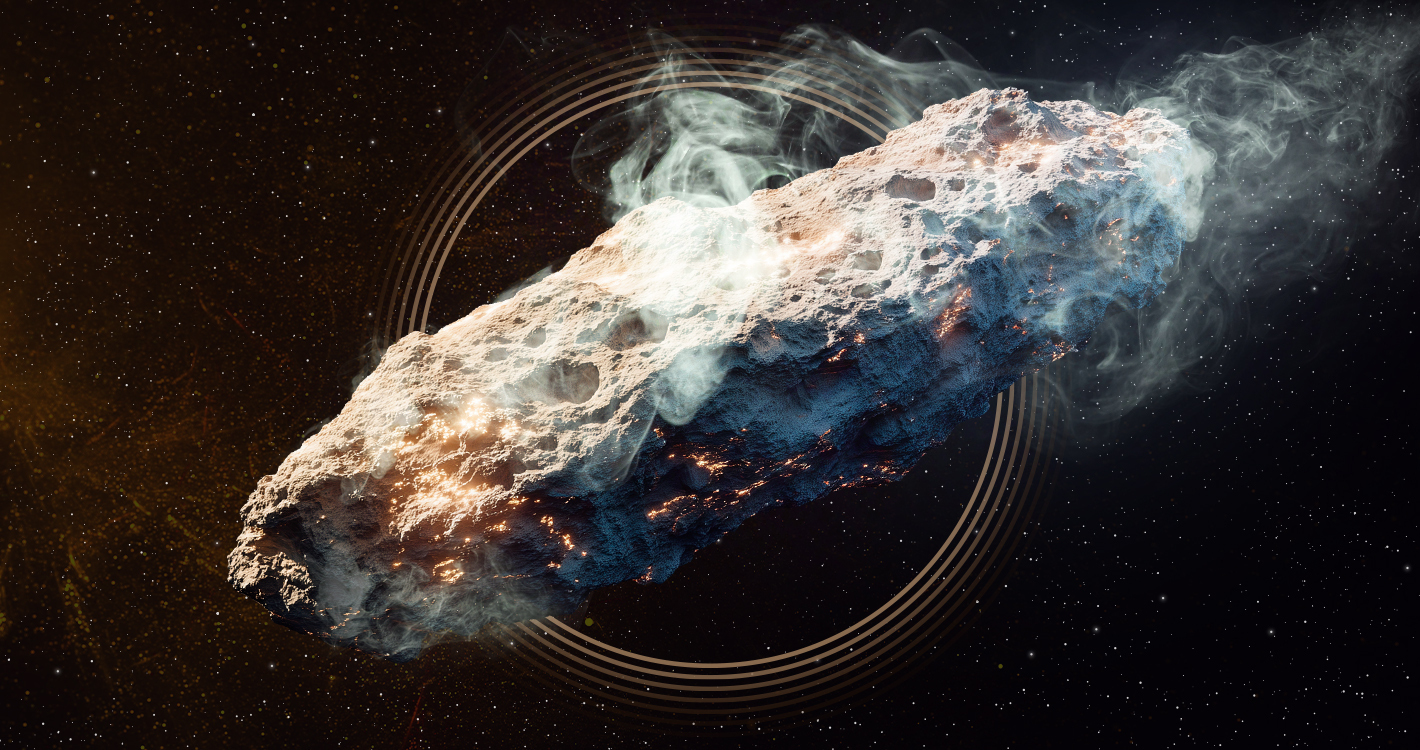
For those of you who have been living under a rock for the past few months, comet 3I/ATLAS (C/2025 N1) is an interstellar object detected on July 1, 2025, by the ATLAS network in Chile. It originates from outside our solar system, traveling at over 200,000 km/h on a hyperbolic trajectory. After months of being bombarded with information about this comet and the possibility that it was an extraterrestrial object, it seemed we had forgotten about it. But nothing could be further from the truth, as it now appears that a group of scientists is back in action, this time to intercept it on its interstellar journey.
Para los que hayáis estado en una cueva los últimos meses, el cometa 3I/ATLAS (C/2025 N1) es un objeto interestelar detectado el 1 de julio de 2025 por la red ATLAS en Chile. Proviene de fuera de nuestro sistema solar, viajando a más de 200.000 km/h en una trayectoria hiperbólica. Después de bombardearnos durante meses con este cometa y la posibilidad de que fuese un artefacto extraterrestre, parecía que ya nos habíamos olvidado de él pero nada más lejos de la realidad ya que ahora parece que un grupo de científicos vuelven a la carga, esta vez para interceptarlo en su viaje interestelar.
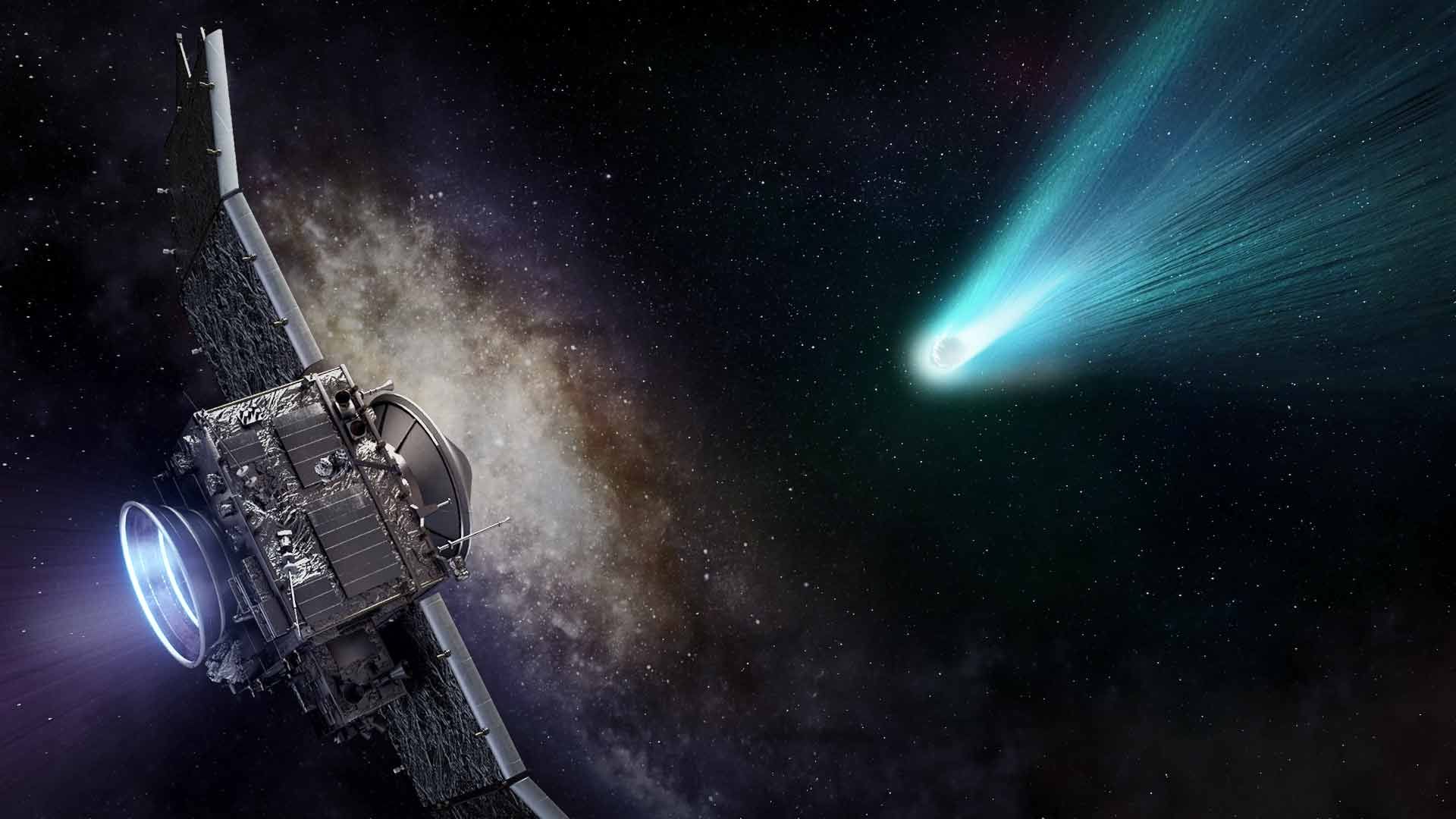
This is an ambitious theoretical proposal from a group of researchers (primarily from the Initiative for Interstellar Studies - i4is) to send a space probe to intercept and closely study the interstellar comet 3I/ATLAS. Once reached after pursuing it for fifty years, the goal is not to land on it, but to perform a high-speed flyby to collect crucial data about its composition and origin, taking advantage of the fact that this visitor from another solar system is passing by ours.
Se trata de una propuesta teórica y ambiciosa de un grupo de investigadores (principalmente de la Initiative for Interstellar Studies - i4is) para enviar una sonda espacial que intercepte y estudie de cerca al cometa interestelar 3I/ATLAS . Una vez alcanzado tras perseguirlo durante cincuenta años, el objetivo no es aterrizar en él, sino realizar un sobrevuelo a alta velocidad para recopilar datos cruciales sobre su composición y origen, aprovechando que este visitante de otro sistema solar está de paso por el nuestro.

Source
Since the comet is moving at a colossal speed and was detected after the window for a direct launch had already passed, scientists have devised an indirect route that uses the Sun's gravity to gain an extra boost. The optimal launch window would be in 2035, taking advantage of the perfect alignment between Earth, Jupiter, and the target. A very powerful rocket, such as SpaceX's Starship, would be needed, and it would also require refueling in orbit. The probe would not head directly toward the comet; it would first travel to Jupiter to use its enormous gravity to "slow down" or adjust its trajectory, thus falling into an orbit that takes it very close to the Sun.
Dado que el cometa se mueve a una velocidad colosal y fue detectado cuando la ventana para un lanzamiento directo ya había pasado, los científicos han ideado una ruta indirecta que aprovecha la gravedad del Sol para obtener un impulso extra. La ventana de lanzamiento óptima sería en 2035, aprovechando la alineación perfecta entre la Tierra, Júpiter y el objetivo . Se necesitaría un cohete muy potente, como el Starship de SpaceX, que además requeriría repostar en órbita. La sonda no se dirigiría directamente hacia el cometa, primero viajaría hacia Júpiter para usar su enorme gravedad y "frenar" o ajustar su trayectoria, cayendo así en una órbita que la lleve muy cerca del Sol.
The probe would approach the Sun extremely closely, coming within about 1.5 million kilometers of its surface (to give you an idea, Mercury is about 58 million km away). As it falls toward the Sun, its gravity would accelerate it to an astonishing speed of about 346 km/s at its closest point. At that precise moment, taking advantage of the so-called "Oberth Effect," which states that a thrust is much more effective when the object is already moving very fast in a gravitational field, the probe would fire its engines to give the final push that would propel it out of the Solar System at a speed sufficient to chase and catch up with 3I/ATLAS.
La sonda se acercaría extremadamente al Sol, a solo unos 1.5 millones de kilómetros de su superficie (para haceros una idea, Mercurio está a unos 58 millones de km). Al caer hacia el Sol, la gravedad de este la aceleraría hasta alcanzar una velocidad pasmosa de unos 346 km/s en su punto más cercano. En ese momento preciso y aprovechando el llamado "Efecto Oberth" que dice que un empuje es mucho más efectivo cuando el objeto ya se mueve muy rápido en un campo gravitatorio, la sonda encendería sus motores para dar el "empujón" final que la impulse fuera del Sistema Solar a una velocidad suficiente para perseguir y alcanzar a 3I/ATLAS.
Source
Following this initial boost, the probe would begin a journey of approximately 50 years, finally, around 2085, performing a high-speed flyby of the comet at a distance of over 700 Astronomical Units (AU) from the Sun. This is an astounding feat considering that Voyager 1, the most distant human-made object, is only about 170 AU away. Although theoretically possible, the mission faces extremely complex technological and engineering challenges. To survive the approach to within 1.5 million km of the Sun, the probe would require a very heavy and advanced heat shield, which reduces the space available for scientific instruments.
Tras este impulso, la sonda iniciaría un viaje de unos 50 años para finalmente, alrededor de 2085, realizar un sobrevuelo a toda velocidad del cometa, ya a una distancia de más de 700 Unidades Astronómicas (UA) del Sol. Esto es una salvajada teniendo en cuenta que la Voyager 1, el objeto humano más lejano, está tan solo a unas 170 UA. Aunque es teóricamente posible, la misión se enfrenta a obstáculos tecnológicos y de ingeniería extremadamente complejos, para sobrevivir al acercamiento a 1.5 millones de km del Sol, la sonda necesitaría un escudo térmico muy pesado y avanzado, lo que reduce el espacio para instrumentos científicos.
At over 700 AU, the radio signal is extremely weak, so a powerful nuclear power source would be needed onboard, along with the construction of enormous new antennas on Earth to receive the data. Even with a giant rocket like Starship, the probe's mass would be limited to about 500 kg (similar to a small car), which would have to accommodate the heat shield, the power source, and all the scientific instruments. Furthermore, the probe would have to operate autonomously and flawlessly for over 50 years during this entire journey. The worst part is that by 2085 we'll all be bald.
A más de 700 AU, la señal de radio es extremadamente débil por lo que se necesitaría una potente fuente de energía nuclear a bordo y construir nuevas y enormes antenas en la Tierra para poder recibir los datos. Incluso con un cohete gigante como Starship, la masa de la sonda estaría limitada a unos 500 kg (similar a un coche pequeño), donde habría que meter el escudo térmico, la fuente de energía y todos los instrumentos científicos. Además, durante todo este periplo la sonda debería funcionar de manera autónoma y sin fallos durante más de 50 años. Lo peor de todo es que para 2085 estaremos todos calvos.
More information/Más información
https://en.clickpetroleoegas.com.br/cientistas-revelam-plano-ousado-para-alcancar-o-3i-atlas-espaconave-teria-que-passar-colada-no-sol-viajar-mais-de-700-vezes-a-distancia-da-terra-ao-sol-e-perseguir-o-cometa-por-ate-50-anos-flpc96/