The first regular space debris collection service will begin in 2027/El primer servicio regular de recogida de basura espacial comenzará en 2027

Source
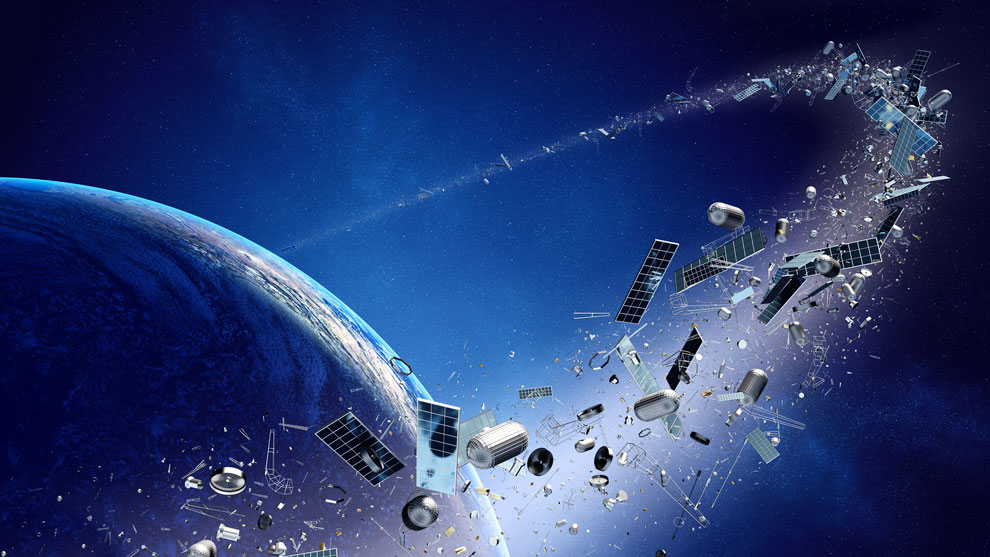
We call space junk all the useless artificial objects orbiting Earth. This includes everything from rocket stages and failed satellites to small fragments from collisions or explosions. It is estimated that there are more than 130 million small objects (less than 1 cm) and more than 36,000 objects larger than 10 cm (such as defunct satellites) orbiting at extremely high speeds. These objects travel at speeds of up to 28,000 km/h; a collision, even with a small fragment, can disable or destroy an active satellite, generate more debris, and endanger crewed missions, such as the International Space Station.
Llamamos basura espacial a todos los objetos artificiales sin utilidad que orbitan la Tierra. Esto incluye desde etapas de cohetes y satélites fallidos hasta pequeños fragmentos producto de colisiones o explosiones. Se estima que hay más de 130 millones de objetos pequeños (de menos de 1 cm) y más de 36.000 objetos mayores de 10 cm (como satélites muertos) dando vueltas a velocidades altísimas. Estos objetos viajan a velocidades de hasta 28.000 km/h, un choque incluso con un fragmento pequeño, puede inutilizar o destruir un satélite activo, generar más basura y poner en riesgo misiones tripuladas, como la Estación Espacial Internacional.
To give you an idea, it's estimated that satellite operators in the US spend around $58 million a year just on collision avoidance maneuvers. In this context, Portal Space Systems (USA) and Paladin Space (Australia) have joined forces to launch the first Debris Removal as a Service (DRAAS). Their goal is to transition from a scientific experiment to an operational, commercial service, starting in 2027. In fact, the company Starlab Space has already signed a letter of intent to use this service.
Para hacerse una idea, se calcula que los operadores de satélites en EE. UU. gastan unos 58 millones de dólares al año solo en maniobras para evitar colisiones. En esta tesitura, Portal Space Systems (EE. UU.) y Paladin Space (Australia) han unido fuerzas para lanzar el primer servicio de "Eliminación de Basura como Servicio" (Debris Removal as a Service o DRAAS). Su objetivo es pasar de ser un experimento científico a un servicio operativo y comercial que empiece a funcionar en 2027. De hecho, la compañía Starlab Space ya ha firmado una carta de intención para usar este servicio.
Source
The mission will function as a "space garbage truck" thanks to the combination of two key technologies. First, there's a kind of "truck," which is Portal Space Systems' Starburst spacecraft. It's a highly maneuverable platform, designed to move nimbly between different orbits and, crucially, is resuppliable in space, allowing it to perform multiple cleanup missions. Second, there's a "collecting arm" from Paladin Space that's responsible for identifying and sorting the debris, even if it's spinning uncontrollably.
La misión funcionará como un "camión de basura espacial" gracias a la combinación de dos tecnologías clave. Por un lado una especia de "camión", que es la nave espacial Starburst de Portal Space Systems. Es una plataforma muy maniobrable, diseñada para moverse con agilidad entre diferentes órbitas y, crucialmente, es reabastecible en el espacio, lo que le permite realizar múltiples misiones de limpieza. Por otro lado tiene un "brazo recolector" de Paladin Space que es el encargado de identificar y clasificar la basura, incluso si está girando de forma descontrolada.
This system could capture objects up to 1 meter in size and store between 20 and 50 objects per mission, for later controlled disposal (for example, by burning them up in the atmosphere). The space debris removal market is still in its early stages and is expected to grow exponentially in the coming years. Some projections indicate that it could increase from approximately $359 million in 2024 to over $3.1 billion in 2032.
Con este sistema se podrían llegar a capturar los objetos de hasta 1 metro de tamaño y se podrían almacenar hasta entre 20 y 50 objetos por misión, para luego deshacerse de ellos de forma controlada (por ejemplo, haciéndolos arder en la atmósfera). El mercado de la eliminación de basura espacial está todavía en fase de despegue y se espera que crezca de manera exponencial en los próximos años. Algunas proyecciones indican que podría pasar de unos 359 millones de dólares en 2024 a más de 3.100 millones en 2032.

Source
But some challenges remain. Currently, there is no clear international legal framework regarding who is responsible for waste removal, how it is done, and who pays. This is one of the biggest obstacles to the industry's development. The business model is still being defined, and while the "waste-as-a-service" initiative is promising, the technology remains expensive, and companies must find a way to make it profitable on a large scale. Cleanup will not be done in just one way. Alongside systems like those used by Portal and Paladin, other techniques are being researched, such as nets or harpoons to capture larger objects.
Pero aún quedan algunos retos por superar, actualmente no existe un marco legal internacional claro sobre quién es responsable de retirar la basura, cómo se hace y quién paga. Esto es uno de los mayores obstáculos para el desarrollo de la industria. El modelo de negocio aún se está definiendo y aunque la iniciativa "basura como servicio" es prometedora, la tecnología sigue siendo cara y las empresas deben encontrar la manera de que sea rentable a gran escala. La limpieza no se hará de una sola forma. Junto a sistemas como el de Portal y Paladin, se investigan otras técnicas como redes o arpones para atrapar objetos más grandes.
In short, the initiative by Portal Space Systems and Paladin Space is a historic step toward the active and commercial management of the space environment. Although it faces economic and legal challenges, it represents a necessary solution to ensure we can continue using the satellites we rely on for communication, navigation, and weather forecasting. With ever-increasing space mission traffic, this debris can pose a very real danger, such as the well-known Kessler syndrome, which could transform Earth's orbits into a giant billiard table.
En resumen, la iniciativa de Portal Space Systems y Paladin Space es un paso histórico hacia la gestión activa y comercial del entorno espacial. Aunque se enfrenta a desafíos económicos y legales, representa una solución necesaria para garantizar que podamos seguir usando los satélites de los que dependemos para comunicarnos, navegar o predecir el tiempo. Cada vez tenemos más tráfico de misiones espaciales y estos escombros pueden suponer un peligro muy real como es el famoso síndrome de Kessler, según el cual las órbitas terrestres podrían convertirse en una mesa de billar gigante.
More information/Más información
https://en.clickpetroleoegas.com.br/space-debris-already-exceeds-130-million-fragments-in-low-earth-orbit-and-us-and-australian-companies-are-preparing-for-2027-the-first-regul-ctl01/
Es una excelente iniciativa de Portal Space Systems (Estados Unidos) y Paladín Space (Australia) para gestionar comercialmente el entorno espacial. Sin duda, los desafíos económicos y legales son inmensos, pero algo hay que hacer para seguir utilizando los satélites fundamentales para la comunicación, la navegación y la predicción climatológica.
Los peligros reales van en aumento al mismo ritmo del aumento del tráfico de misiones espaciales y de los escombros.
Gracias por compartir, saludos y éxitos.