The US will use AI-powered climbing robots on military ships for maintenance/EEUU usará robots trepadores con IA en buques militares para su mantenimiento
Source
A few days ago, news broke that the aircraft carrier USS Gerald R. Ford was facing chronic and serious problems with its sanitation system. A floating fortress capable of keeping a country in check, yet with clogged toilets. The ship has serious malfunctions, including frequent pipe blockages and valve failures, to the point that they have been a constant operational complication, recently exacerbated by an onboard fire that forced the ship to withdraw from its operational area in the Red Sea.
Hace unos días salió una noticia según la cual el portaaviones USS Gerald R. Ford enfrentaba problemas crónicos y graves con su sistema de saneamiento. Una fortaleza flotante capaz de mantener a raya a un país pero con los retretes atascados. El buque tiene graves averías que incluyen obstrucciones frecuentes en las tuberías y fallos en las válvulas, hasta el punto de que han sido una complicación operativa constante, exacerbada recientemente por un incendio a bordo que obligó al buque a retirarse de su zona de operaciones en el Mar Rojo.
The US fleet remains the most powerful in the world, but its actual readiness is under considerable strain. It's not a collapse, but it's not exactly overstretched either. According to experts, approximately 68% of surface ships are currently operational, and the same is true for submarines (67%) and naval aircraft (70%), meaning that one in three systems is not ready for immediate combat. Meanwhile, China not only has more ships, but its industrial capacity is overwhelming. Through constant production, the Chinese fleet is newer and requires less immediate maintenance.
Y es que la flota de EE. UU. sigue siendo la más potente del mundo pero su disponibilidad real está bastante tensionada. No es un colapso, pero tampoco está “sobrada”. A día de hoy según los expertos aproximadamente el 68% de los buques de superficie están operativos y lo mismo ocurre con los submarinos (67%) y aviación naval (70%), lo que significa que uno de cada tres sistemas no está listo para combate inmediato. Mientras tanto China no solo tiene más barcos sino que su capacidad industrial es abrumadora. Al producir constantemente, la flota china es más nueva y requiere menos mantenimiento inmediato.
Source
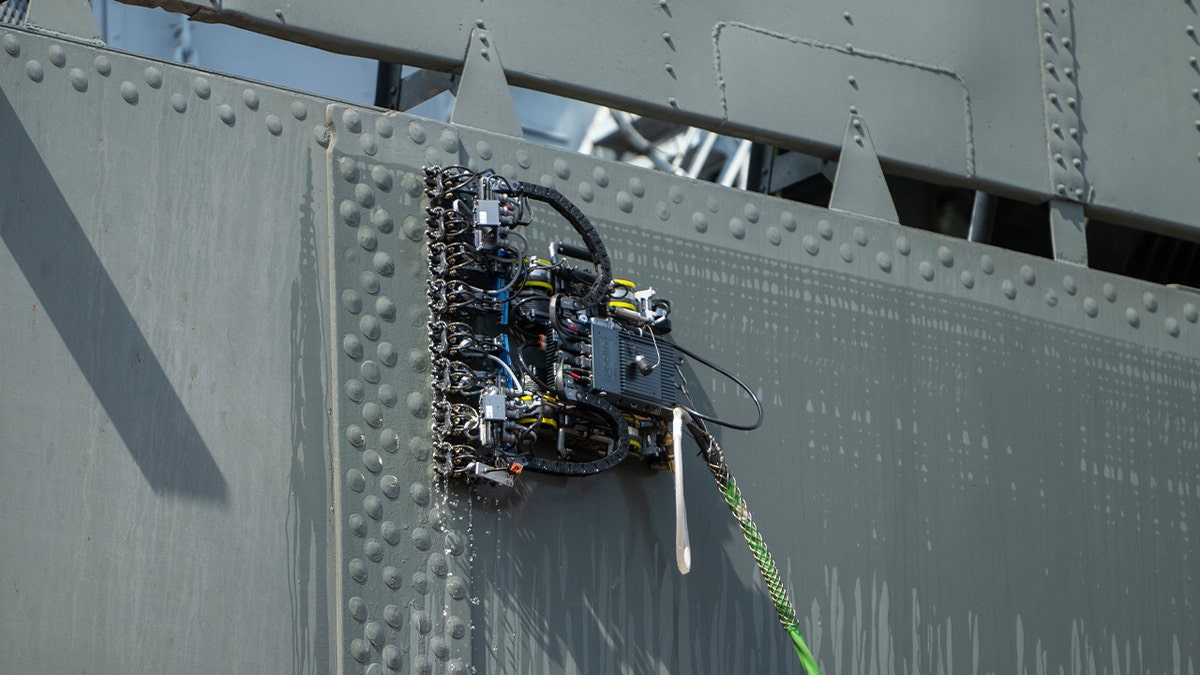
In this context, given that increasing shipbuilding capacity is not a quick process, the US has opted to deploy crawler robots with artificial intelligence to perform inspections and repairs. The company in charge is Gecko Robotics, and the initial contract is for $71 million to implement the system on 18 ships in the Pacific Fleet. These robots attach to the ships' steel hulls using magnets and can climb the sides, the bottom, or even fly within confined spaces (such as ballast tanks) that are dangerous or difficult for humans to access.
En este escenario, dado que aumentar la capacidad de construcción naval no es algo que sea rápido, EEUU ha optado por desplegar robots rastreadores (trepadores) con inteligencia artificial para realizar inspecciones y reparaciones. La empresa encargada es Gecko Robotics, y el contrato inicial es por 71 millones de dólares para aplicarlo en 18 buques de la Flota del Pacífico. Son robots que se adhieren al casco de acero de los barcos mediante imanes y pueden trepar por los laterales, el fondo o incluso volar dentro de espacios reducidos (como tanques de lastre) que son peligrosos o de difícil acceso para los humanos.
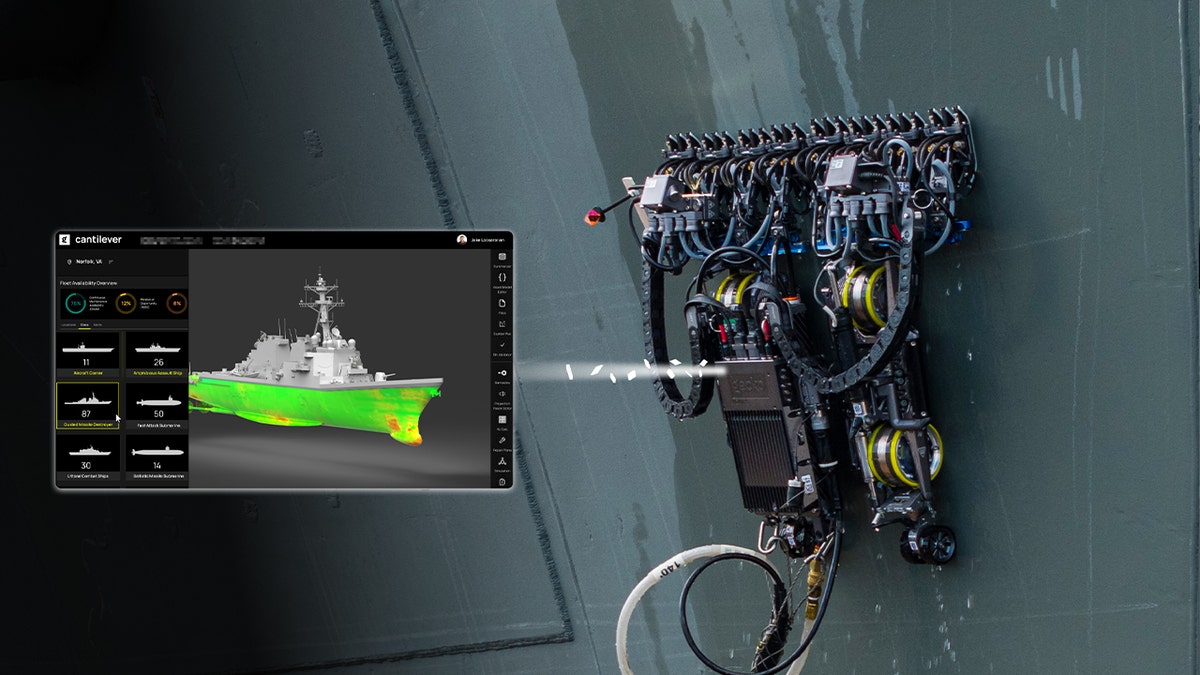
As the robots move, they use advanced sensors to scan the metal and collect millions of data points about the steel's thickness, welds, corrosion, and microscopic cracks. This data is uploaded to an artificial intelligence platform called Cantilever, which analyzes everything and creates a "digital twin" (an exact 3D replica of the ship's actual condition). This system can solve three key problems. First, speed, since artificial intelligence processes information 50 times faster than a human team. What previously took weeks of manual inspection is now done in hours.
Mientras los robots se mueven, utilizan sensores avanzados para escanear el metal y recopilan millones de datos sobre el grosor del acero, las soldaduras, la corrosión o las grietas microscópicas. Esos datos se suben a una plataforma de inteligencia artificial llamada Cantilever, que analiza todo y crea un "gemelo digital" (una réplica 3D exacta del estado real del barco). Con este sistema se pueden solucionar tres problemas clave. Por un lado la velocidad ya que la inteligencia artificial procesa la información 50 veces más rápido que un equipo humano. Lo que antes tomaba semanas de inspección manual, ahora se hace en horas.

Source
On the other hand, robots detect corrosion or metal fatigue that the human eye cannot see, preventing serious structural damage from being overlooked. Traditionally, damage is discovered after the ship enters dry dock (causing delays because spare parts have to be ordered on the spot). With robots, technicians know exactly what is broken before the ship even arrives at the shipyard, so they can have the parts ready in advance, resulting in crucial time and cost savings.
Por otro lado, los robots detectan corrosión o fatiga del metal que el ojo humano no ve, evitando que se pasen por alto daños estructurales graves. Tradicionalmente, los daños se descubren después de que el barco entra al dique seco (lo que provoca retrasos porque hay que pedir repuestos sobre la marcha). Con los robots, los técnicos saben exactamente qué está roto antes de que el barco llegue al astillero, por lo que pueden tener las piezas listas con antelación, lo que supone un ahorro clave de tiempo y dinero.
In short, since it's impossible to compete with China's industrial capacity to launch new ships at an unstoppable rate, the US is using robotics and artificial intelligence to try to prevent its aging ships from becoming stuck in the repair shop. Naval maintenance is extremely slow and expensive, as shutting down a vessel can cost millions a day. Manual inspections take weeks, and these robots significantly reduce inspection time and detect problems earlier, resulting in fewer serious breakdowns.
En resumen, ya que es imposible competir con China con su capacidad industrial para lanzar barcos nuevos al agua a una velocidad imparable, EE.UU. usa la robótica y la inteligencia artificial para intentar evitar que sus barcos viejos se queden atascados en el taller. El mantenimiento naval es lentísimo y carísimo ya que parar un buque puede costar millones al día. Las inspecciones manuales requieren semanas y con estos robots se reduce considerablemente el tiempo de inspección y se detectan problemas antes por lo que surgen menos averías graves.
More information/Más información
https://www.cnbc.com/2026/03/17/gecko-robotics-navy-contract-ship-repair-trump.html