They develop a 3D-printed elastic implant that reduces blood pressure/Desarrollan un implante elástico en 3D que reduce la presión arterial
Source
High blood pressure is a global health problem of epidemic proportions. It affects more than 1.4 billion people worldwide and is the leading preventable risk factor for cardiovascular disease and premature death. Because of its silent nature, it is known as the "silent killer," as most sufferers experience no symptoms until a serious event occurs, such as a heart attack or stroke. Although the risk increases with age (especially in those over 60), the problem is worsening in people under 40, indicating a worrying trend toward chronicity at younger ages.
La hipertensión arterial es un problema de salud global de proporciones epidémicas. Afecta a más de 1.400 millones de personas en todo el mundo y es el principal factor de riesgo prevenible para enfermedades cardiovasculares y muerte prematura. Por su naturaleza silenciosa, se la conoce como el "asesino silencioso", ya que la mayoría de quienes la padecen no presentan síntomas hasta que ocurre un evento grave, como un infarto o un derrame cerebral. Aunque el riesgo aumenta con la edad (especialmente en mayores de 60 años) , el problema se está agravando en personas menores de 40 años, lo que indica una tendencia preocupante hacia la cronicidad desde edades más tempranas.
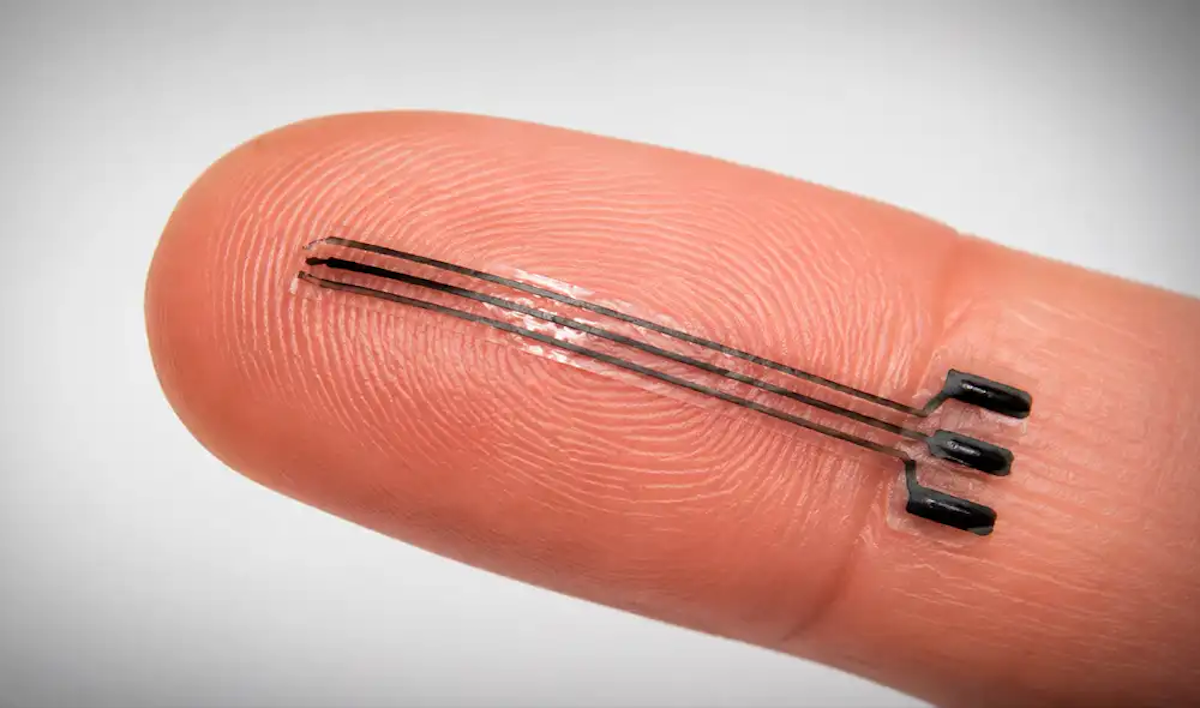
To try to mitigate this problem, a group of engineers from Pennsylvania State University presented a 3D-printed elastic implant capable of reducing blood pressure through gentle, localized electrical stimulation. It's called CaroFlex, a small, elastic bioelectronic implant designed to treat high blood pressure, especially in patients who don't respond well to medication. It's an ultrathin, elastic patch, made almost entirely of hydrogel, that adheres directly to the surface of the carotid artery (in the neck).
Para intentar mitigar este problema, un grupo de ingenieros de la Universidad Estatal de Pensilvania presentaron un implante elástico en 3D capaz de reducir la presión arterial mediante estimulación eléctrica suave y localizada. Se trata de CaroFlex, un pequeño implante bioelectónico elástico, diseñado para tratar la hipertensión arterial, especialmente en pacientes que no responden bien a los medicamentos. Es un parche ultrafino y elástico, creado casi en su totalidad con hidrogel, que se adhiere directamente a la superficie de la arteria carótida (en el cuello).
Source
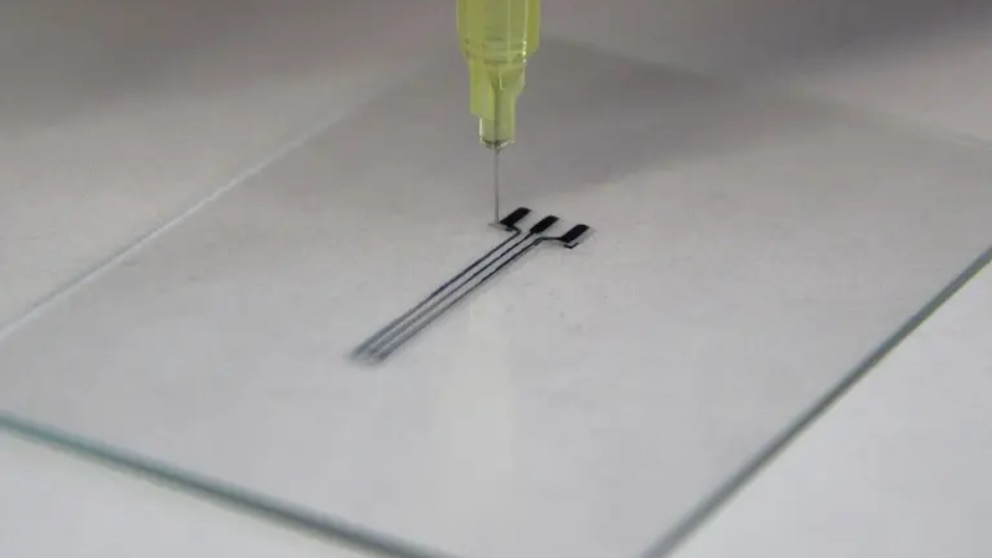
Unlike traditional rigid metal implants, CaroFlex is designed to be biocompatible and "soft," mimicking the texture of body tissue. The device can stretch to more than twice its original size without breaking, adapting perfectly to the movement and pulsations of the artery. Thanks to its hydrogel adhesive layer, it bonds to the tissue without the need for staples or sutures, which often cause long-term damage. Because they are 3D printed, the implants can be customized more efficiently, which could be key to tailoring them to each patient.
A diferencia de los implantes tradicionales de metal rígido, CaroFlex está diseñado para ser biocompatible y "blando", imitando la textura de los tejidos del cuerpo. El dispositivo se puede estirar hasta más del doble de su tamaño original sin romperse, adaptándose perfectamente al movimiento y los latidos de la arteria. Gracias a su capa adhesiva de hidrogel, se pega al tejido sin necesidad de grapas o puntos de sutura, que suelen causar daños a largo plazo. Al ser fabricados en 3D se pueden personalizar los implantes de forma más eficiente, lo que podría ser clave para adaptarlos a cada paciente.
CaroFlex works on the body's natural system for regulating blood pressure, called the baroreflex. It is placed over the carotid sinus, a small, enlarged area of the carotid artery where a large number of pressure sensors called baroreceptors are concentrated. The implant emits gentle, low-frequency electrical impulses to these sensors. These impulses trick the brain into thinking that the blood pressure is higher than it actually is. In response, the brain signals the blood vessels to relax and widen, and the heart to beat more slowly, thus naturally lowering the blood pressure.
CaroFlex actúa sobre el sistema natural que el cuerpo usa para regular la presión arterial, llamado barorreflejo . Se coloca sobre el seno carotídeo, una pequeña zona ensanchada de la arteria carótida donde se concentran una gran cantidad de "sensores de presión" llamados barorreceptores. El implante emite impulsos eléctricos suaves y de baja frecuencia hacia estos sensores. Estos impulsos "engañan" al cerebro haciéndole creer que la presión arterial es más alta de lo que es. Como respuesta, el cerebro ordena que los vasos sanguíneos se relajen y ensanchen, y que el corazón lata más despacio, logrando así que la presión arterial disminuya de forma natural.

Source
This system has many advantages over current treatments, offering real hope to the 10% of patients with hypertension who cannot control it with three or more medications. By eliminating rigid sutures, the risk of damaging the soft, pulsatile tissues of the arteries is reduced. Because it is a localized therapy applied to the artery, it would not have the systemic (whole-body) side effects caused by medications, such as dizziness or fatigue. Initial trials in laboratory rats have yielded very positive results, although they are still in the early stages.
Este sistema tiene muchas ventajas sobre los tratamientos actuales, ofrece una esperanza real a un 10% de pacientes con hipertensión que no logran controlarla con tres o más fármacos. Al eliminar las suturas rígidas, se reduce el riesgo de dañar los tejidos blandos y pulsátiles de las arterias. Al ser una terapia localizada en la arteria no tendría los efectos sistémicos (en todo el cuerpo) que provocan los medicamentos, como mareos o fatiga. Los primeros ensayos en ratas de laboratorio han arrojado resultados muy positivos, aunque aún en fase temprana.
Despite all the successes, it's important to be cautious. The device is still in the proof-of-concept phase in animals (rodents), and the road to human use could be long. The team's next steps include optimizing the device's efficacy and scaling up the design for testing in larger animals. Finally, they will conduct the extensive human clinical trials necessary to demonstrate its safety and efficacy before it can reach pharmacies or hospitals. This suggests we'll have to wait a while longer, but we shouldn't get too anxious, as that only raises the pressure.
A pesar de todos los éxitos es importante ser prudentes, el dispositivo todavía está en fase de prueba de concepto en animales (roedores) y el camino hasta su uso en seres humanos puede ser largo. Los siguientes pasos del equipo incluyen optimizar la eficacia del dispositivo y escalar el diseño para probarlo en animales de mayor tamaño. Finalmente, realizar los exhaustivos ensayos clínicos en humanos necesarios para demostrar su seguridad y eficacia antes de que pueda llegar a las farmacias u hospitales. Lo que indica que aún habrá que esperar sin ponernos ansiosos, que eso sube la presión.
More information/Más información
https://interestingengineering.com/health/soft-hydrogel-implant-blood-pressure-control
Your articles are consistently unique because you don't just provide a report of scientific developments, but you also provide a thoughtful reflection on what might happen with these new advancements in the future. The article you shared about the CaroFlex implant for example was an interesting read, and so was the way that you explained the use of bioelectronic stimulation to take advantage of the body's natural baroreflex system rather than solely relying on the use of a conventional drug.
The thing I appreciate most about your writings is the balance between scientific depth versus accessibility. You are able to explain complex biomedical innovations to experienced readers while still communicating clearly, so that those who may not have much experience working with scientific literature may be able to read your articles and understand them at a high level. Achieving this level of communication is difficult.
I have been following your posts for a while now, and I can say that one common theme exists throughout all of your previous posts: you conduct thorough research, your explanations are clear, and you are passionate about providing STEM advancements to the general public. You authors give this platform even richer content, to people who appreciate learning something.
Great Article as always, and I thank You for continuing to provide valuable content.
By the way, you work with the reliable sources!
Thank you @aboy01
It is my pleasure!
Entiendo que la hipertensión arterial es un problema global y sus causas básicamente están relacionadas con la alimentación de hoy día.
Tal vez este invento pueda resolver la tensión arterial alta pero no las consecuencias de una mala alimentación, es como tratar de engañar al cuerpo.
Gracias por este artículo.
Saludos y éxitos..!
0.00 SBD,
0.65 STEEM,
0.65 SP