The controversy over humanoid robots at Hyundai
in Popular STEM5 days ago

The controversy over humanoid robots at Hyundai


Image source:


“Robots Won’t Replace Humans”


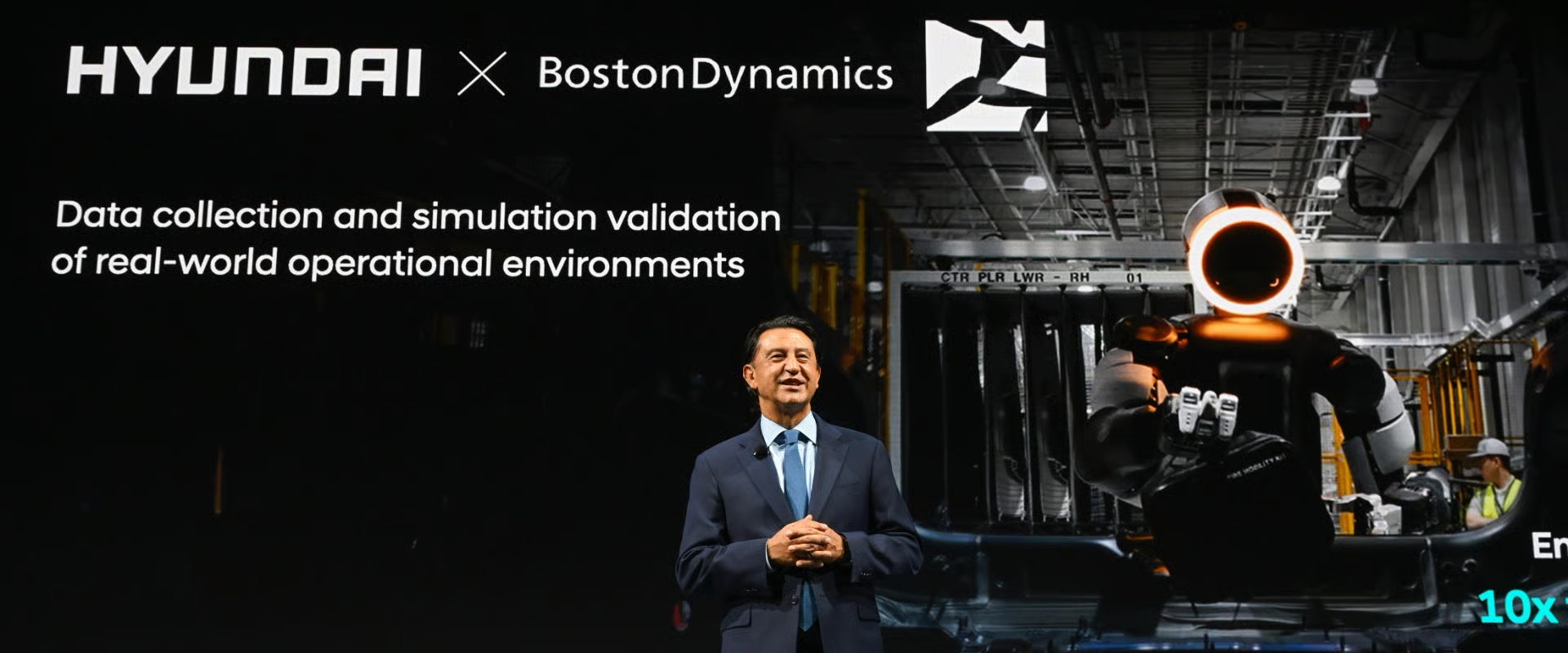
Hyundai states that its future humanoid robots will not be used to replace human workers; this declaration was made by Hyundai Motor CEO José Muñoz during the company’s 2026 Investor Day event in Seoul. The timing of the statement, however, was notable: just a day earlier, Hyundai and its South Korean labor union had reached a preliminary agreement following weeks of work stoppages and negotiations that addressed concerns directly related to artificial intelligence, automation, and job security.


During his presentation to investors, Muñoz affirmed that the robots would serve people. According to the executive, they are expected to primarily handle difficult and repetitive tasks, while new job categories—such as robot maintenance—will emerge. Hyundai is preparing for a significant expansion in precisely that area. The company plans to begin robot production in 2026 at a new factory in the United States. The projected capacity is 30,000 units per year, and a large portion of that initial output is already spoken for.


According to Muñoz, the first 25,000 commercial units are already spoken for—starting with Hyundai’s own operations and extending to industrial and logistics partners—representing approximately 83% of the new factory's planned annual capacity. A key robot in this strategy will be the Atlas model developed by Boston Dynamics. Its first large-scale deployment is also scheduled for 2028 at the Hyundai Motor Group Metaplant America in Georgia.


"We are creating new job categories."


Initially, the robots will handle parts sequencing—a task involving the organization and preparation of components in the specific order required for various production stages. From 2030 onwards, Hyundai plans to expand the use of Atlas to more complex activities, including component assembly; however, even as Hyundai prepares thousands of robots for its factories, South Korean workers are debating the precise impact of this automation.


The Hyundai union had already declared earlier in the year that no robot based on new technologies should be introduced into Korean factories without an agreement between workers and management. Employee representatives argued that the use of humanoids could allow the company to cut back on hiring and jeopardize job security. Labor negotiations dragged on for months and included partial work stoppages in August—Hyundai's first full-scale strike in South Korea in roughly a decade.


For now, there are two clear positions: Hyundai intends to manufacture tens of thousands of robots and progressively deploy them across its industrial operations, maintaining that these machines will work alongside people rather than replace them.


References 1
References 2


Follow my publications with the latest in artificial intelligence, robotics and technology.

If you like to read about science, health and how to improve your life with science, I invite you to go to the previous publications.


Sort:  

The integration of humanoid platforms like Boston Dynamics' Atlas into automotive manufacturing highlights the growing friction between automation and labor agreements. Hyundai's massive production plans for the Georgia facility point to rapid scaling over the next few years.

Congratulations!

Your post has been selected and upvoted by the SteemPro Team 🚀

Explore more on SteemPro:
🌐 https://www.steempro.com
🎮 Play SteemHeights: https://www.steempro.com/games/steem-heights
💬 Join our Discord: https://discord.gg/Bsf98vMg6U

💪 Supporting the growth of the Steem ecosystem together.

🟩 Vote for witness faisalamin:
https://steemitwallet.com/~witnesses
https://www.steempro.com/witnesses#faisalamin

steempro-cover-black.png
This is an automated message.

El dato de que 25 000 de los 30 000 robots ya están asignados me parece práctico, muestra que la demanda está lista. No es lo mismo lanzar un modelo y quedarnos sin clientes, la diferencia se nota en la planificación de Hyundai. Esto es genial para crear la nueva categoría de mantenimiento de robots.