MoM-BH-1 // The Big Bang object that made me rethink everything I knew about the cosmos
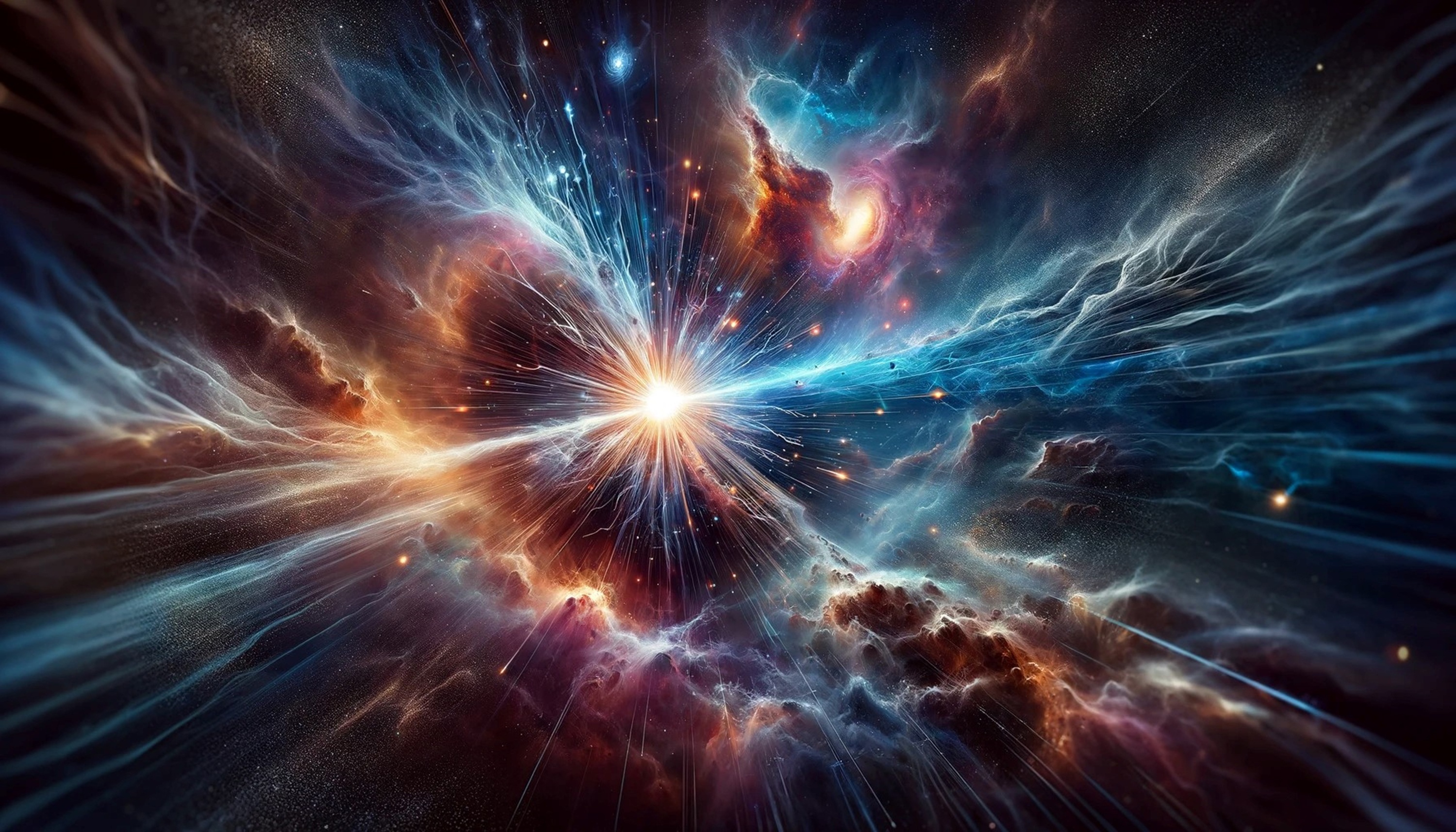
The existence of such a body, created more than thirteen billion years ago, and which we can observe today thanks to the James Webb Space Telescope, offers, in my opinion, a powerful clue to understanding how supermassive black holes arose. I have the feeling that we are looking directly into the most hidden mysteries since the beginning of the universe, and that, frankly, gives me goosebumps.
And speaking of time, it must be admitted that 2026 has been a boon for those who enjoy observing the heavens. I clearly remember August 12th, not only because of scientific findings in journals, but also because I was able to go out into the street and witness the total solar eclipse that astronomers had predicted. For me, observing that celestial alignment and those giant, resplendent moons was like having a completely free, three-dimensional movie theater in the sky.
I feel that the research group has been right on target by focusing so much on the satellite this year; personally, I believe that these expeditions and journeys of 2026 are not merely to touch the gray lunar surface, but to understand "the story of the entire stellar environment," as the experts stated. It's astonishing to think that, as I write these lines, there are spacecraft out there accumulating data that, I'm certain, will end up modifying the textbooks we currently read.
If anyone asks me about bibliographic sources or how to begin understanding these topics without losing my mind, I have a definite position. While specialized publications like Nature—where the work of Rohan P. Naidu and colleagues appeared in 2026—provide the necessary calm and methodical reference for building a solid foundation of knowledge, for those seeking a less dense approach, I highly recommend the book titled "My First Science Book: Space," published by Bruño (released in September 2019).
From my perspective, although it may seem aimed at children, it offers remarkable clarity in breaking down concepts that even many adults don't grasp on the first try. However, and this is solely my personal opinion: a 2019 volume is insufficient given the magnitude of recent events; therefore, I believe that the optimal bibliography today involves cross-referencing these texts with updated data repositories from the U.S. space agency. In short, we live in an exceptional period, and if there is one thing that is clear to me, it is that we have never before had so many answers... and simultaneously, so many unprecedented questions.
Leí tu post y me quedé pensando un buen rato después. Hay una honestidad en tu forma de escribir que se nota distinta. @newton666
De los posts que aportan algo distinto a lo que se ve habitualmente en el feed. Gracias por profundizar en lugar de quedarte en la superficie.
Me quedé pensando en lo que escribiste. Es de esos posts que uno termina y sigue dándole vueltas un rato después.