A robot made for space.

in Popular STEM16 hours ago

A robot made for space.


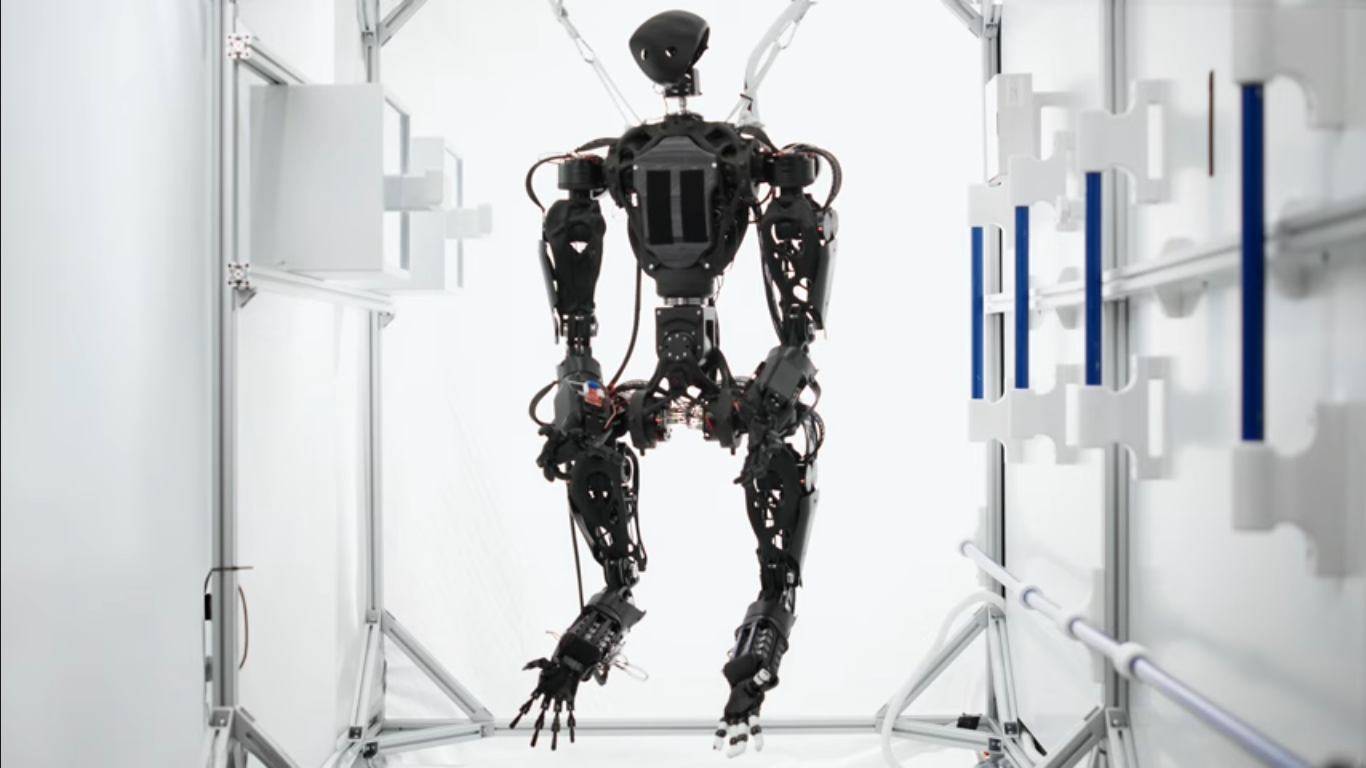
What should the body of a robot created to live in space be like? Science fiction imagined mechanical astronauts with legs, helmets and a human appearance walking through orbital stations as if space were just a futuristic version of the Earth, but aerospace engineering began to notice something curious: in zero gravity, the legs may be completely useless and it was exactly that logic that led the Canadian company Orbit Robotics to create the Helios, a space humanoid that completely abandons traditional human autonomy.


Instead of legs, the robot has four articulated arms designed to move, grabbing metal structures inside space stations and orbital satellites, the result almost looks like an alien organism from fiction, but there is an extremely rational reason behind this, on Earth, legs exist because we need to overcome gravity constantly, walking is basically a fight against the body's own weight, in space that problem disappears.


In micro-gravity, locomotion does not depend on steps, but on anchor points and motion control, so Orbit Robotics engineers came to a simple conclusion, if the robot does not need to walk, it makes more sense to transform the legs into tools, with four arms, Helios can attach part of the body to the structure of the station while using the other limbs to execute simultaneous tasks, something extremely important in orbital environments where any wrong movement can push the operator away and its internal engineering also completely deviates from traditional industrial robotics.


Instead of using rigid joints and heavy motors distributed throughout the body, the main actuators were placed near the shoulders to reduce the mass in the moving arms, the force is transmitted through cables, pulleys and coils that function almost like artificial biological tendons, this makes the movements lighter, smoother and more energy efficient.


The Helios elbow, for example, uses a rolling contact joint with very little friction, allowing extremely delicate manipulations in the orbital vacuum; on space missions, small impacts or vibrations can cause huge problems. So mechanical smoothness becomes as important as strength and all this exists for a very clear financial reason, yes it seems all science fiction but it is already happening even now.


Sorry for my Ingles, it's not my main language. The images were taken from the sources used or were created with artificial intelligence