The fastest humanoid robot in the world.
The fastest humanoid robot in the world.
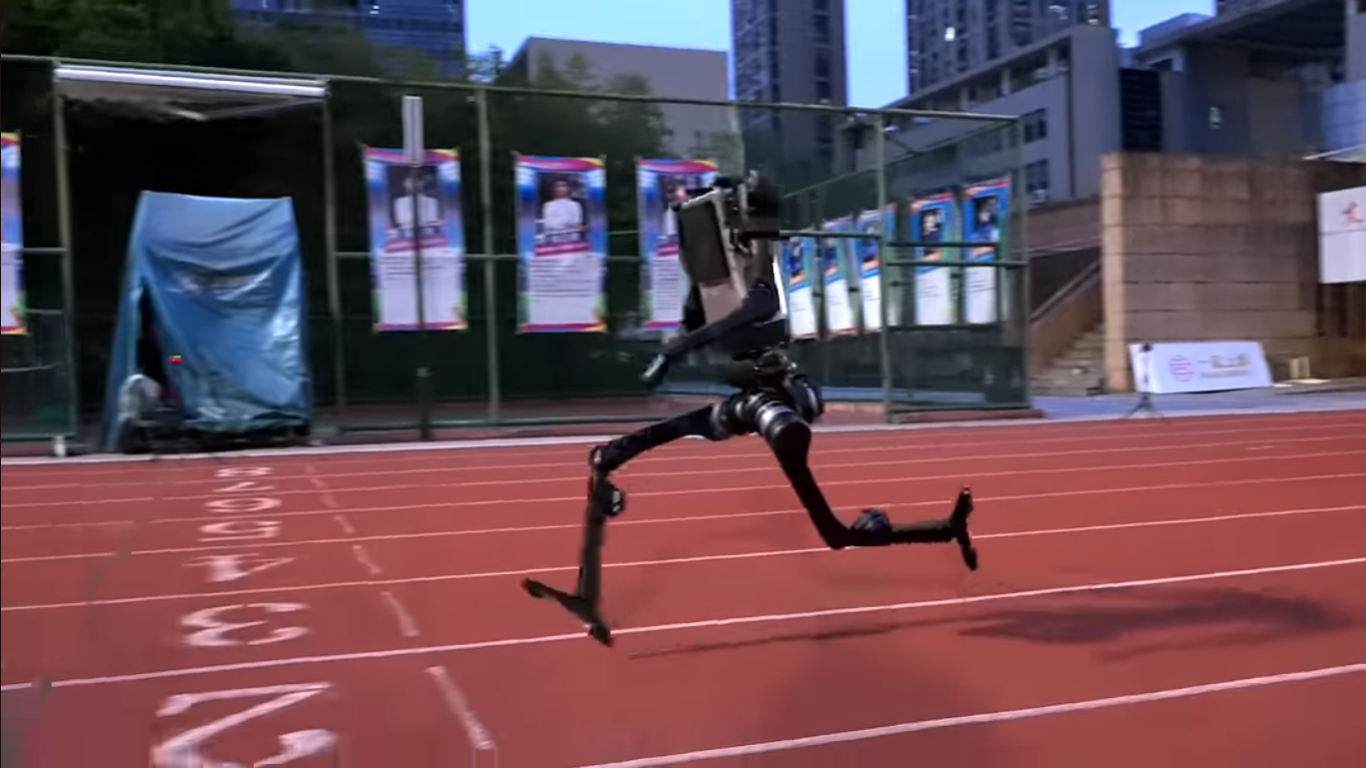

The Chinese Startup presented a new demonstration of its H1 humanoid robot, reaching a speed of up to 10 m per second, which is approximately equivalent to 36 km/h, this number places the robots very close to the speed of a high-level human athlete, something that until recently seemed far away for this type of machines. To put it in perspective, that speed corresponds to a 100m race in about 10 seconds, a performance that almost falls within the range set by Usain Bolt.
Any mistake can result in a fall and that makes this achievement even more relevant, if we analyze the recent history, the jump is even more evident, at the beginning of 2024, this same model reached close to 3.3 m/s, now it exceeds 10 m per second, an increase of more than 200% in a short time, this type of evolution shows that the pace of development in humanoid robotics is accelerating significantly, but speed alone is not the final goal, it is a indicator, a sign that these systems are becoming more stable, more efficient, and more capable of operating in real environments.
Congratulations!
Your post has been selected and upvoted by the SteemPro Team 🚀
Explore more on SteemPro:
🌐 https://www.steempro.com
🎮 Play SteemHeights: https://www.steempro.com/games/steem-heights
💬 Join our Discord: https://discord.gg/Bsf98vMg6U
💪 Supporting the growth of the Steem ecosystem together.
🟩 Vote for witness faisalamin:
https://steemitwallet.com/~witnesses
https://www.steempro.com/witnesses#faisalamin
This is an automated message.