The first biological data center in Singapore.
in Popular STEM23 hours ago

The first biological data center in Singapore.



Researchers in Singapore have just unveiled a rather unique type of data center: instead of relying solely on traditional silicon-based processors, a portion of its computing power comes from living human neurons grown in the laboratory.


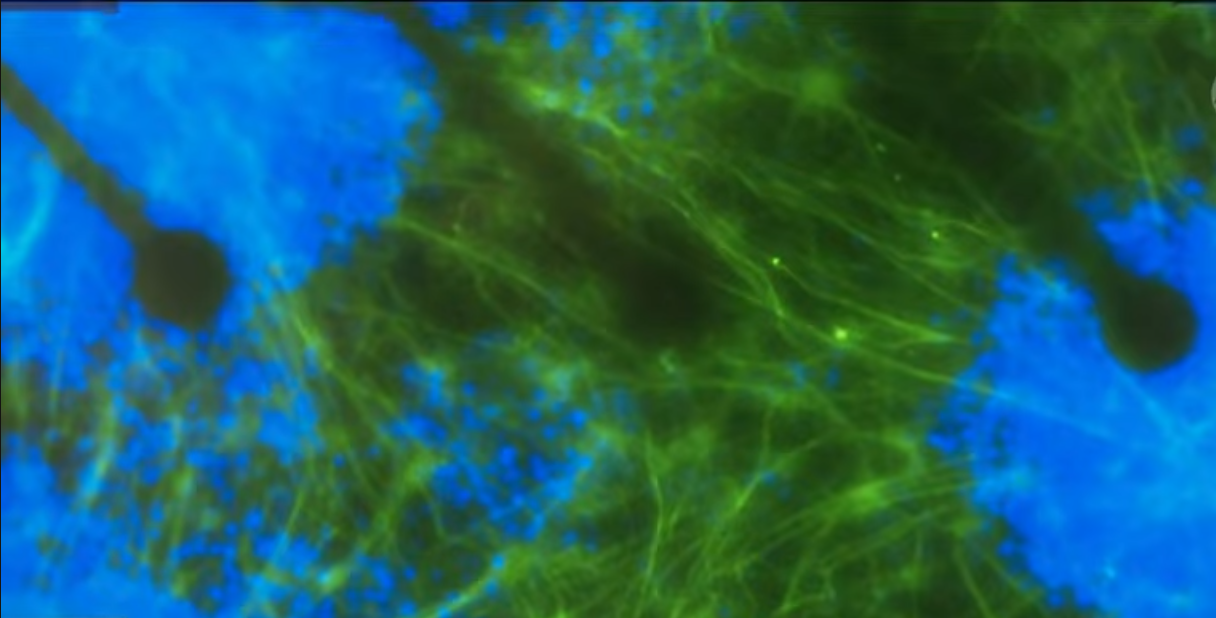
The prototype was installed at the National University of Singapore’s Life Sciences Institute and comprises 20 CL1 biological computers developed by the Australian company Cory Collabs; collectively, these systems utilize approximately 16 million living human neurons. Each CL1 unit combines neuronal cells—grown from human stem cells—with conventional electronic components.


The neurons grow on an electrode array, creating an interface capable of both sending electrical signals to the cells and recording their responses. This allows the system to interact directly with the neurons: they receive information via electrical stimuli, respond to those stimuli, and can modify their behavior based on the interaction—and it is precisely this capacity for adaptation that makes biological computing so compelling.


The human brain performs extremely complex tasks while consuming only about 20 watts of energy; in contrast, the massive traditional data centers currently used for artificial intelligence can require enormous amounts of electricity. The idea is not to immediately replace silicon chips with lab-grown brains, but rather to investigate whether systems composed of living cells can complement traditional computers in specific tasks—particularly those involving learning and adaptation.


The CL1 was developed specifically to enable this type of experiment; inside each unit lies a complete system responsible for keeping the neurons alive, controlling temperature, nutrient circulation, and the filtration of waste and gases necessary for the cells to function. In effect, these computers must biologically maintain part of their own hardware.


The project brings together Cordicolabs, the infrastructure company Day One, and the Yong Loo Lin School of Medicine at the National University of Singapore. Linking 20 of these units to work together represents a significant shift in scale; until now, most computing involving cultured neurons took place in isolated laboratory experiments. The new installation arranges these units in a structure similar to that used by conventional servers, forming what the team describes as the first rack of biologically integrated servers operating independently.


Researchers aim to use the system to study artificial intelligence in the brain, biomedical modeling, drug discovery, and neurological diseases; while it is far from replacing the massive servers currently in use, for the first time, millions of lab-grown human neurons are housed within an infrastructure designed like a true data center—and in this instance, a component of the computer is not merely manufactured but must remain alive.


Sorry for my Ingles, it's not my main language. The images were taken from the sources used or were created with artificial intelligence


Sort:  

Congratulations!

Your post has been selected and upvoted by the SteemPro Team 🚀

Explore more on SteemPro:
🌐 https://www.steempro.com
🎮 Play SteemHeights: https://www.steempro.com/games/steem-heights
💬 Join our Discord: https://discord.gg/Bsf98vMg6U

💪 Supporting the growth of the Steem ecosystem together.

🟩 Vote for witness faisalamin:
https://steemitwallet.com/~witnesses
https://www.steempro.com/witnesses#faisalamin

steempro-cover-black.png
This is an automated message.

La cifra de 16 millones de neuronas distribuidas en 20 unidades CL1 me dejó pensando en cuánto consumo de energía se puede ahorrar, eso es genial y práctico. ¿Ya probaron alguna tarea de reconocimiento de patrones para comparar con GPUs tradicionales?