Unified brains for all robots.

Unified brains for all robots.
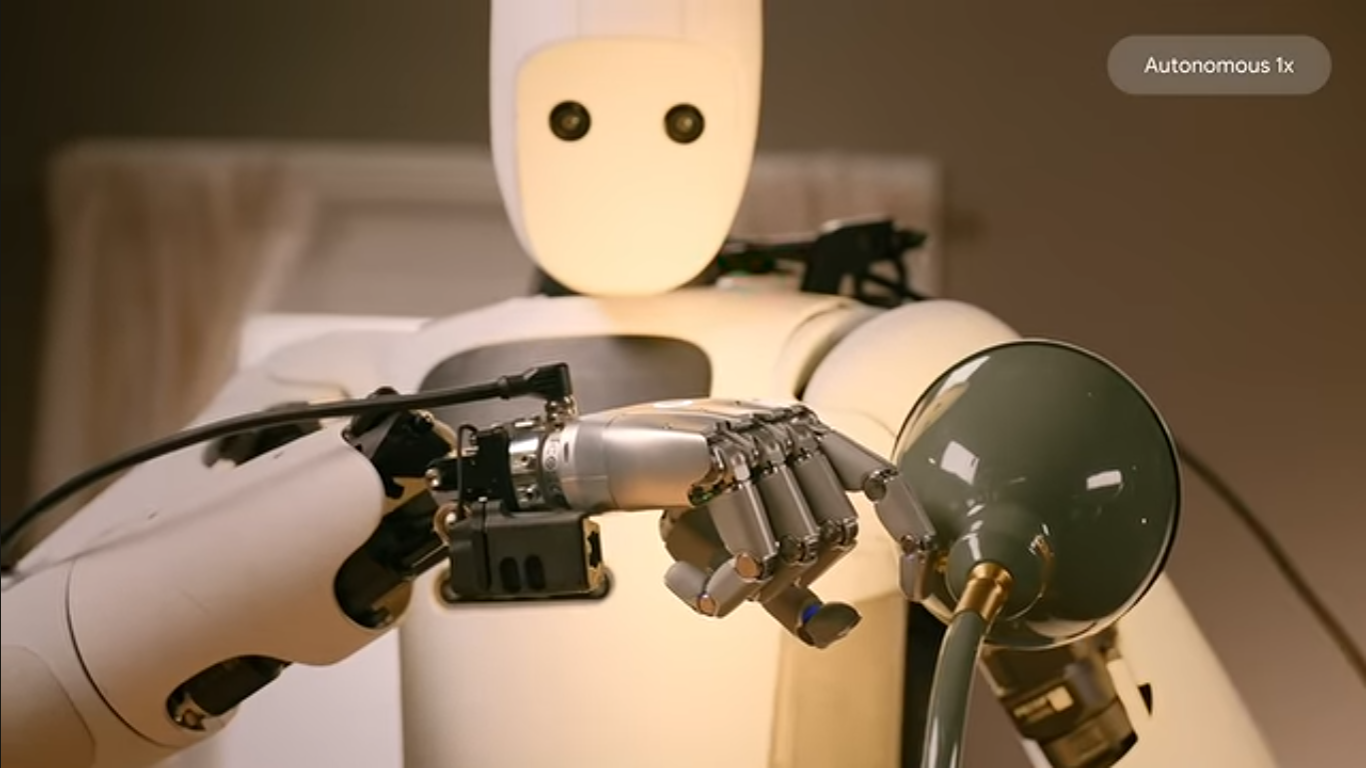


Google Gemini Robotics essentially follows the same concept introduced by the Chinese "Octopus" robot, albeit with some differences: instead of splitting intelligence across multiple independent programs, the system employs a unified architecture based on vision, language, and action models. This means the robot perceives its environment, understands natural language commands, and translates them directly into physical movements, without relying on various separate systems communicating with one another.


However, this "brain" is organized into distinct levels. At the core lies the primary model, responsible for interpreting images, understanding instructions, and deciding which movements to execute. Above it operates a strategic reasoning module capable of breaking down lengthy tasks into smaller steps, organizing complex sequences, and even coordinating work among multiple robots.


Regarding hardware, there is a third, critically important layer: part of the intelligence runs directly on the robot itself, eliminating the need for a constant internet connection. This reduces latency, enhances security, and allows specific functions to continue operating even if cloud communication is interrupted; this architecture also facilitates adaptation to different platforms.


During demonstrations, Gemini Robotics 2 was integrated into the Apollo humanoid from Apptronik, enabling the robot to walk, crouch, manipulate objects, and execute continuous movements using only natural language commands. At the same time, the platform demonstrated compatibility with highly sophisticated robotic hands—including models with 22 degrees of freedom—capable of performing extremely delicate tasks such as sealing plastic bags, handling fabrics, and even tying knots in ropes; these activities require a level of coordination far superior to the simple act of picking up a part on a production line.


Another interesting aspect is the speed of adaptation: according to DeepMind, the system can transfer to new robots using only a few hundred training examples, drastically reducing the time needed to teach new machines to perform similar tasks. However, greater autonomy brings greater safety concerns; consequently, the company introduced a new testing suite called Asimov, designed to evaluate whether the AI ​​can identify dangerous situations and reject potentially unsafe commands. Additionally, proximity sensors continuously monitor the presence of people nearby, drastically slowing down or halting movements whenever there is a risk of collision.


If this strategy truly works, we may be witnessing the birth of something far greater than just another robot.


Sorry for my Ingles, it's not my main language. The images were taken from the sources used or were created with artificial intelligence


Sort:  

Congratulations!

Your post has been selected and upvoted by the SteemPro Team 🚀

Explore more on SteemPro:
🌐 https://www.steempro.com
🎮 Play SteemHeights: https://www.steempro.com/games/steem-heights
💬 Join our Discord: https://discord.gg/Bsf98vMg6U

💪 Supporting the growth of the Steem ecosystem together.

🟩 Vote for witness faisalamin:
https://steemitwallet.com/~witnesses
https://www.steempro.com/witnesses#faisalamin

steempro-cover-black.png
This is an automated message.
