[Citizen Science] Overview of Backyard Wildlife Observations in South-eastern Pennsylvania During March 2026
As mentioned in several previous posts, I have been taking "wildlife walks" in my back yard so I can practice photography and improve my skills a bit. I'm still very much a novice photographer, but I think I'm improving a little. As I've been practicing at photography, I also started to learn about the animals that I'm photographing, and I discovered a way to simultaneously contribute to Citizen Science (aka Decentralized Science or DeSci) through the iNaturalist.org web site.
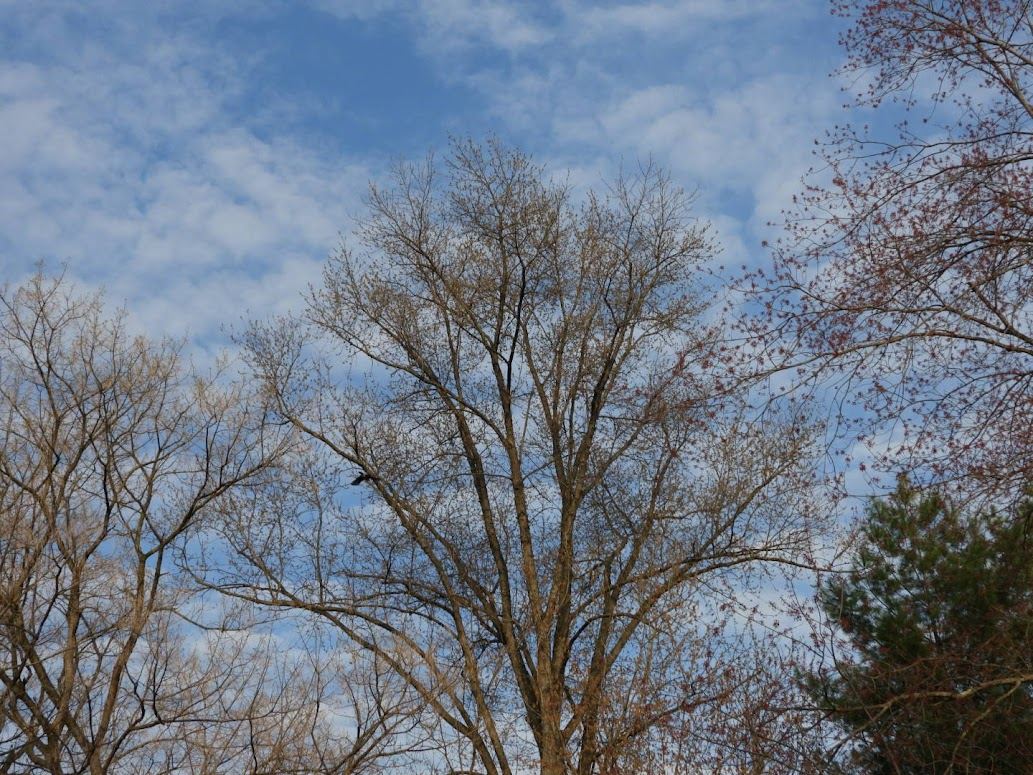
No idea what kind of bird that is flying in front of the tree, but I got a "bird in flight" ;-).
During the course of the month, I saved more than 600 photographs and threw away countless others. Most of them are bad - even the ones that I saved, but a few decent photographs snuck in there, too. So I'm planning to post some of them here broken down into animal types or groups of animal types.
In this time, I also logged 26 iNaturalist observations covering 13 species of birds and mammals.
The month started with bare trees and snow on the ground and it ended with flowers and leaf buds emerging on the trees and comfortably warm T-shirt weather.
In this first post, I'm just going to post a table with the species that I observed last month along with the number of iNaturalist observations that I submitted.
| Animal Type | Species | # iNaturalist Observations |
|---|---|---|
| Mammal | American Red Squirrel | 1 |
| Bird | American Robin | 0 (not submitted) |
| Bird | Bald Eagle | 1 |
| Bird | Blue jay | 3 |
| Bird | Brown-headed cowbird | 1 |
| Bird | Dark-eyed junco | 2 |
| Bird | Mourning dove | 2 |
| Bird | Northern cardinal | 1 |
| Bird | Northern flicker | 2 |
| Bird | Red-bellied woodpecker | 2 |
| Bird | Red-tailed hawk and subspecies Eastern Red-tailed hawk | 4 |
| Bird | Turkey Vulture | 5 |
| Bird | White-breasted nuthatch | 1 |
| Bird | Yellow-bellied sapsucker | 1 |
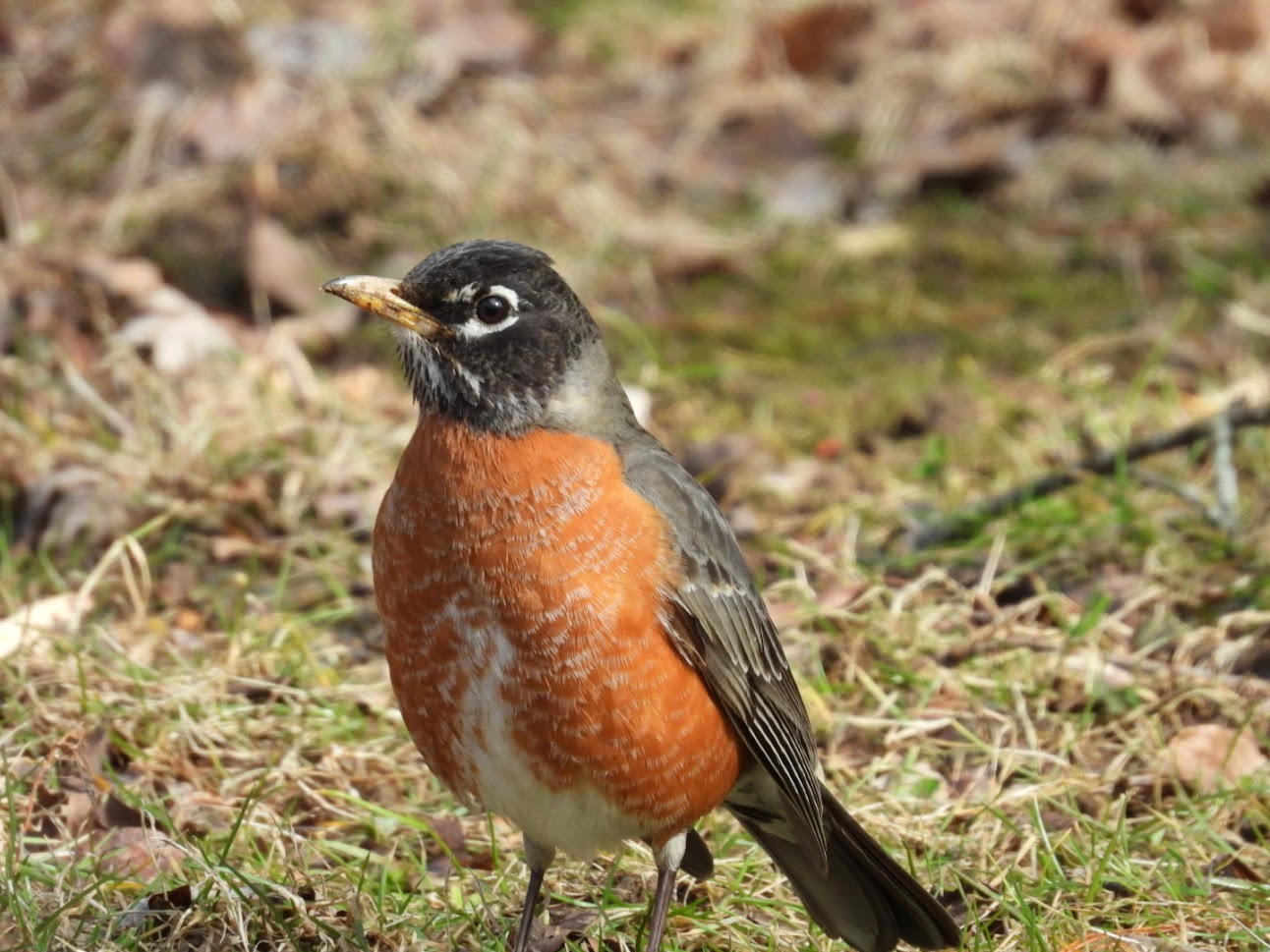
In total, I photographed thirteen species of bird and one mammal. Three of the bird species are raptors, and three are woodpeckers. I'm not aware of any grouping for the other seven.
The only species above that I didn't submit an observation for was the American robin. This is because they're so common and easy to photograph, it would feel like reporting that the sun came up today. At the other extreme, the Bald eagle is listed with imperiled status - S2B, which means:
Imperiled in the nation or state because of rarity due to very restricted range, very few populations (often 20 or fewer), steep declines, or other factors making it very vulnerable to extirpation from the nation or state.
So, there's the series introduction. Stay tuned for some more posts with some of the best photographs that I managed to capture.
Both photos above were taken by me with a Nikon P1000 camera and I'm sharing them under the CC BY 4.0 license (share & adapt freely with attribution to the original source).
I like that American Robin photo.
More here;-).
I saw it just now.
In fact I tried to use American Robin in one of my story but I had to switch it out because it sounded too cheerful for the story.
Thank you, @afzalqamar!
Your post have been rewarded by the Speak on Steem curator team!
Now become a plus member delegating at least 500 SP
Ways to support us:
Curated by @marvinvelasquez