[Citizen Science] The Night Sky in South-Eastern Pennsylvania
Introduction
The other day, I put up a quick post, Steem for Citizen Science: Globe At Night's March Campaign where I mentioned that the Globe At Night project is currently running their monthly campaign to measure light pollution around the world from March 10 through March 19.
Here are the steps they describe for recording a measurement:
Six Easy Star Hunting Steps
- During the campaign dates, go outside more than an hour after sunset (8-10 pm local time). The Moon should not be up. Let your eyes become used to the dark for 10 minutes before your first observation.
- Use a night sky app on your phone outside to find the constellation from where you are.
- Go to the Globe at Night Report page to start to enter Globe at Night measurements. Make sure you are in “Nighttime version”
- With a smart phone, the app will put in the date, time, location (latitude/longitude) automatically. Otherwise please type them in. For your location, type the street address closest to your observation along with the city, state or province and country.
- Choose the star chart that looks most closely to what you see toward your constellation. That is, what is the faintest star you can see in the sky and find in the chart?
- Chose the amount of cloud cover at the time of observation and then click on the “SUBMIT DATA” button.
As I mentioned in my previous post, I think this campaign is a great opportunity for people on the Steem blockchain to contribute to Citizen Science by making an observation and then writing a blog post about it.
Making an Observation
On the first day of the campaign, March 10, the skies were clear for me, so I was able to enter an observation. Today is the first chance I've had to write a post about it.
For the March campaign, the targeted constellations were Orion or Leo in the Northern hemisphere or Canis Major in the Southern hemisphere. I'm in the northern hemisphere and Leo was hidden behind the trees, so my target was Orion. I tried to go out again later and record a Leo observation, but the sky had become too cloudy.
I was also able to capture a couple cell phone pictures of the constellations, which you can see here:
| Orion | 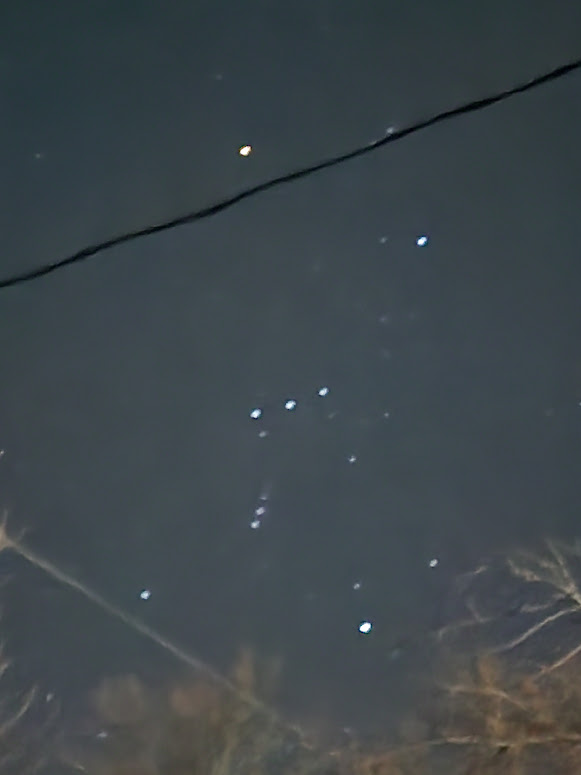 | 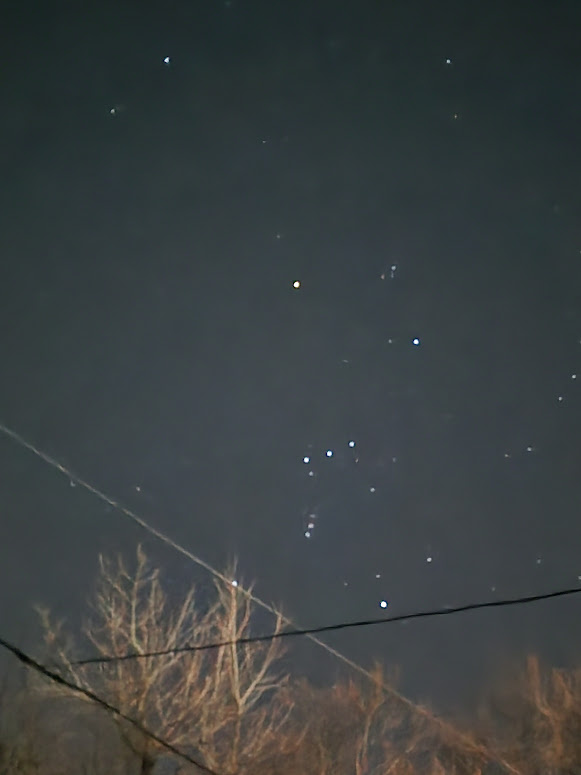 |
| Leo | 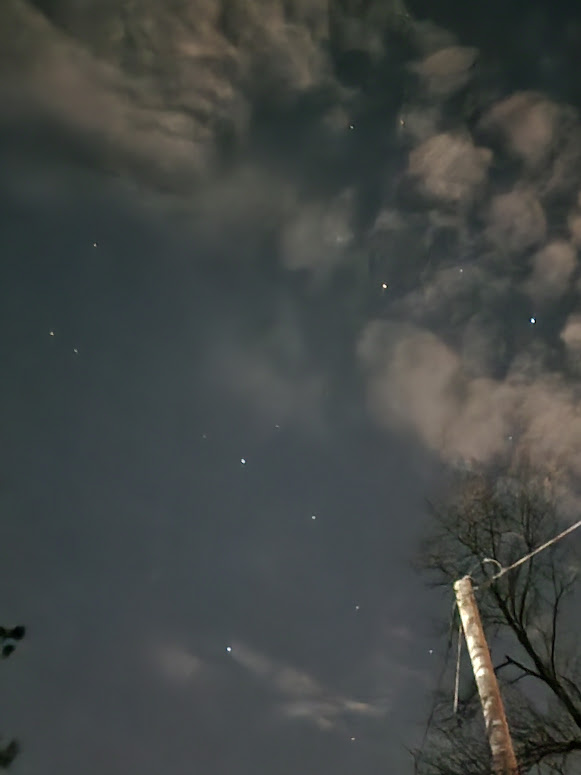 | 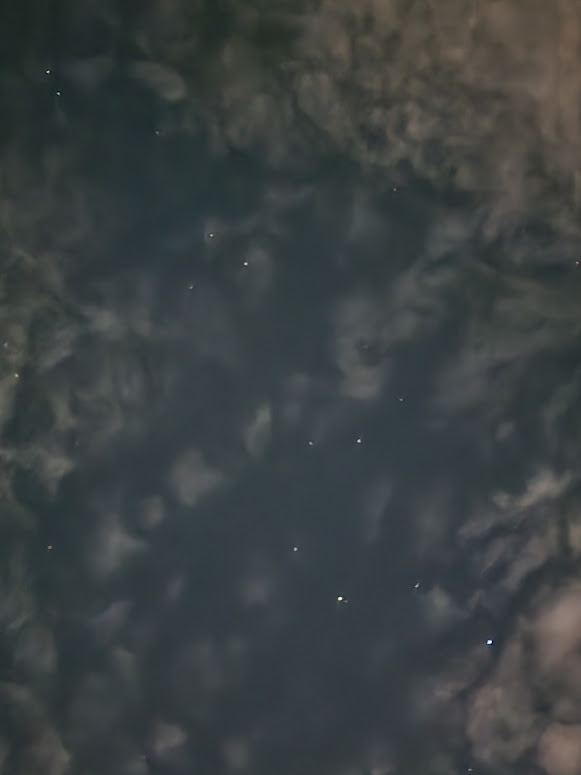 |
So, Orion was clear. Focusing mainly on the belt and the sword/knife, I scored it at magnitude 3 and entered a reading into the application.
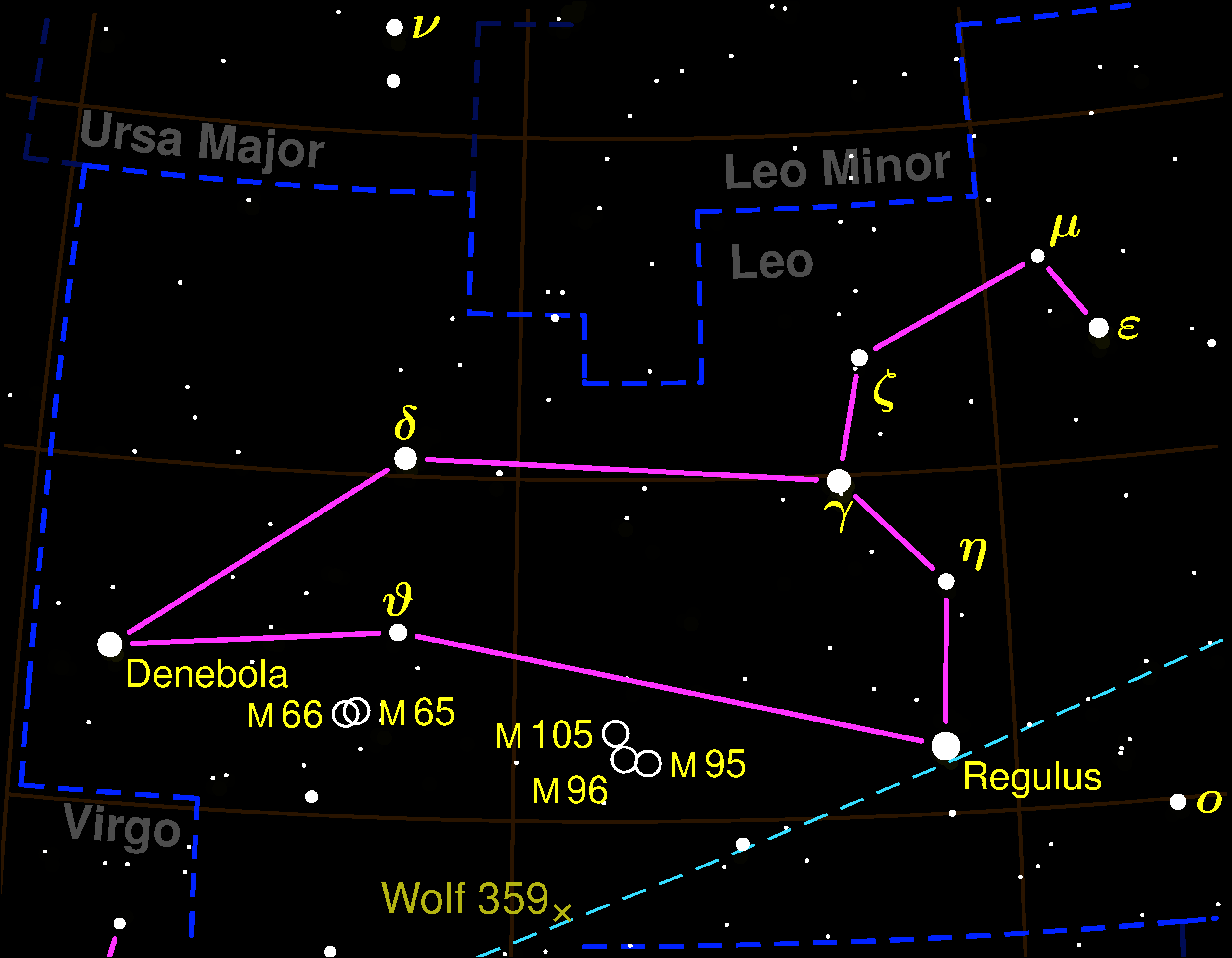
For Leo, on the other hand - with the clouds covering the frame - I'm not even sure where the lion's head and tail should be. The wikimedia image to the right shows what it's supposed to look like, but I just didn't see how the stars I saw in the sky fit into that map (or if I was actually looking at the right part of the sky).
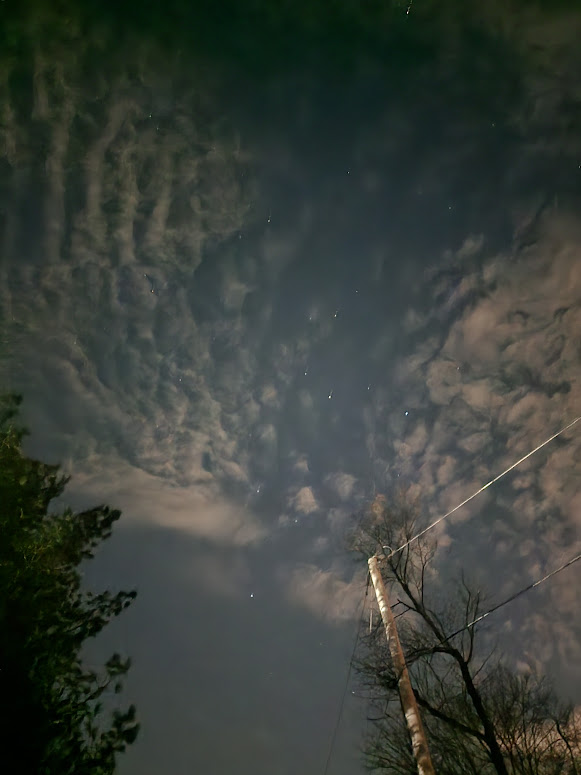
According to Stellarium, that's where Leo was, but I just don't see it. From what I can tell, the closest star/map alignment that I'm able to find seems to be at the wrong angle. The cloud-swirl looked pretty cool in the photo to the left, though. ;-)
All photos were taken with a Samsung S22 Ultra in "Night Mode".
South-Eastern Pennsylvania over time
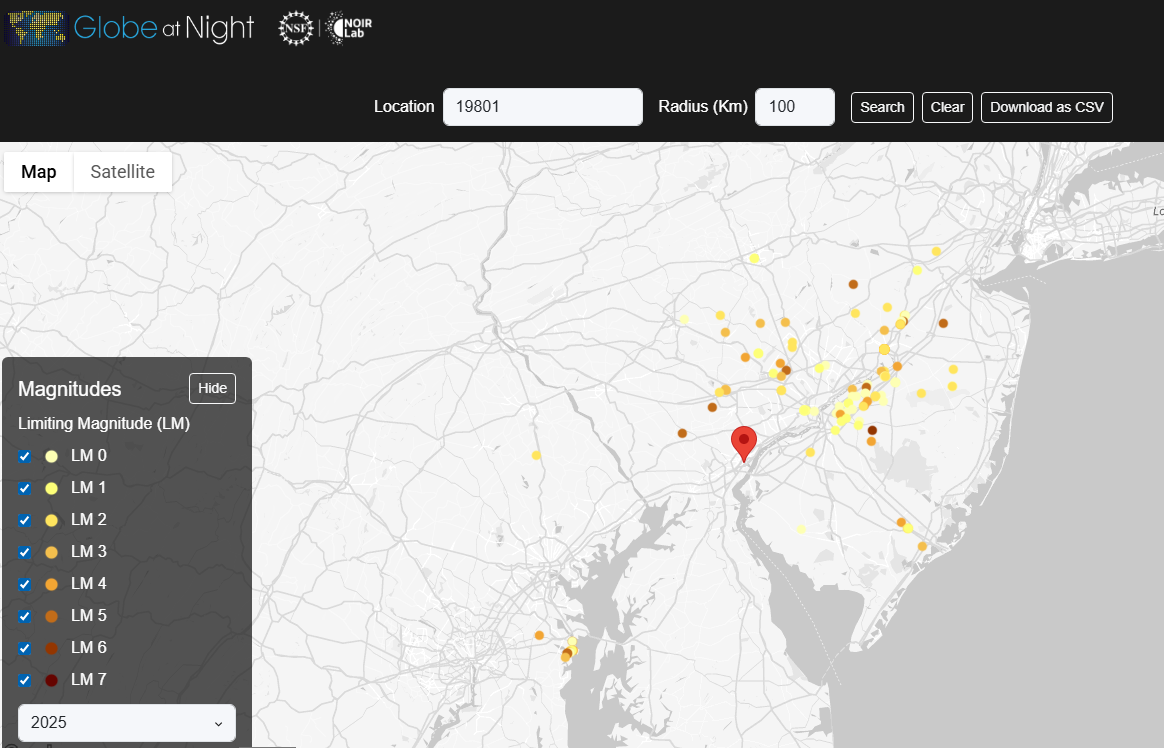
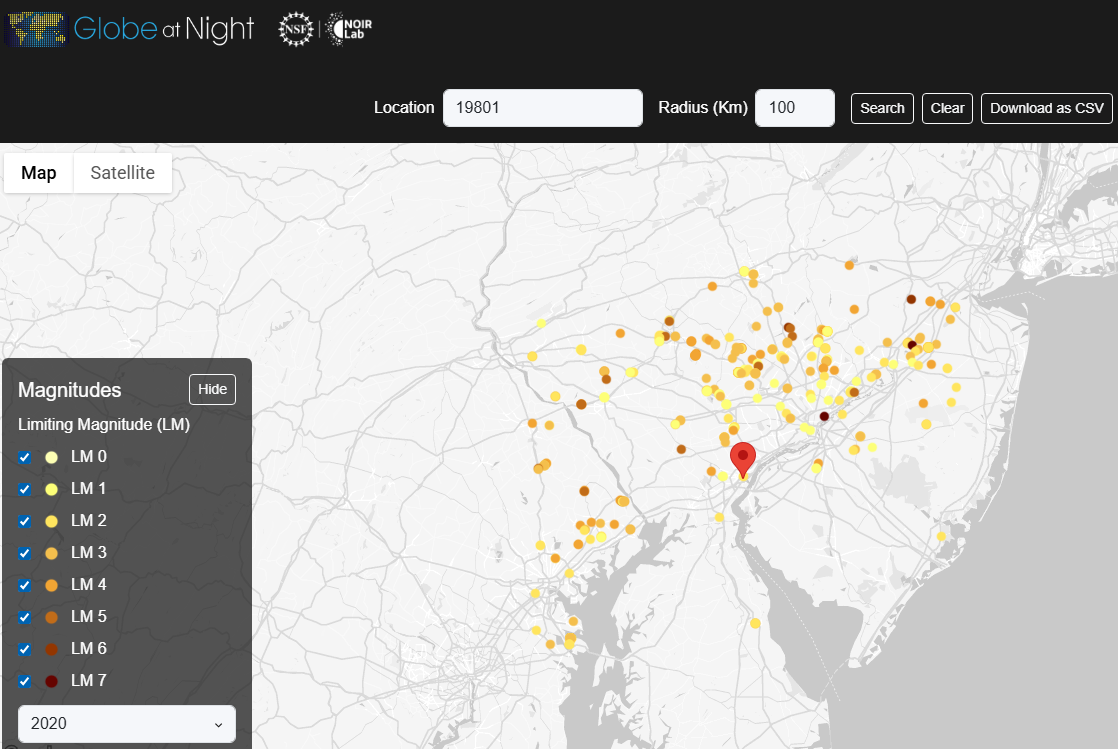
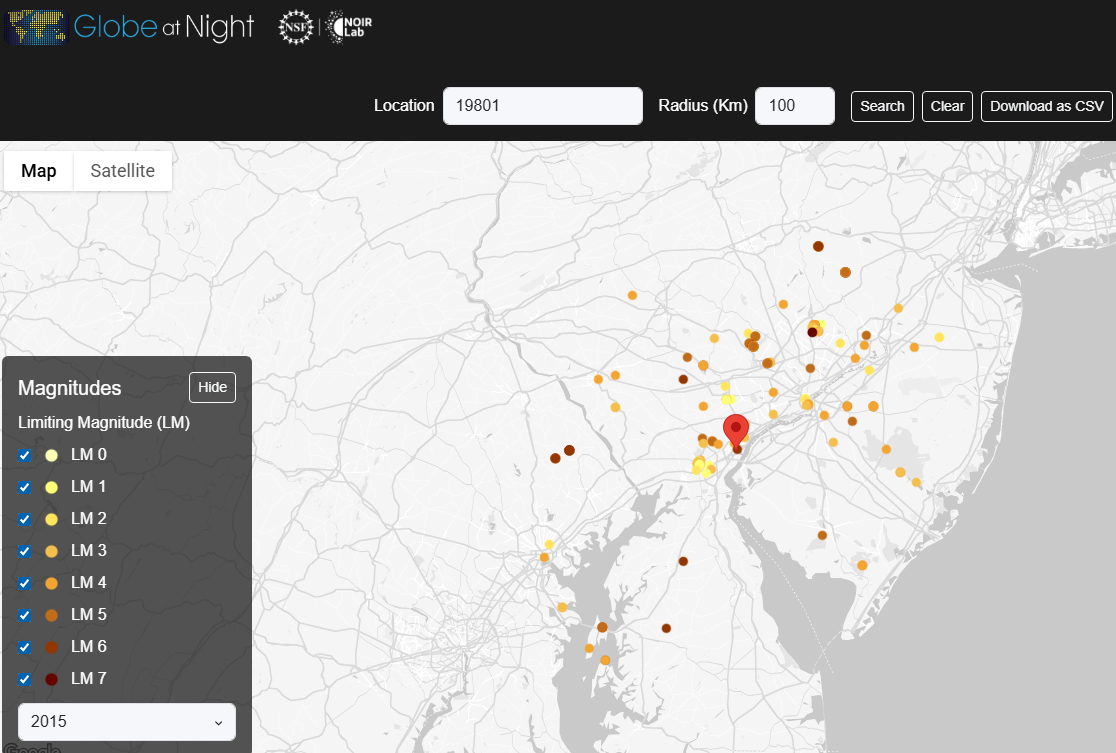
After making the reading, I wanted to make sure that it showed up in their data, and while I was there I noticed that you can also look at an interactive map for previous years, so I was curious to see how my area has changed over time. I was also surprised to see that I was the first person to enter a reading in the area this year. So, backing up to 2025, here's how my area has looked during some previous years. The pin is in Wilmington, DE, so we can see parts of PA (including Philadelphia), NJ, DE, and MD. I also added a pin in Wilmington for SteemAtlas to pick up this post.
2025
2020
2015
2010
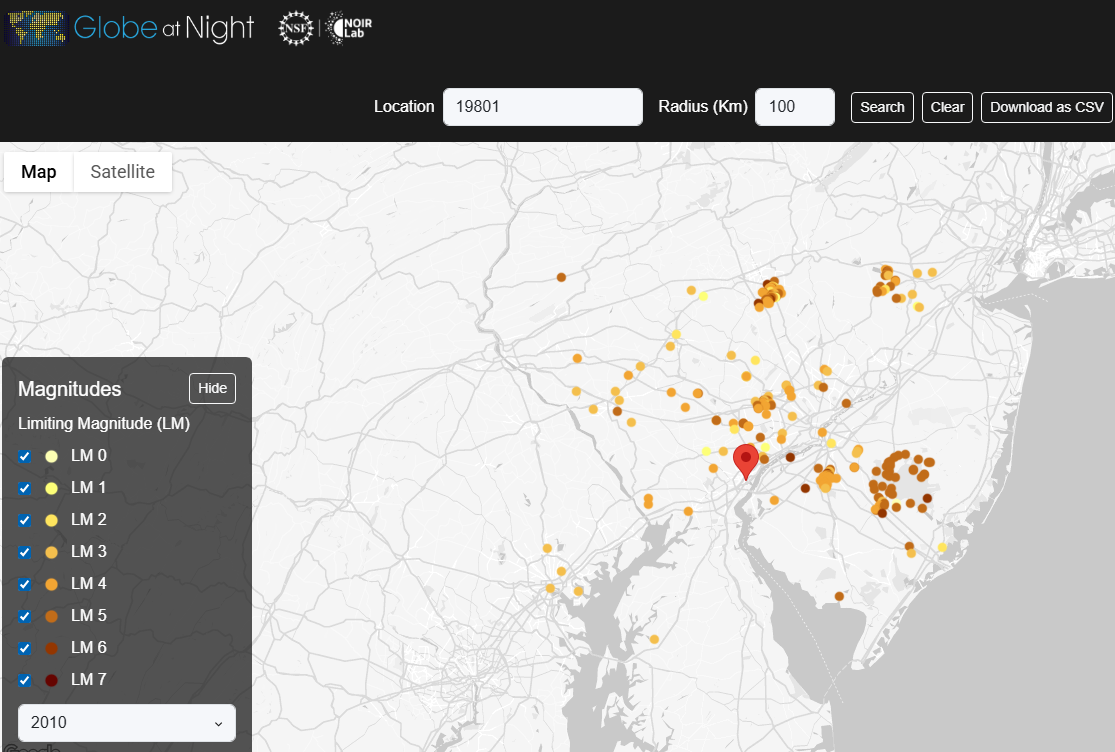
There's also a "Download as CSV" option that looks like it might be fun to play with, but I haven't tried it yet. From the maps, I have 3 main impressions:
- The data is sparse. The project definitely needs more participation.
- Even with the sparse data, you can see the light pollution increasing over time - mainly between 2015 and 2020. Eyeballing it, it looks like we were generally magnitude 3-4 in 2010, and we're generally in the magnitude 2-3 range now.
- There appear to be more readings during 2020. Another effect of the pandemic-era lockdowns, I suppose.
Conclusion
So that's my experience participating in this month's Globe At Night Campaign. I invite others to join me and to blog about it here on Steem. What is the night sky magnitude where you live and how has it changed over time? If you're in the northern hemisphere, can you do a better job than I did at finding Leo? The campaign ends in 4 days, so there's not much time to procrastinate!
Unfortunately, it’s been cloudy at night here for the past few days.
I think it's been cloudy here every night since the 10th, too. I'm hoping for a clear night before the 19th so I can try to see Leo again before the moon comes back in the sky.
Orion 💓💓💓