The Intersection of Blockchain Technology and Internet of Things (IoT) Networks
Technology is rapidly transforming the world. There are fresh concepts emerging that make life easier and interconnected every year. The Internet of Things (IoT) and Blockchain Technology are two of the most crucial technologies that are in the spotlight these days. These technologies are already making a significant impact in various sectors including healthcare, agriculture, finance, logistics, education, and industry. Combining blockchain and IoT can lead to a more secure, reliable, and efficient system. I think it's crucial to understand how the two technologies relate, since these are all going to impact the future.
IoT, also known as the Internet of Things, is a network of internet-connected physical objects. These devices are used to gather, transmit, receive data with some minimal human effort. Smart watch, smart TV, security camera, smart refrigerator, fitness trackers, traffic sensors and smart home lights are some examples of IoT devices. These devices are inter-connected to ease day-to-day tasks. For instance, a smart thermostat can take into account the weather or the owner's wishes to control the temperature of the room.
Blockchain is a digital system for storing information in a secure and transparent manner. Blockchain doesn't store information in a single main computer, but in numerous computers that are connected to a network. Each piece of information is wrapped within a block and each block is linked to the next, which creates a chain. After information is placed on the blockchain, it is very hard to modify or delete the information from the blockchain. This ensures high security and reliability of blockchain. Blockchain, the technology behind cryptocurrencies such as Bitcoin, is generally popular not only for its cryptocurrency applications, but for various other purposes.
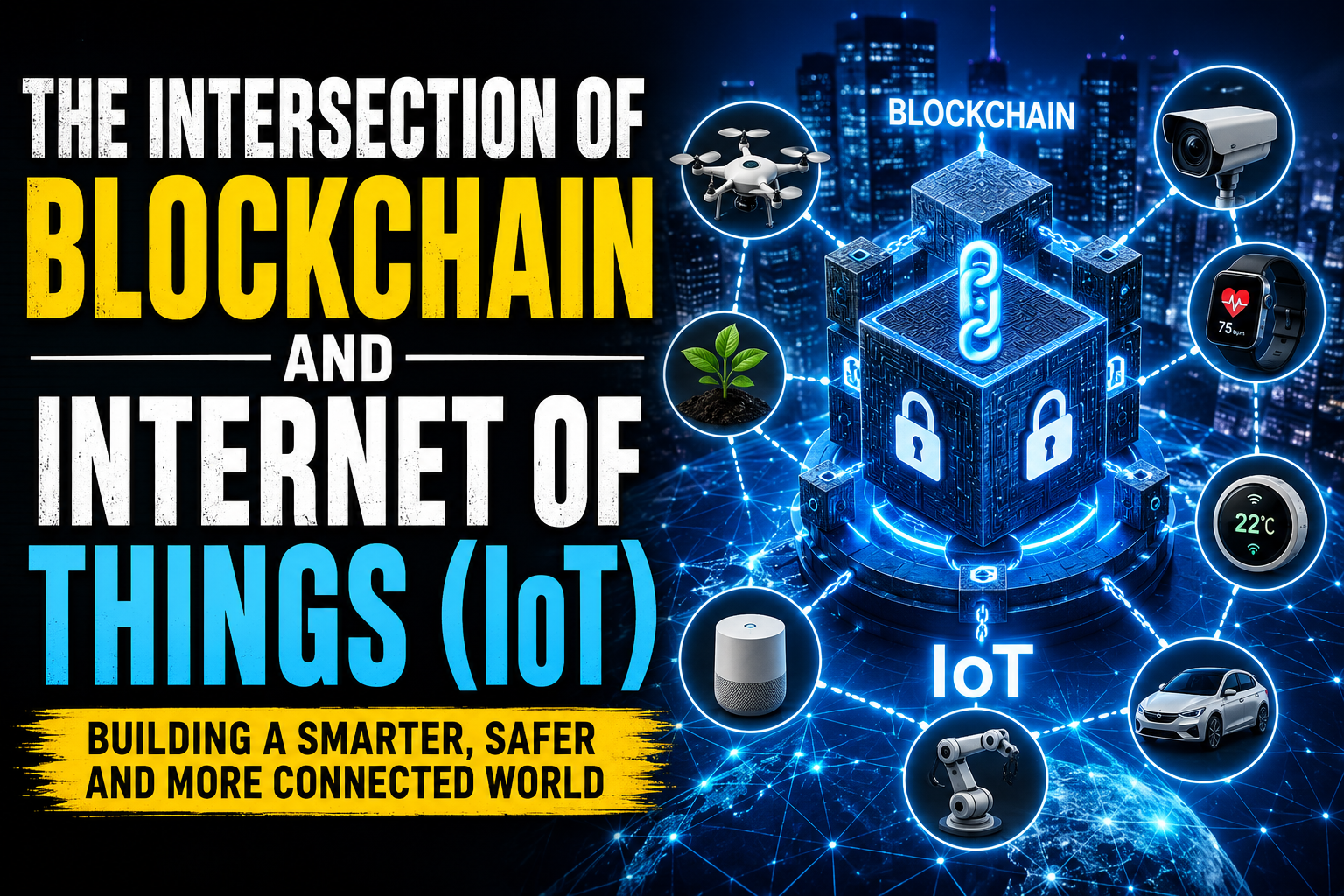
Blockchain and IoT together can address numerous issues that are encountered in either one technology or another. Lots of data are gathered by IoT devices every second. If such information is kept in a single repository, hackers can break into that system and steal or alter the information. The blockchain can be used to address this issue by recording data on a decentralized network. Many computers have copies of the data, making it difficult for criminals to alter or destroy the data. I believe this means that people have more confidence in the use of smart devices.
Security is one of the major advantages of the IoT and blockchain integration. Many IoT devices are small with limited processing power, and therefore the security of the devices is weak. This can make them an easy prey of cybercriminals. The data is secured with robust encryption and digital verification processes on blockchain. All transactions and changes to data are clearly and permanently recorded, which makes it easier to identify unauthorized operations. This helps to minimize fraud and build user trust.
Transparency is another key benefit. All of the transactions on a blockchain are traceable and verifiable. Therefore, users are able to understand the origin and usage of data. In a supply chain for instance, IoT sensors can track the temperature and location of food products in transit. This information is permanently recorded on the blockchain, allowing companies and consumers to verify the proper handling of the products. I think this can help to enhance food safety and minimize food waste.
Another application where blockchain and IoT can collaborate effectively is in healthcare. Patients' health information, such as heart rate, blood pressure, oxygen levels, etc., is monitored in hospitals by using IoT devices. These medical records can be securely stored on the blockchain, and only accessed by authorized physicians and healthcare professionals. This will enhance patient privacy as well as facilitate the sharing of medical information when required. Improving the quality of healthcare services and decreasing errors are also possibilities.
The addition of blockchain and IoT is another area that can help smart cities. Traffic light control, street lighting, waste collection, water supply and electricity distribution are some areas where many cities are controlling with IoT devices. Blockchain technology safeguards the information gathered by these devices, as well as ensuring its accuracy. This helps to make city services more effective and resources more efficiently managed. Citizens are also more confident that public information has not been tampered with.
This technology is also being applied in the agricultural sector. Soil moisture, weather, growth and health of livestock are measured using IoT sensors on the farm. These records are securely maintained on the blockchain and can be traced by the buyer to see the origin of agricultural products. This engenders a sense of trust among farmers, suppliers and customers. I believe that this will enable farmers to receive better prices as customer can easily know the product quality.
There are some problems, though, with all that. The more transactions that are processed in a blockchain network, the slower it becomes. The amount of data generated by IoT devices is vast, and having all this data stored directly on a blockchain can not be always practical. The other difficulty is the price of establishing blockchain systems and IoT structures. For many organizations, investment will be needed in order to maximize the use of these technologies. Another issue is energy consumption, as well as technical complexity and standards that will ensure compatibility for a diverse range of devices worldwide.
A lot of research and technology development is being pushed to address these issues. New blockchain systems are developing which are faster, less energy consuming, and are capable of processing greater amounts of information. Improving IoT devices also are being built with increased security. With the advent of improved technology, more companies, governments, and individuals will make use of blockchain and IoT solutions in their daily operations.
So, the convergence of blockchain and IoT is opening the door for innovation in various sectors. Blockchain offers security, transparency, trust and data protection and IoT is the technology that links smart devices that gather valuable information. They can work together to transform the healthcare, agriculture, transportation, supply chain management, smart cities and many other sectors. I am confident that the future of blockchain and IoT is bright, but there are yet things we need to overcome. The evolution of these technologies will contribute to creating a smart, safe, connected world for all.
https://x.com/i/status/2076017373513920556
https://coinmarketcap.com/currencies/pussfi/
https://x.com/i/status/2074764888006709589
Note:-
Regards, @adeljose