Nature's Pharmacy: My Routine for Harvesting and Processing Bitter Leaf (Vernonia amygdalina)
Hello, wonderful members of the Steem Recreative community! I hope everyone is having a healthy and productive week.
Today, I want to share a very traditional and beneficial activity I engaged in recently: harvesting and processing Bitter Leaf right from my home garden. In many parts of Africa, especially here in Nigeria, Bitter Leaf is not just a vegetable for soup; it is a powerful medicine.
I will take you through the step-by-step process of how I harvested, washed, and extracted the medicinal juice, while saving the leaves for a delicious meal later.
Step 1: The Harvest
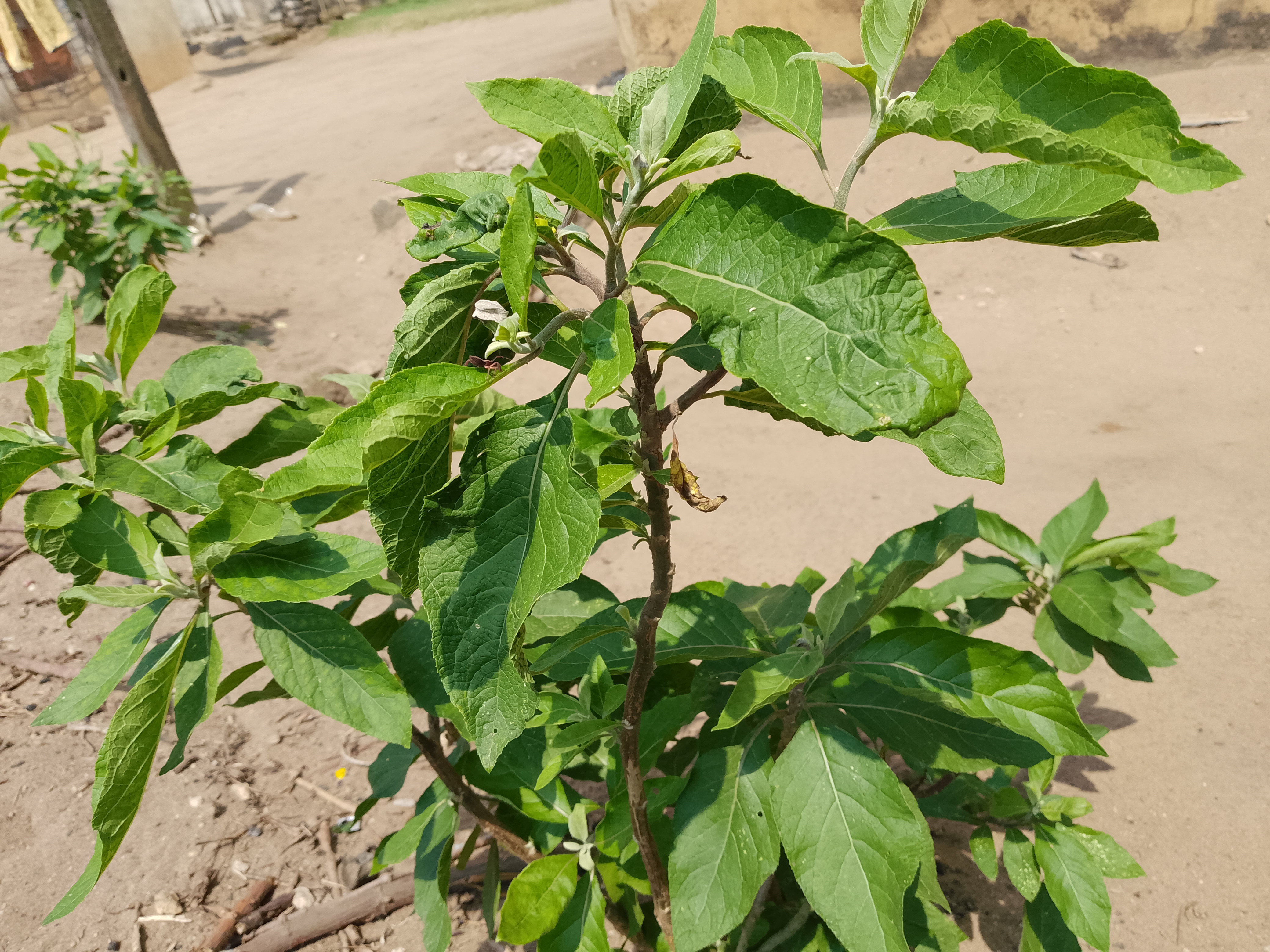
a healthy Bitter Leaf shrub
It all started in the garden. We are blessed to have fresh Bitter Leaf plants growing right in our backyard. There is nothing quite like the feeling of picking fresh leaves that you grew yourself.
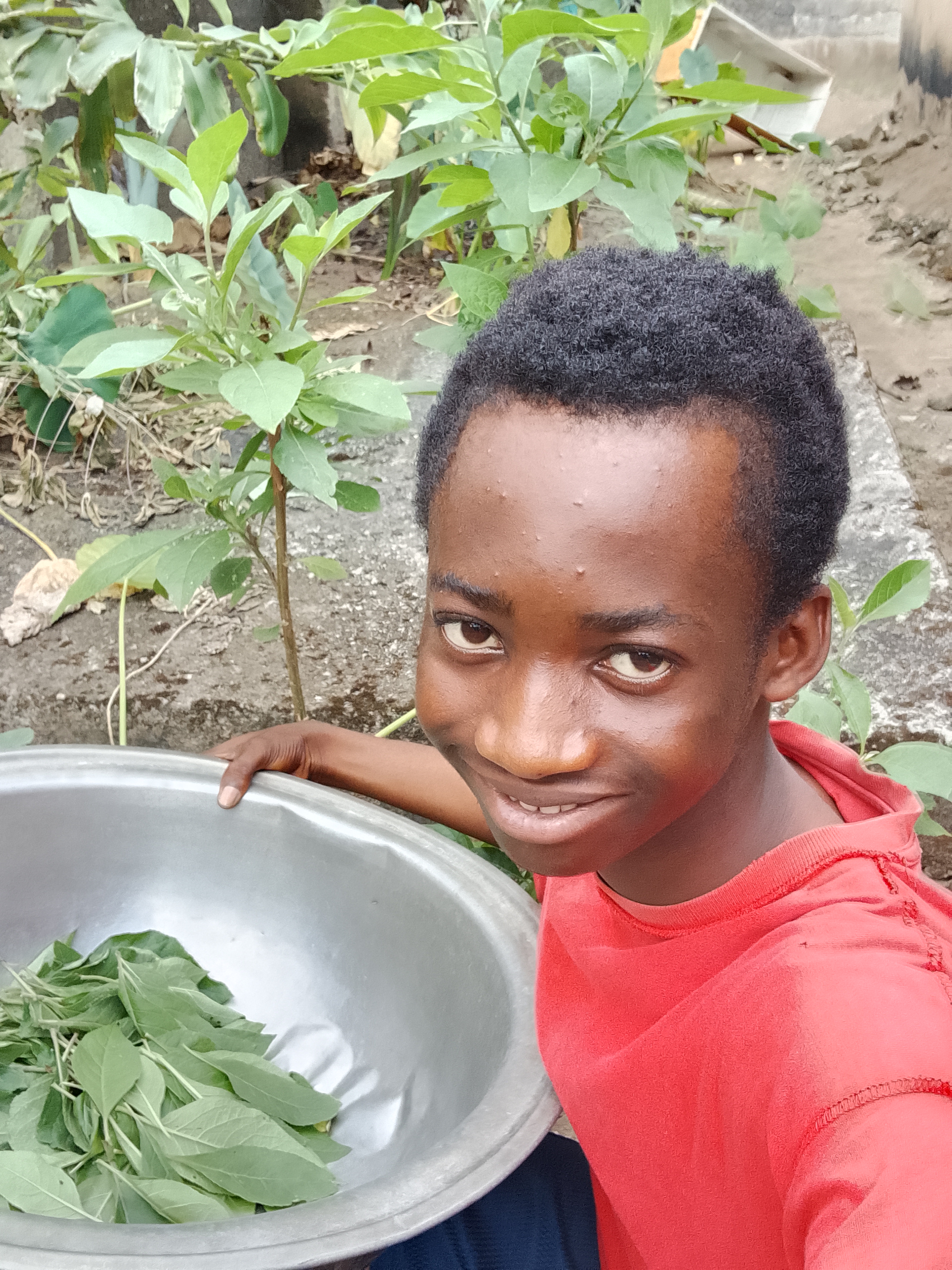
Me with my harvest bowl, ready to get to work!
As you can see, the shrub is healthy and green. The leaves are broad and vibrant.
I carefully plucked the fresh, tender leaves from the stems. I made sure to select the best ones, avoiding any that looked dry or eaten by insects.
Did You Know? Bitter Leaf is rich in antioxidants and vitamins. It is traditionally used to treat ailments like fever, stomach aches, and high blood sugar.
Step 2: Preparation and Washing
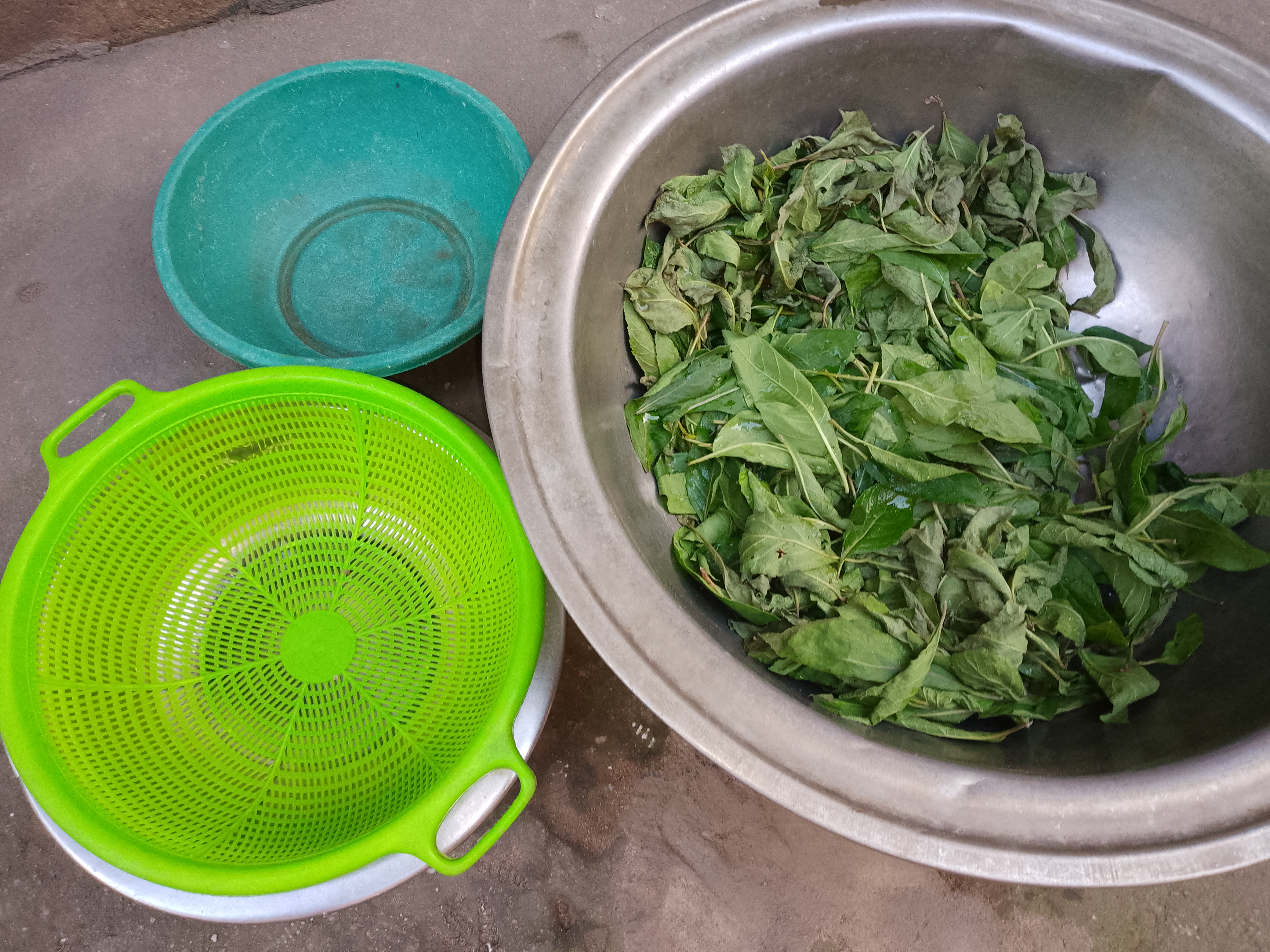
Fresh leaves in the basin, a green sieve for filtering, and a bowl for water
Once I had enough leaves in my basin, it was time for the most labor-intensive part: the squeezing.
I placed the plucked leaves into a large stainless steel basin.
I had my plastic sieve (basket) and a bowl of clean water ready.
Step 3: The Squeezing Process
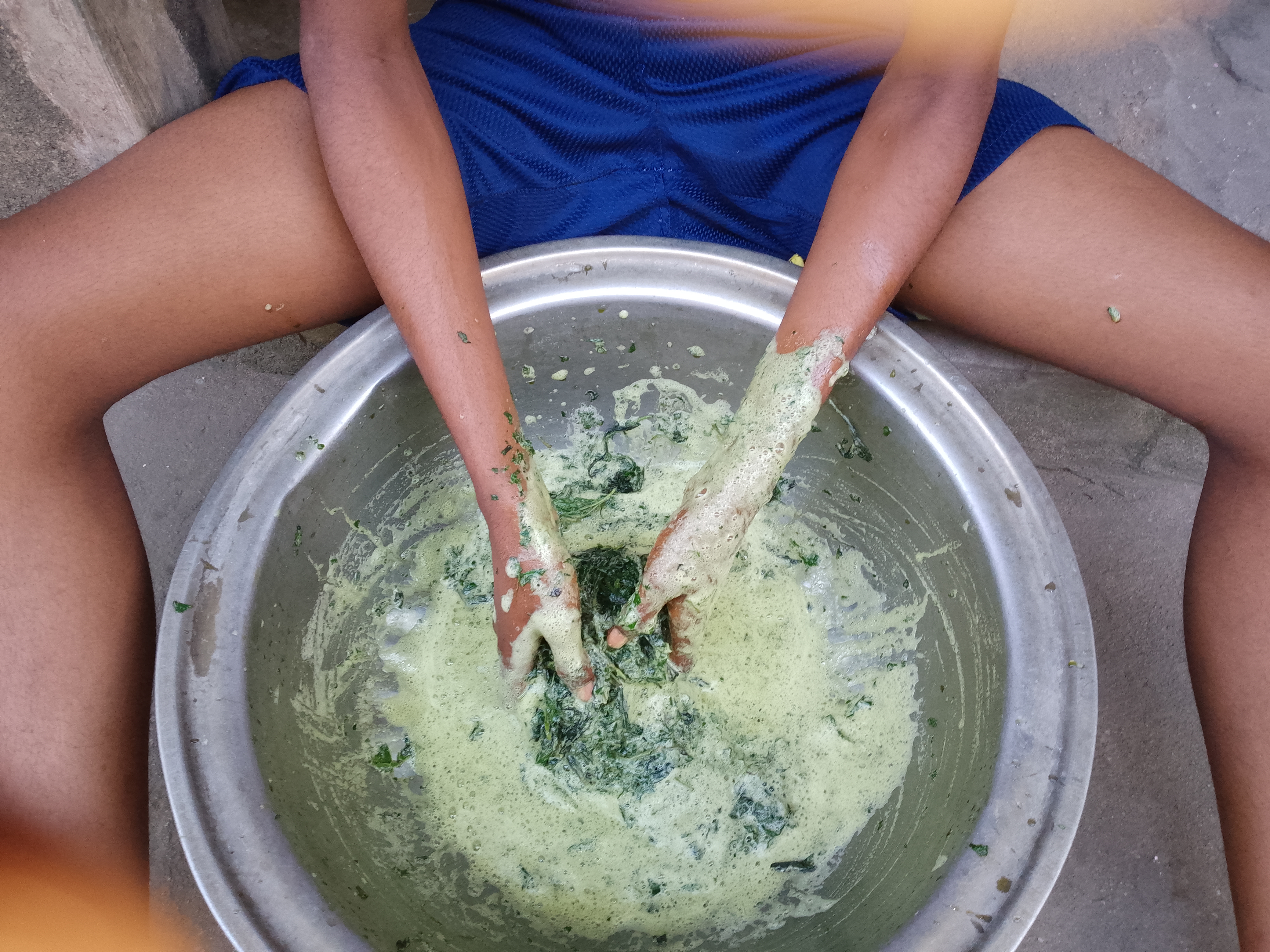
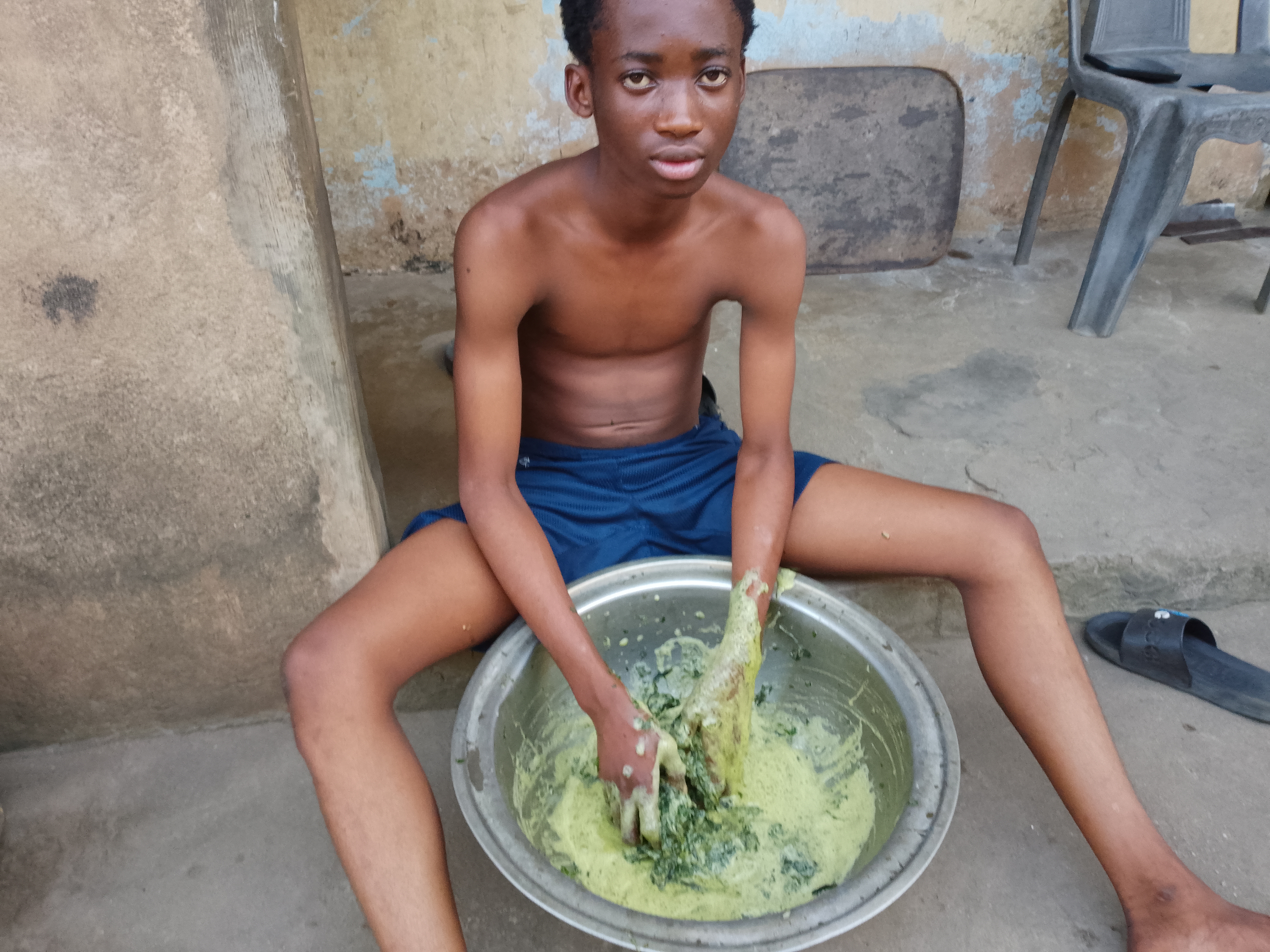
Vigorously squeezing the leaves to extract the potent juice
This is where the real work happens! To extract the juice and reduce the bitterness for cooking, the leaves must be squeezed vigorously.
Technique: I added a little water to the leaves and began scrubbing them together between my palms. This friction breaks down the leaf tissues and releases the green juice.
The Foam: As you squeeze, you will notice a thick, green foam forming. This is perfectly normal and shows that the extraction is working properly.
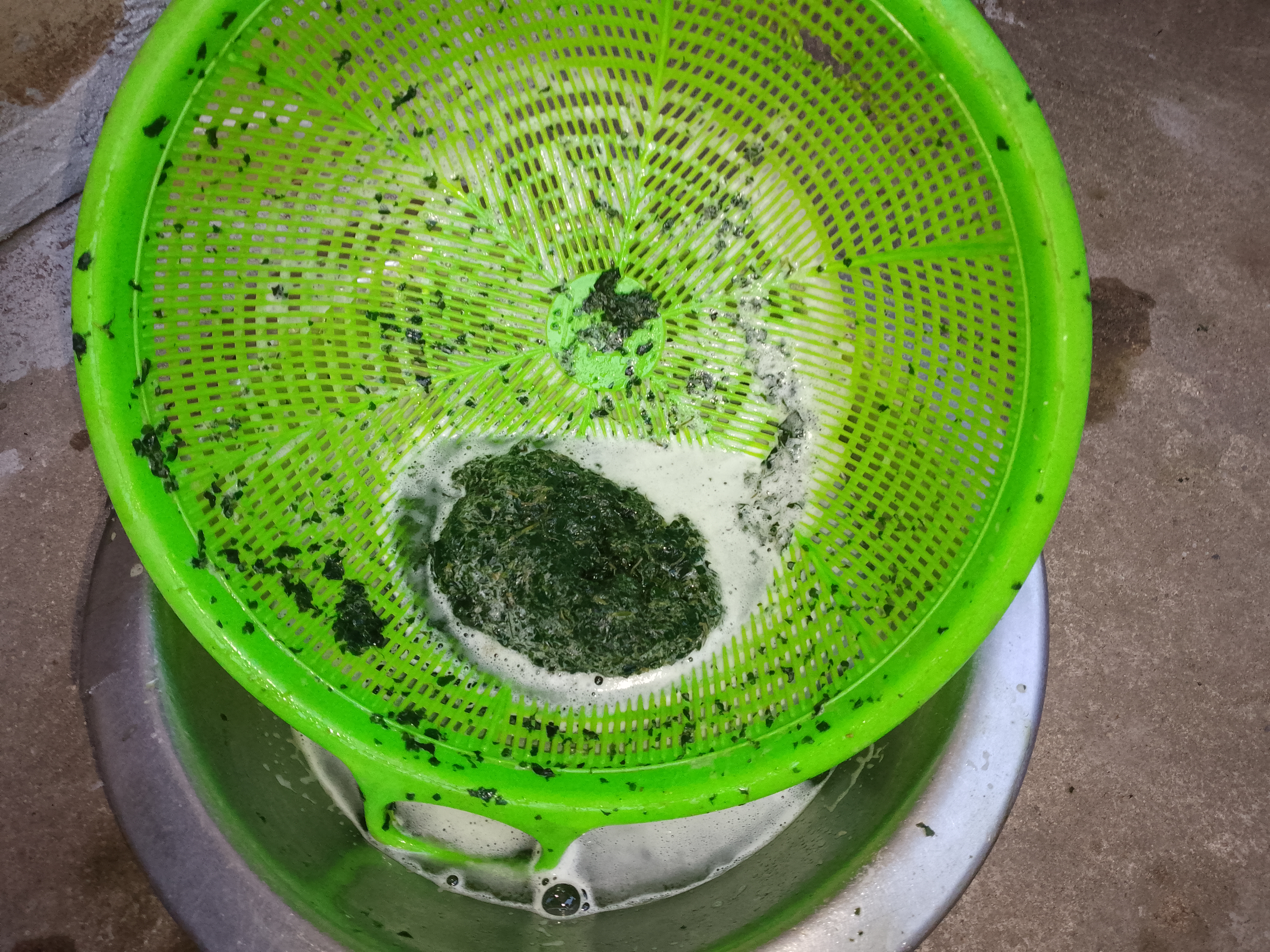
Separating the leaves from the medicinal water
Filtering the "Liquid Gold"
After the first round of thorough squeezing, I filtered the liquid. This green juice is the medicinal part.
I used the green plastic sieve to separate the squeezed leaves from the juice.
The resulting liquid is dark green and very frothy.
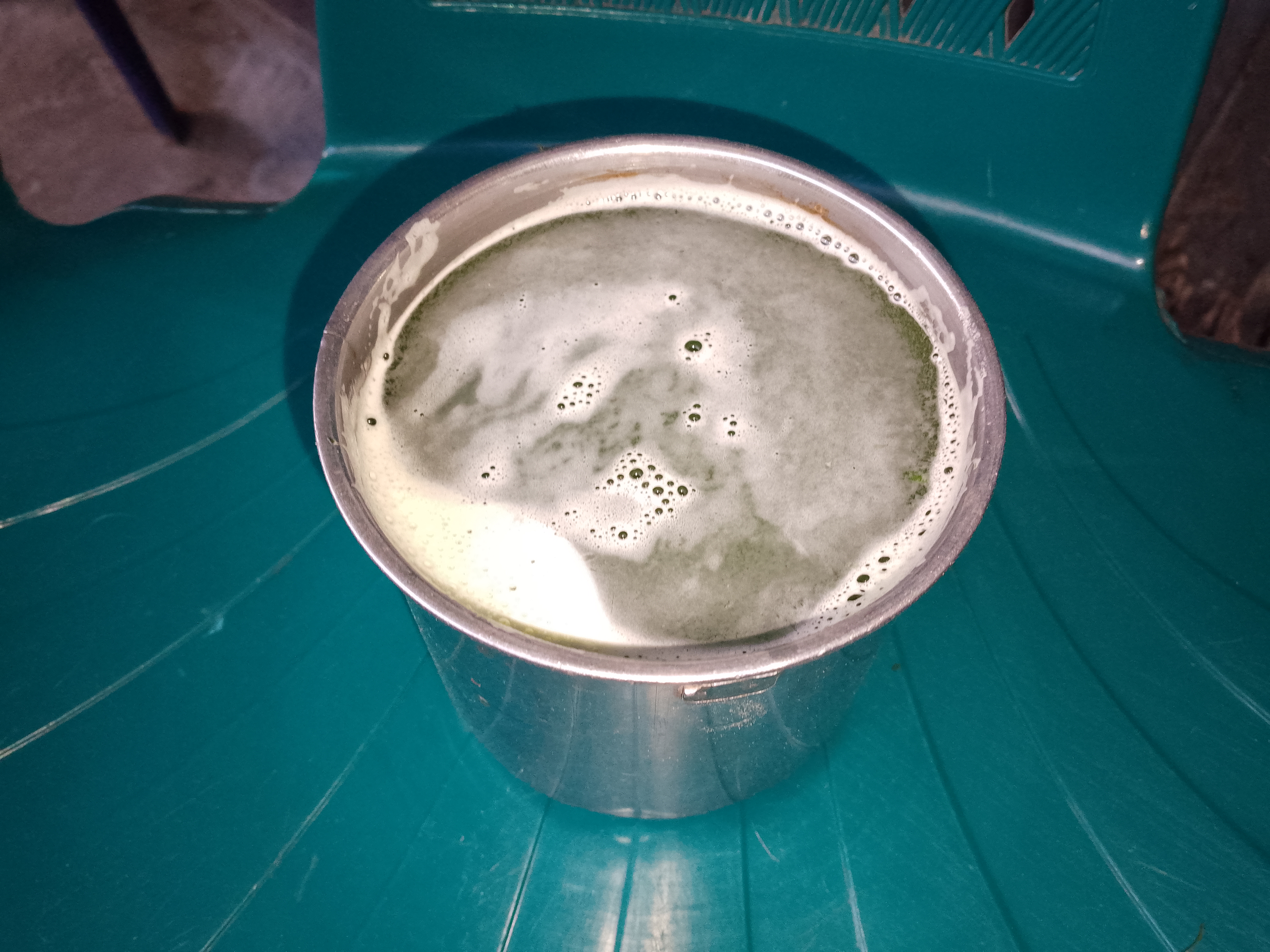
Freshly squeezed Bitter Leaf water. It may look simple, but it is packed with health benefits
The final product:
Step 5: Taking the Medicine

Cheers to good health! It's a tough swallow, but the benefits are worth it
I don't just make it; I take it! Drinking a cup of this juice is a great way to cleanse the system.
The Taste: As the name implies, it is very bitter! But as our elders say, "Sweetness in the mouth does not always mean good for the body." The bitterness is where the healing lies.
Benefits: I drink this to help detoxify my body and keep my stomach healthy.
Step 6: The Residue (For Cooking)
I don't throw away the squeezed leaves! After extracting the juice, I squeezed the leaves a second time to remove even more bitterness.
These washed leaves (the residue) are now ready to be used in cooking Bitter Leaf Soup (Ofe Onugbu). They have been softened and much of the harsh bitterness is gone, leaving just the right flavor for a rich soup.
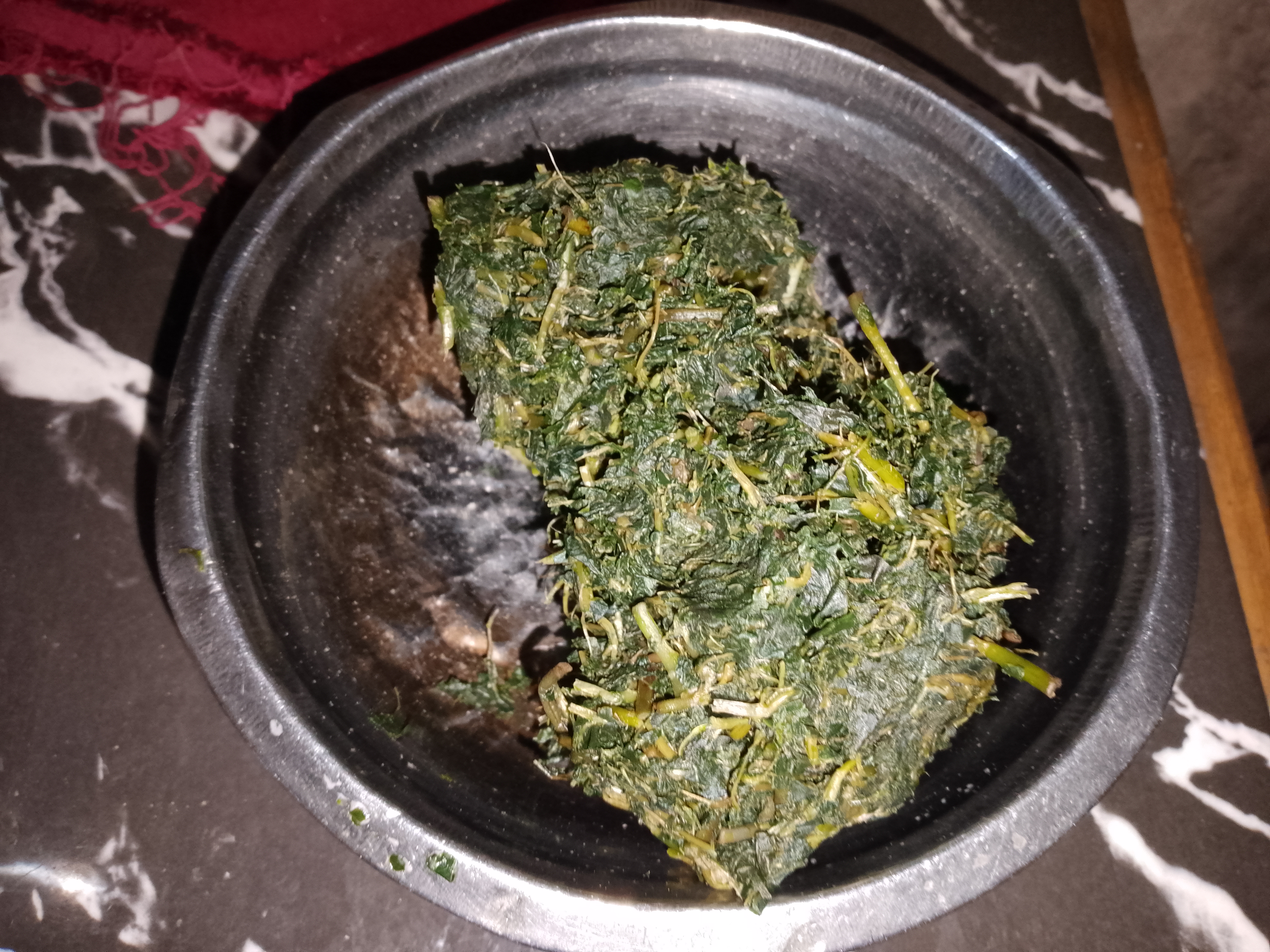
Why Bitter Leaf?
For those who don't know, Vernonia amygdalina (Bitter Leaf) is a miraculous plant. Here are a few reasons why we prize it so much:
Digestive Health: It is excellent for curing stomach upsets and fighting intestinal worms.
Sugar Regulation: It is widely known to help lower blood sugar levels, making it good for diabetic management.
Skin Health: The juice can even be used to treat skin rashes and eczema.
Nutrients: It is loaded with Vitamin A, C, E, and minerals like zinc and calcium.
Thank you for reading my post on how I process this wonderful gift of nature. It takes a bit of effort to squeeze it by hand, but having free medicine and delicious vegetable soup ingredients makes it 100% worth it.
I encourage everyone to try planting a small stem in their compound; it grows very easily!
Twitter shared Link
https://x.com/i/status/2008310175438868812
WOW
Thanks so much for the support, I really appreciate