DeFi Marketing in 2026: Strategies That Actually Drive Real Users
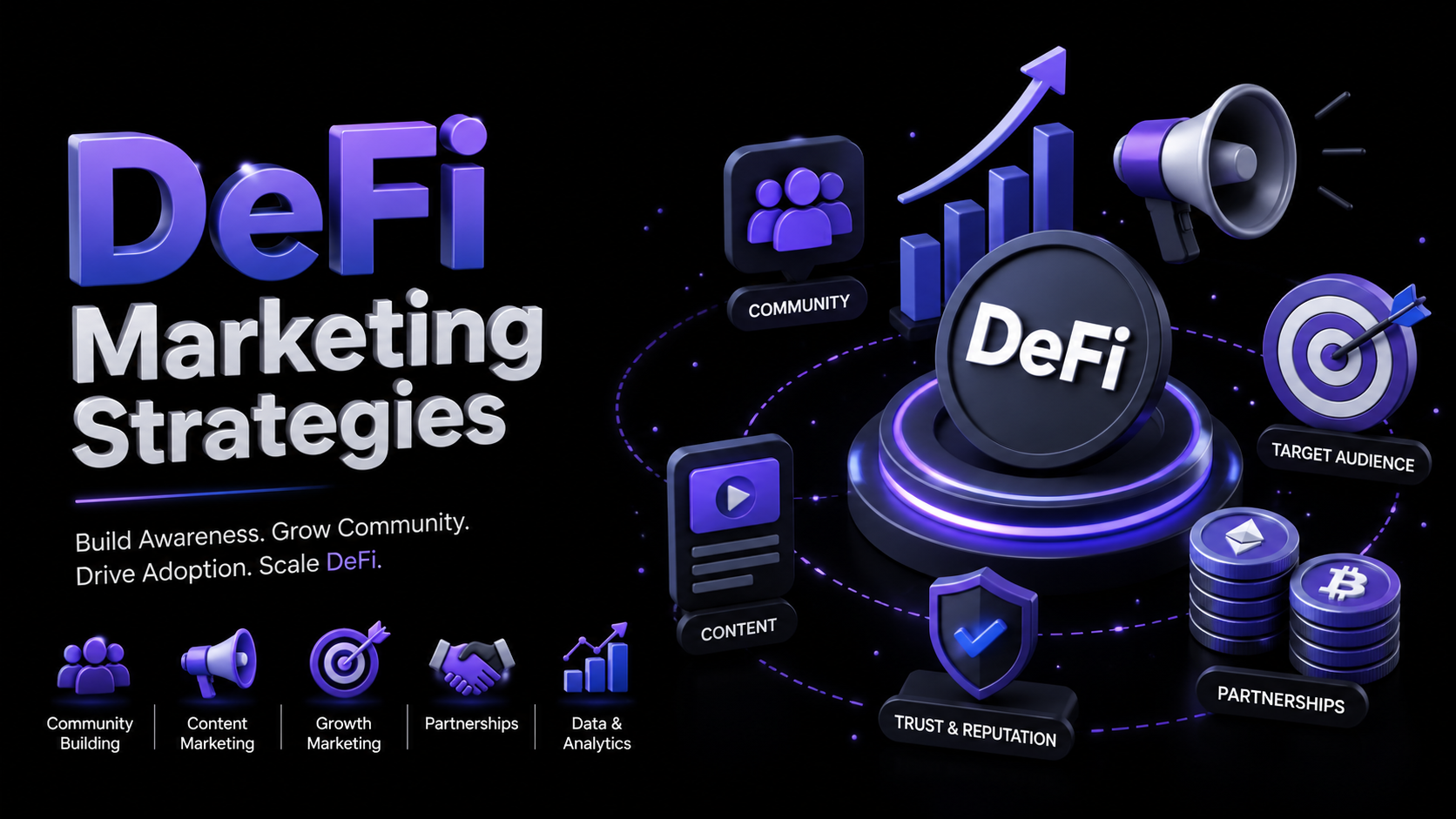
Defi Marketing in 2026: Strategies That Actually Drive Real Users
Decentralized finance has moved far from its early experimental phase. In 2026, projects are no longer compete just on new protocols or token mechanics. The real competition is about getting people to actually use the product and return after the first visit. Many DeFi platforms still struggle with this part, even when their tech works well.
This is where structured marketing work becomes important. Defi Marketing today is not just about posting updates or running token campaigns. It involves clear communication, user education, and long-term relationship building with real users who understand what the product does and why it matters.
Below is a practical look at what actually works in this space right now, along with common mistakes and how teams can correct them.
Why DeFi projects struggle to get real users
Many DeFi platforms launch with excitement, early investors, and a strong technical foundation. But after the first wave of attention, usage often drops. The reasons are usually simple:
Most platforms assume users already understand wallets, gas fees, staking, lending, or liquidity pools. In reality, many people are still new to these concepts.
Another issue is communication. A lot of projects talk more about protocol details than user benefit. This creates confusion rather than interest.
Finally, trust is still a major factor. Users want to know if the platform is safe, stable, and worth their time.
This is why Defi Marketing must focus on clarity, education, and trust building rather than hype.
Clear messaging matters more than complexity
One of the most common mistakes is overloading users with technical language. When someone lands on a DeFi platform, they should quickly understand:
- What problem does it solve
- What action they can take
- What they get in return
If this is not clear within a few seconds, most users leave.
Defi Marketing Services that focus on message simplification often see better user retention. This includes rewriting landing pages, simplifying product descriptions, and creating step-by-step guides.
Even small changes in wording can improve how users respond to a platform.
Community building still matters, but not in a shallow way
A lot of DeFi projects think community means having a large group on Telegram or Discord. In 2026, that is not enough.
Real community building is about participation. Users should feel they are part of something where their questions are answered and their feedback is taken seriously.
Some effective approaches include:
- Weekly Q&A sessions with developers
- Simple explainers shared regularly
- Reward systems for meaningful participation
- Early access for active members
The goal is not just volume of members, but consistency of interaction.
A Defi Marketing Agency often helps structure these systems so communities do not become inactive after the first few months.
Education content is now a core requirement
DeFi still feels complex to many users. Because of this, educational content is no longer optional.
Projects that invest in simple learning materials tend to see better user retention. This includes:
- Short guides explaining basic actions like swapping or staking
- Video walkthroughs showing real use cases
- FAQ pages that answer common doubts
- Glossaries explaining key terms in plain language
Education builds comfort. When users understand what they are doing, they are more likely to return.
Defi Marketing Solutions that focus on education often see better onboarding results compared to campaigns that focus only on promotions.
Partnerships that actually bring users
In earlier years, partnerships were often announced for publicity. In 2026, partnerships need to bring real usage.
For example, connecting with wallets, exchanges, or apps where users already exist can help bring steady traffic.
But the key point is integration, not announcement. If users can actually move between platforms easily, they are more likely to try new DeFi tools.
A Defi Marketing Company usually evaluates which partnerships bring active users rather than just brand visibility.
Incentives must feel meaningful, not random
Token incentives still exist, but users are more careful now. Simple reward farming without context no longer works well.
Better incentive models include:
- Rewards tied to long-term participation
- Bonus systems for consistent usage
- Task-based rewards that teach platform features
- Loyalty systems for returning users
The goal is to encourage actual interaction with the product rather than short-term activity spikes.
Defi Marketing today often includes designing incentive systems that balance interest and long-term engagement.
Trust building is a continuous process
Trust is one of the most important factors in DeFi. Users want to know that their funds are safe and that the platform behaves predictably.
Trust building includes:
- Transparent updates about platform changes
- Regular security audits shared in simple language
- Clear explanations of risks
- Public communication from core teams
If users feel uncertain, they will not stay long, even if incentives exist.
This is why many Defi Marketing Services include reputation management and communication planning as part of their work.
Content strategy that focuses on real user questions
Instead of producing general content, successful DeFi teams focus on real questions users ask, such as:
- How do I connect my wallet safely
- What happens if transaction fails
- How does staking return work
- What fees will I pay
Answering these questions clearly reduces friction for new users.
Blogs, short videos, and simple social posts work better when they directly address these doubts.
A Defi Marketing Agency usually builds content calendars based on user queries rather than generic themes.
Data tracking without overcomplication
In 2026, tracking user behavior is still important, but it should not be overcomplicated.
Useful metrics include:
- First-time user actions
- Return visits after onboarding
- Drop-off points in onboarding flow
- Feature usage frequency
The goal is to understand where users lose interest and improve those areas.
Defi Marketing Solutions often include simple dashboards that show these patterns in a clear way for teams.
Choosing the right marketing partner
Many projects work with external teams to handle growth-related work. But choosing the right partner matters.
A reliable Defi Marketing Company should:
- Understand both blockchain and user behavior
- Focus on real usage, not only visibility
- Provide clear reporting without unnecessary complexity
- Offer practical suggestions based on user data
Some agencies focus too much on announcements or branding. While that can help awareness, it does not always bring long-term users.
The best partners focus on helping users understand and use the product repeatedly.
What makes Defi Marketing Services different today
Compared to earlier years, marketing services in DeFi now include more than just campaigns. They often include:
- User onboarding planning
- Content systems for education
- Community structure design
- Retention analysis
- Feedback loops between users and product teams
This shift shows that marketing is no longer separate from product experience. It is closely connected to how users interact with the platform.
Common mistakes teams still make
Even in 2026, some repeated issues continue:
- Overuse of technical language
- Focus on announcements instead of user experience
- Ignoring onboarding steps
- Treating community as numbers instead of people
- Running short-term campaigns without follow-up
Fixing these issues often improves user retention more than adding new features.
The role of simplicity in DeFi growth
Simplicity is often overlooked in DeFi. Many teams think complexity shows technical strength, but users usually prefer clarity.
Simple design, simple instructions, and simple flows reduce confusion. When users feel comfortable, they are more likely to return and use more features.
This is a core principle behind effective Defi Marketing Solutions in 2026.
Conclusion
DeFi is no longer just about protocols or financial mechanics. It is about how people interact with tools that manage their assets.
Defi Marketing in 2026 is centered on clarity, education, trust, and consistent user engagement. Projects that focus on these areas tend to see better long-term participation compared to those relying on hype or short campaigns.
Whether you work with a Defi Marketing Agency, build in-house systems, or partner with a Defi Marketing Company, the goal remains the same: help users understand the product and give them reasons to return.
When communication is clear and user experience is simple, adoption becomes more natural and steady over time.