1958 Trabant P50 – East Germany’s People’s Car
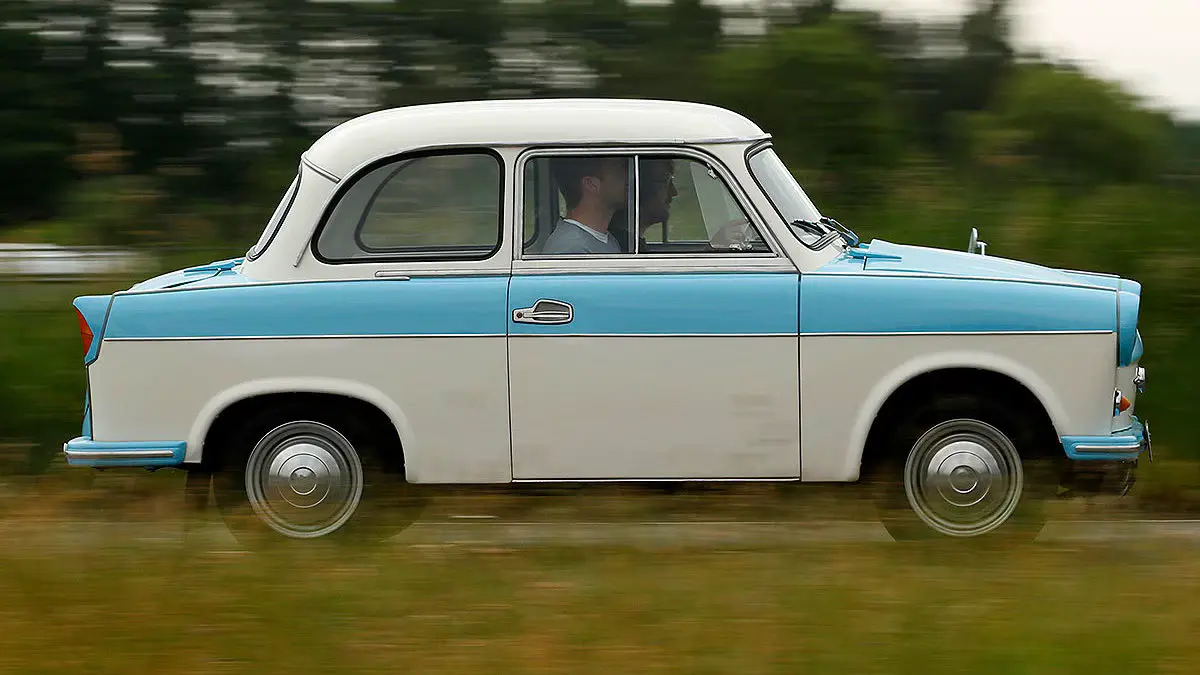
🇩🇪 The Trabant P50 — East Germany's automotive icon.
The Trabant P50 (nicknamed the Trabbi) was East Germany's answer to the Volkswagen Beetle. Launched in 1958 by VEB Sachsenring Automobilwerke Zwickau, it became the most common vehicle on the roads of the DDR, with over 3 million built across all generations by the time production ended in 1991.
🔧 Engineering & Specs
| Spec | Detail |
|---|---|
| Production | 1958 – 1962 |
| Engine | 499 cc two-stroke parallel-twin |
| Power | 18 hp (13 kW) |
| Torque | 31 lb-ft (42 Nm) |
| Top speed | 100 km/h (62 mph) |
| 0–60 km/h | ~16 seconds |
| Transmission | 4-speed manual (unsynchronised) |
| Weight | 620 kg (1,367 lb) |
| Fuel economy | ~5.5 L/100 km |
| Body | Duroplast (cotton-reinforced phenolic resin) |
The engine was a two-stroke — meaning you mixed oil with the petrol. It produced a distinctive blue-tinged exhaust smoke and a buzzing sound that could be heard from blocks away.
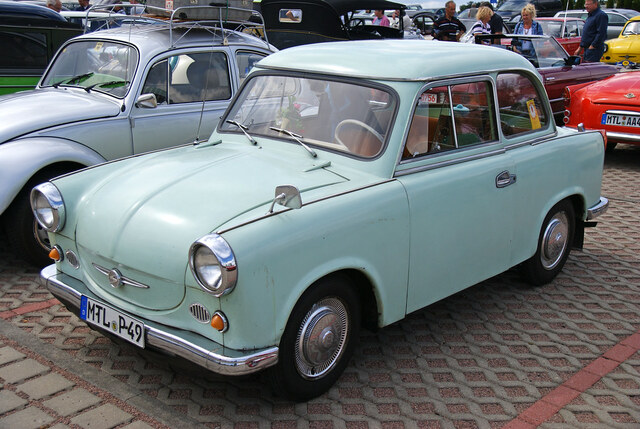
🔬 The Duroplast Body
Perhaps the Trabant's most famous feature: its body panels were made of Duroplast, a composite of cotton waste (from Soviet textile mills) bonded with phenol-formaldehyde resin, pressed under heat and pressure.
Why? East Germany had plenty of cotton but very limited steel. Duroplast was:
- Lightweight — non-structural panels weighed far less than steel
- Dent-resistant — could flex and pop back into shape
- Corrosion-proof — no rust, ever
- Repairable — holes could be patched with resin-soaked fabric
The chassis was a steel unibody — only the skin was plastic.
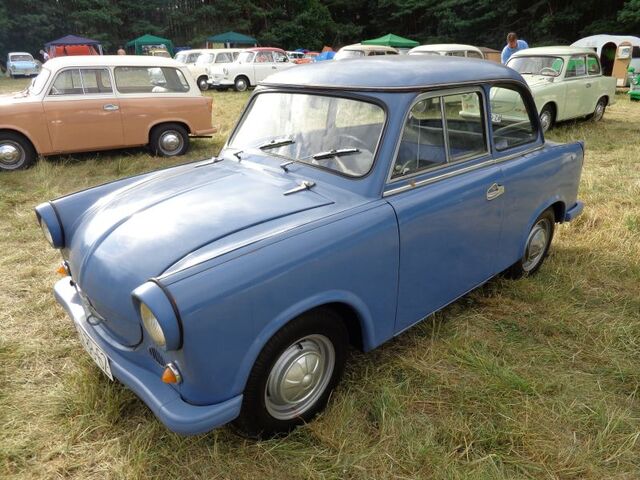
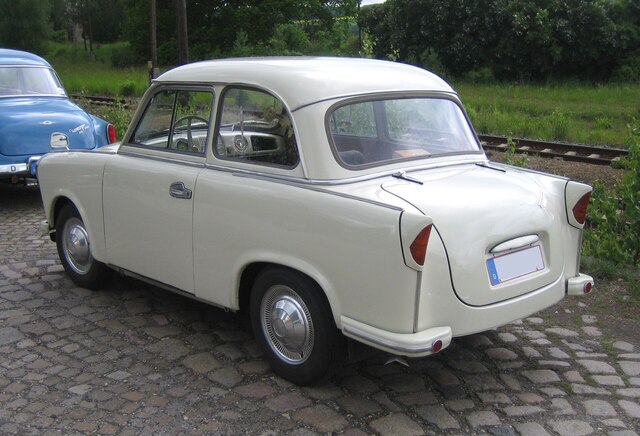
📉 Life Behind the Curve
The Trabant was already outdated when it launched. The engine and chassis design traced back to pre-war DKW technology, and by Western standards the P50 was underpowered, under-braked, and alarmingly basic.
- No fuel gauge — you opened the cap and looked
- No turn signals on early models — hand signals only
- Heater was optional and barely worked
- Waiting list for a new Trabant in East Germany was 10–16 years
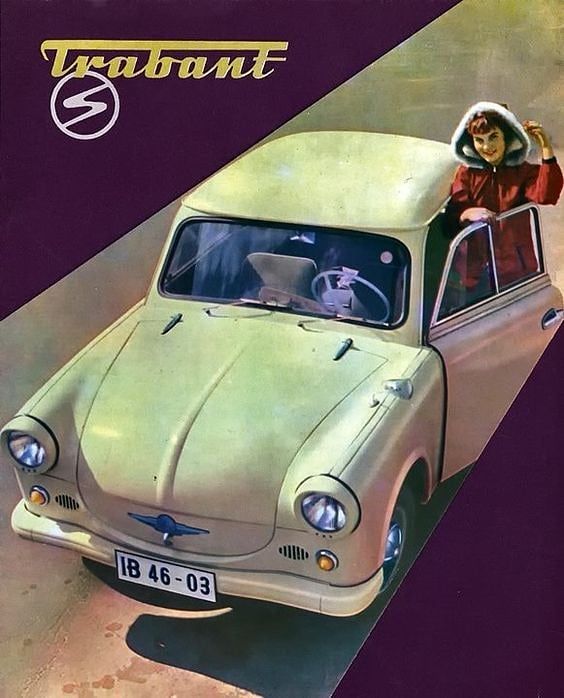
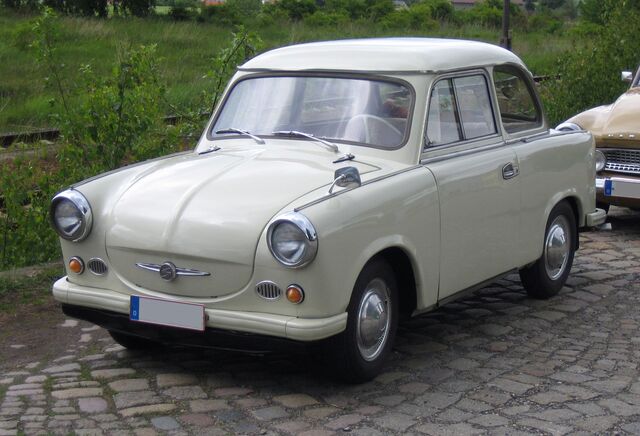
Yet the P50 was the car that moved a nation. Families saved for years, celebrated delivery day like a wedding, and kept their Trabbis running through ingenious home repairs.
🏁 Racing Pedigree
- Trabant 500 R — factory racing version with a tuned two-stroke making ~50 hp
- Won its class in the 1960 Wartburg Rally
- Competed in the London–Sydney Marathon in 1968
- Still raced today in the Trabi Cup — a one-make series in Germany
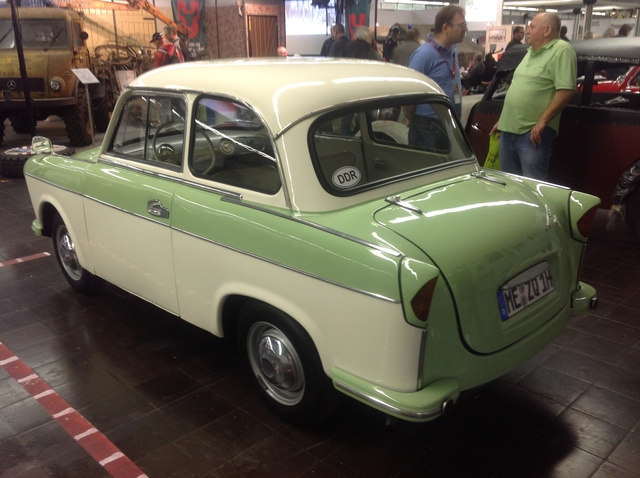
💰 Today
| Condition | Estimated Value |
|---|---|
| Project / barn find | $1,000 – $3,000 |
| Restored / excellent | $5,000 – $12,000 |
| Museum quality | $15,000+ |
The Trabant has become a cult classic. A new generation of collectors — especially in Germany and Eastern Europe — has driven values up significantly. Parts are still widely available, the engineering is dead simple, and the community is passionate.
"The Trabant was designed to meet a need, not a desire. And yet, the desire it created outlasted the country that built it."