Basic Knowledge in Agriculture #85
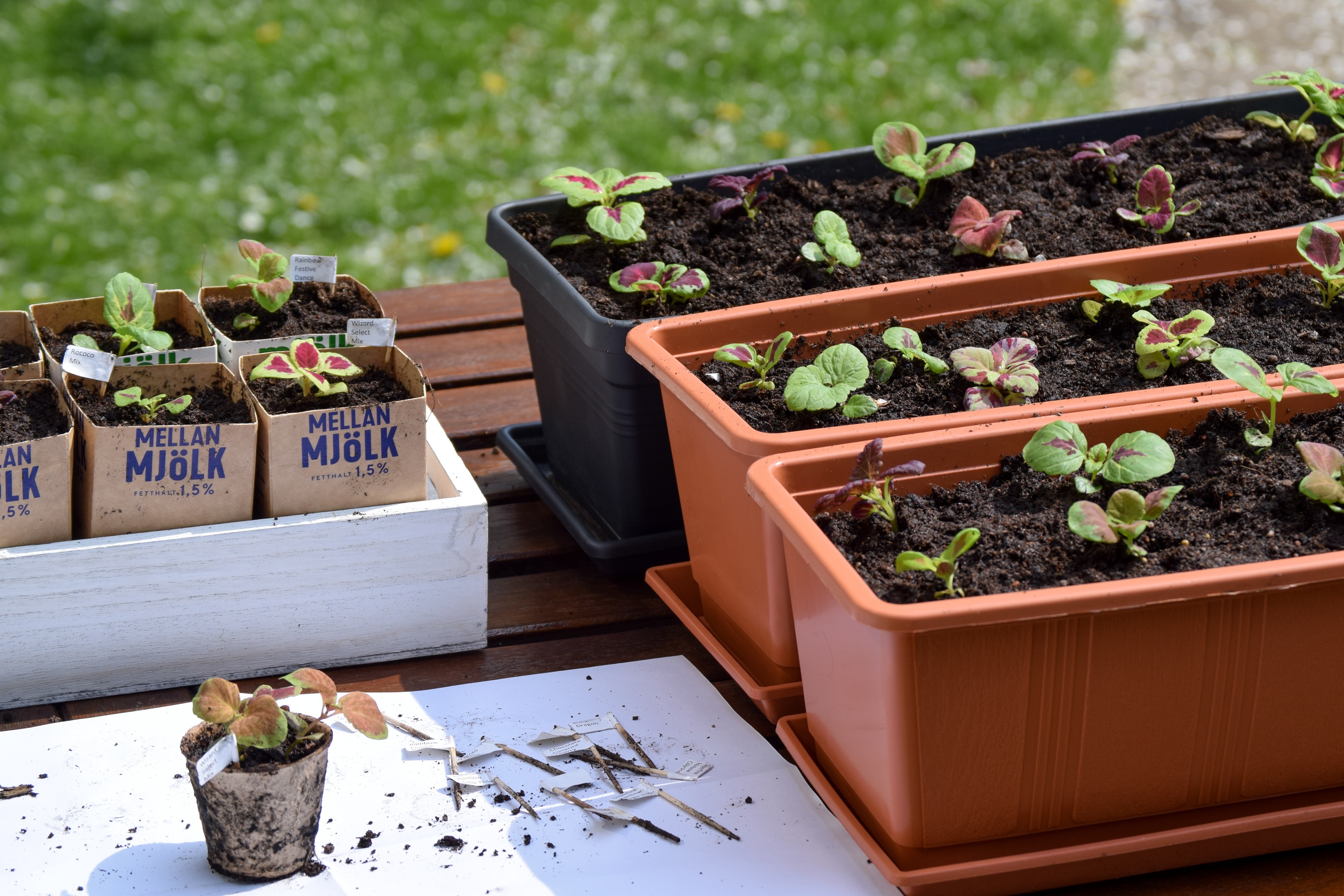
I did not grow up thinking I will care much about farming but during my National youth service year, I was posted to a school in an area in Rivers State where they took farming so seriously, and the the principal gave me seedlings of pepper and tomato for the school farm project. These ones are too crowded make sure You transplant them on the school garden he said. That was the first time I really understood the word transplanting and it meaning became so real to me.
Now what is transplanting?
Transplanting in agriculture means the practice of moving young plants called seedlings from one place where they were germinated or nursery bed to another location where they will grow to maturity. The first location where the planting takes place is usually a nursery bed, seed tray, or germination box where seeds are sown close together because it is easier to protect, water, and monitor them there. Once the seedlings starts to develop leaves and strong roots usually for about two to three weeks depending on the kind of plant some can take up to three to six weeks then, they will carefully be uprooted and moved to the main farm. The spacing is wider in the main farm and the soil is usually prepared there with manure, and there each plant gets its own breathing space.
Transplanting is a very delicate work, if you apply too much force the plant will not survive and if you care too little the plant will goes into what is called transplant shock from the change in environment.
After the whole transplanting process the term became real to me not just the one in the textbook but this time in practice and in real life.
Is there any important attached to transplanting. Let's look at the important of transplanting.
Important of transplanting
Transplanting give crop a uniform look.
While in the nursery, weak seedlings die off naturally remaining the healthy ones which will later be transplanted. Since only the healthy ones are transplanted the whole farm grows evenly.Transplanting maximizes the use of land. Instead of wasting large space in the farm to plant seeds that sometimes not all of them will germinate, we use small nursery space first and later transfer only the ones that has survived. That way, land will be saved, water as well as manure.
Transplanting improve crop yield and its quality. The reason is that proper spacing after transplanting will give the plant enough sunlight, nutrient and air circulation.
Transplanted crops usually are not crowded compared to when the were in the nursery bed and as such they will be less attack of pest and disease.Transplanted crops produces bigger and healthy fruit 🍑 compared to the ones that are not transplanted.
Transplanting taught me lesson not only on agronomy but also about people.
I learnt that growth sometimes requires discomfort because the looks on the seedlings
Fews days after the transplant, some leaves started dropping which made me to almost gave up but after a while new leaves appeared looking stronger than the previous ones.
That is how I see life too, sometimes, we need to move from our comfort zone and try something new, give ourselves space and responsibility even if at first we may make mistakes or fail, but with the right support and consistency we will root deeper.
I see Agriculture not just about food security but also about stewardship, about soil, about plants, and about young minds.
At this point I would like to invite @ruthjoe, @josepha and @ninapenda to participate in this contest.
Sometimes a small school project can stay in the mind for many years and later become an interesting hobby or interest.