Cybersecurity Threats in Cryptocurrency Exchanges and Preventive Security Mechanisms
Cryptocurrency is undoubtedly one of the most popular digital advancements of the times. Cryptocurrency exchanges are platforms that allow users to trade and trade digital currencies like Bitcoin and Ethereum. The exchanges make it convenient and quick to make transactions. But they're also vulnerable to numerous online security risks that could compromise users' money and personal data. With the increasing popularity of the cryptocurrency market, cybersecurity is more important than ever.
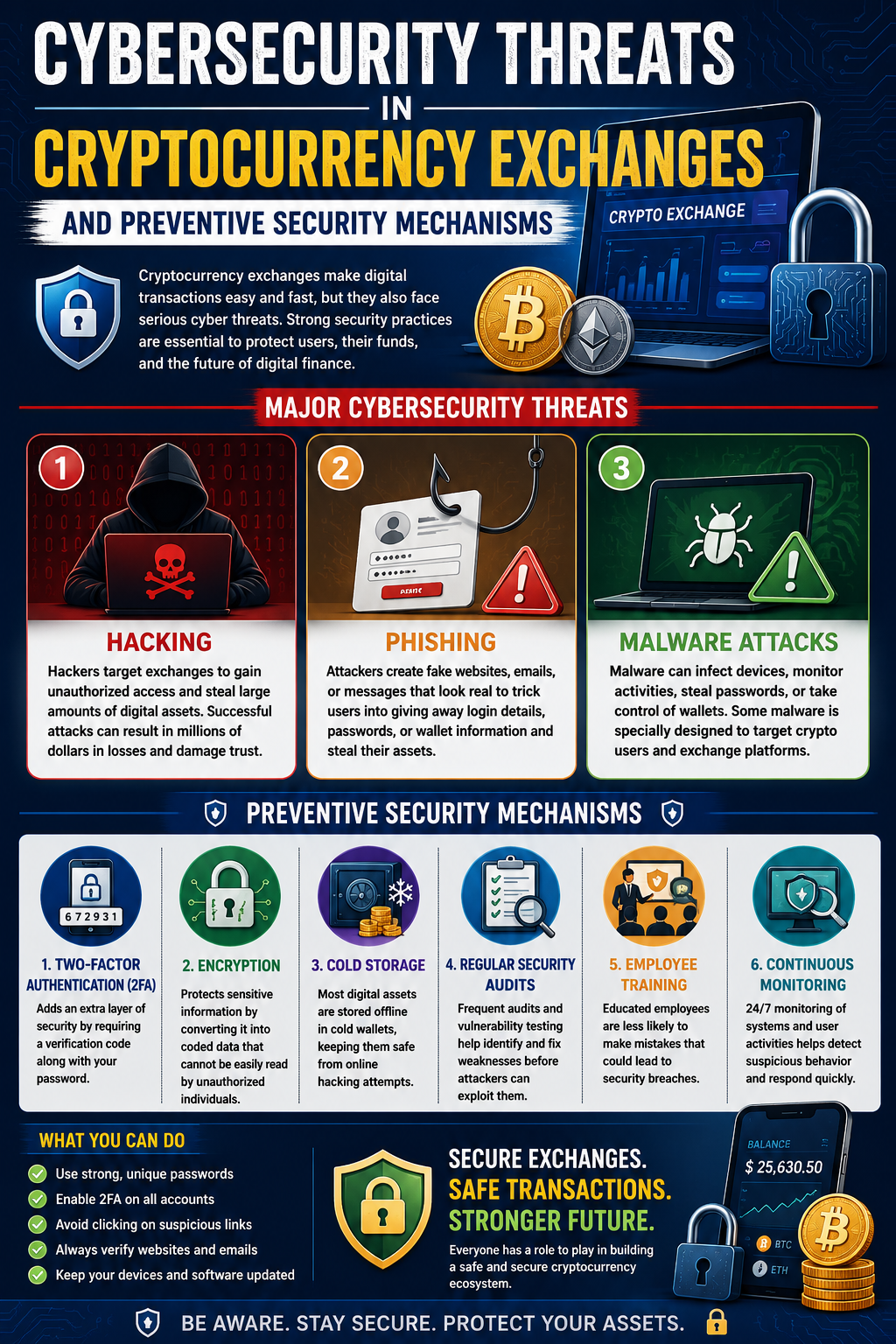
One of the biggest cybersecurity risks on cryptocurrency exchanges is hacking. Exchanges are frequently the target of cybercriminals because of the significant amount of digital assets they can hold. Criminals can steal cryptocurrencies with the help of hacking attacks on users' account. Sometimes entire trades have been lost for millions of dollars because of security issues. As I've seen, each time somebody reports on a successful hack, a lot of investors become concerned about the safety of their money.
A phishing attack is another frequent attack. Phishing is when bad guys make fake websites, emails, or messages that resemble the websites of real cryptocurrency exchanges. Their aim is to get users to disclose their log-in information, passwords, or wallet credentials. With these information, attackers can access victims' accounts and steal their assets. Users lose money due to the fact that they don't ensure the authenticity of websites and emails before disclosing sensitive information.
Cryptocurrency exchanges and their users are also vulnerable to malware attacks. Malware can transmit to computers and mobile devices to be able to track activities, steal passwords, and even control cryptocurrency wallets. There are also cryptocurrency mining malware that is created to attack cryptocurrency users and exchange platforms.
These threats are counteracted by a number of security measures implemented by cryptocurrency exchanges. Two Factor Authentication (2FA) is one of the important measures. This security measure asks extra verification code, other than the password, from users before accessing their accounts. This provides greater resistance to unauthorised access by hackers.
Encryption is another efficient way of doing this. Encryption is the process of transforming data into a coded format that is not easily readable by anyone else without the key or password. Exchanges also employ cold storage – a process in which they store the majority of digital assets far from internet connected systems. This substantially minimises the possibility of hacking.
Regular security audits, employee training, strong passwords, and continuous system monitoring also boost security. However, the user should be alert and make sure not to click on any suspicious links and take advantage of all security options.
To conclude, cryptocurrency exchanges are vulnerable to a variety of cybersecurity risks, such as hacking, phishing, and malware. These threats can result in significant financial losses and damage user trust. Exchanges can enhance their platforms and users' security by adopting preventive measures, including two-factor authentication, encryption, cold storage, and frequent security monitoring. With the growing trend of cryptocurrency usage, robust cybersecurity measures will continue to play a crucial role in providing a safe and secure digital financial landscape.