Why Smart Investors Buy Bitcoin While Everyone Else Is Afriaid
The Man Who Buys More When Everyone Else Is Running
Most people sell when prices fall.
Michael Saylor buys.
That single difference in behavior is worth more than any investment course you will ever pay for.
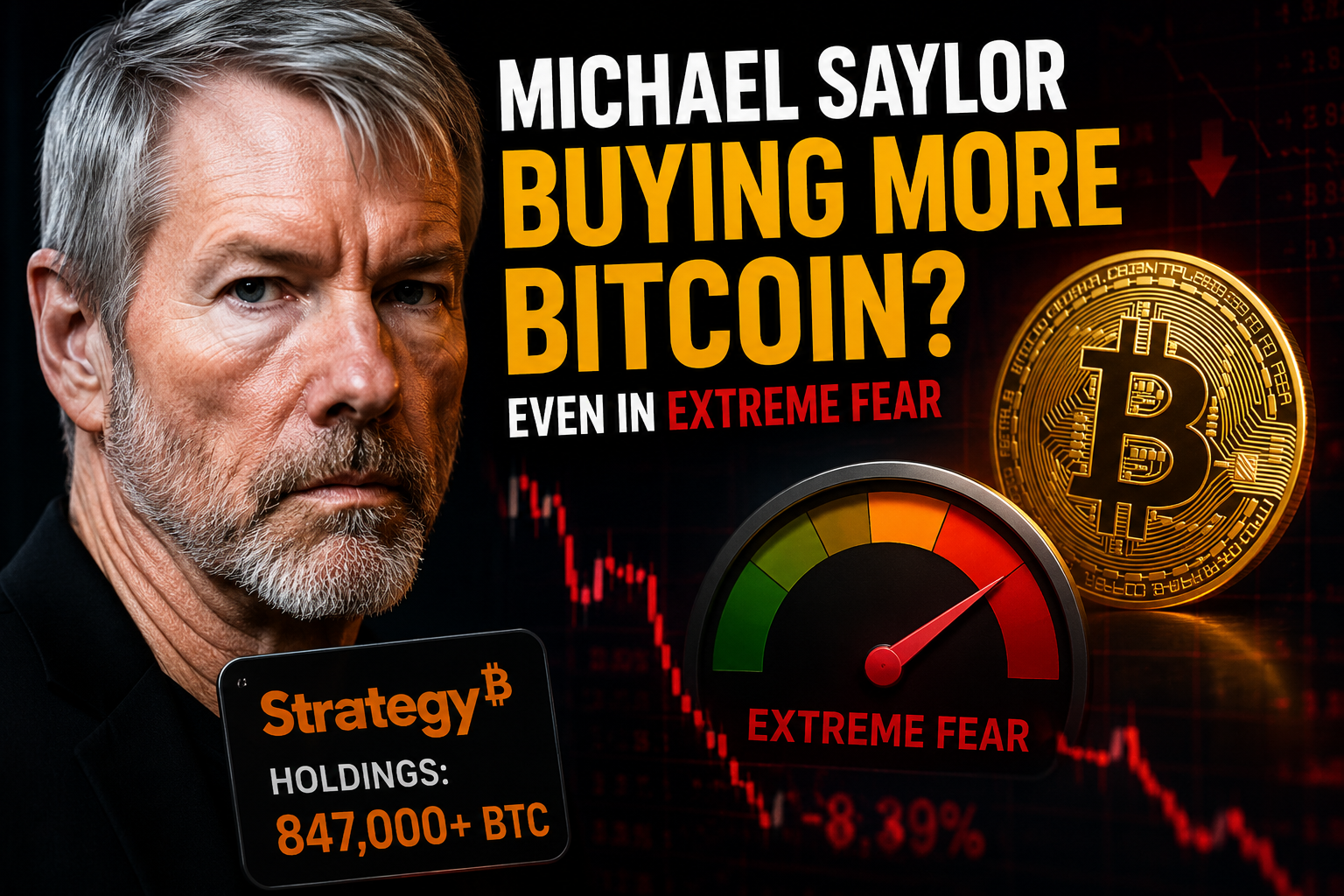
Right now, Bitcoin is trading near $58,000. The Crypto Fear and Greed Index sits at 16, deep inside what analysts call "Extreme Fear" territory. TheStreet Over a billion dollars got wiped out in liquidations in a single day. Regular investors are panicking, writing obituaries for Bitcoin on social media, and quietly exiting positions they swore they would hold forever.
Saylor posted two words: "More Orange."
That is his signal that Strategy, the company he chairs, just bought more Bitcoin.
Let me explain what is actually happening here, because the surface story is not the real story.
What Most People See
They see a man with unrealized losses.
Strategy has spent roughly $58 billion acquiring Bitcoin at an average cost of around $75,600 per coin. With Bitcoin trading near current levels, that is approximately $5 billion in paper losses. CoinDesk
The crowd looks at that number and calls him reckless. Some call him delusional. The Ripple CEO went on television and said Saylor was "focused on the wrong stuff" and that financial engineering cannot create long-term value. CoinPedia
What nobody explains is the actual model behind the behavior.
What Is Actually Happening
Strategy built its position by repeatedly issuing securities, stocks and preferred shares, to raise fresh capital and use that capital to purchase Bitcoin. [Bloomberg] They essentially turned a publicly traded company into a machine that converts investor money into Bitcoin holdings.
When Bitcoin was rising, this looked like genius.
When Bitcoin falls, the same machine looks fragile.
After Bitcoin hit an all-time high of around $126,000 in October 2025, the price fell to rough Strategy's own stock fell nearly 47% in a single month. Their preferred shares dropped 26% below what investors originally paid for them.
And yet Saylor keeps buying.
The Lesson Nobody Is Teaching You
Here is the part that most financial commentators miss entirely.
Saylor is not buying because he is brave. He is buying because his entire thesis is a long-duration bet, meaning he is not thinking in weeks or months. He is thinking in decades.
At the Bitcoin Prague conference, Saylor explained that Bitcoin has underperformed in 2026 partly because AI companies like OpenAI, Anthropic, and Meta are absorbing capital that would otherwise flow into crypto. He estimated this cycle will last between 12 and 24 weeks, after which capital will rotate back toward Bitcoin. [Crypto Economy]
He is not reacting to price. He is positioning for a future he has already decided will arrive.
That is a completely different psychology from almost every retail investor alive.
What This Reveals About Human Behavior
Most people make financial decisions based on emotion disguised as logic.
When prices are high, they feel smart buying. When prices fall, they feel stupid holding. So they sell at the bottom to stop the emotional pain, and then buy again when prices recover so they can feel smart again.
This cycle is not investing. It is emotional management dressed in financial language.
Saylor operates from a fixed conclusion. The price movement does not update his belief. It only changes his entry cost.
That is the mental model worth studying. Not the Bitcoin. Not the billions. The actual thinking pattern underneath the behavior.
One More Thing
When investors pressured Saylor to respond to the selloff, he wrote: "Volatility tests every capital structure. Strategy remains focused on Bitcoin, disciplined capital allocation, credit quality, and long-term value creation."
No panic. No explanation. No begging the market for validation.
That level of certainty, whether he is ultimately right or wrong, is something most people will never develop because they have never decided what they actually believe about anything.
Most people do not lose money because of bad assets.
They lose money because they have not decided who they are as an investor before the market tests them.
The market does not create weak hands.
It simply reveals them.
Drop your thoughts in the comments. What does Saylor's behavior teach you about conviction versus stubbornness? There is a real difference and it is worth discussing.