How does a Four-Quadrant AC Source and Load Enable Regenerative Power Testing?
Modern electrical systems are becoming increasingly dynamic and bidirectional. Technologies such as electric vehicles, renewable energy inverters, energy storage systems, and smart grid infrastructure frequently send energy back toward the grid instead of simply consuming power. This evolution has created new challenges for engineers designing and testing power electronics.
Traditional power supplies and loads are not designed to handle energy flowing in both directions. They typically provide power to a device under test but cannot absorb returned energy efficiently. As a result, much of that energy is dissipated as heat using resistive loads, which wastes electricity and increases cooling requirements.
Four-quadrant AC sources and loads solve this problem by enabling regenerative power testing, where energy generated during testing is returned to the grid or reused within the system. These advanced testing systems are now essential in laboratories developing modern power electronics.
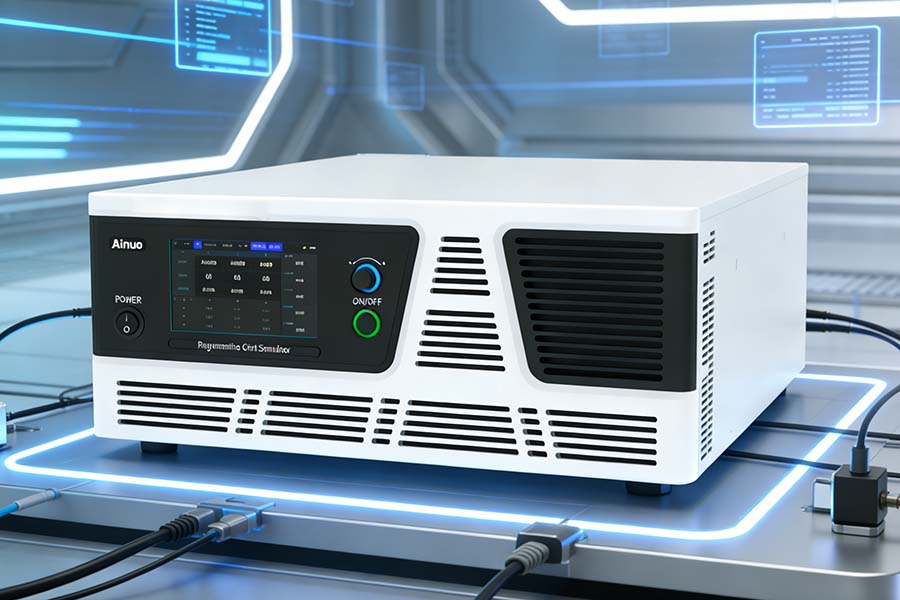
In this article, we explore how four-quadrant AC sources and loads work, how they enable regenerative testing, and why they are critical for evaluating next-generation electrical technologies.
Understanding Regenerative Power
To understand regenerative testing, we first need to understand how power flows in electrical systems. Electrical power is determined by the relationship between voltage and current.
P = V × I
When voltage and current flow in the same direction, power is delivered from the source to the load. However, when current flows in the opposite direction relative to voltage, power flows back toward the source. Many modern devices generate power under certain operating conditions. Examples include:
- Motor drives during braking
- Electric vehicles during regenerative braking
- Grid-tied solar inverters
- Energy storage systems
- Vehicle-to-grid (V2G) charging systems
During these situations, the device under test becomes a temporary energy source rather than a load. Testing such systems requires equipment capable of absorbing this returned energy safely and efficiently.
What Is a Four-Quadrant AC Source and Load?
A four-quadrant AC source or load is a programmable power system capable of operating in all four combinations of voltage polarity and current direction. These four operating regions are known as quadrants, representing different directions of power flow.
The Four Operating Quadrants
- Quadrant I – Forward Power Delivery
Voltage and current are both positive, meaning power flows from the AC source to the device under test. - Quadrant II – Regenerative Operation
Voltage remains positive while current reverses direction. The device sends power back to the source. - Quadrant III – Reverse Power Delivery
Both voltage and current are negative, enabling reverse polarity power flow. - Quadrant IV – Regenerative Reverse Operation
Voltage is negative while current is positive, again allowing power to return to the source.
This capability allows four-quadrant systems to both supply and absorb energy, making them ideal for testing bidirectional electrical devices.
Limitations of Traditional Testing Methods
Before regenerative systems became widely available, engineers used less efficient methods to handle returned energy during testing.
Resistive Load Banks
One common method was connecting resistive loads to absorb generated power. The energy produced by the device under test would simply be converted into heat. This approach has several disadvantages:
- Extremely inefficient
- High heat generation
- Large cooling requirements
- Increased operating costs
Back-to-Back Motor Testing
In motor testing environments, engineers sometimes connected two motors so that one acted as the load for the other. Although this approach can simulate regenerative conditions, it is:
- Mechanically complex
- Difficult to control precisely
- Limited in flexibility
These limitations led to the development of regenerative AC testing systems based on four-quadrant technology.
How Four-Quadrant AC Systems Enable Regenerative Testing
Four-quadrant AC sources and loads use advanced power electronic converters to manage bidirectional energy flow. Instead of dissipating returned energy as heat, these systems redirect it back into the electrical grid or reuse it internally.
Bidirectional Power Conversion
At the heart of a four-quadrant AC system is a bidirectional inverter or converter stage. This converter can operate in two modes:
- Source Mode – delivering power to the device under test
- Sink Mode – absorbing power generated by the device
Because the converter can reverse current direction electronically, the system can transition seamlessly between these modes.
Energy Recovery and Grid Regeneration
When a device under test generates power, the four-quadrant AC system captures that energy and returns it to the facility’s electrical grid. This process is known as regeneration. The advantages include:
- Reduced electricity consumption
- Lower operating costs
- Reduced thermal load
- Smaller cooling systems
Some regenerative test systems can recover up to 90–95% of the generated energy, dramatically improving laboratory efficiency.
Key Components of a Regenerative AC Testing System
Four-quadrant AC testing systems typically consist of several key components.
1. Programmable AC Source
The AC source generates a controlled voltage waveform that simulates grid conditions. Engineers can program parameters such as:
- Voltage amplitude
- Frequency
- Phase angle
- Harmonic distortion
This allows simulation of real-world power networks.
2. Regenerative AC Load
The regenerative load absorbs energy generated by the device under test. Unlike resistive loads, regenerative loads convert absorbed power back into usable electrical energy.
3. Control and Measurement System
The control system manages the interaction between the source, load, and device under test. It monitors:
- Voltage
- Current
- Power
- Harmonics
- Power factor
Advanced systems also include data logging and automated test sequencing.
Applications of Regenerative Power Testing
Four-quadrant AC systems are widely used across multiple industries where bidirectional power flow is common.
Electric Vehicle Charging Systems
Electric vehicles increasingly support vehicle-to-grid (V2G) functionality, where energy stored in the vehicle battery can be fed back into the grid. Testing these systems requires equipment capable of both:
- Delivering AC power to the charger
- Absorbing energy returned from the vehicle
Four-quadrant AC sources provide the ideal environment for validating these capabilities.
Motor Drive and Industrial Automation Testing
Electric motors in industrial equipment often generate energy during deceleration or braking. This regenerative energy must be managed safely. Using four-quadrant AC systems allows engineers to:
- Test regenerative braking
- Evaluate drive efficiency
- Simulate real load conditions
- Analyze power quality behavior
Renewable Energy Inverter Testing
Solar and wind inverters interact constantly with the electrical grid. They must respond correctly to conditions such as:
- Voltage fluctuations
- Frequency disturbances
- Grid faults
- Harmonic distortion
Four-quadrant AC systems can simulate these events while safely handling energy returned from the inverter.
Energy Storage System Testing
Battery storage systems both charge and discharge energy depending on grid conditions. Testing these systems requires power equipment capable of switching between source and sink modes rapidly.
Four-quadrant systems allow engineers to test:
- Charging cycles
- Discharging behavior
- Grid interaction
- Efficiency optimization
Benefits of Regenerative Testing
Regenerative testing using four-quadrant AC sources and loads offers several significant advantages compared to traditional testing approaches.
Improved Energy Efficiency
Regenerative systems recycle energy instead of wasting it as heat.
This reduces the total electricity required for testing operations.
Reduced Cooling Requirements
Since less energy is dissipated as heat, laboratories require smaller cooling systems.
This leads to lower infrastructure costs.
Higher Testing Accuracy
Four-quadrant systems provide precise control over voltage, current, and power flow.
Engineers can replicate real-world grid conditions more accurately.
Greater Testing Flexibility
Because the system can operate in both source and sink modes, engineers can test a wide range of devices with a single setup.
Lower Long-Term Operating Costs
Although regenerative systems may have higher upfront costs, the energy savings over time can significantly reduce overall operational expenses.
Key Features to Look for in Four-Quadrant AC Testing Equipment
When selecting a regenerative testing system, engineers should evaluate several critical features.
Wide Voltage and Frequency Range
This allows testing equipment designed for different international grid standards.
High Regenerative Efficiency
The higher the energy recovery rate, the more electricity the system saves.
Fast Dynamic Response
Power electronics systems often change operating states rapidly.
A high-performance AC source should respond quickly to these changes.
Harmonic Simulation Capability
Modern grid testing requires the ability to introduce and measure harmonic distortion.
Automation and Remote Control
Many laboratories rely on automated testing systems that integrate with software platforms.
Support for communication protocols such as LAN or SCPI commands is essential.
The Future of Regenerative Power Testing
As power systems become more complex, regenerative testing will continue to grow in importance.
Several trends are accelerating demand for four-quadrant AC systems:
Electrification of Transportation
Electric vehicles, charging stations, and electric aviation systems all require bidirectional power testing.
Renewable Energy Expansion
As solar and wind penetration increases, grid-connected power electronics must be tested under increasingly dynamic conditions.
Smart Grid Development
Future electrical networks will involve distributed energy resources interacting continuously.
Four-quadrant testing platforms will play a key role in validating these technologies.
Hardware-in-the-Loop Testing
Advanced laboratories are integrating real power hardware with digital simulations of electrical networks, requiring flexible regenerative power systems.
Conclusion
Four-quadrant AC sources and loads have become essential tools for modern power electronics testing. Their ability to handle bidirectional power flow enables efficient regenerative testing that accurately reflects the behavior of real-world electrical systems.
By capturing and returning energy instead of dissipating it as heat, these systems provide major advantages in efficiency, flexibility, and testing accuracy.
As technologies such as electric vehicles, renewable energy systems, and smart grids continue to expand, regenerative testing capabilities will only become more important.
Organizations investing in four-quadrant AC testing systems today are positioning themselves to develop the next generation of advanced electrical technologies while reducing energy consumption and operational costs.