Hyundai Tucson Evolution Guide: Design, Tech & Performance
Introduced in 2004 by Hyundai Motor Company, the Hyundai Tucson quickly became one of the brand’s most popular compact SUVs. Designed to compete with rivals like the Honda CR-V, Toyota RAV4, and Ford Escape, the Tucson earned recognition for its stylish design, practicality, and strong safety ratings. Over the years, Hyundai continuously improved the Tucson with updated engines, modern technology, enhanced comfort, and advanced safety systems.
2004–2005: First Generation
The first-generation Hyundai Tucson debuted in 2004 with a rugged yet practical SUV design. It featured wraparound headlights, a single-bar grille carrying the Hyundai badge, and a spacious interior suitable for families. Buyers could choose from three engine options: a 2.0L Beta II I4 petrol engine, a 2.7L Delta V6 petrol engine, and a 2.0L CRDi diesel engine. Transmission options included 5-speed manual, 6-speed manual, and 4-speed automatic gearboxes.
The Tucson was available in GL, GLS, SE, and Limited trims. Standard features included six airbags, air conditioning, alloy wheels, electronic stability control, remote keyless entry, and a CD player. Higher trims added leather seats, heated seats, fog lights, automatic climate control, and upgraded audio systems. The 2.7L V6 engine was reserved for SE and Limited models.
Practicality was one of the Tucson’s strengths. The rear seats folded easily to expand cargo space, and the front passenger seat could fold flat for carrying longer items. Safety was also impressive, with frontal airbags, side-impact airbags, and curtain airbags protecting both front and rear passengers.
2009–2014: Second Generation
The second-generation Tucson arrived with a more modern and aerodynamic design. Hyundai expanded the engine lineup significantly, offering petrol engines such as the 1.6L Gamma GDI, 2.0L Nu GDi, and 2.4L Theta II, along with 1.7L and 2.0L CRDi diesel options. Transmission choices improved as well, including 6-speed manual and 6-speed automatic gearboxes.
Trim levels became more refined, with GLS and Limited variants receiving redesigned alloy wheels, upgraded sound systems, heated seats, and automatic climate control. Hyundai also improved ride comfort with upgraded suspension components and enhanced steering systems.
The 2014 facelift brought notable improvements, including GDI direct-injected Theta II engines for better power and fuel efficiency. Exterior styling updates included LED headlights and taillights, while the interior received upgraded infotainment and audio systems. The Tucson also continued to offer all-wheel-drive options for better performance in challenging road conditions.
2015–2019: Third Generation
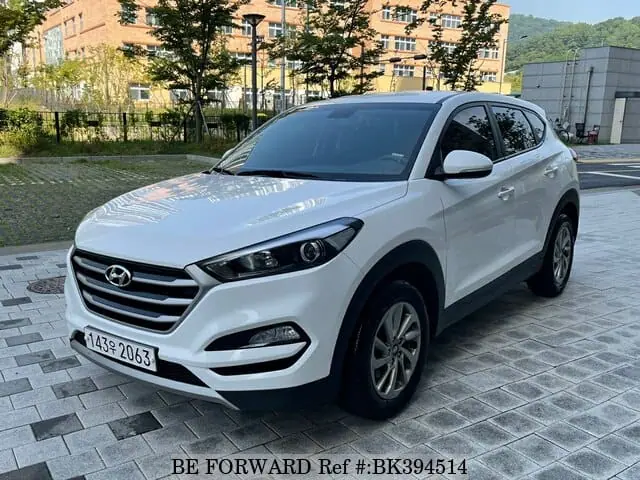
The third-generation Tucson introduced a more premium appearance and a larger body. It became 65 mm longer and 30 mm wider than the previous model, while cargo capacity increased to 513 liters. Hyundai focused heavily on safety and technology during this generation.
New features included lane departure warning, blind-spot detection, automatic emergency braking, and Hyundai Active Cornering Control. The engine range expanded further with turbocharged petrol engines, naturally aspirated engines, and diesel variants paired with 6-speed automatic, 8-speed automatic, or 7-speed dual-clutch transmissions.
In 2019, Hyundai launched a major facelift featuring a redesigned grille, updated LED headlights, reshaped hood, and a modernized dashboard with a high-mounted touchscreen display. Advanced safety technologies such as Driver Attention Warning, Lane Keeping Assist, and Front Collision-Avoidance Assist became standard across all trims.
Hyundai also introduced hybrid and plug-in hybrid concept versions during this era, showcasing the brand’s move toward electrification and improved fuel efficiency.
2020–2022: Fourth Generation
The fourth-generation Tucson was officially revealed in September 2020 with a bold futuristic design inspired by Hyundai’s Vision T Concept. It featured Hyundai’s “jewel-like” grille with integrated daytime running lights, angular body styling, and a more upscale interior.
The cabin received major upgrades, including a fully digital instrument cluster, a large 10.25-inch touchscreen, and a redesigned center console. Hyundai offered two wheelbase lengths depending on market requirements.
Engine options became more advanced, including Smartstream petrol, diesel, hybrid, and plug-in hybrid powertrains. Buyers could choose from multiple transmissions such as 6-speed manual, 8-speed automatic, and dual-clutch systems. Hybrid models also included a 48V mild-hybrid system for improved efficiency.
Fuel economy improved significantly, with EPA estimates reaching around 11 km/L in the city and 14 km/L on highways for front-wheel-drive models.
Maintain peak performance—shop parts here
Final Verdict
From 2004 to 2022, the Hyundai Tucson evolved from a simple compact SUV into a highly advanced and stylish family vehicle. Each generation introduced better technology, stronger safety systems, improved comfort, and more efficient engines. Whether choosing an older affordable model or a newer high-tech version, the Tucson remains a strong competitor in the compact SUV market. Browse the Hyundai Tucson lineup and secure yours now