Mitsubishi Mirage Evolution Guide: Design, Efficiency & Technology
The Mitsubishi Mirage, also known as the Colt in some markets, has evolved significantly since its debut in 1978. Produced by Mitsubishi Motors, the Mirage has been offered in several body styles including hatchback, sedan, wagon, coupe, and liftback. Over the decades, it developed from a basic economy car into a practical and fuel-efficient modern subcompact while maintaining its reputation for affordability, reliability, and low running costs.
The first-generation Mirage (1978–1982) was introduced during the aftermath of the 1973 oil crisis, with Mitsubishi focusing on fuel efficiency and economy. It was available as a three- or five-door hatchback and featured a simple design with rectangular headlights, a narrow grille, and lightweight construction. In 1982, Mitsubishi released a facelift with larger taillights and redesigned headlights integrated into the grille. Inside, the dashboard was modernized with rotary switches for convenience. Engine options included 1.2L, 1.4L, and later a 1.6L petrol engine, while a turbocharged 1.4L engine producing 103 hp became available in 1982. A unique feature was the “Super Shift” transmission, effectively creating an eight-speed manual gearbox.
The second generation (1983–1986) introduced more body styles, including sedan and wagon variants. The wagon gained popularity in export markets, especially with optional four-wheel drive. Styling became more refined while retaining compact dimensions. Engine choices expanded to include 1.3L, 1.5L, 1.6L, and 1.8L petrol engines, along with a 1.8L diesel engine. Power outputs ranged from 60 hp to 124 hp. The Super Shift transmission continued, giving drivers better flexibility and fuel economy.
The third-generation Mirage (1987–1990) brought a more aerodynamic and modern appearance. Mitsubishi introduced a stylish hatchback, sedan, and five-door liftback. The interior improved with supportive bucket seats, split-folding rear seats, and a more driver-focused dashboard. Engine choices included efficient 1.3L and 1.5L petrol engines, a 1.8L diesel, and performance-oriented variants. The famous “Cyborg” model featured a turbocharged 1.6L engine producing 145 hp. Unlike previous generations, this version offered both front-wheel drive and four-wheel drive, improving handling and versatility.
The fourth generation (1991–1994) adopted a curvier and more modern body design. Mitsubishi expanded the lineup with hatchback, sedan, coupe, and wagon variants. The Mirage and Lancer models differed in styling, with the Lancer featuring a more upright and angular appearance. Engine options became broader, ranging from 1.3L naturally aspirated engines to turbocharged 2.0L engines and diesel variants.
One of the most impressive additions was a 1.6L V6 engine. High-performance versions such as the Lancer GSR/RS produced up to 202 hp, making the Mirage platform more appealing to enthusiasts.
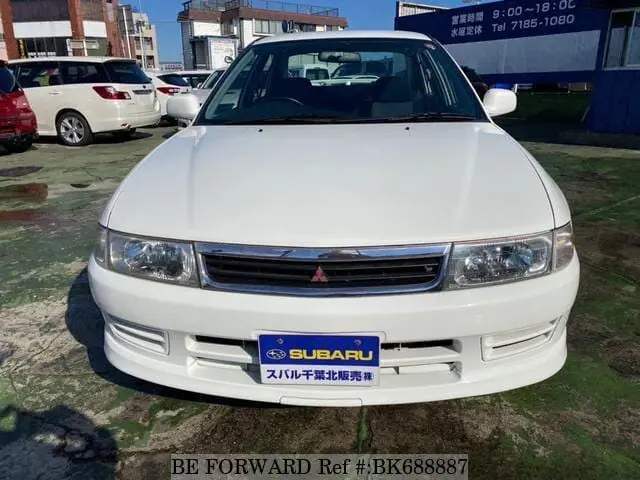
The fifth generation (1995–2011) refined the previous design instead of completely redesigning it. Mitsubishi offered hatchback, sedan, and coupe body styles, while the wagon from the older generation continued separately. A facelift in 1997 introduced revised headlights, grille designs, and redesigned taillights. Special editions such as the Mirage Modarc added chrome trim and premium styling details. The most common engine was the reliable 1.5L 4-cylinder producing 109 hp, paired with either a five-speed manual or four-speed automatic transmission.
After a production pause, Mitsubishi revived the Mirage in 2012 as a lightweight, fuel-efficient subcompact hatchback. Mitsubishi focused heavily on reducing weight and aerodynamic drag, achieving a drag coefficient as low as 0.27. Although the exterior styling was simple, the interior offered impressive space, practical controls, and good comfort for four adults. Engine options included a 1.0L and 1.2L three-cylinder engine paired with either a CVT or five-speed manual transmission. Standard features included power windows, keyless entry, and MP3 compatibility.
The Mirage received major upgrades in 2017 and 2020. Improvements included redesigned bumpers, LED lighting, upgraded suspension and brakes, Apple CarPlay compatibility, improved audio systems, and additional safety technologies such as forward collision mitigation and radar-based safety systems.
Need parts? We’ve got you covered
Overall, the Mitsubishi Mirage/Colt has remained successful because it is affordable, practical, reliable, and economical to maintain. Over six generations, Mitsubishi continuously improved comfort, technology, safety, and efficiency while keeping the Mirage true to its reputation as a dependable everyday car. Check the latest Mitsubishi Mirage arrivals and secure yours