Toyota Highlander: Complete Generational Review & Comparison
The Toyota Highlander, known as the Toyota Kluger in some markets, is a crossover SUV produced by Toyota. Introduced in 2000, it became one of the earliest car-based mid-size SUVs, combining sedan-like comfort with the practicality and cargo capacity of a traditional SUV. Built initially on the same platform as the Toyota Camry, the Highlander evolved significantly over the years, growing larger, more refined, and more technologically advanced with every generation.
2000 – 2006
Toyota launched the first-generation Highlander in 2001 with a unibody structure that provided a smoother, more comfortable ride than truck-based SUVs. Early models were five-seaters with the spare tire stored inside the cabin, though from 2004 the spare tire was relocated underneath the rear of the vehicle. By 2006, Toyota introduced a seven-seat version to improve family practicality.
The cabin offered generous passenger space with supportive seating and flexible cargo capacity. Cargo space measured 1,090 liters and expanded to 2,305 liters when the rear split-folding seats were folded down. Standard equipment included air conditioning, cruise control, a CD/cassette player with six speakers, cup holders, and a tilt steering wheel. Higher trims added features such as leather upholstery, JBL audio, woodgrain trim, alloy wheels, fog lights, and automatic climate control.
Engine choices included a 2.4-liter four-cylinder petrol engine and an optional 3.0-liter V6, later upgraded to a 3.3-liter V6. Transmission options included four- and five-speed automatic gearboxes, while buyers could choose between front-wheel drive and all-wheel drive.
2007 – 2012
The second-generation Highlander debuted in 2007 with a larger body and longer wheelbase, resulting in improved interior room and comfort. Toyota kept the familiar styling but refined the design, and by 2011 the SUV received slimmer headlights, a revised grille, and updated side trim.
Interior improvements included increased headroom, shoulder room, and better legroom for second- and third-row passengers. One notable feature was the second-row center-stow seat, which could be stored under the front center console when not needed.
Standard features now included power windows and locks, front and rear air conditioning, cruise control, and keyless entry. Optional upgrades included heated seats, leather upholstery, a Smart Key system, and touchscreen navigation.
Toyota replaced the previous base engine with a more powerful 3.5-liter V6 producing 270 horsepower. Hybrid versions combined a V6 engine with an electric motor for better efficiency and performance. In 2009, Toyota also introduced a 2.7-liter four-cylinder engine paired with a six-speed automatic transmission. Buyers could choose either front-wheel drive or all-wheel drive configurations.
2013 – 2018
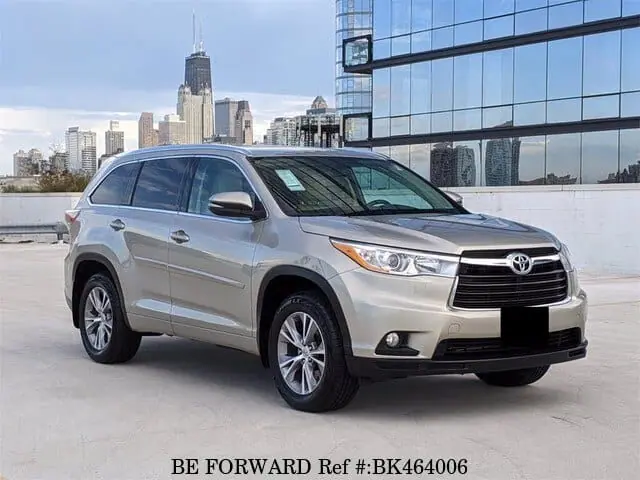
Toyota revealed the third-generation Highlander in 2013 for the 2014 model year. This version was longer, wider, and more stylish, moving away from the boxy appearance of earlier models toward a smoother and more modern design.
The Highlander now seated up to eight passengers, with spacious first- and second-row seating and a third row mainly suited for children. Buyers could choose cloth, synthetic leather, or genuine leather upholstery, while higher trims added heated and ventilated seats, captain’s chairs, and power-adjustable front seats.
Technology also improved significantly. The SUV featured Toyota’s Entune infotainment system with either a 6.1-inch or 8.0-inch touchscreen, Bluetooth connectivity, and HD radio.
The powertrain lineup remained similar initially, but in 2017 Toyota upgraded the V6 engine to produce 295 horsepower and paired it with a new eight-speed automatic transmission, improving both performance and fuel economy.
2019 – 2022
The fourth-generation Highlander arrived in 2019 riding on Toyota’s TNGA GA-K platform, which improved rigidity, ride comfort, and efficiency. The SUV adopted a more aggressive design with sharper lines, a larger grille, and LED projector headlights.
Inside, the Highlander continued offering three rows of seating for up to eight passengers. Standard features included a touchscreen infotainment system, Bluetooth, multiple USB ports, rear air conditioning, and Toyota Safety Sense 2.5+, which added advanced safety technologies such as lane-keeping assist, adaptive cruise control, and automatic emergency braking.
Engine options included a 2.5-liter four-cylinder engine and a 3.5-liter V6 producing 295 horsepower. Hybrid models combined a 2.5-liter engine with electric motors for a total output of 240 horsepower and improved fuel efficiency.
Find & purchase parts easily
In 2022, Toyota introduced the Hybrid Bronze Edition, positioned between the XLE and Limited trims. It featured bronze styling accents, captain’s chairs, heated seats, wireless charging, and a digital instrument display.
Over two decades, the Highlander evolved from a simple crossover into a refined family SUV known for comfort, reliability, technology, and versatility. Your next Toyota Highlander is waiting—check the stocklist now